
Journal · Accessories ·
Maison Margiela Tote: Removing Storage Yellowing
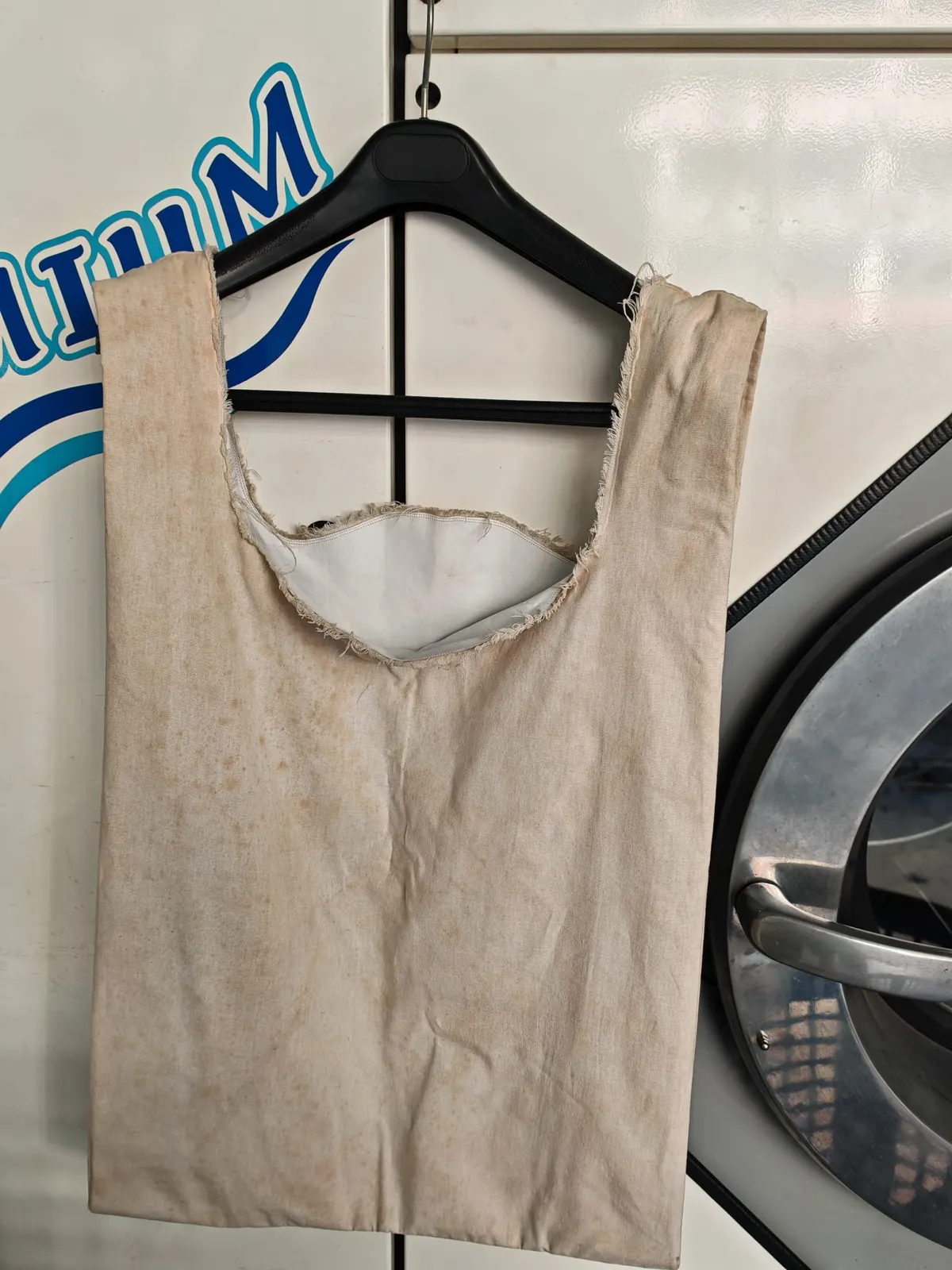
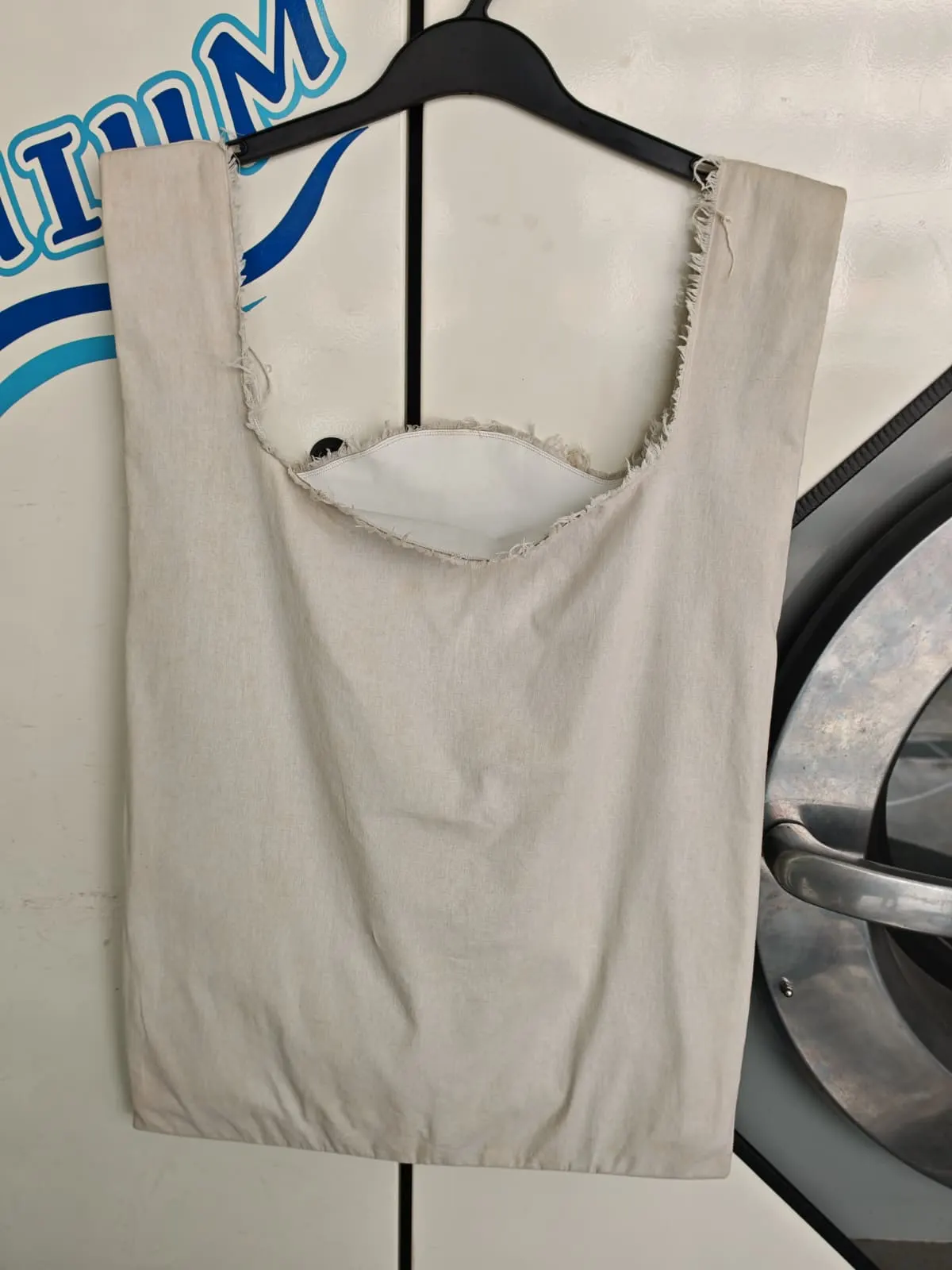
Margiela's famous joke, a luxury tote built to look like an ordinary shopping bag, came out of storage yellowed all over and browning at the spots. Most of it reversed; not all of it. Both halves of that matter.
What came in
Maison Margiela's shopping tote is a deliberate joke: a designer bag cut to the silhouette of a throwaway plastic carrier, in raw-edged fabric over a leather interior. The joke stops at the construction, which is genuinely expensive and genuinely delicate. This one had been carried hard for years without ever being cleaned, then put away in storage, still uncleaned. It came back out covered in yellow spotting, and the older marks had already deepened past yellow into brown and maroon.
Why it turned brown in a cupboard
Nothing new happened to this bag in storage; what happened was already on it. Hands, humidity, and daily contact leave behind oils and soiling that are close to invisible on the day they land. Sealed away in Singapore's heat, that residue slowly oxidises, the way a cut apple browns: first a faint yellow cast, then defined spots, then brown heading toward maroon. By the time the discolouration is obvious, it is no longer sitting on the fabric; it has bonded with it. And the further along that colour scale a stain has travelled, the less of it any cleaner can honestly promise to reverse.
The work
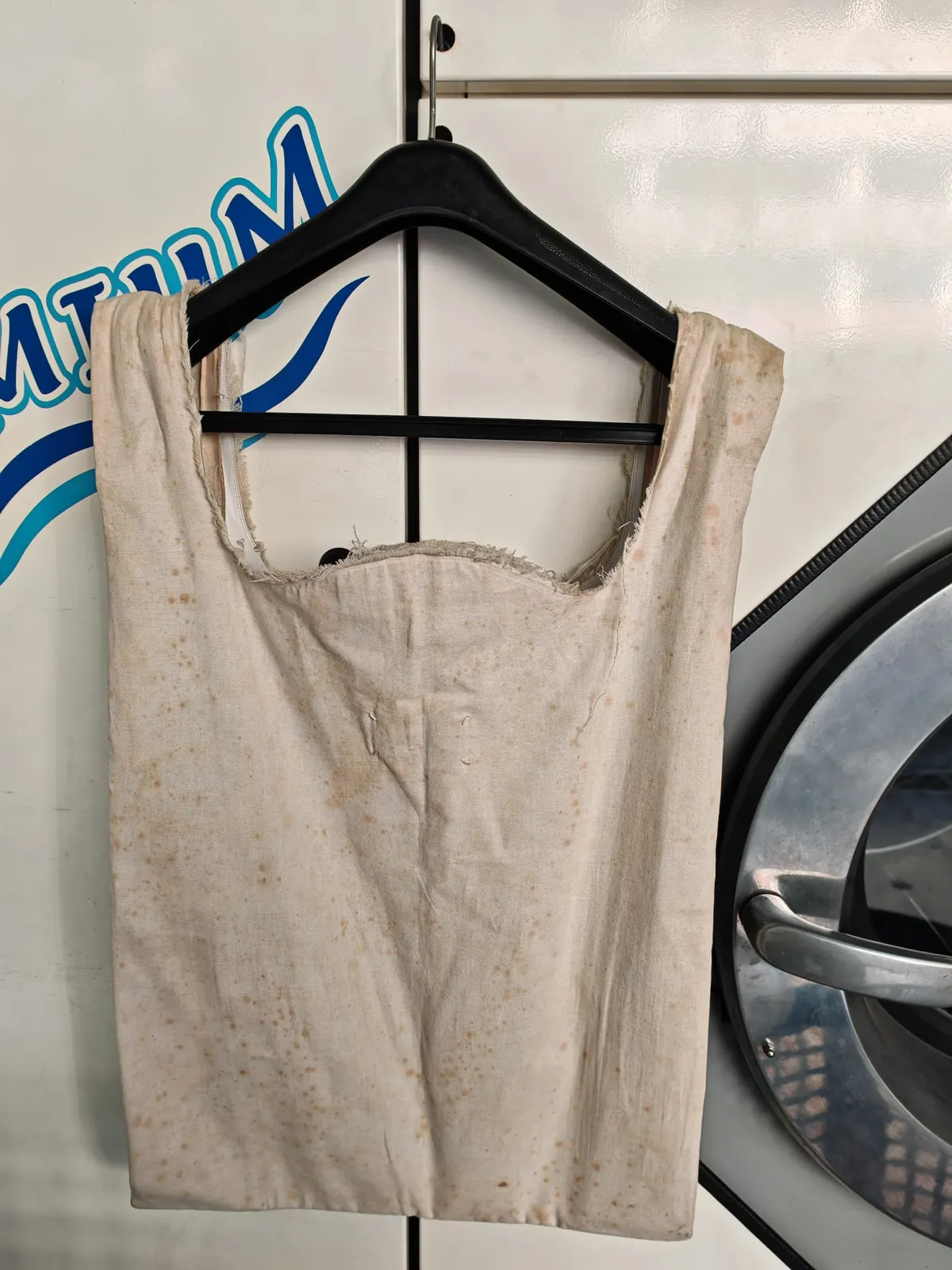
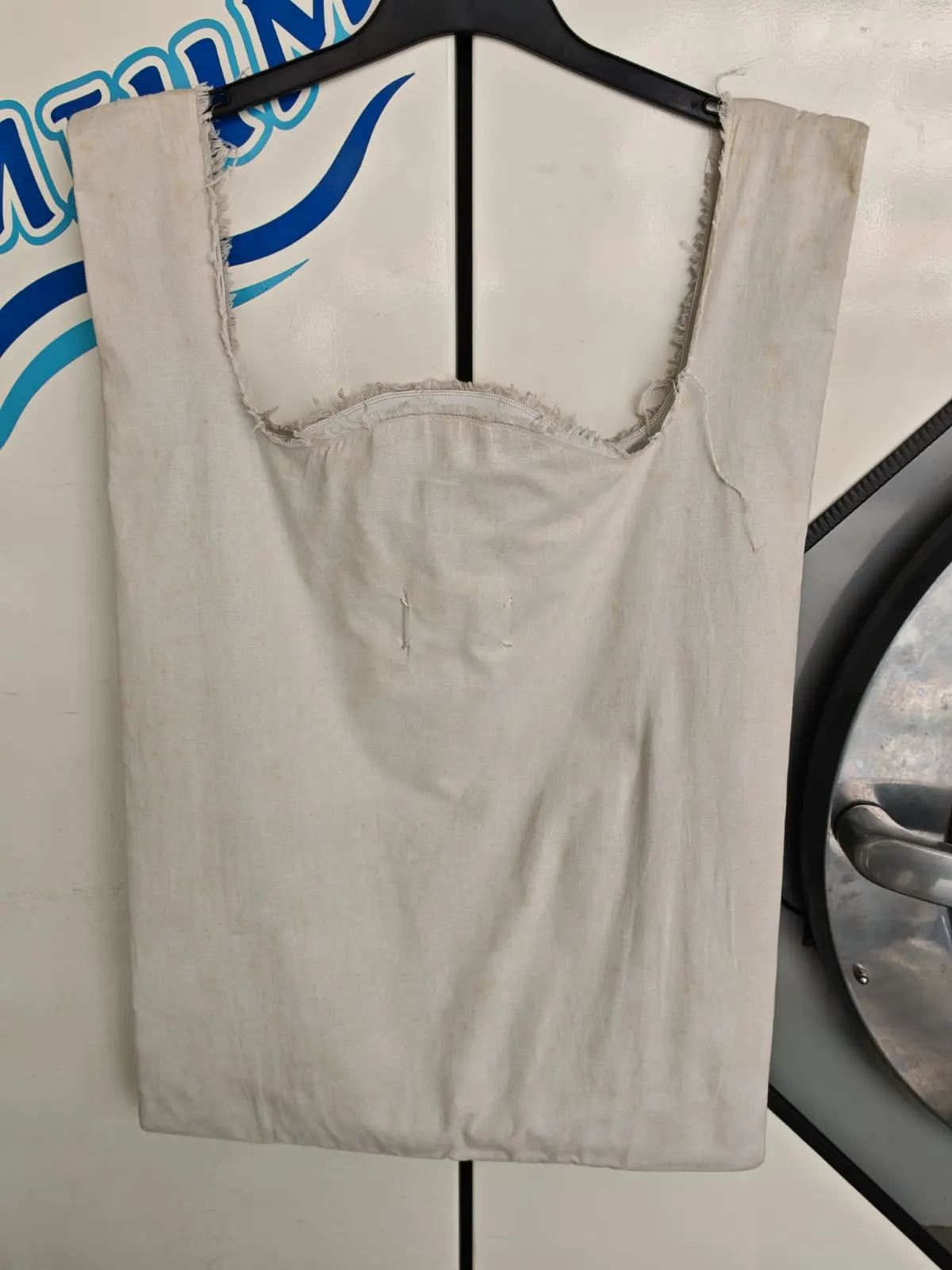
What made this case difficult was not the staining alone but the construction. The treatments that lift oxidised staining out of fabric are exactly the ones leather cannot tolerate, and here the two materials are sewn into one another, with no way to separate them. So the work went in stages: the leather interior protected and treated on its own terms, the fabric shell worked in repeated, controlled passes rather than one aggressive bath, each round assessed before the next.
The honest note
This bag is not like new, and we won't tell you it is. Oxidation that has matured for years leaves traces past a certain point, and the deepest of these marks had crossed it. What the owner got back is a big improvement: clean, even, and comfortably back in use. The lesson is simple: clean pieces you use regularly, and never put anything away dirty, because storage is where invisible soiling becomes permanent staining. Six months earlier, this would have been a routine clean. It became a rescue. The other way this story goes is already in the journal, where routine cleaning was all that was needed.
Case practitioner and technical review: Zach Lim.
Related cases
More like this

Common questions
Frequently asked
Why did my bag turn yellow or brown in storage?
Nothing new happens in storage; what is already on the bag oxidises. Hands, humidity and daily contact leave oils and soiling that are nearly invisible on the day, and sealed away in heat that residue slowly oxidises, the way a cut apple browns: first a yellow cast, then defined spots, then brown. By the time it is obvious it has bonded with the fabric. Singapore's humidity speeds that oxidation up, and a sealed plastic dust bag makes it worse by trapping moisture against the surface. Handbag cleaning at Rosabelle starts from $180, quoted after inspection, and leather work runs two weeks and upwards.
Can yellowing on a designer bag be reversed?
Yellowing on a bag moves along a colour scale from yellow toward brown as it matures, and the further it has travelled, the deeper it sits in the material. This Margiela tote improved a lot and went back into use, but the deepest marks did not fully clear, and we won't tell you it is like new.
Why is a leather-and-fabric bag hard to clean?
Because the treatments that lift oxidised staining out of fabric are exactly the ones leather cannot tolerate, and in a bag like this the two materials are sewn into one another with no way to separate them. The work goes in stages: the leather protected and treated on its own terms, the fabric shell worked in repeated controlled passes rather than one aggressive bath.
How do I stop my bags yellowing?
Clean pieces you use regularly, and never put anything away dirty, because storage is where invisible soiling becomes permanent staining. Six months earlier this bag would have been a routine clean; left uncleaned in storage it became a rescue.