
Stain removal · Singapore
Stain Removal & Restoration in Singapore
Rosabelle removes stains from clothing in Singapore and restores garments that have yellowed, spotted or taken on colour from something else: old and set-in stains, perspiration and storage yellowing, oil, food and drink, ink and colour run, mud, rust, mould and mildew, and stains already washed, ironed or treated at home. Silk, tailoring, knitwear, bridalwear and everyday garments are all assessed, including pieces other cleaners have declined.
Every piece is assessed free before treatment. The fibre, the dye and finish, the age of the stain and anything already tried on it decide the method and the risk. The work is done by hand, in-house at our Queenstown workshop, in stages, with the garment checked between rounds.
Standard stain treatment is included in the normal clean for most items, which takes about five working days. Specialist stain work and restoration is quoted after assessment and typically takes three weeks and up. Complete removal is possible on some garments but cannot be guaranteed. Walk in at Orchard or Queenstown with no appointment, or book islandwide pickup.
The stain that beat everyone else.
What stains and garments can we assess?
Set-in stains on silk, structured tailoring, knitwear, beaded eveningwear, bridalwear and everyday garments, including pieces other cleaners have already declined. Each piece is examined first: the fibre, the dye and finish, the age of the stain, and what earlier attempts may have done to it. Only then do we choose a treatment, because the wrong chemistry applied confidently is how garments get ruined. Leather, suede and bags are cleaned on a process of their own; see leather cleaning.
Perspiration and yellowing
Yellow marks at the collar and underarms form when antiperspirant made with aluminium salts meets sweat and skin oil, leaving a gel-like residue that dissolves poorly in water, so a normal wash leaves it behind. Storage yellowing comes from residues that were invisible when the garment was put away, such as oils that turn yellow as they oxidise. A pale blue Elizabeth and James dress with yellowing needed its own colour preserved while the marks were treated.
Oil and grease
Oil repels water, so a home wash tends to leave it in the fibre, and oil left in fabric can turn yellow as it oxidises. Oily stains are treated with dry-cleaning solvent, which is where professional cleaning differs from a wash.
Food and drink
Many food and drink stains are combinations, such as coffee with milk, and the oily, protein, sugar and tannin parts each need their own treatment, the oily part first. A sugary drink can leave no visible mark at first and turn brown later, as the sugar caramelises with time or heat.
Ink, dye transfer and colour run
Transferred dye bonds to the fibre the way the garment's own dye does, so it has to be lifted without lifting the garment's own colour with it. A cream Celine jacket marked by dye from a cleaning cloth needed transferred colour removed. Ink is not one stain either: ballpoint, felt-tip and water-based writing inks each need a different treatment.
Mud and floor soil
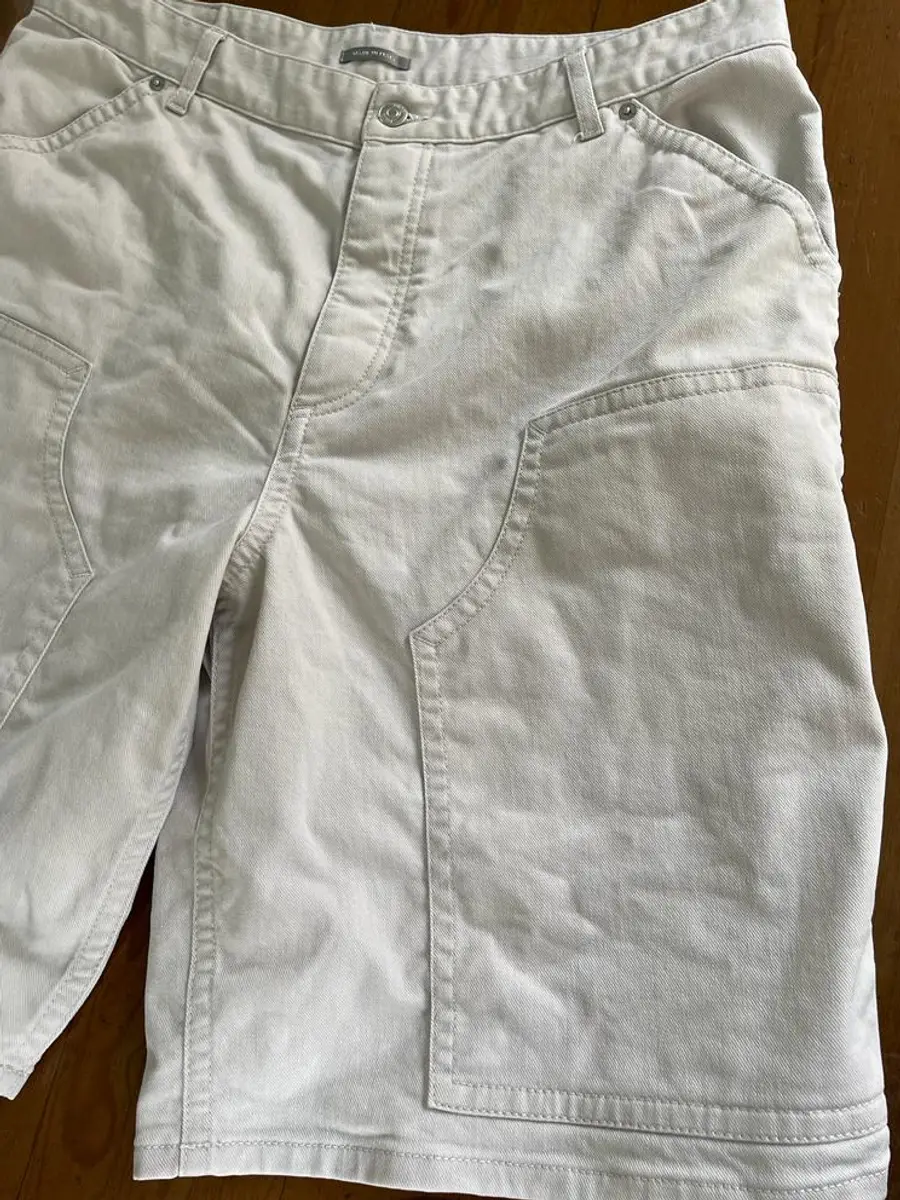
Mud is mineral soil that abrades the fibre if it is rubbed, together with organic matter that stains. Washing it out at home first usually makes the job harder, as a pair of Dior Bermudas washed at home after a muddy weekend showed.
Rust
Rust marks are iron oxide picked up from a metal fitting, a hanger or a pin. They need a treatment of their own, and chlorine bleach sets them.
Mould and mildew
A category of its own in Singapore's humidity, and treated as restoration rather than laundering. See mould and mildew on clothes below.
Glue and unknown residue
When nobody knows what a mark is, the residue is tested first to identify what will release it, before anything is applied to the garment itself.
Stains already treated at home or by another cleaner
Bleach, heat, rubbing and the wrong product each change a stain, and sometimes the fabric around it. Tell us what was used, because it changes the method. A Zegna shirt arrived with another cleaner's written refusal, and a Dior denim collar had been left patchy by a home attempt.
- Acikgoz Tufan, Gocek, Sahin and Erdem, "A novel washing algorithm for underarm stain removal", IOP Conference Series: Materials Science and Engineering 254 (2017) (antiperspirant, sweat and sebum forming a gel-like residue that dissolves poorly in water)
- Cornell Cooperative Extension: Removing Stains at Home (oily stains treated with dry-cleaning solvent; unsaturated oils yellowing with age; combination stains, oily part first; separate procedures for ballpoint, felt-tip and writing inks)
- Smithsonian Museum Conservation Institute: Stain Removal (sugar in a drink that leaves no visible stain turning brown with time or heat; oily stains yellowing as they oxidise)
- University of Georgia FACS Extension: Remove Stains From Iron, Rust (chlorine bleach sets rust stains)
Stain removal at a glance
- Assessment
- Free, at Orchard or Queenstown; no appointment needed
- Worked at
- In-house at our Queenstown workshop
- Standard treatment
- Included in the normal clean for most items
- Specialist work
- Quoted after assessment, confirmed before any work starts
- Turnaround
- About five working days; restoration typically three weeks and up
- Pickup
- Islandwide pickup and delivery
Good to know
- Earlier is better, as stains set over time
- Don't wash, dry or iron it first
- Pieces other cleaners declined are welcome
How stain removal works, step by step
Stain work is done by hand, one garment at a time, in our Queenstown workshop.
-
Assessment and a quote, before anything is touched
The fibre, dye, finish and construction are examined along with the stain itself: what it is, how old it is and what has been tried on it. We tell you what we see, the risks, the price and the timeline, and nothing starts until you have agreed to it.
-
Testing on a hidden area
Each treatment is tried on a hidden seam or hem allowance first. Testing is what stops a treatment that lifts a stain from lifting the colour with it.
-
Treatment in stages
A set stain is lifted over repeated controlled rounds rather than one strong treatment. Where a stain has several parts, each is treated on its own, as the rust and the yellowing were on a Vivienne Westwood gown.
-
Inspection
After each round the treated area is left to dry and inspected before anything more is applied. A stain can look lighter while wet and show again once dry, so the next round is decided on dry fabric.
-
Repeated treatment
A typical restoration takes three rounds of treatment or more. Each garment is treated on its own by a specialist. Rounds continue until the stain has lifted as far as the fabric safely allows, and stop before a further round would put the fibre or the colour at risk.
-
Cleaning, finishing and a final check
The garment is cleaned and finished as its fibre and construction require, and checked again before it goes home.
Mould and mildew on clothes in Singapore
Singapore's relative humidity averages over 80 per cent, and mould growth increases in vigour above 75 per cent. A piece left in a closed wardrobe, a damp room or a sealed bag can develop musty spotting, whether it is silk, linen, cotton, wool or structured tailoring.
We treat mould as restoration rather than laundering over it: the growth and its staining are lifted, the musty smell is treated and the piece is finished. Mould that has stained the fibre may leave faint shadowing, and we tell you what we see before any work starts. Stored bridalwear is where it happens most often, which is why we advise against sealing a gown into a box; see wedding gown cleaning. Mould after a leak, a flood or sea shipping, where an insurer is paying, is covered under insurance claim cleaning.
To keep it from coming back, store clothes clean and fully dry, out of plastic, in a wardrobe with air moving through it.
- Meteorological Service Singapore: Climate of Singapore (mean annual relative humidity around 82 per cent)
- Canadian Conservation Institute: Agent of deterioration: pests (mould growth increases in vigour above 75 per cent relative humidity)
What to do before you bring a stain in
Blot a fresh spill with a clean white cloth and do not rub. Keep heat away: a dryer, an iron, hot water or a steamer can set a stain so it has to be lifted in stages rather than washed out. If you are unsure, do not wash it at all, and bring it in sooner rather than later.
What we will ask you
- What caused the stain, if you know
- When it happened
- Whether it has been washed, dried, ironed or steamed since
- What has been used on it, including bleach
- Whether another cleaner has already treated it
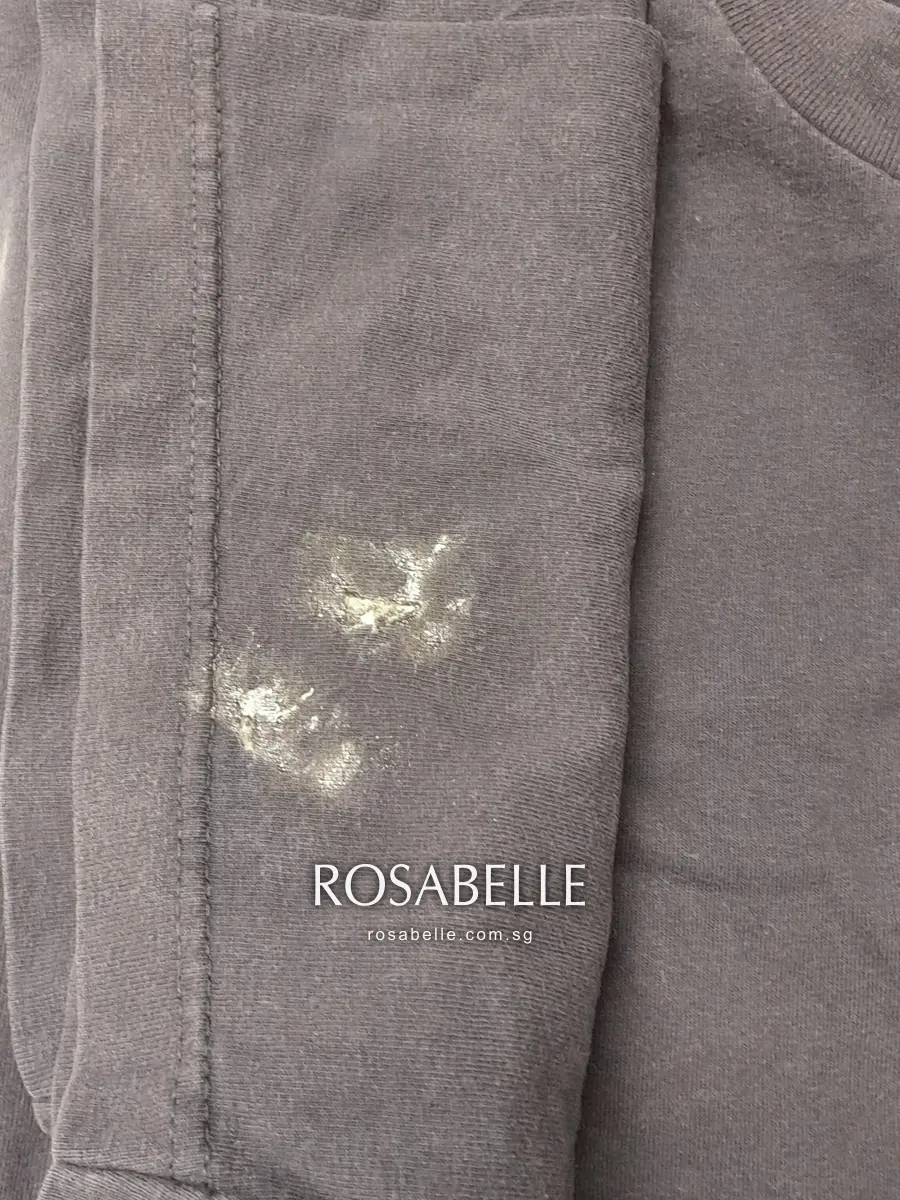
None of it has to be certain. An unknown mark is tested before anything is applied, as the dried glue on a navy T-shirt was.
How much stain removal costs and how long it takes
Standard stain treatment is included in the normal cleaning price for most items and happens inside the normal clean, which takes about five working days. Heavy or specialist stain work carries an additional charge, quoted after a free assessment and confirmed with you before any work starts.
Specialist stain work costs more than a standard clean because the charge is for time and judgement rather than one product applied once. The garment is tested first, then treated in rounds, three or more for a typical restoration, and each round is left to dry and inspected before the next is decided. The work is done by hand, one garment at a time, and it includes knowing when to stop before the fabric or the dye is put at risk. For a gown, a tailored piece or something that cannot be replaced, that care is what the price covers.
Specialist stain work and restoration, where a mark needs repeated controlled rounds rather than a single treatment, typically takes three weeks and up. We give you a timeline once the piece has been assessed.
Examples from our Singapore workshop
More like thisDocumented cases from our own workshop, with before and after photographs, grouped by the kind of stain. Each result belongs to that garment and its condition, not an outcome to expect from every piece.
Yellowing, perspiration and oxidised stains
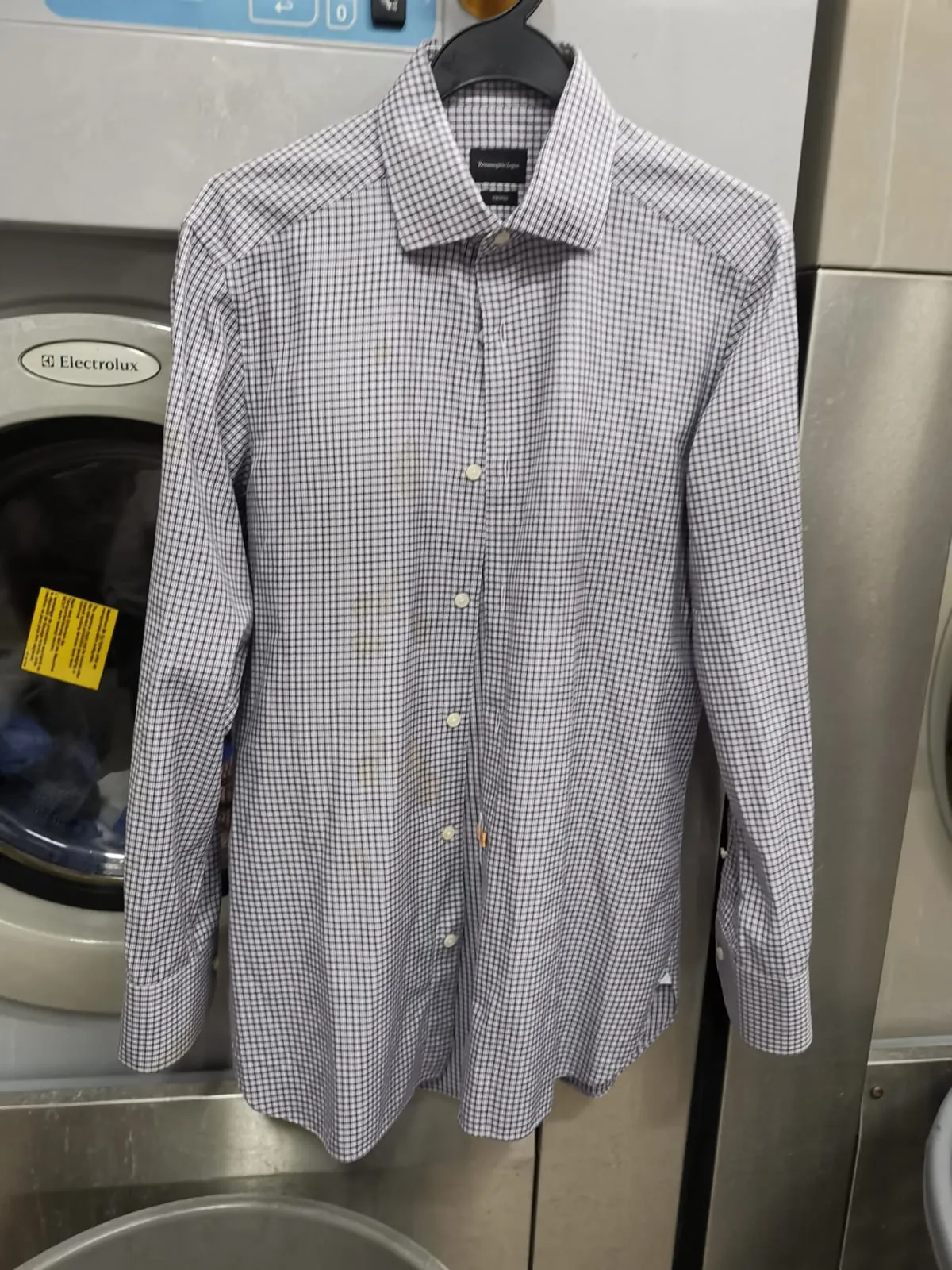 Stain removal
Zegna shirt: after another cleaner declined
Oxidised stains across the front of a Zegna Trofeo shirt that another premium cleaner had declined in writing, fully recovered.
 Stain removal
Elizabeth and James dress: yellowing on a coloured garment
Perspiration yellowing removed from a pale blue dress without lifting its dye, then the whole dress cleaned.
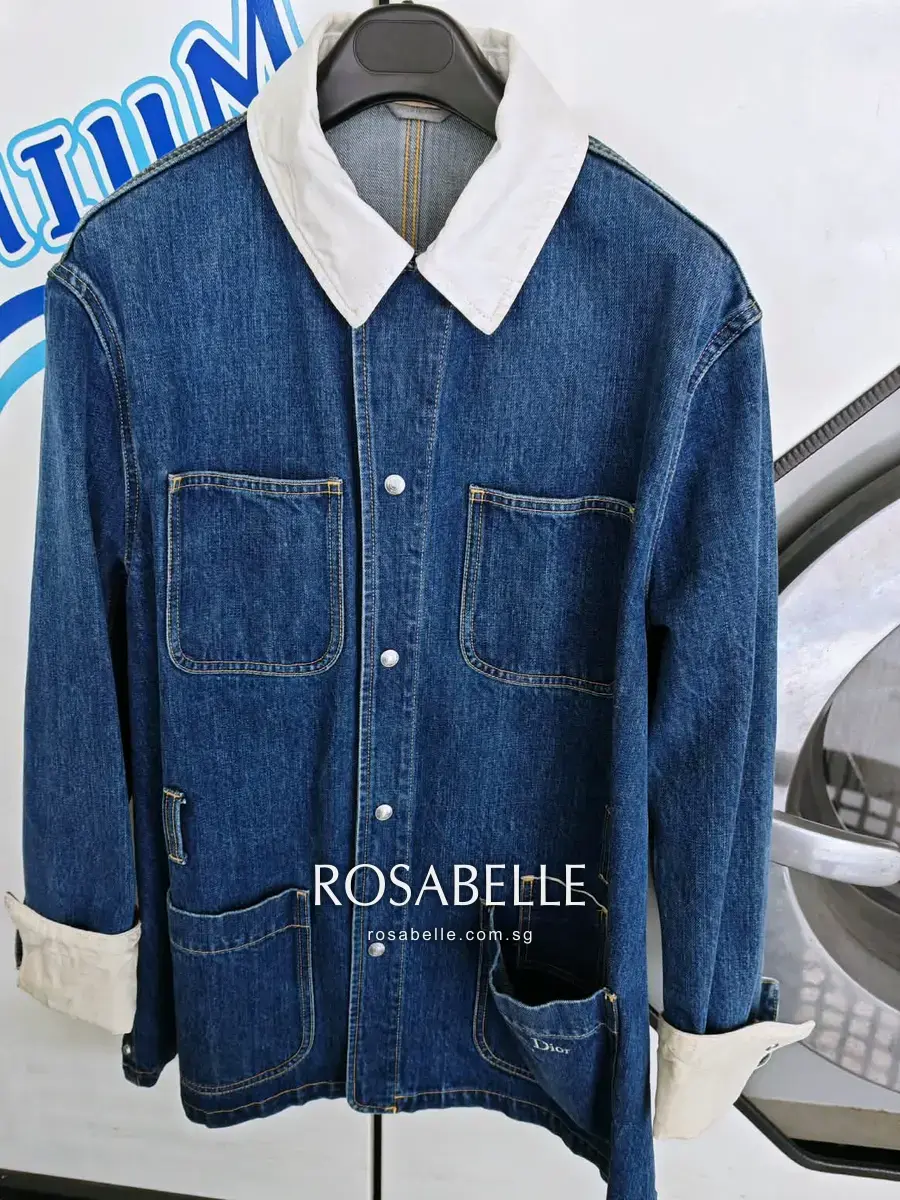 Stain removal
Dior denim jacket: a yellowed collar beside indigo
A yellowed cream collar and cuffs, left patchy by a home attempt, brought back to an even cream with the indigo beside them untouched.
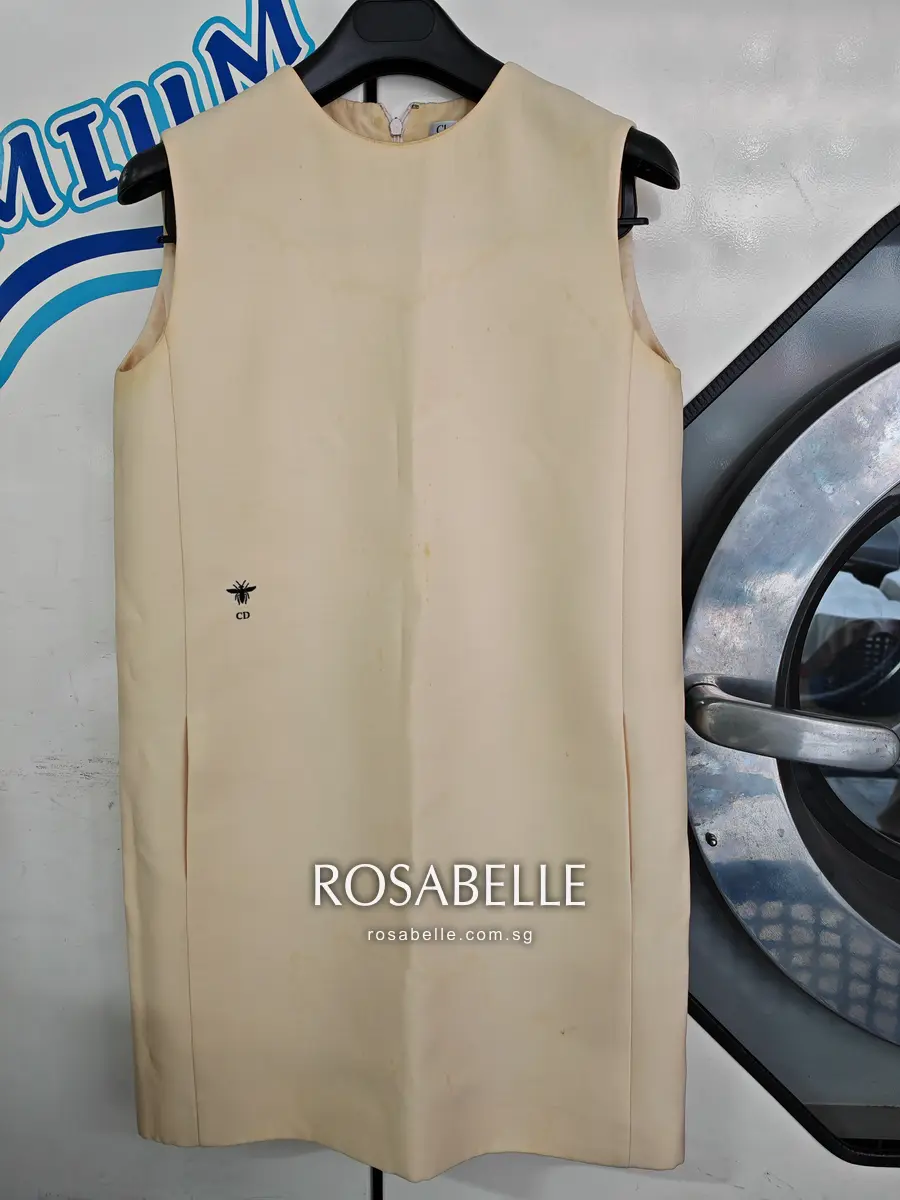 Stain removal
Dior wool and silk dress: storage yellowing and a watermark
Storage yellowing, underarm rings and a hem watermark removed from a silk-lined dress; a faint trace of the front spots remains.
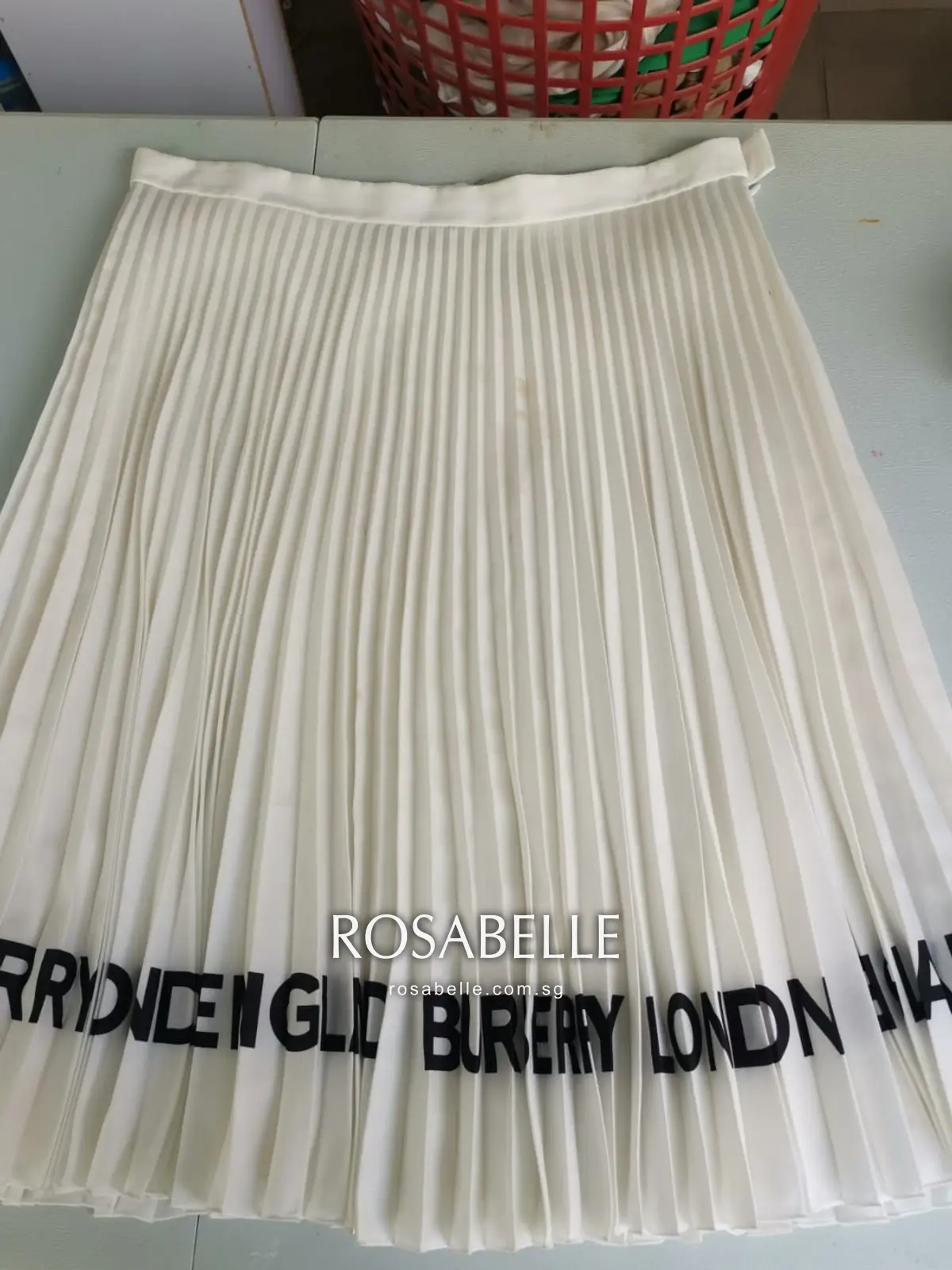 Stain removal
Burberry pleated skirt: yellowing inside the pleats
Yellow marks hidden inside the pleat folds of a cream skirt, cleared without flattening the pleating.
 Bedding
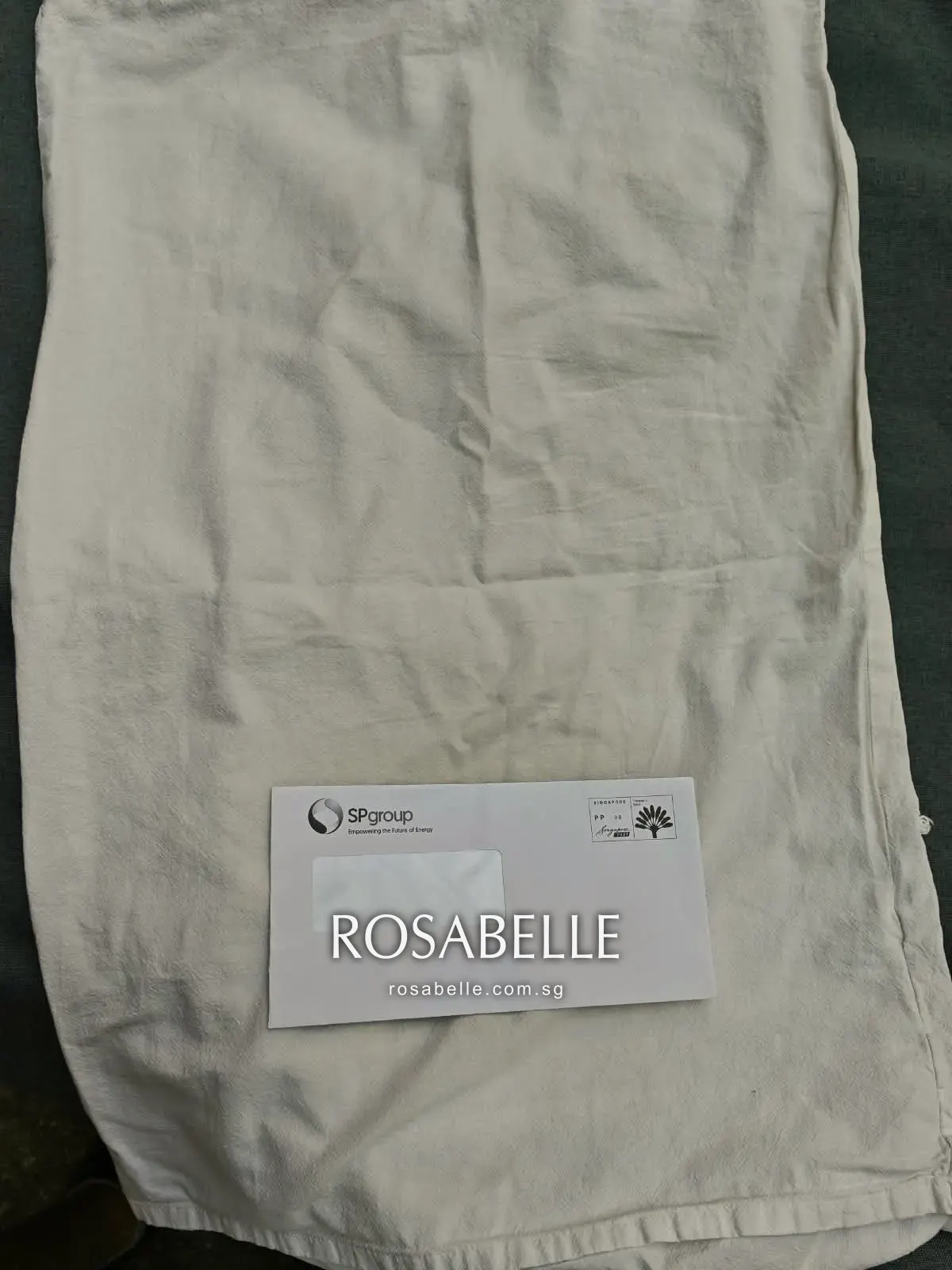
Yellowed bed linen: duvet cover and pillowcases
A tufted cotton duvet set, dull yellow with a grey cast, washed back to white over several passes.
 Leather
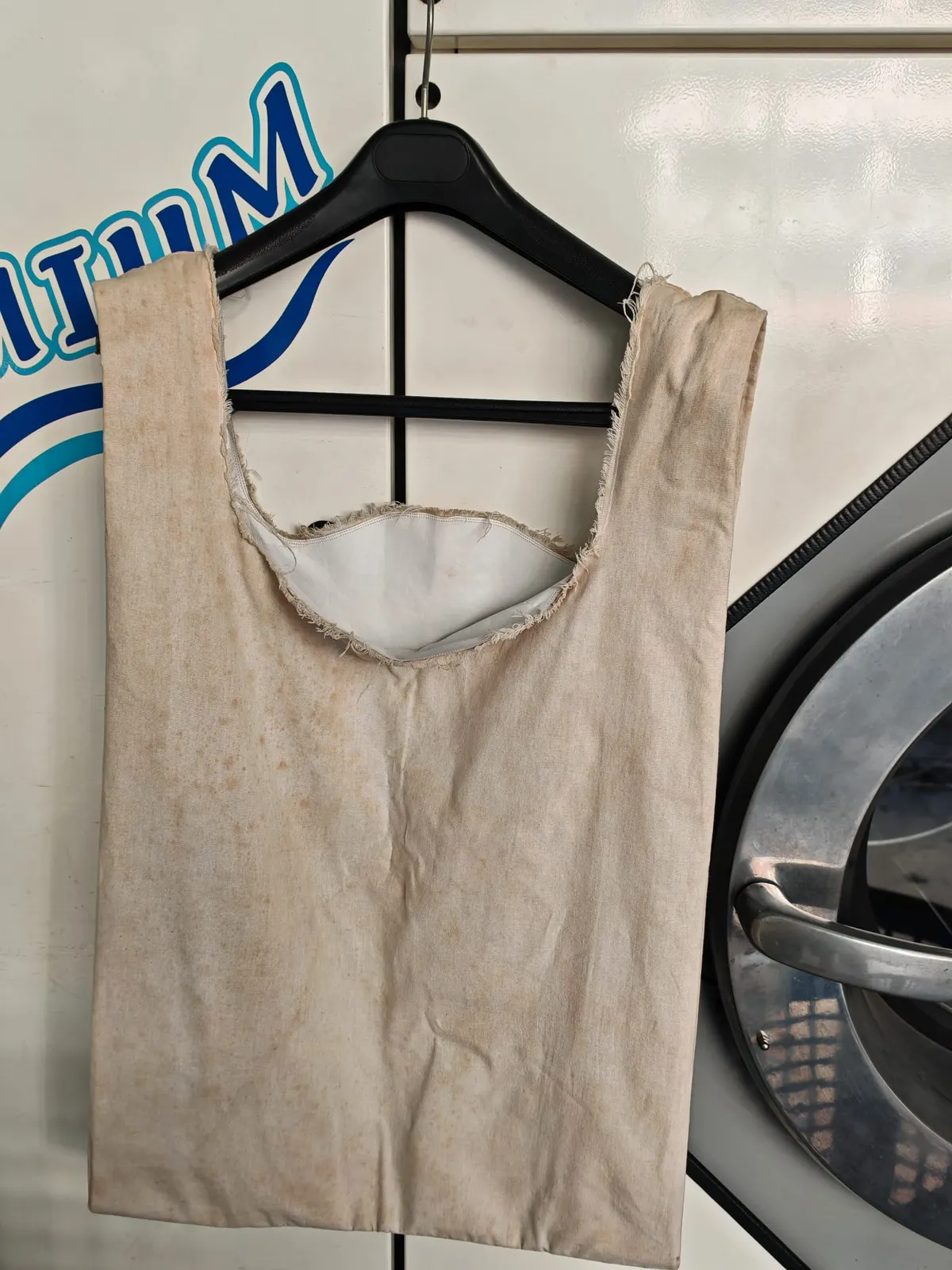
Maison Margiela tote: storage yellowing
A mixed-media tote put away uncleaned and turning brown: what storage does to residues, and how far back this one came.
 Bridal
Vivienne Westwood gown: yellowing and rust
Restoration on a boned crepe gown: overall yellowing, a browned hem and rust spots each treated separately, back to an even ivory.
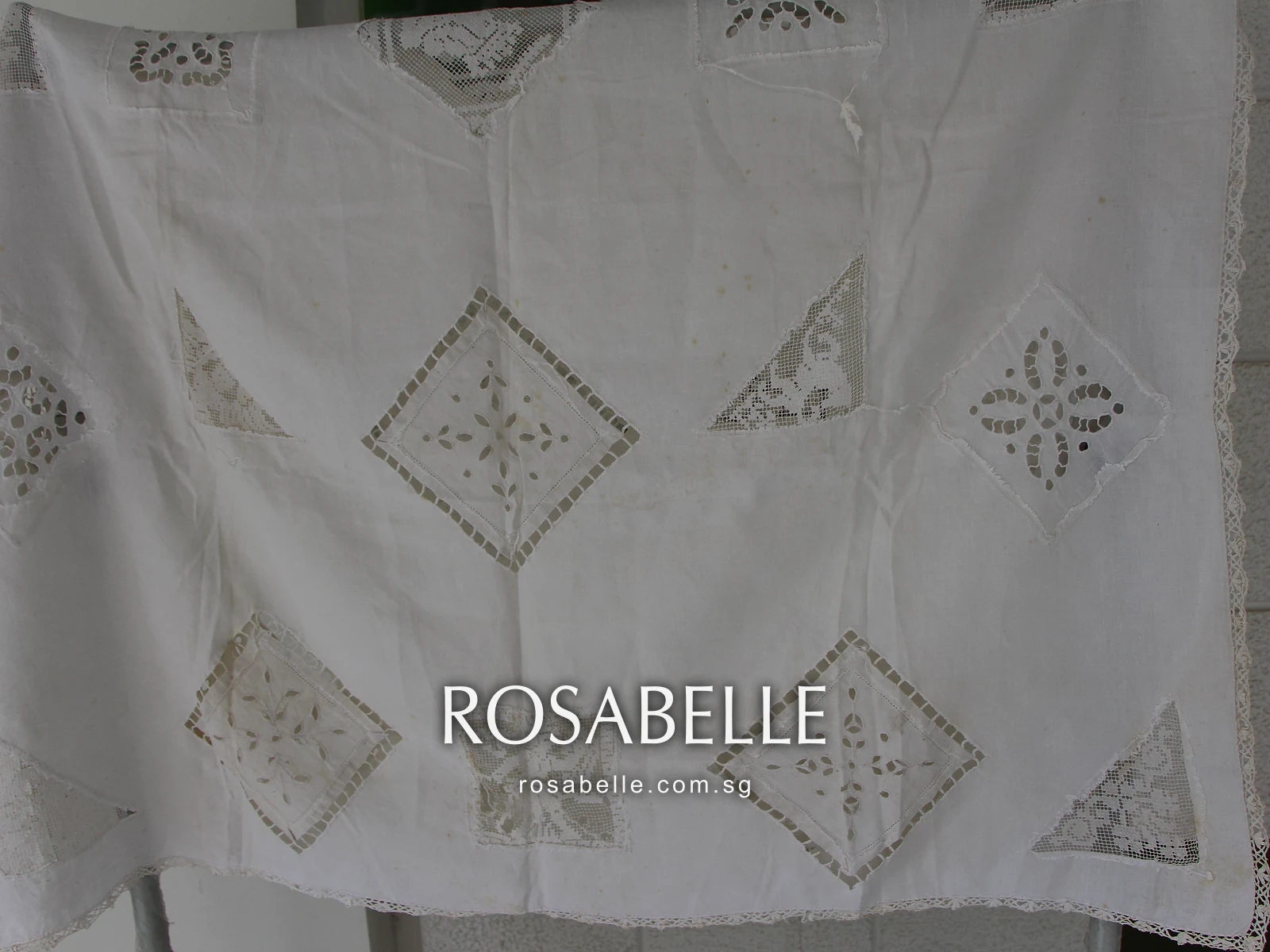 Table linen
Heirloom table linen: age stains, marked 1827
Eight pieces of family linen damask with brown storage staining, cleaned with the stitched names left intact.
 Stain removal
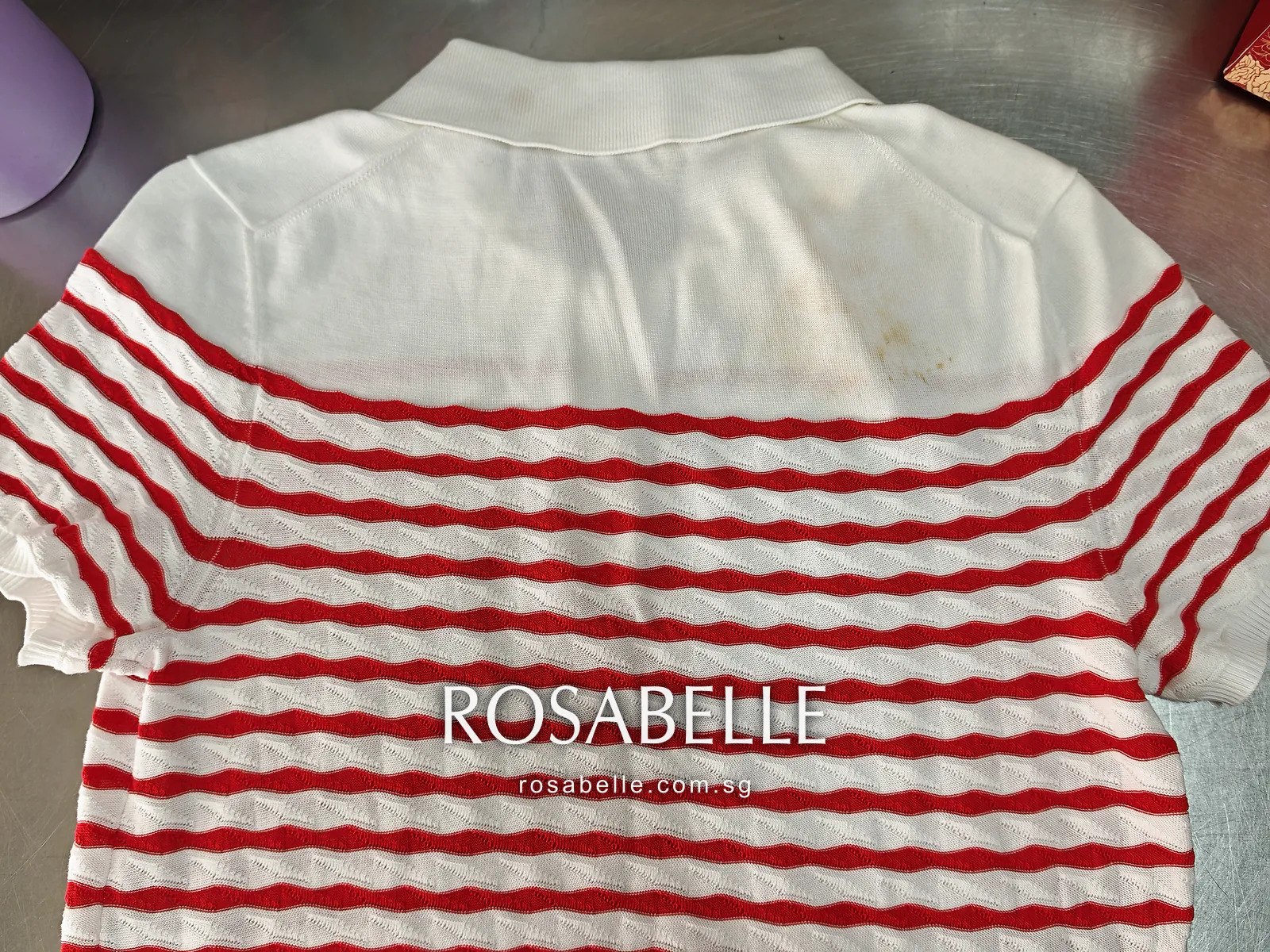
Chanel cotton knit polo: yellow spots on white knit
A dry-clean-only white and red striped cotton polo with yellow spots near the right shoulder that another cleaner could not remove. The yellow spots came out.
Mould and water marks

Colour run and dye transfer
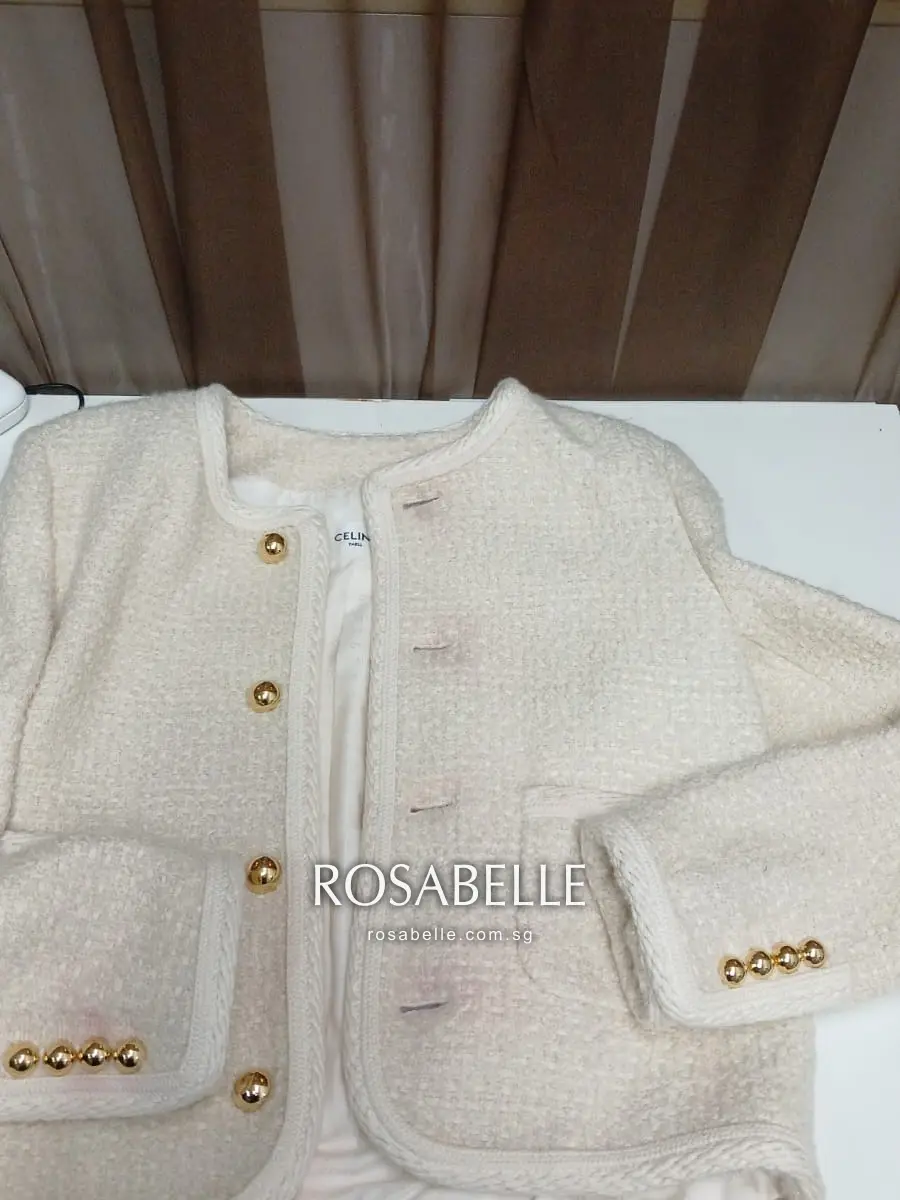 Stain removal
Celine bouclé jacket: dye from a cleaning cloth
Pink dye transferred from a damp cloth while the gold buttons were polished, fully removed from cream bouclé.
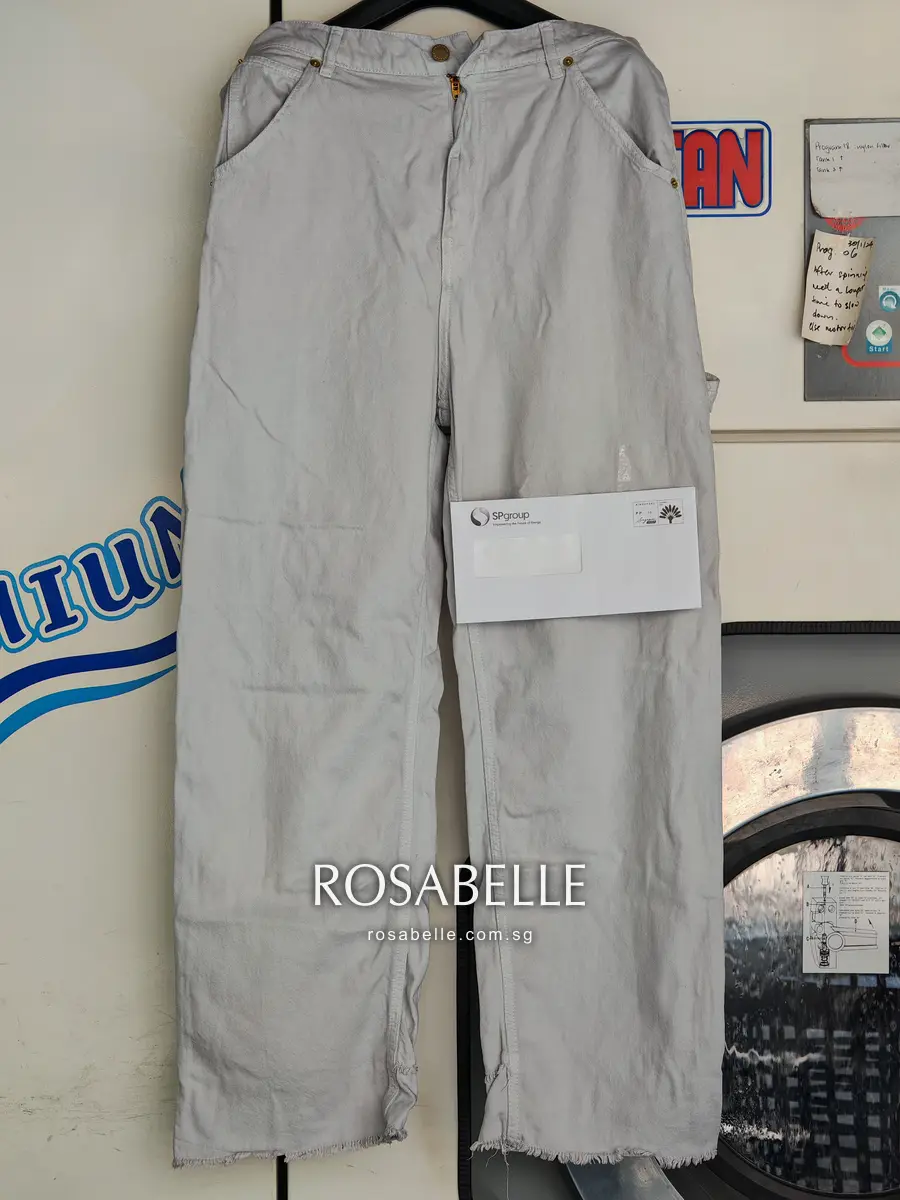 Stain removal
Darkpark white jeans: colour run from a home wash
White cotton jeans greyed by another item in a home wash, back to their original white with the leather patch unaffected.
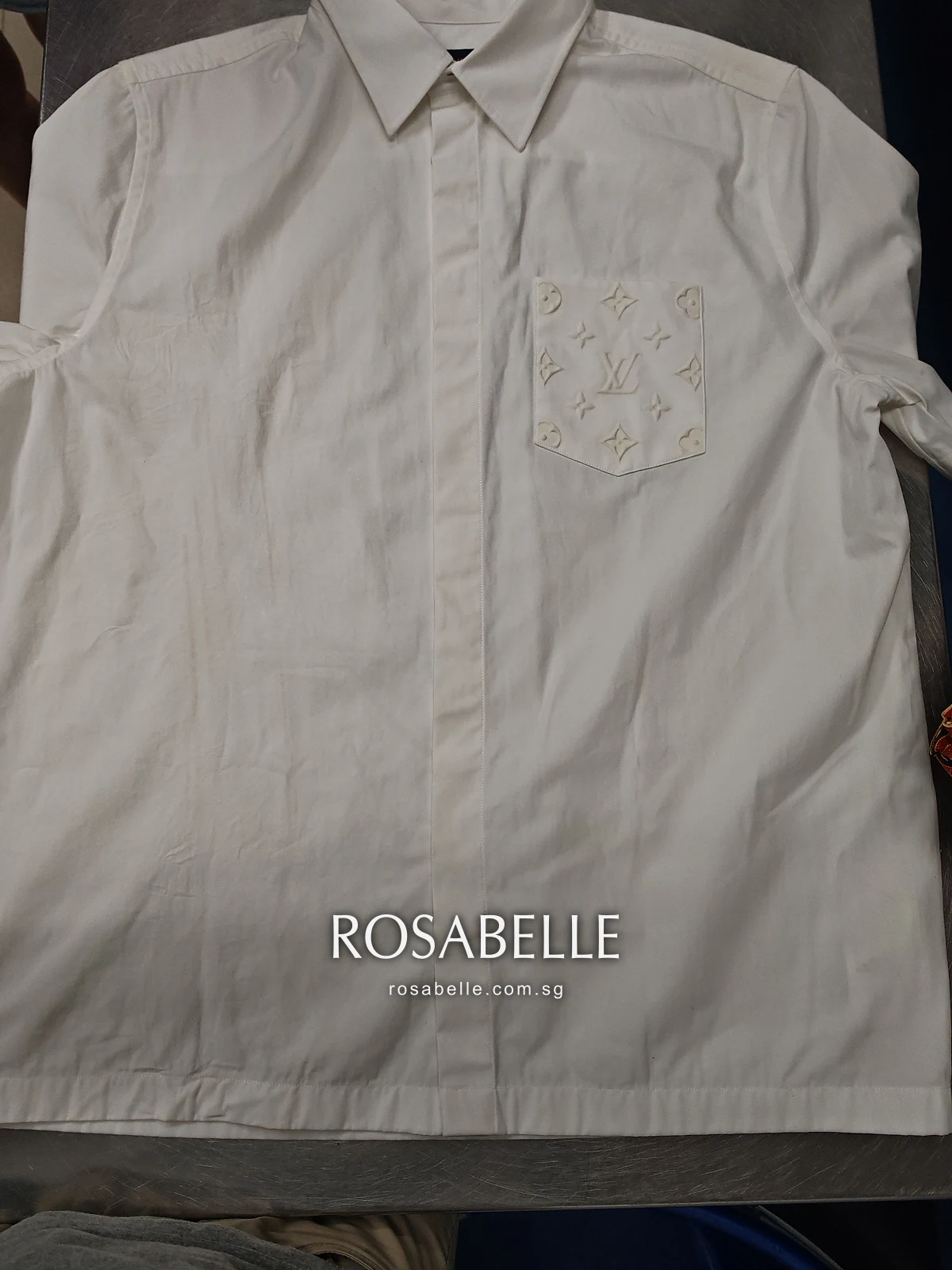 Stain removal
Louis Vuitton shirt: reddish colour run from a home wash
Dye from other items in the load left reddish streaks on a white shirt front, removed completely.
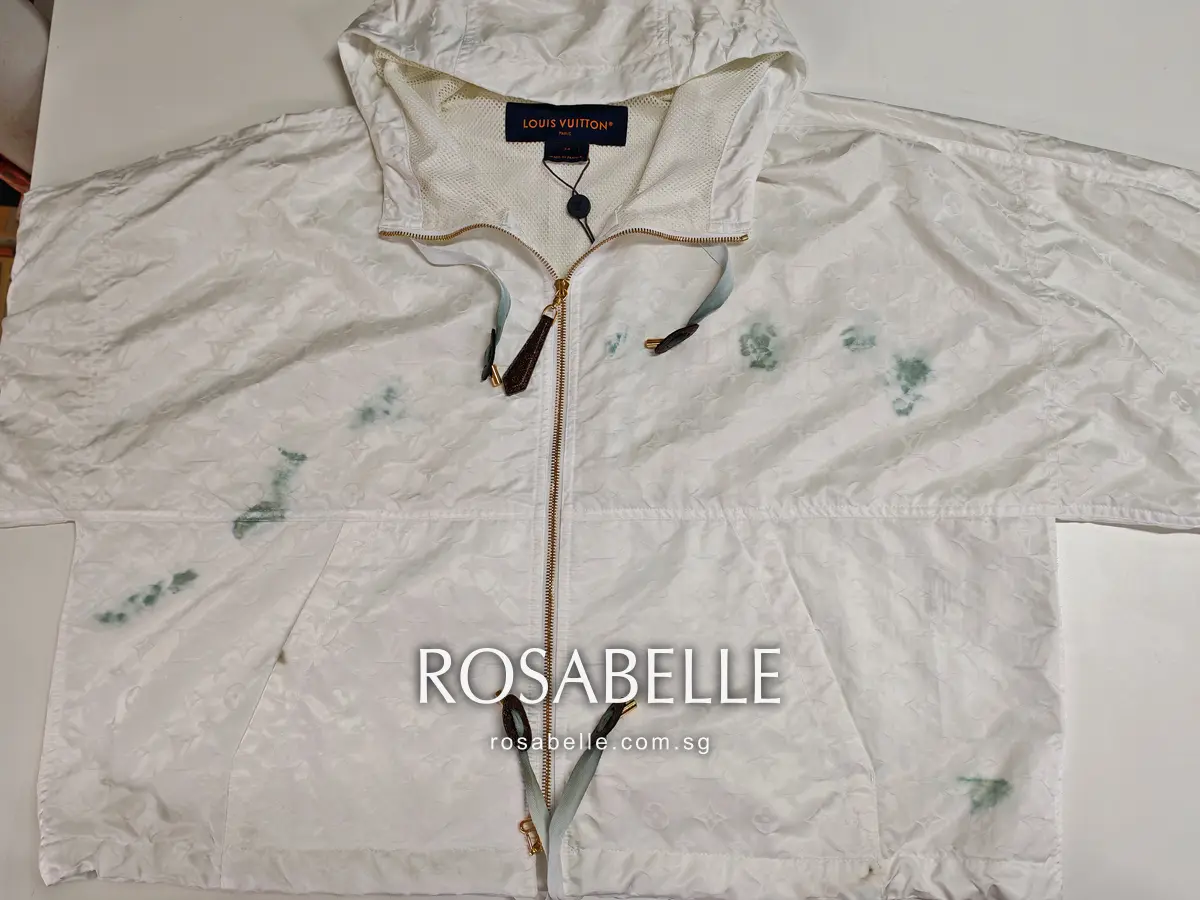 Stain removal
Louis Vuitton parka: colour run from bleached toggles
Leather toggles bled teal after contact with bleach: the bleeding was stopped first, then the colour run removed from the polyamide.
 Stain removal
Bec + Bridge viscose dress: dye from a wet leather bag
Tan dye from a rain-soaked bag spread across a pale blue viscose dress. The dress was fully restored.
Mud, floor soil and heavy soiling
 Stain removal
Dior Bermuda shorts: mud, then a home wash
Mud from a wet race weekend, washed at home first and left patchy grey: why that made the job harder, and how the colour was brought level.
 Stain removal
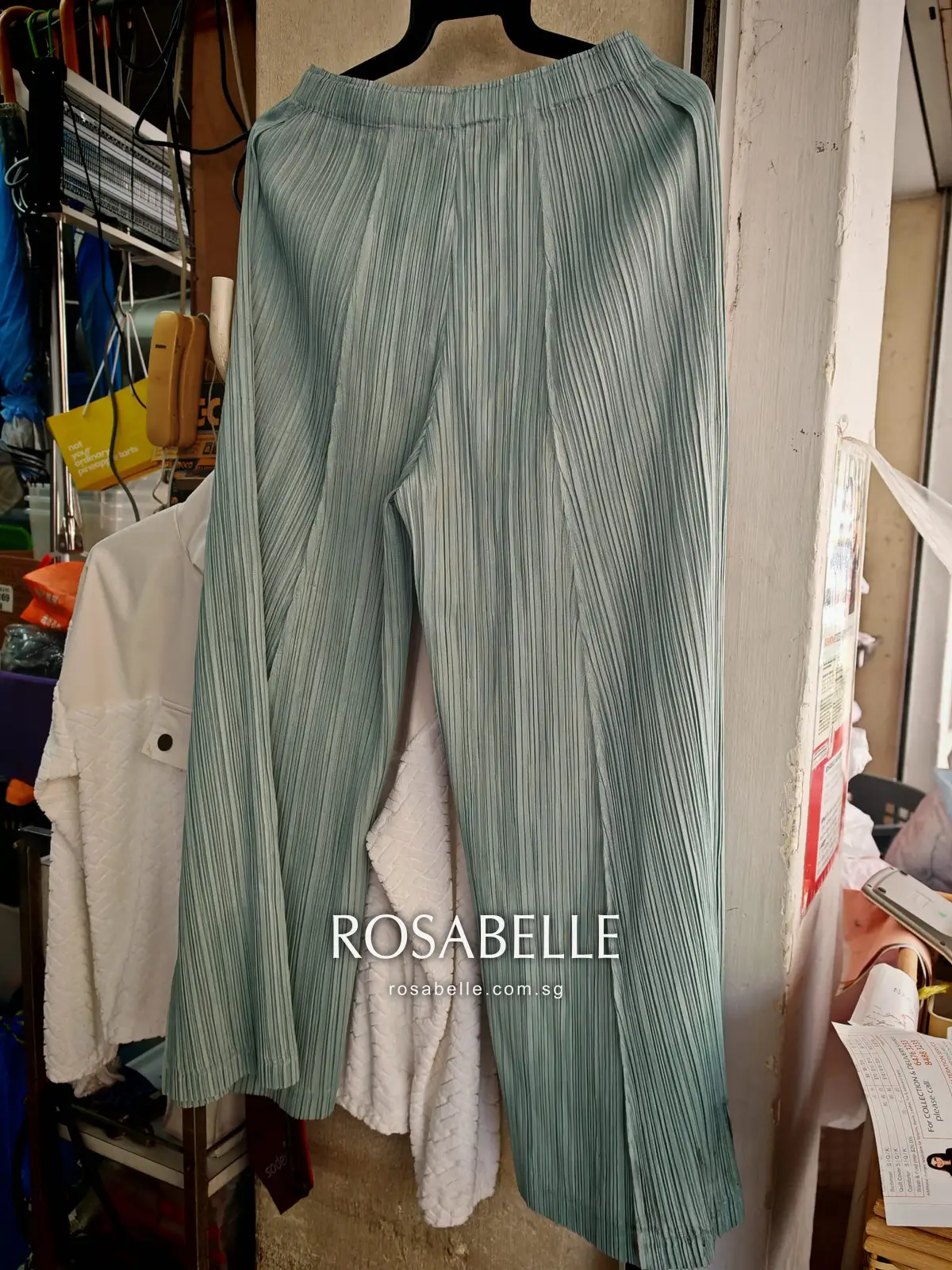
Issey Miyake Pleats Please: heavy soiling
Ground-in soiling cleaned from heat-set pleating that cannot be ironed back once lost, with the pleats intact.
 Accessories
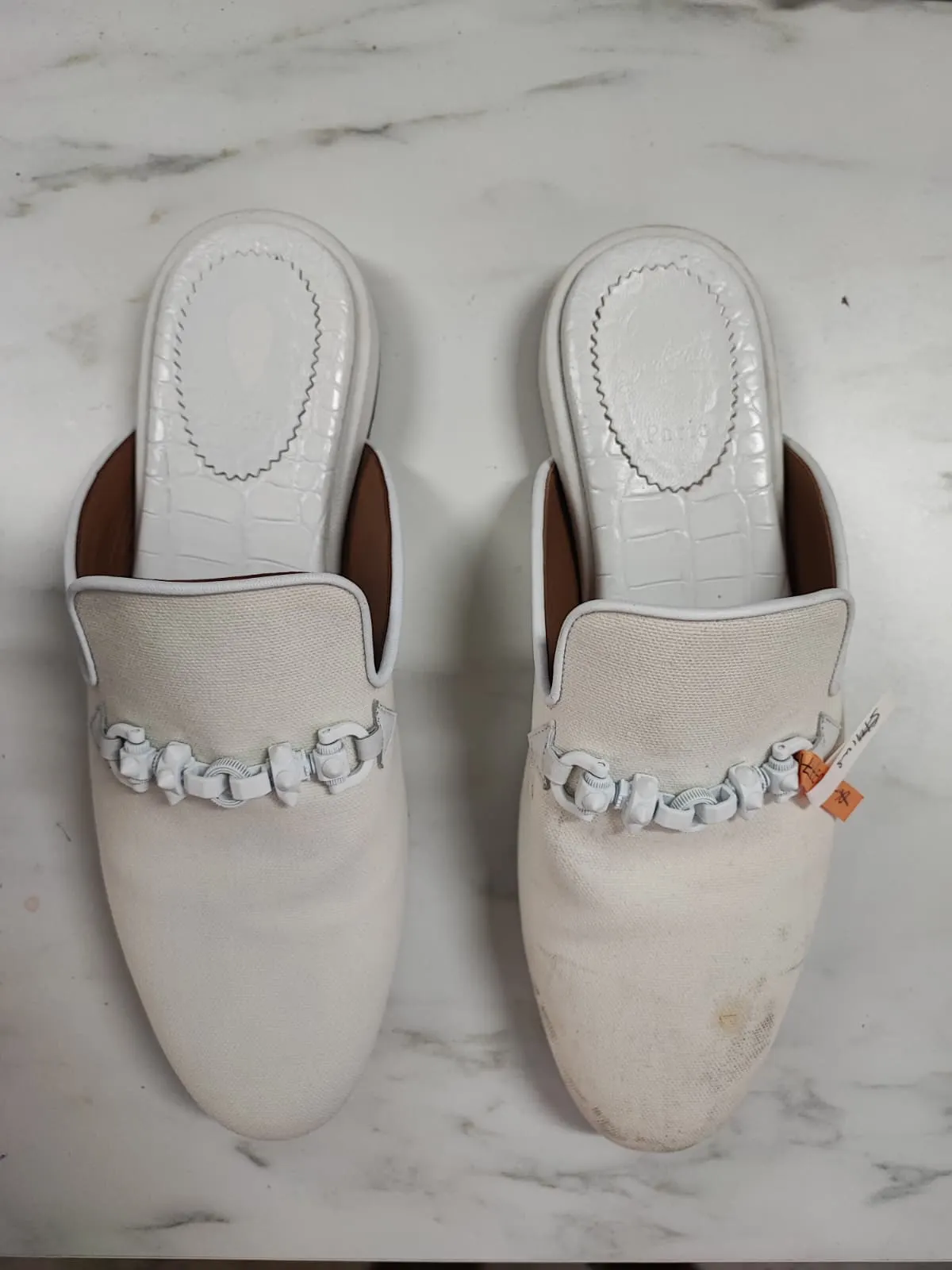
Louboutin canvas mules: grey from wear
White canvas shadowed grey and scuffed from honest wear, off-white again with the red soles cleaned too.
 Bridal
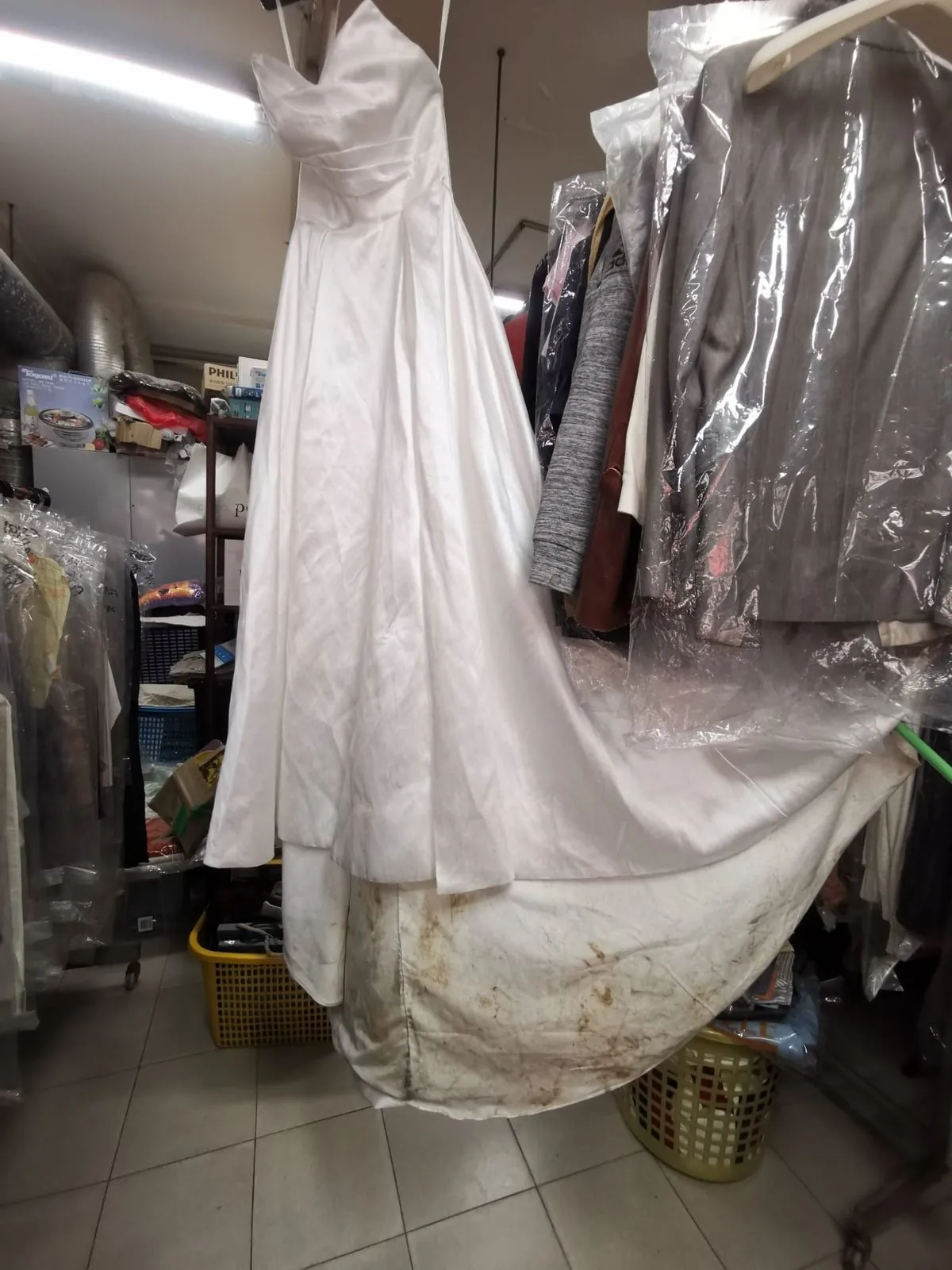
Gown train caked in mud
Heavy mud through a layered train after an outdoor ceremony, released before wet treatment and dried evenly so no watermarks replaced it.
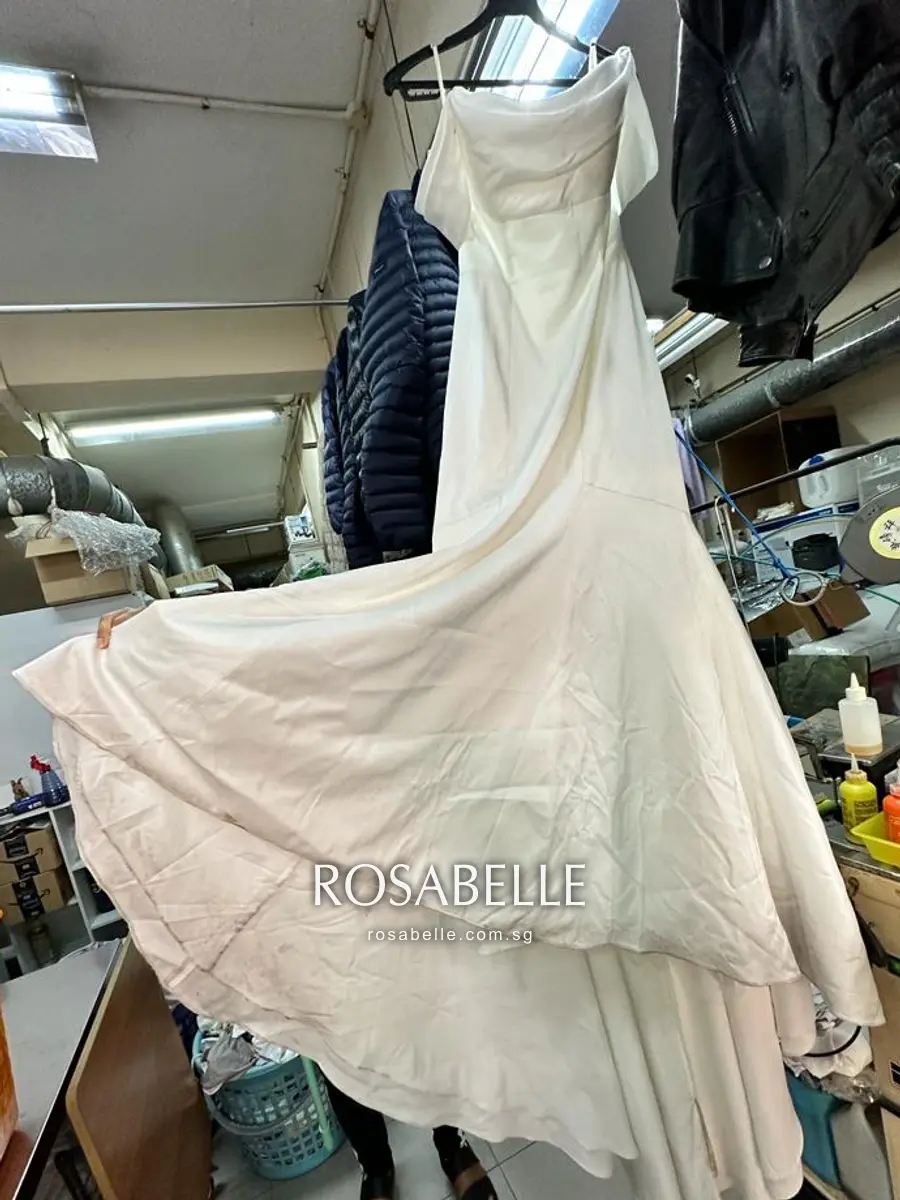 Bridal
Satin train greyed by one evening
A routine post-wedding clean: the hem and train treated first, then the gown cleaned through and returned white.
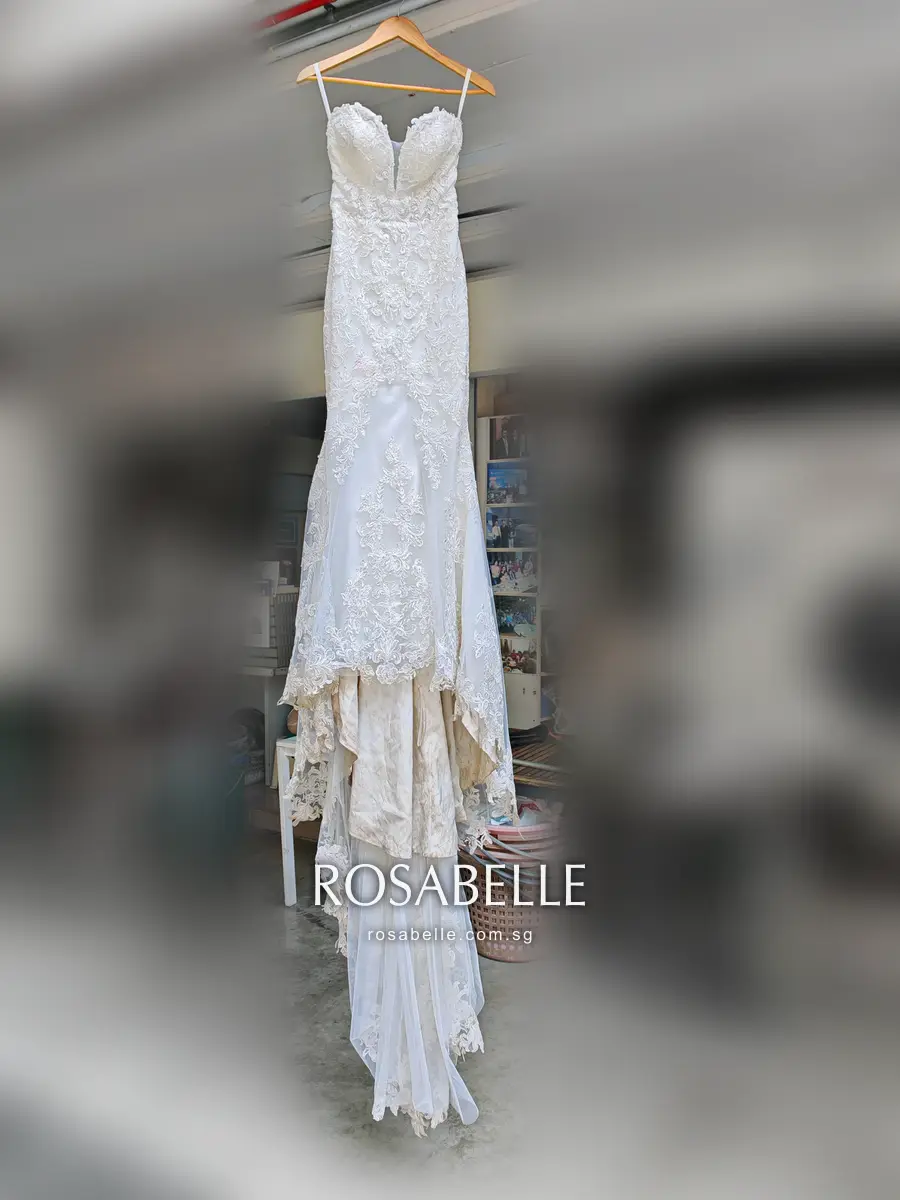 Bridal
Lace mermaid gown: makeup mark and floor soil
Sequinned lace over tulle: a pink mark lifted from the lace and floor soil from the hem, with the lace and sequins intact.
Wine, makeup and everyday spills
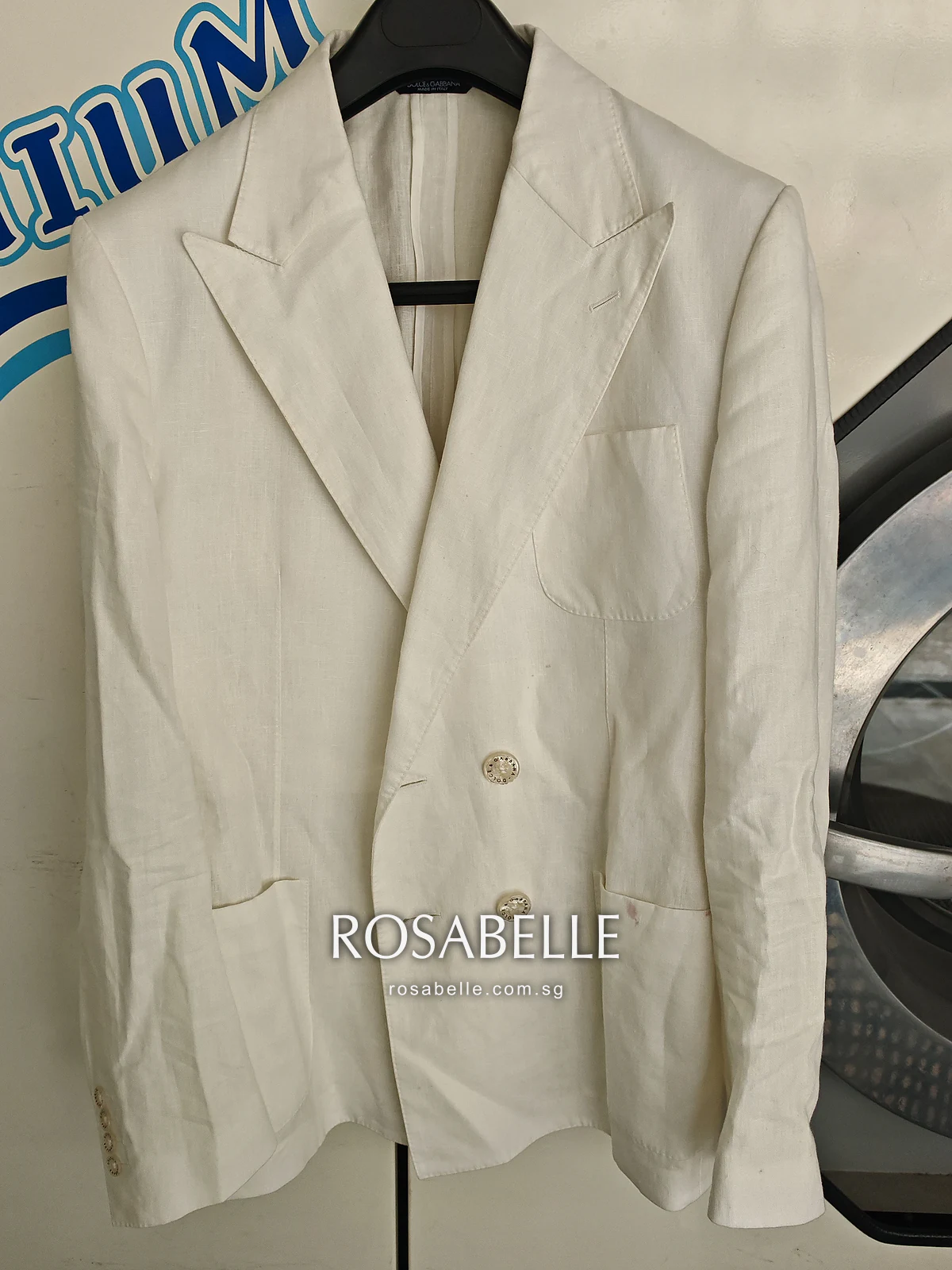 Stain removal
Dolce & Gabbana linen coat: red wine spots
Week-old red wine spots on a cream double-breasted coat in 100% linen, all removed.
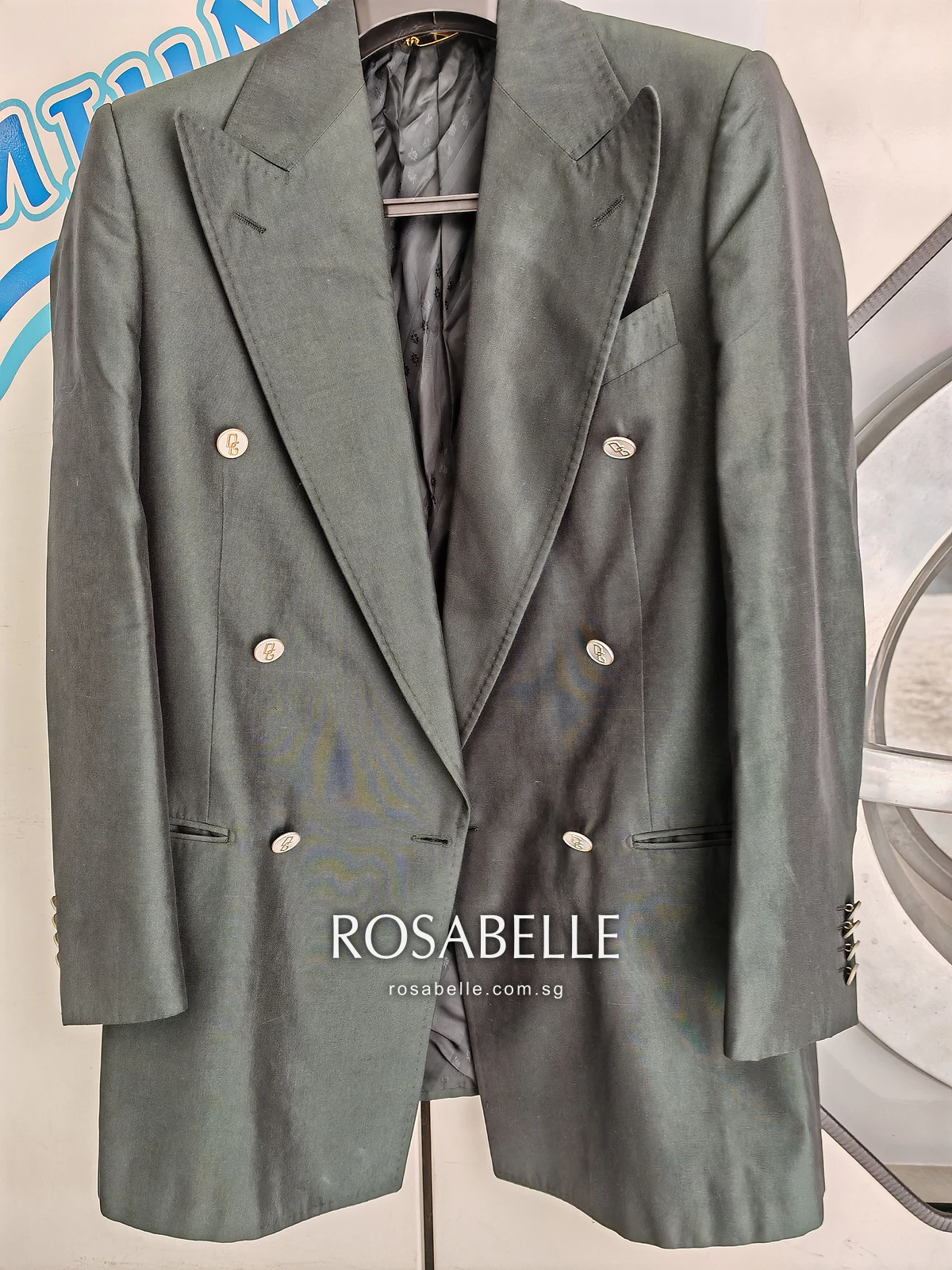 Stain removal
Dolce & Gabbana silk coat: coconut oil
A large patch of coconut oil on a silk lapel, already rubbed with a stain wipe. The oil came out completely.
 Stain removal
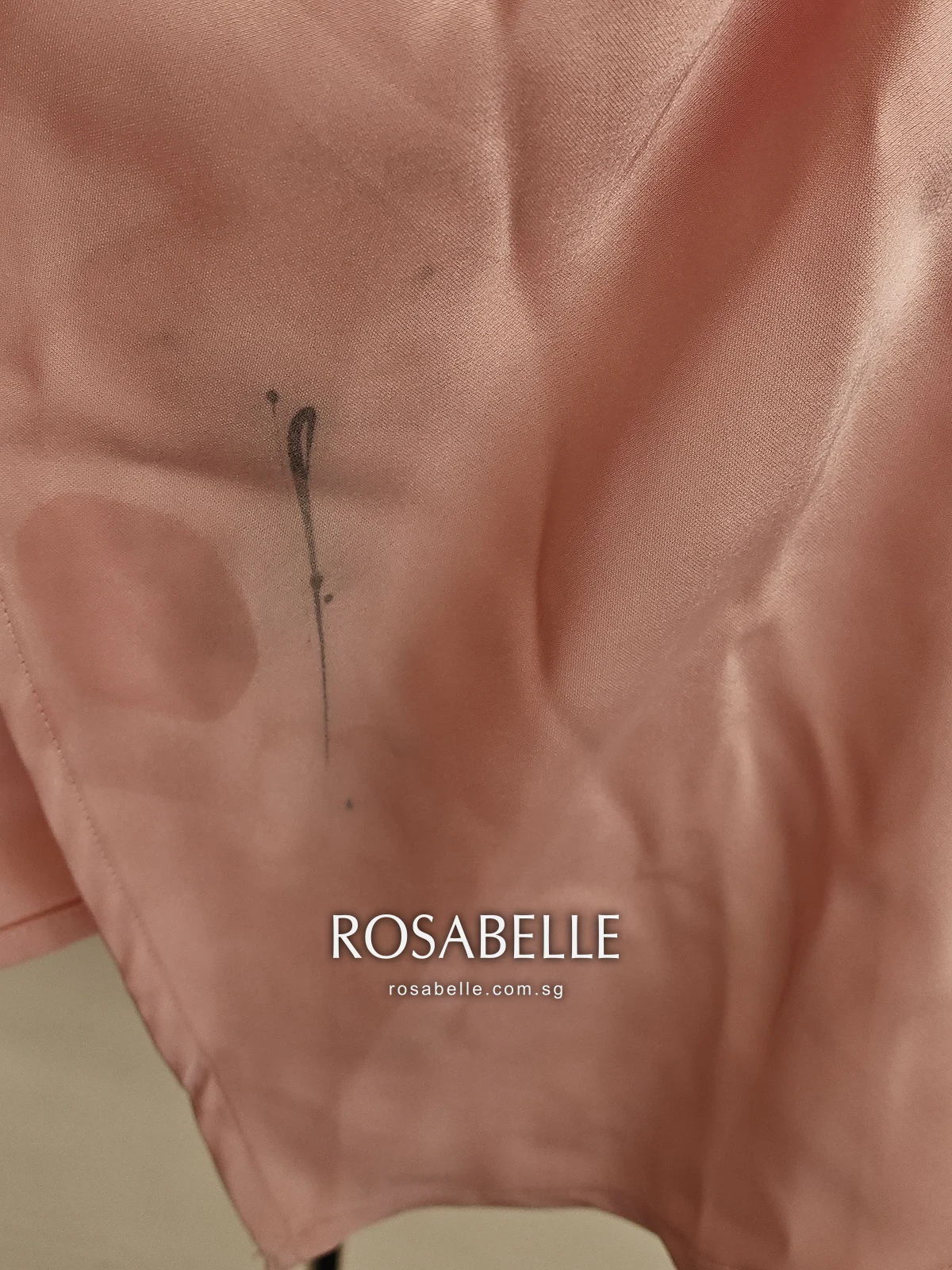
Satin slip dress: eyeliner after home treatment
An eyeliner line on pink satin that makeup remover and alcohol had not shifted at home, removed.
 Stain removal
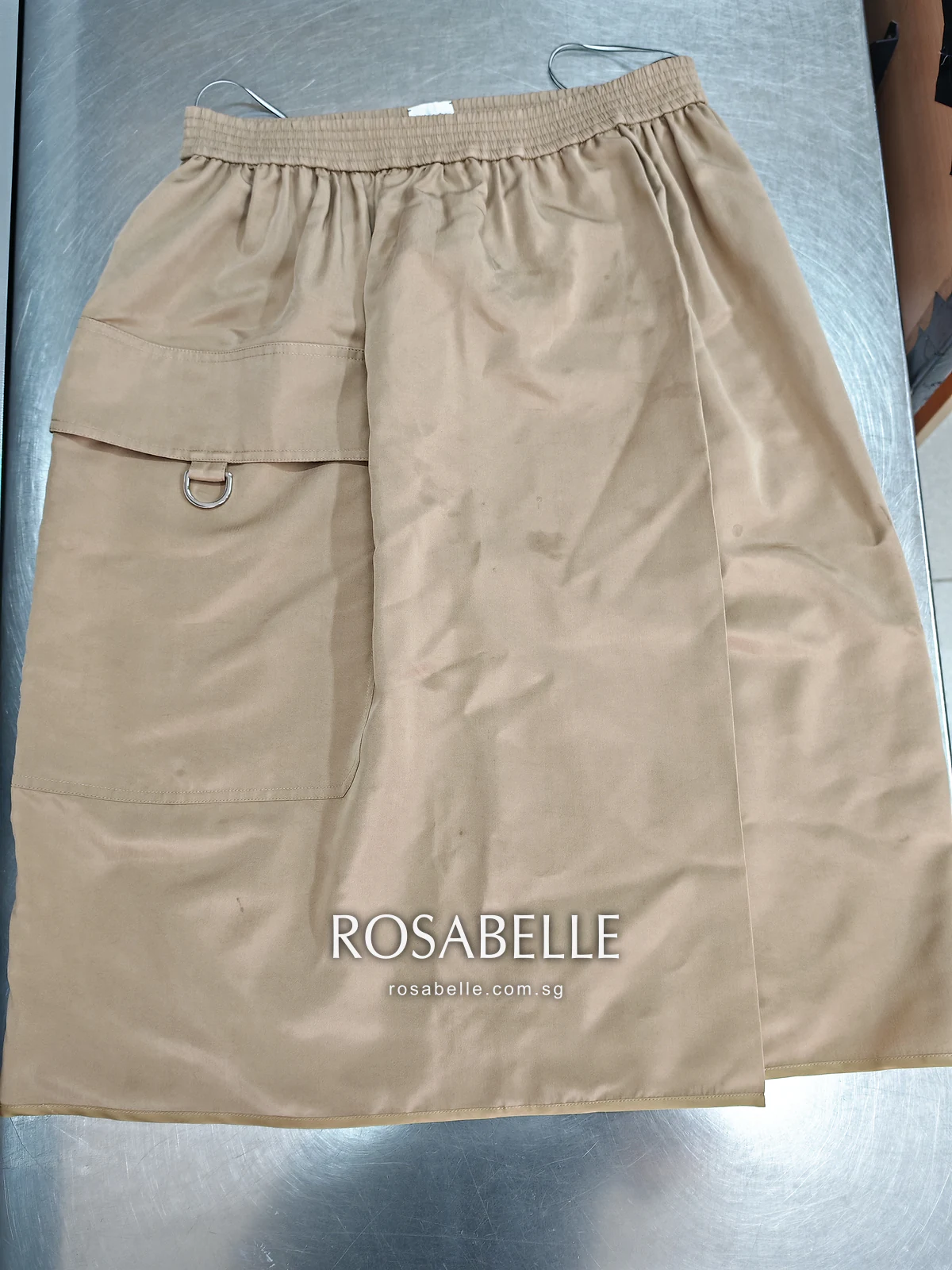
Hermès silk skirt: food stains from a dinner
Food spots on an almost new skirt in 100% silk, removed within a dry-clean-only label.
 Stain removal
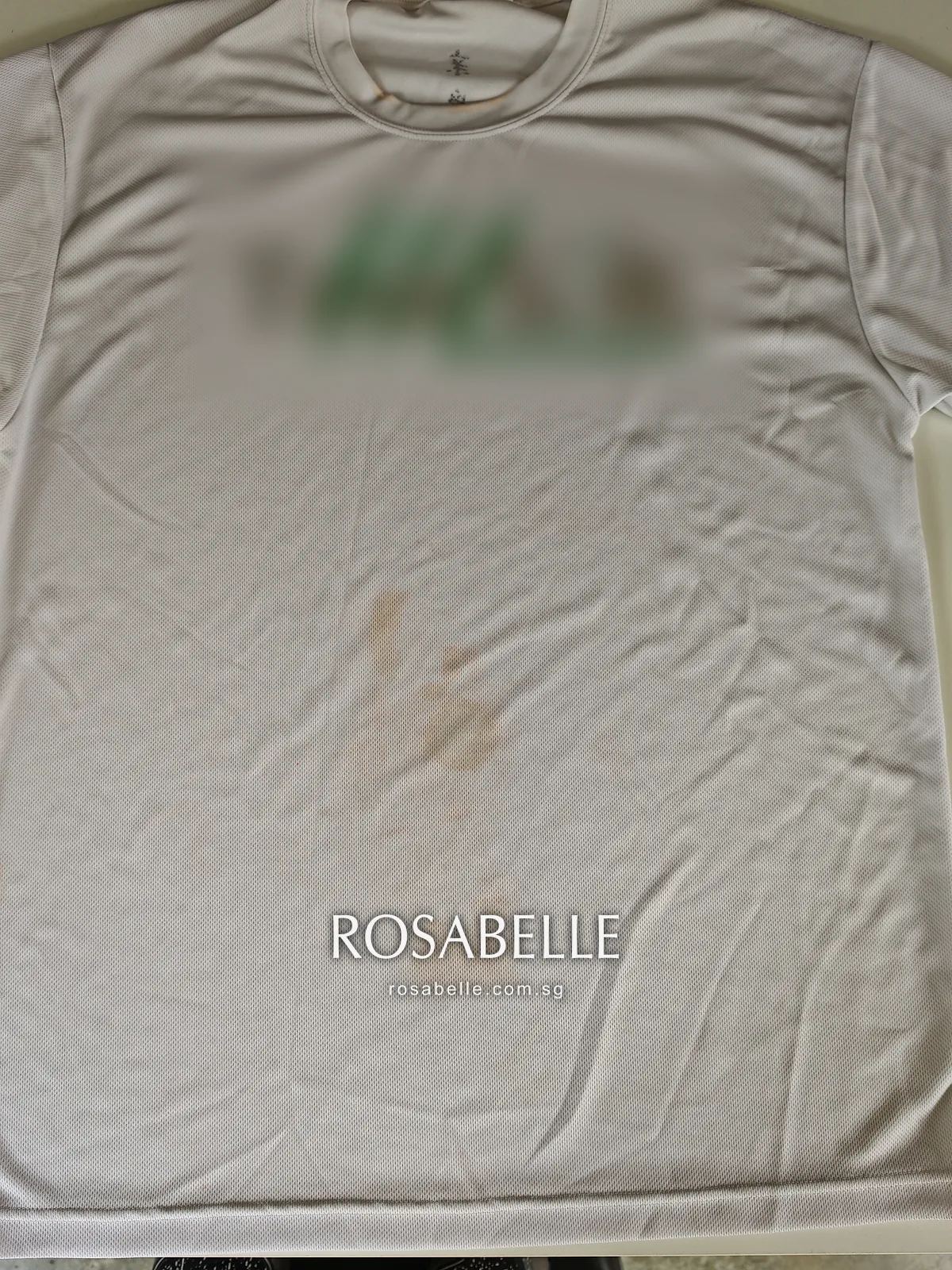
Polyester T-shirt: sunscreen stains
Brown and orange-brown sunscreen marks on a white T-shirt, front, back and sleeves, all removed.
Glue and unknown residue
What we do not promise
Fibre, dye, construction and what the stain has already done to the fabric all decide what is possible, and treatment itself carries risk beyond the stain staying: colour or texture change, and occasionally fabric that a stain has quietly weakened giving way under cleaning despite looking sound beforehand. Every case above is a record of one garment rather than a promise about the next. What we commit to is assessing the piece properly, telling you honestly what we see and the risks before any work begins, and leaving the decision to proceed with you. Complete removal is possible on some garments but cannot be guaranteed.
In their words
What customers say
"Rosabelle Laundrette saved my Thom Browne shirt, I cannot thank them enough. I tried using Oxiclean and white vinegar to remove the sweat stain but it was not able to be removed completely. However, once I brought it to Rosabelle Launderette, it was completely removed. Initially I was doubtful that the sweat stain could be removed but these guys surprised me (You may refer to the before and after in the pictures). Special shout out to Joyce for her amazing and swift service, it was an easy transaction and I managed to receive my shirt earlier than what was proposed."
"Great service and really value for money, Shoutout to Joyce that assisted us.Send this shirt to RL after the first Laundry service couldn't do anything to removed the stains, RL did a great job making the shirt looking brand new not leaving any stains behind. Highly recommend good job! Thank you"
"Brought my wool quarter zip jacket here because there were two large chili oil stains on it. I was unsure if they could be completely cleaned but all the stains were removed and there's no trace of the stains now. Highly recommend"
"Joyce was so friendly and helpful! Sent my fav pair of jeans for dry cleaning for very stubborn stains and happy to see that all of it was gone! You could barely tell where it was & I couldn't be happier with the results. the fabric still looks good with zero damages or fading, will definitely recommend!!"
"Very nice service. My woollen material dress got some mouldy spots on it, sent it for special treatment to clean it, the result is great, highly recommend!"
Common questions
Frequently asked
Can old or set-in stains be removed from clothes?
An old stain has had time to oxidise and bond more tightly with the fibre, and heat from ironing or a dryer sets it further, so it has to be lifted in stages rather than washed out. A Zegna Trofeo shirt that another premium cleaner had declined in writing was fully recovered here. Fibre, dye, the stain's age and any earlier home treatment all change the work, so we assess each garment before any work starts. Complete removal is possible on some garments but cannot be guaranteed.
Can you remove a stain another dry cleaner could not remove?
A stain that has already been through another cleaner has usually met solvent, pressing heat or a treatment that did not match it, and each of those can set it further or change what it needs. A Zegna Trofeo shirt arrived with a printed tag from a well-known cleaner saying the stains could not be safely removed, and went home fully recovered. Tell us what was done to it before, because that changes the method. We assess every piece before any work starts. Complete removal is possible on some garments but cannot be guaranteed.
Can you remove mould and mildew from clothes in Singapore?
Singapore's relative humidity averages over 80 per cent, and mould growth increases in vigour above 75 per cent, so clothes left in a closed wardrobe, a damp room or a sealed bag can develop musty spotting. We treat mould as restoration rather than laundering over it: the growth and its staining are lifted, the smell is treated and the piece is finished. Mould that has stained the fibre may leave faint shadowing, so we assess each piece and tell you what we see before any work starts. Complete removal is possible on some garments but cannot be guaranteed.
Can yellow sweat stains be removed?
Yellow underarm and collar marks form when antiperspirant made with aluminium salts meets sweat and skin oil: together they form a gel-like residue that dissolves poorly in water, so a normal wash leaves it in the fibre. On a pale blue Elizabeth and James dress, the perspiration yellowing was removed without lifting the dye, and the whole dress was then cleaned. The fibre, the dye, how long the marks have been there and what has been tried at home change the work. Complete removal is possible on some garments but cannot be guaranteed.
Can colour run or dye transfer be removed from clothes?
Transferred dye bonds to the fibre the way the garment's own dye does, so it has to be lifted rather than washed off, and heat from a dryer or an iron sets it further. On a cream Celine bouclé jacket the pink from a cleaning cloth came out completely, and white Darkpark jeans greyed in a home wash went back to their original white. The fibre, the dyes involved, heat and time change the work, and each garment needs its own assessment. Complete removal is possible on some garments but cannot be guaranteed.
Can oil stains be removed from clothes?
Oil repels water, so a home wash tends to leave it in the fibre, and oil left in fabric can turn yellow as it oxidises. Oily stains are treated with dry-cleaning solvent, which is where professional cleaning differs from a wash. How long the oil has been there, whether it has been through a dryer and the fibre itself change the work. Complete removal is possible on some garments but cannot be guaranteed.
Should I wash a stained garment before bringing it in?
No. A wash can spread a stain, and a dryer, an iron, hot water or a steamer can set it into the fibre so it has to be lifted in stages rather than washed out. Cream Dior Bermudas washed at home after a muddy race weekend came in patchy grey, a harder job than the mud alone. Blot a fresh spill with a clean white cloth, do not rub, keep heat away, and tell us what caused the stain and what has been tried on it.
Will stain treatment damage my garment?
Every cleaning carries some risk, and stains add to it. A stain can weaken fabric invisibly, so material that looks sound can fail under agitation. Careful treatment minimises risk but never removes it. We explain the specific risks for your piece before proceeding, and the decision is yours.
How much does stain removal cost in Singapore?
At Rosabelle, standard stain treatment is included in the normal cleaning price for most items. Heavy or specialist stain work is typically from $100 upwards, depending on the fibre, the stain and how much treatment it needs. It is quoted after a free assessment at Orchard or Queenstown and confirmed with you before any work starts.
How long does stain removal take?
Standard stain treatment happens inside the normal clean, which is about five working days. Specialist stain work and restoration, where a mark needs repeated controlled passes rather than a single treatment, typically runs three weeks and up. We assess the piece first and give you a timeline before any work starts.
Do I need an appointment for a stain assessment?
No. Walk in at Orchard or Queenstown during opening hours for a free assessment, or arrange a pickup and we will assess the piece at our facility and contact you.
Do you collect stained garments?
Yes. Stained garments can be collected anywhere in Singapore through our pickup and delivery service. We assess each piece at our facility and confirm the price and timeline with you before any work starts, and the work itself is done in-house at our Queenstown workshop.