
Couture & delicates · Singapore
Couture & Designer Garment Care in Singapore
Rosabelle provides specialist cleaning and hand finishing for designer, couture and delicate garments in Singapore: silk, linen, cashmere, structured tailoring, pleats, embroidery, beading, traditional dress and mixed-material pieces. Everything is cleaned and hand-finished in-house at our Queenstown facility. Drop off at Orchard or Queenstown, or book an islandwide pickup.
Each piece is assessed on its fibre, construction, trims, colour and soiling before a method is chosen, and the most fragile part of the garment sets the method for the whole piece. Wedding gowns and leather go to their own dedicated processes rather than being treated as ordinary couture cleaning.
Guide prices follow the normal garment list: a dress from $15, a knee-length cheongsam from $25, an evening dress from $45. Genuinely complex pieces are quoted on inspection. A routine clean takes five working days and upwards.
Garments that deserve a trained hand.
Why construction matters as much as fabric
A couture piece is rarely one material. A jacket can combine lambskin, cotton, a silk rib and embroidery thread; a dress can put sequins and applied fabric petals under a chiffon layer. Each part answers to cleaning differently, so the piece is cleaned to the tolerance of its least tolerant part, and the method is chosen for the whole garment rather than for the face fabric alone.
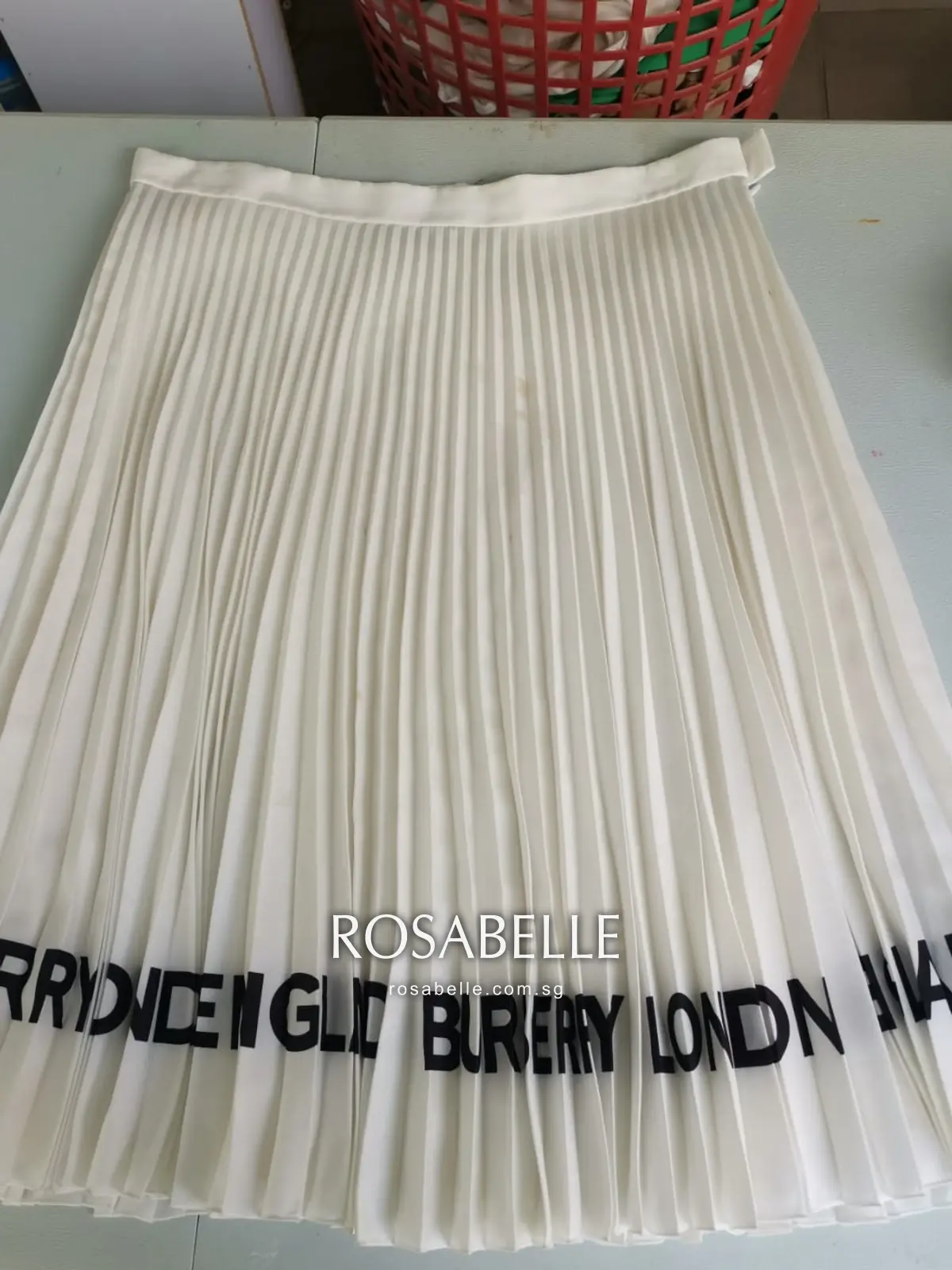
Construction also hides soil and risk. Yellowing can sit inside the folds of a pleated skirt while the surface looks clean. Dye from a cloth used on a jacket's buttons can move into the bouclé around them. Heat-set pleating is fixed into the fabric when it is made, so heat and handling are kept to what the set will stand. Those are the cases in the examples below, and they are why removing a mark is always weighed against preserving the garment.
We've cared for pieces from Hermès, Dior, Brioni and Louis Vuitton, and from Singapore designers such as Ong Shunmugam and Laichan.
What counts as couture or delicate care?
Anything whose fabric, construction or trim would not survive a standard cycle, or that you would rather not trust to one. Guide prices follow the normal garment list, and genuinely complex pieces are quoted on inspection.
Designer ready-to-wear
Pieces from international houses and independent designers. A designer name does not change the method; the fabric and the construction do, so each piece is assessed as a garment rather than by its label.
Silk, linen and cashmere
Silk is a protein fibre that water-spots and can lose its lustre or bleed dye if it is handled wrongly, so it is assessed for dye stability before anything else. Cashmere, like wool, has surface scales that lift when the fibre is wet and warm and lock together under agitation, so heat and agitation are kept off it. Linen creases readily and is finished by hand.
Structured tailoring
Canvas, interlining and shoulder construction sit under the face cloth and move differently in water, so tailoring usually goes to solvent. Finishing is by hand, to put the line back rather than press the panel flat.
Pleated garments
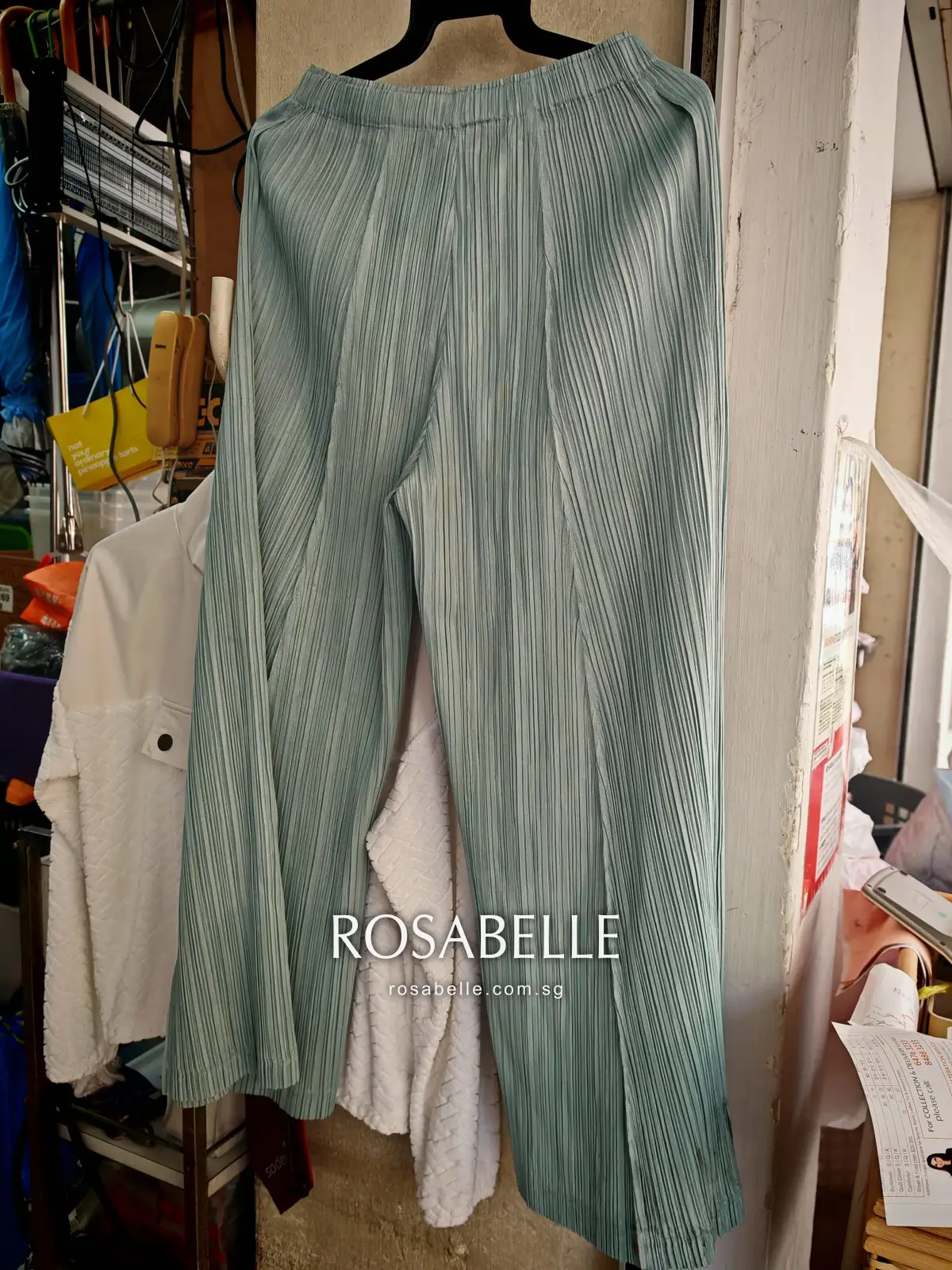
Heat-set pleating is fixed into the cloth when it is made, and an ordinary press cannot put it back once it is lost. Soil also collects inside the folds, out of sight. Heat and handling are kept to what the set will stand, and the pleats are finished by hand.
Beading, sequins and embroidery
Some beads and sequins react to standard dry-cleaning solvent, so the most fragile trim sets the method, not the fabric. We check each embellishment during assessment, and where a trim looks at risk we flag it to you before cleaning starts. Not every weakness shows beforehand, but we point out what we can see.
Mixed-material pieces
Leather against cotton, a silk rib against wool, metal hardware against a pale cloth. The piece is cleaned as one garment, to the tolerance of its most sensitive part. Where most of a piece is hide or fur, it goes to our separate leather process instead.
Traditional and ceremonial garments
Traditional pieces are core to what we do, and they often pair a delicate fabric with beading, sequins, metallic thread or pankou buttons, each protected and hand-finished individually.
Cheongsam and qipao
A knee-length cheongsam is from $25 dry-cleaned, and we regularly care for couture cheongsams from Singapore designers. Cheongsam construction rewards a cleaner who understands it: the fit, the piping and the pankou buttons are all finished by hand.
Kebaya, baju kurung, sari and kua
Assessed on the same terms as any delicate piece: the fabric, the trim and the construction decide the method. They follow the normal garment list, and genuinely complex pieces are quoted on inspection.
Service facts
- Covers
- Designer and couture pieces, silk, linen, cashmere, tailoring, pleats, beading, traditional dress
- Prices
- Dress from $15, cheongsam from $25, evening dress from $45
- Complex pieces
- Quoted on inspection
- Methods
- Dry cleaning, professional wet cleaning or hand work, chosen per piece
- Finishing
- Hand pressed
- Cleaned
- In-house at our Queenstown facility
- Turnaround
- Five working days and upwards; restoration three weeks and up
- Access
- Drop off at Orchard or Queenstown, or islandwide pickup and delivery
How we choose the cleaning method
Every piece is assessed on its fibre, construction, trims, colour and soiling, then cleaned with solvent, water, or a combination, whichever the garment actually needs.
Solvent lifts oil and grease without swelling fibres the way water does, which is why structured tailoring, wool, silk and dye-sensitive pieces usually go to solvent. Water is better on water-soluble soil, such as perspiration and most food and drink.
For those pieces we run a dedicated professional wet-cleaning process, on an Electrolux Professional Lagoon system. The Woolmark Company has endorsed Lagoon wet cleaning, and Electrolux cites independent tests by the Hohenstein Institute showing the system keeps fabric shape, colour and texture on a par with solvent cleaning over repeated cycles. That endorsement belongs to the system, not to our shop, and it does not replace assessment of the garment in front of us.
Some pieces are worked by hand instead. A dry-clean-only label is checked against the garment rather than followed automatically; where the label and the garment disagree, we follow the garment in front of us and tell you what we are doing.
How couture garment care works, step by step
Every piece goes through the same stages. What changes is the method, and that is decided at assessment rather than at the machine.
-
Receipt and itemising
Everything is counted in and recorded against your order, whether it came over the counter at Orchard or Queenstown or off the van.
-
Assessment of fibre, construction and trim
Fibre, construction, trims, linings, colour and the care label are read together with whatever soil is actually on the garment. The most fragile part sets the method, and any trim that looks at risk is flagged to you before cleaning starts.
-
Stain treatment where a mark needs it
Specific marks are worked before general cleaning rather than after, because a general cycle can set some stains and make them harder to reach.
-
Cleaning
In solvent, through the wet-cleaning process, or by hand, whichever was chosen at assessment.
-
Hand pressing and finishing
Pressed and finished by hand, piece by piece: collars, pleats, piping and tailoring put back to their line rather than pressed flat.
-
Final inspection, then return
Every piece is checked before it goes back. If something did not come out, we tell you what we saw rather than returning it quietly.
Why Rosabelle hand-presses
A pressing machine treats every garment the same way; a trained hand reads the seams, the fabric and the construction before the iron ever touches it. That is how collars keep their roll, pleats keep their edge, and delicate fibres are spared heat they do not need.
Pressing is finishing, not cleaning. It does not make a cleaning method safer; the method is chosen at assessment. What pressing decides is how the garment looks and sits when it comes back. Learning to press properly takes years of daily practice, and it is the least visible part of our work.
How much couture garment care costs and how long it takes
Guide prices follow the normal garment list. Silk, linen, embellished and other delicate materials may carry an additional charge, always confirmed with you before cleaning, and genuinely complex pieces are quoted on inspection.
Five working days and upwards for a routine clean, depending on the complexity of the piece and the scope of the work. Hand-pressing and delicate construction take longer than a standard clean, and restoration work typically runs three weeks and up. We'll give you a timeline at drop-off. Bridalwear is booked separately, since wedding gown cleaning carries its own inspection, pricing and turnaround.
Guide pricing — dry-clean, from
- Dress$15
- Shirt / blouse$10
- Coat / jacket$20
- Jacket — long$25
- Cheongsam (knee length)$25
- Shawl / scarf$20
- Evening dress$45
Examples from our Singapore workshop
All cases & guidesDocumented designer and couture pieces from our own workshop. Each result belongs to that garment and its condition, not an outcome to expect from every piece.
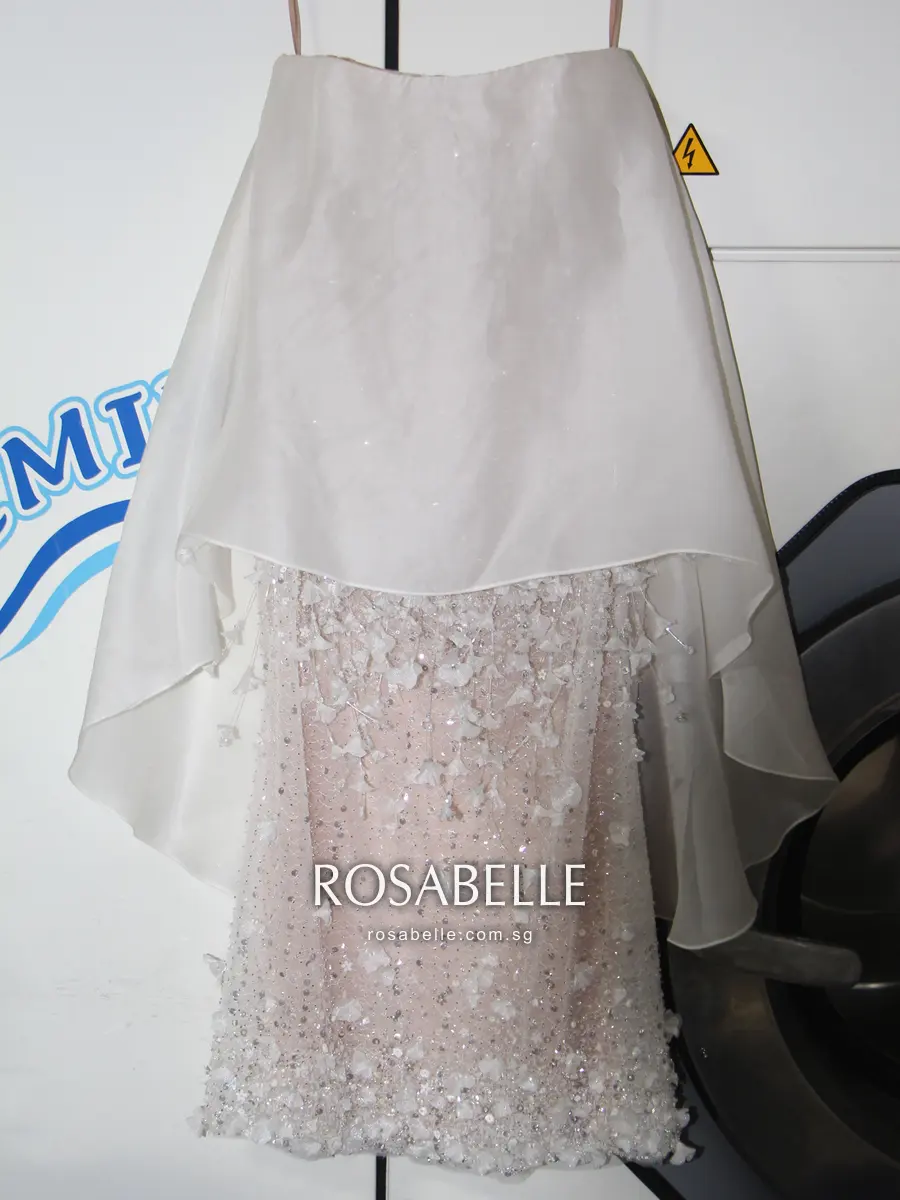 Couture
Phan Huy couture mini dress: hand cleaned and finished
Sequins and applied fabric petals under a chiffon outer layer, with no care label. Hand worked with the beadwork protected, and finished by hand pressing and steaming.
Couture
Phan Huy couture mini dress: hand cleaned and finished
Sequins and applied fabric petals under a chiffon outer layer, with no care label. Hand worked with the beadwork protected, and finished by hand pressing and steaming.
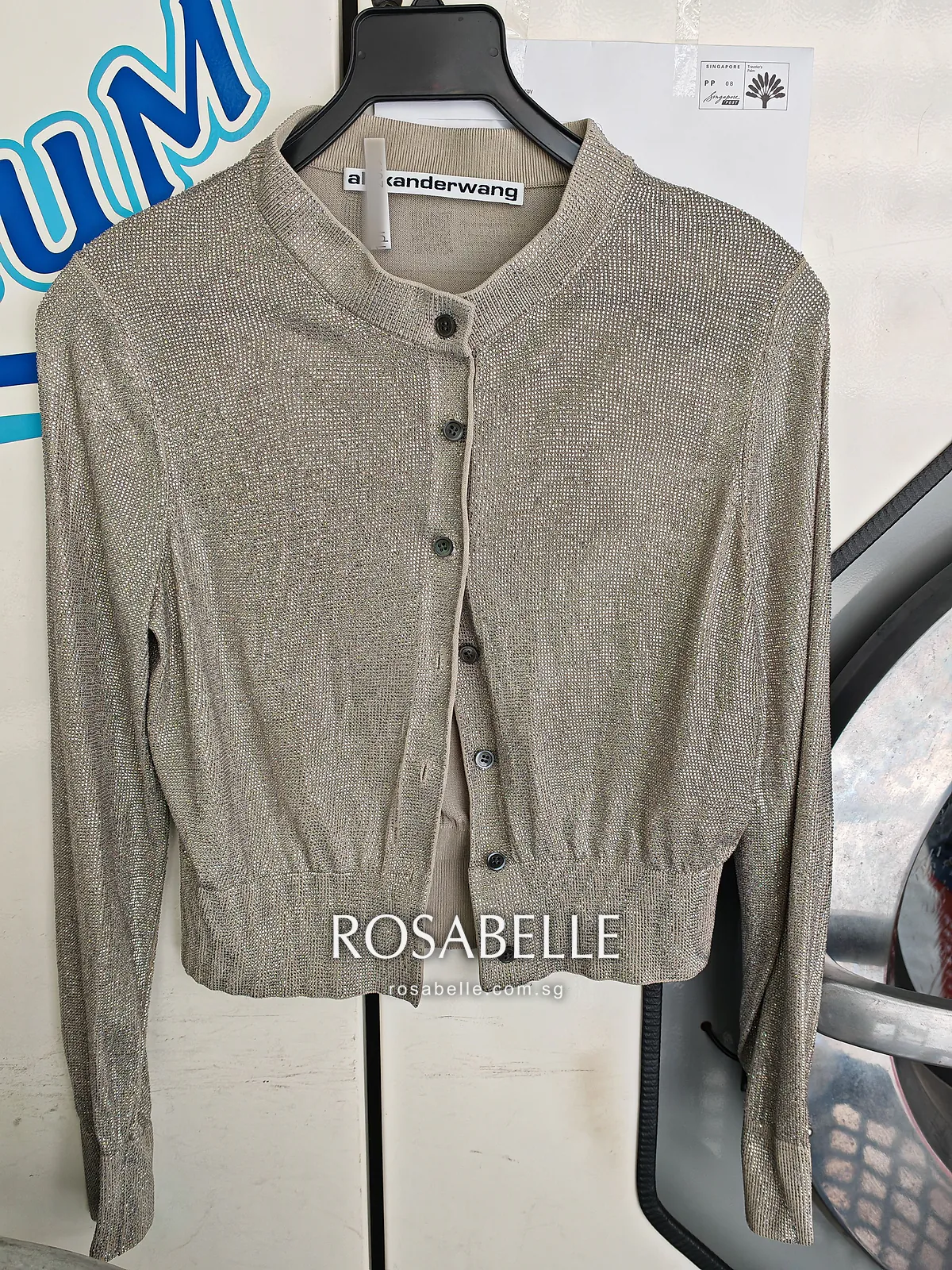 Knitwear
Alexander Wang crystal hotfix cardigan: routine clean
A viscose knit covered in clear beads fixed by heat. Cleaned with heat and friction kept off the beads, and returned with every bead in place.
Knitwear
Alexander Wang crystal hotfix cardigan: routine clean
A viscose knit covered in clear beads fixed by heat. Cleaned with heat and friction kept off the beads, and returned with every bead in place.
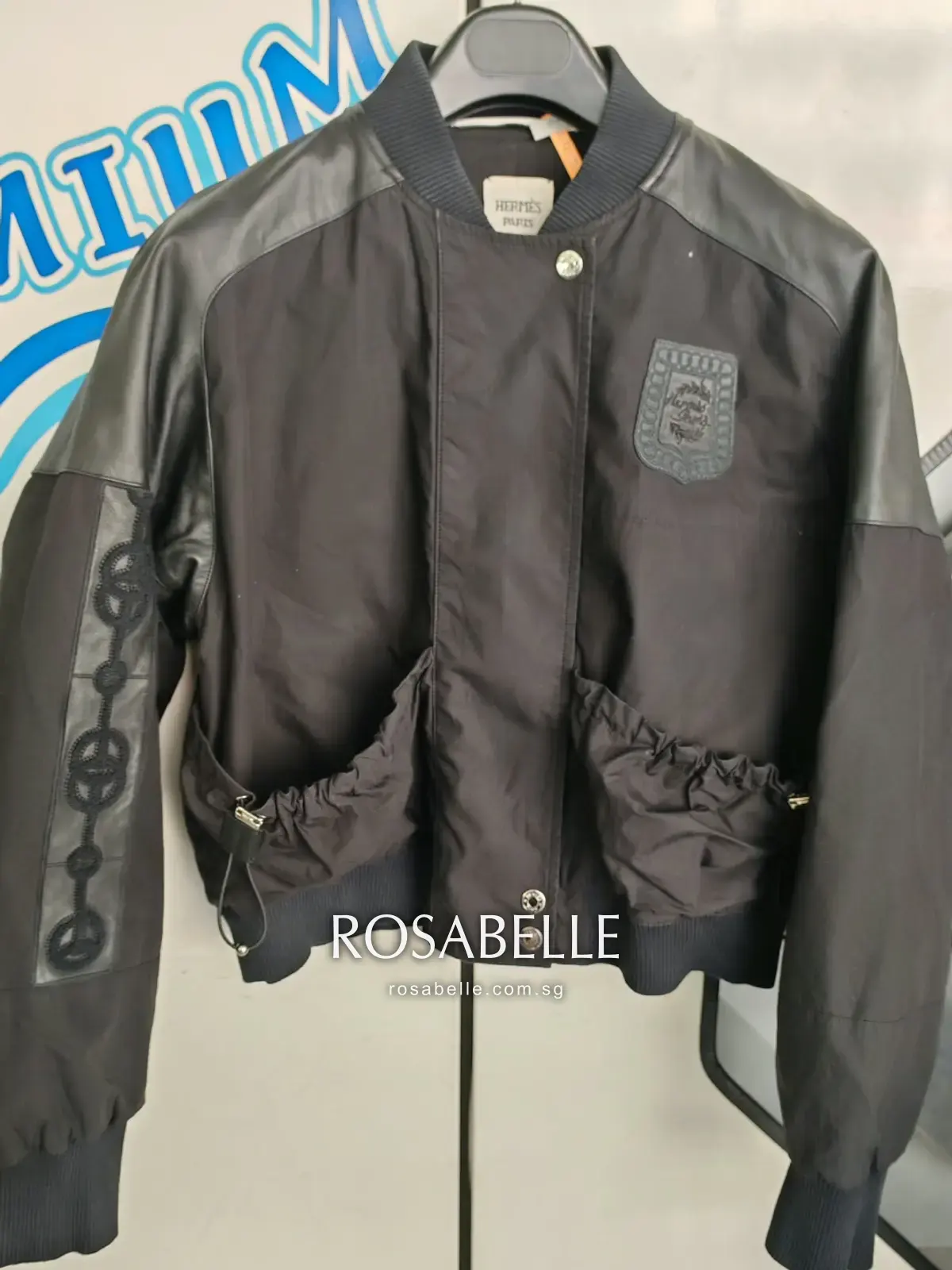 Leather & fur
Hermès bomber: nine materials cleaned as one piece
Lambskin, cotton, a silk rib and four embroidery threads. The least tolerant part set the method for the rest.
Leather & fur
Hermès bomber: nine materials cleaned as one piece
Lambskin, cotton, a silk rib and four embroidery threads. The least tolerant part set the method for the rest.
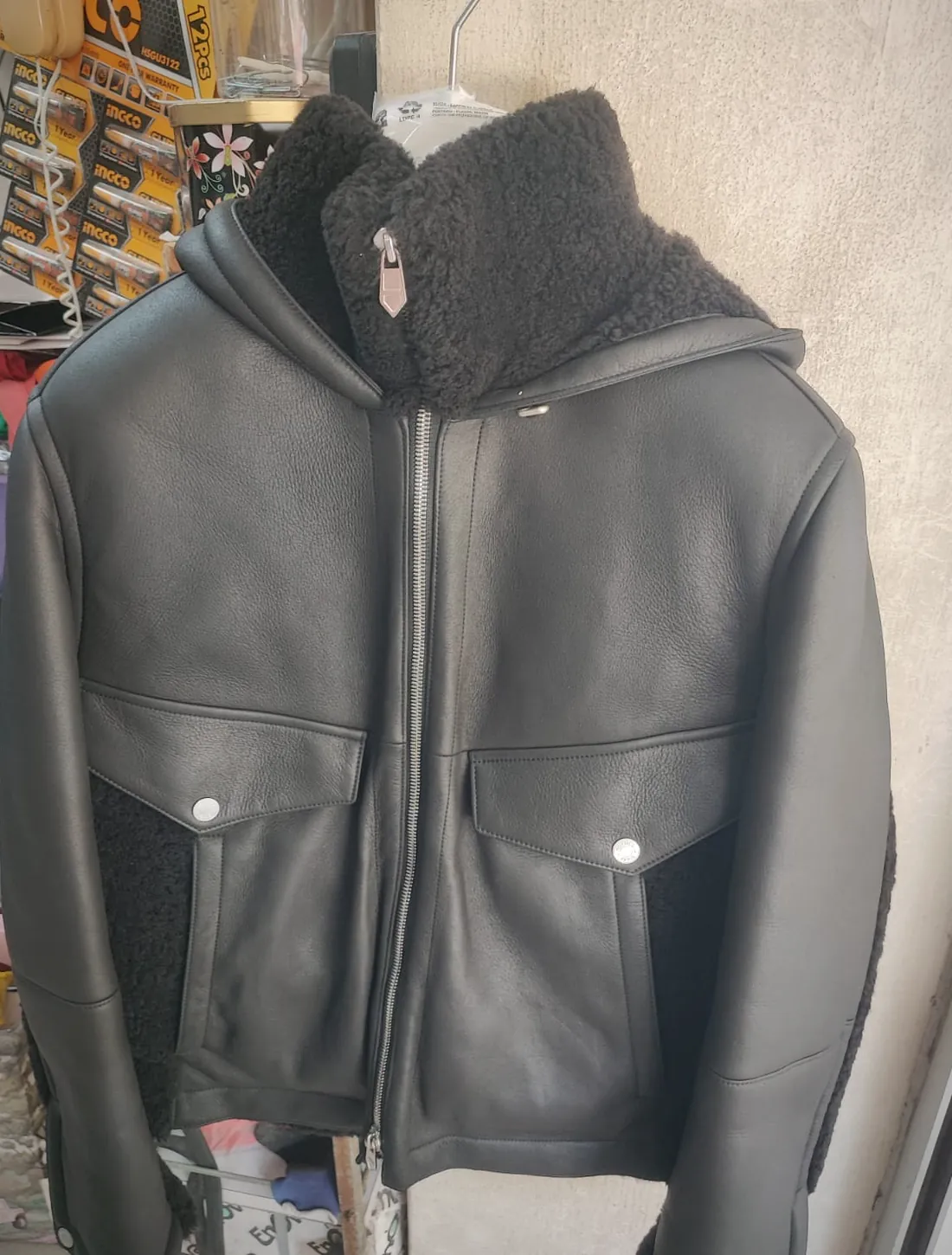 Leather & fur
Hermès shearling jacket: routine cleaning and conditioning
A designer piece that is mostly double-faced lambskin, so it went to the leather process rather than the couture route.
Leather & fur
Hermès shearling jacket: routine cleaning and conditioning
A designer piece that is mostly double-faced lambskin, so it went to the leather process rather than the couture route.
 Stain removal
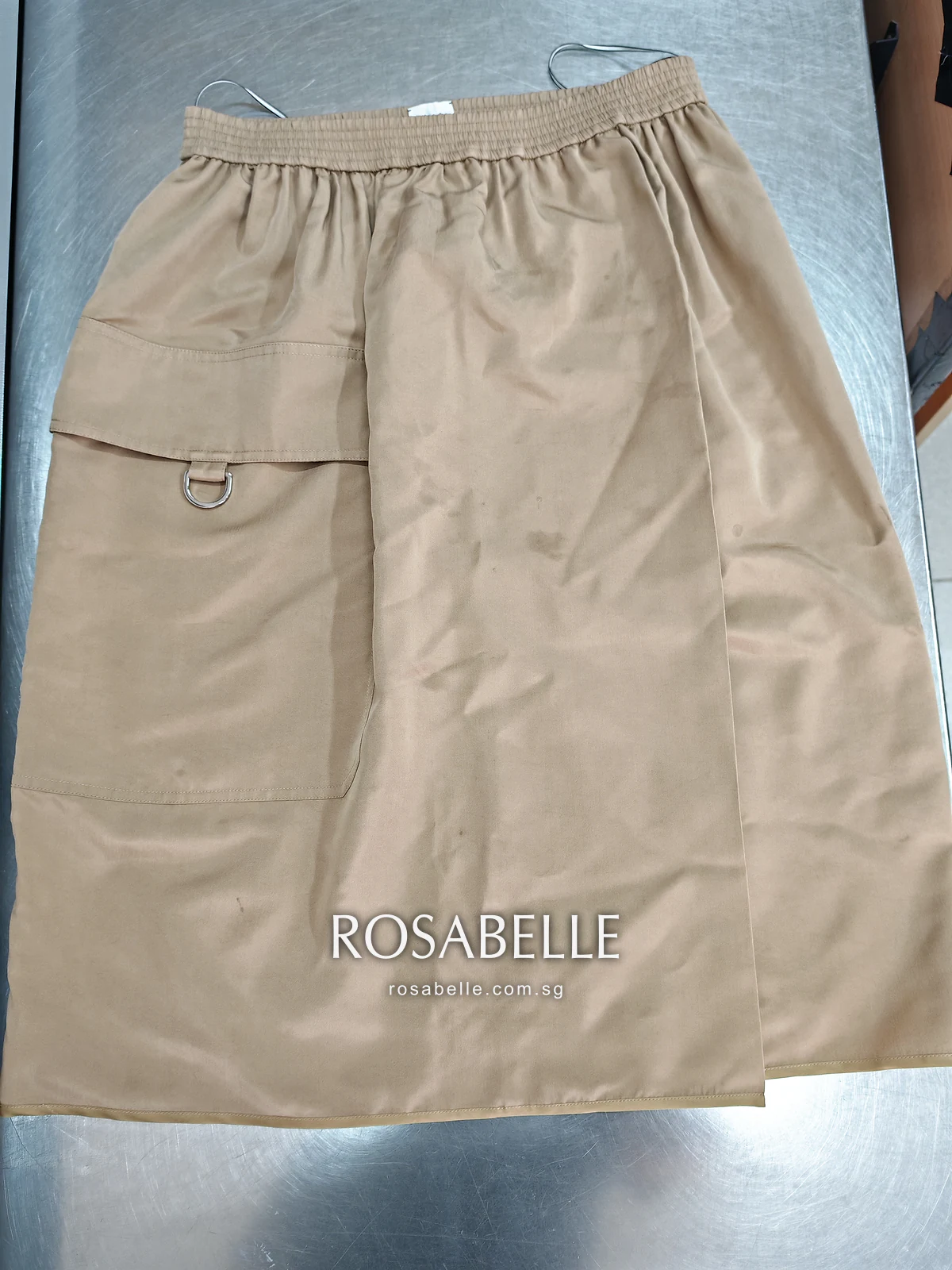
Hermès silk skirt: food-stain removal
Food spots on an almost new 100% silk skirt whose label rules out washing and professional wet cleaning, all removed.
Stain removal
Hermès silk skirt: food-stain removal
Food spots on an almost new 100% silk skirt whose label rules out washing and professional wet cleaning, all removed.
 Stain removal
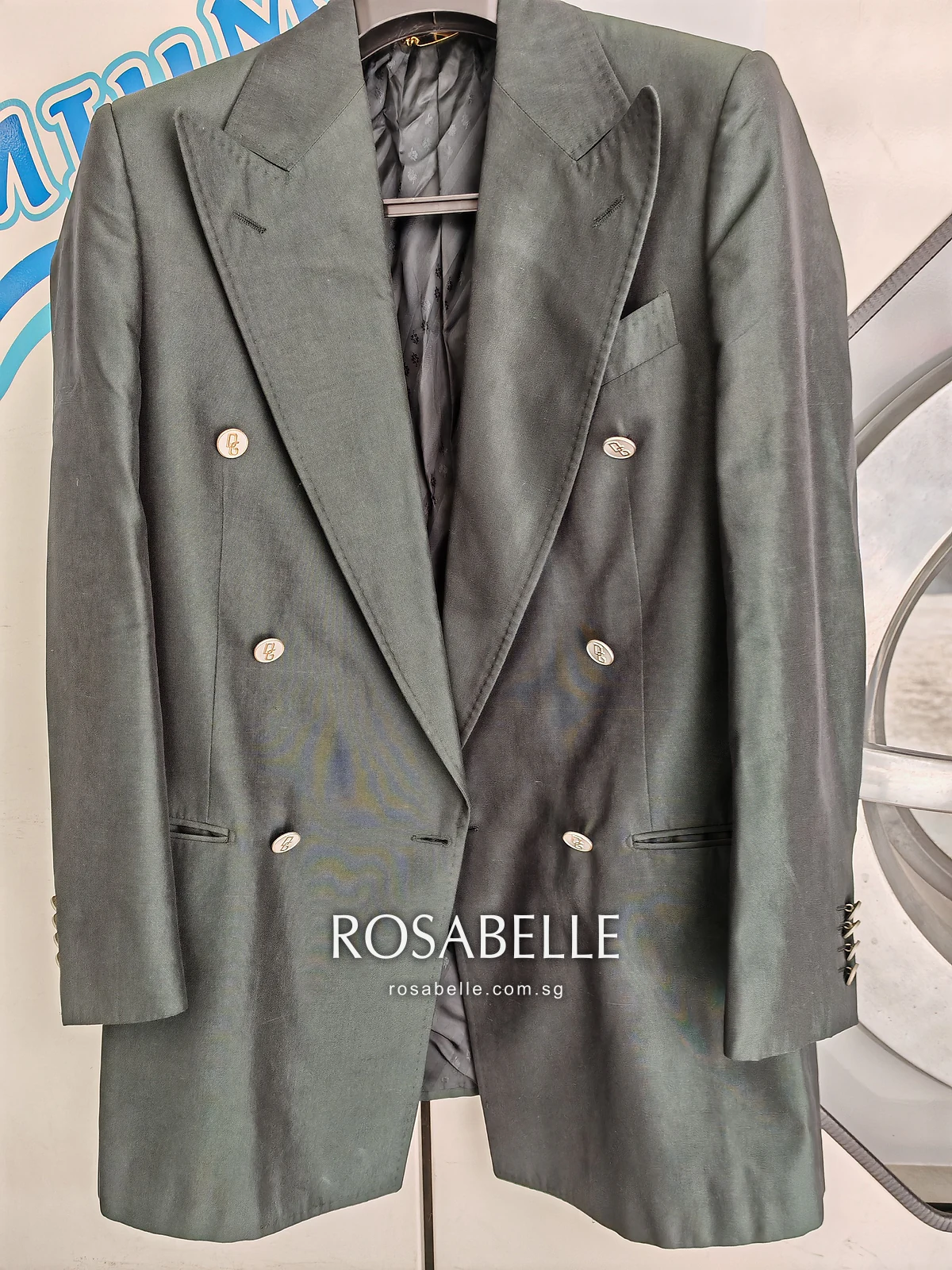
Dolce & Gabbana silk coat: coconut oil
A large patch of coconut oil on a silk lapel, already rubbed with a stain wipe. The oil came out completely.
Stain removal
Dolce & Gabbana silk coat: coconut oil
A large patch of coconut oil on a silk lapel, already rubbed with a stain wipe. The oil came out completely.
 Stain removal
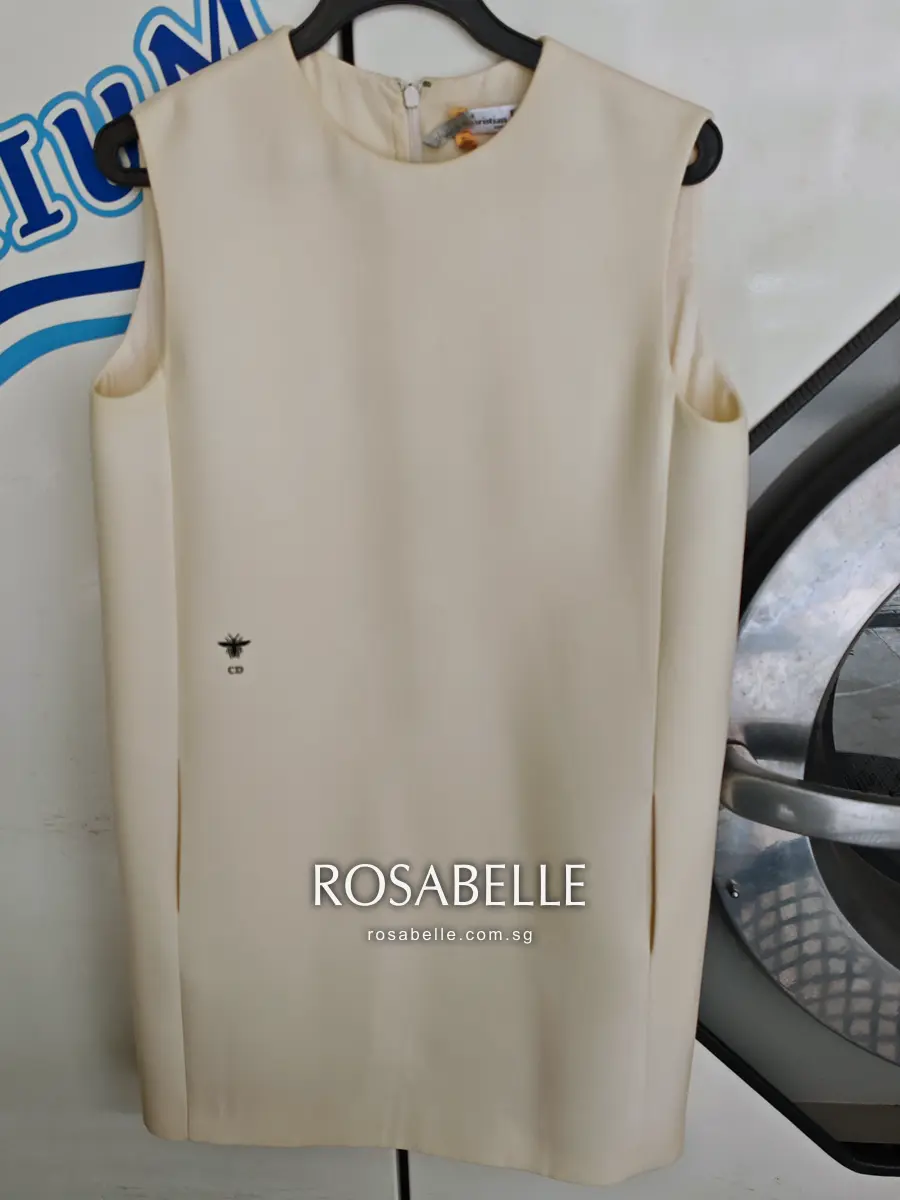
Christian Dior wool and silk dress: watermark and yellowing
Storage yellowing, underarm rings and a hem watermark on a silk-lined dress. What was removed, and the faint trace that remains.
Stain removal
Christian Dior wool and silk dress: watermark and yellowing
Storage yellowing, underarm rings and a hem watermark on a silk-lined dress. What was removed, and the faint trace that remains.
 Stain removal
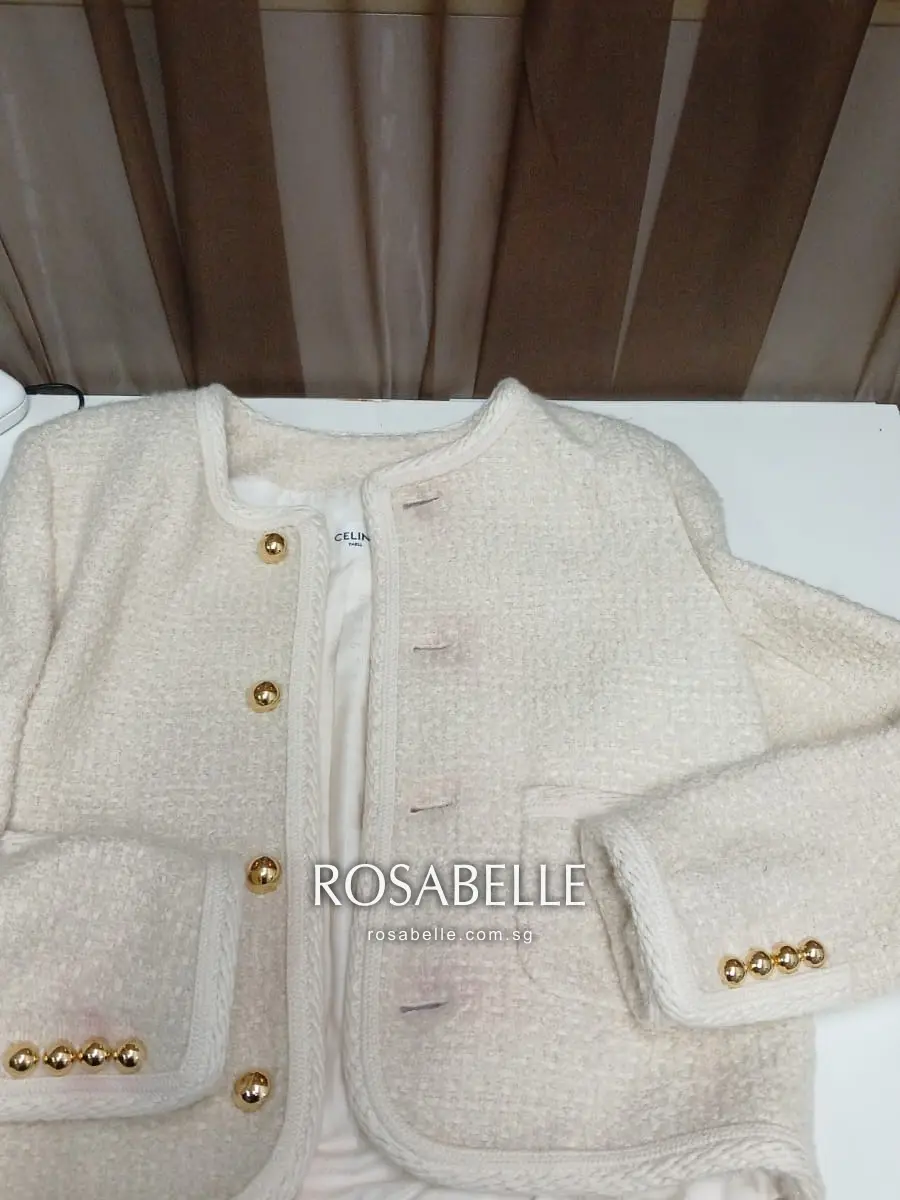
Celine bouclé jacket: colour run from a cleaning cloth
Dye from a damp cloth used on the gold buttons moved into cream bouclé. On this jacket the pink came out completely.
Stain removal
Celine bouclé jacket: colour run from a cleaning cloth
Dye from a damp cloth used on the gold buttons moved into cream bouclé. On this jacket the pink came out completely.
 Stain removal
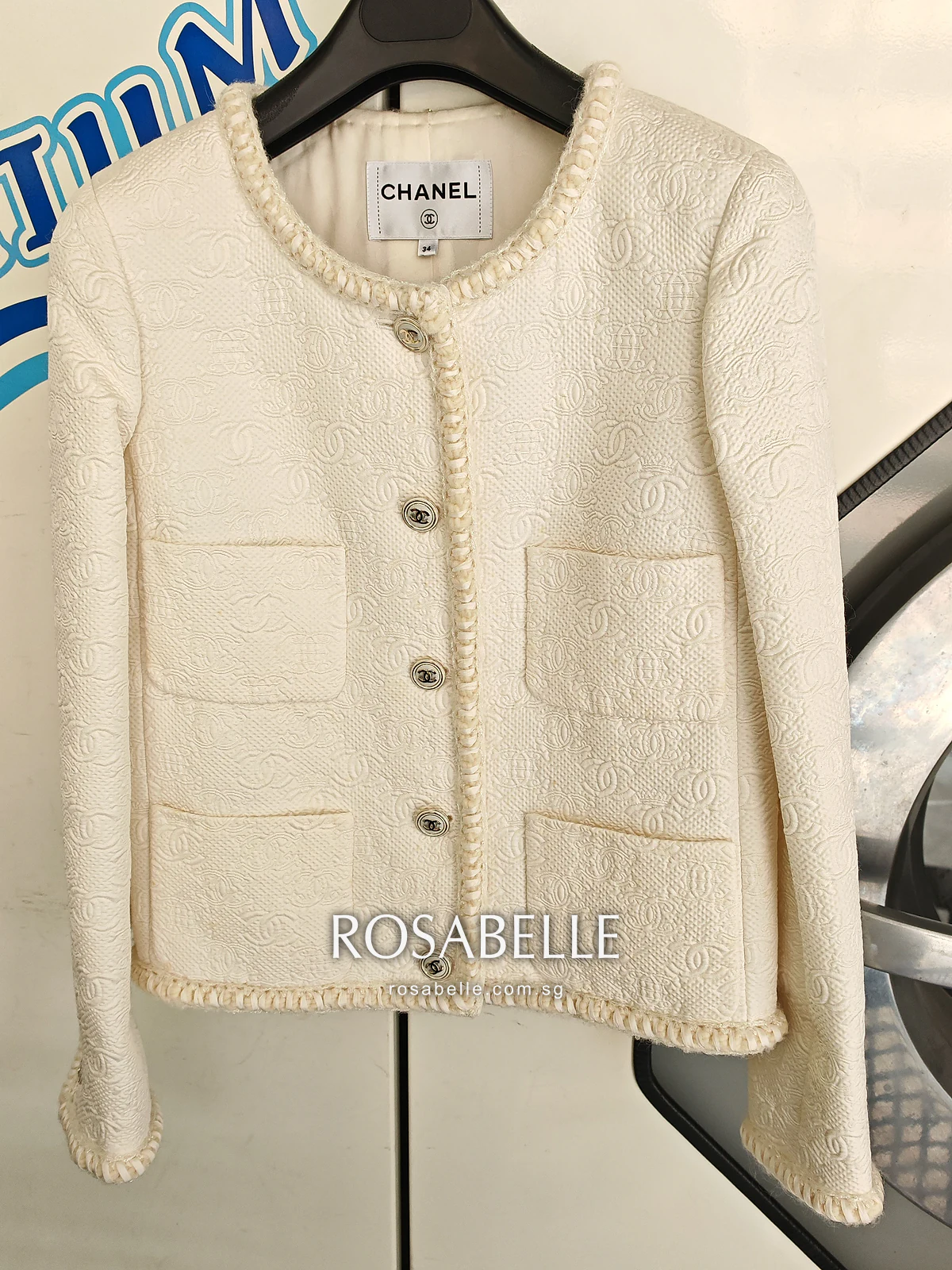
Chanel wool and silk jacket: yellow spots from storage
Four years unworn in storage left yellow spots on a cream jacket. The spots lifted, with the cut, braid and silk lining unchanged.
Stain removal
Chanel wool and silk jacket: yellow spots from storage
Four years unworn in storage left yellow spots on a cream jacket. The spots lifted, with the cut, braid and silk lining unchanged.
 Stain removal
Issey Miyake Pleats Please: heavy soiling, pleats kept
Heat-set pleating cannot be ironed back once it is gone, and that decided how the soiling was handled.
Stain removal
Issey Miyake Pleats Please: heavy soiling, pleats kept
Heat-set pleating cannot be ironed back once it is gone, and that decided how the soiling was handled.
 Stain removal
Burberry pleated skirt: yellowing inside the pleats
Clean on the surface and yellow inside the folds, cleared without flattening the pleating.
Stain removal
Burberry pleated skirt: yellowing inside the pleats
Clean on the surface and yellow inside the folds, cleared without flattening the pleating.
 Outerwear
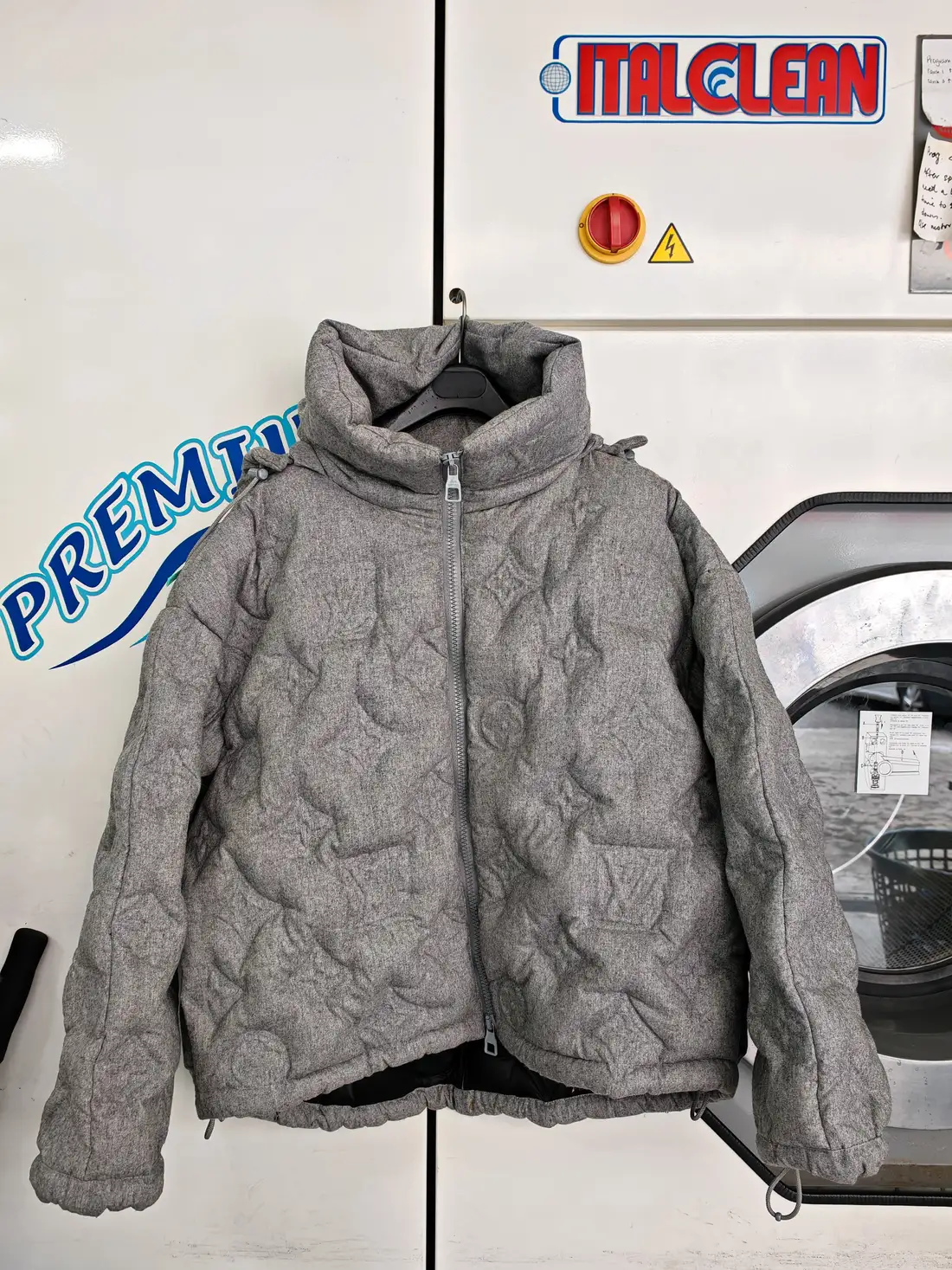
Louis Vuitton puffer: the monogram kept
A monogram embossed into the cloth over down fill, cleaned and re-lofted without flattening the embossing.
Outerwear
Louis Vuitton puffer: the monogram kept
A monogram embossed into the cloth over down fill, cleaned and re-lofted without flattening the embossing.
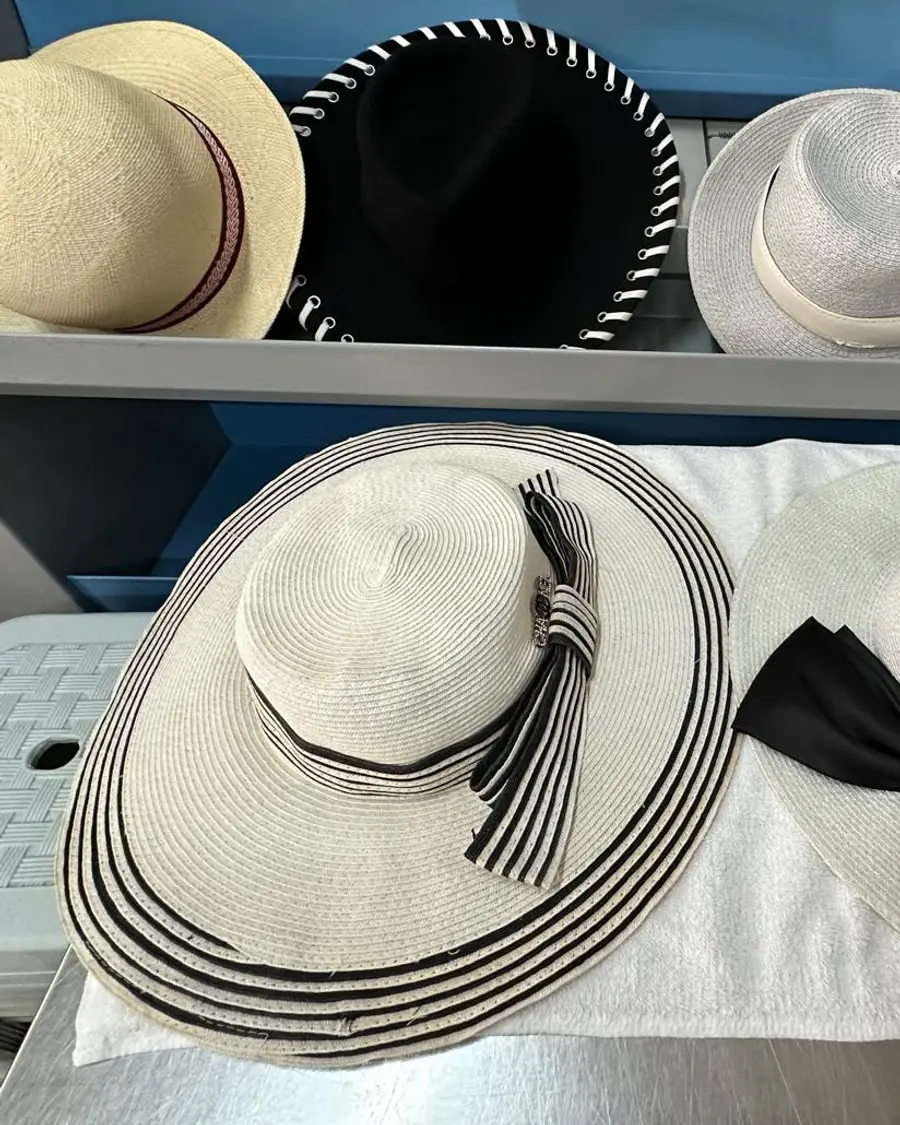 Accessories
Designer hats: straw, felt and cotton after storage
Chanel, Hermès, Balenciaga, Prada and SMFK, cleaned by hand over the block rather than washed.
Accessories
Designer hats: straw, felt and cotton after storage
Chanel, Hermès, Balenciaga, Prada and SMFK, cleaned by hand over the block rather than washed.
In their words
What customers say
"I had two put on really stained kimono and the work they did was amazing. I wouldn't have believe it was possible before I saw it. Highly recommended"
"This place saved my sweater which was growing yellow stains from age!"
"Fantastic dry cleaning quality! Best in Singapore. Wool and silk are taken care of professionally."
What we do not promise
Cleaning takes soil out; it does not put back what has gone. Dye that has faded from light or wear has left the fibre. Heat-set pleating that has already been pressed or washed out is a change in how the cloth was set, not a crease. A bead or sequin whose coating has already failed, or a thread that has already weakened, is damage rather than soiling, and some of those weaknesses do not show until the garment is handled. We check during assessment and flag what we can see. Where a mark has been in a garment for a long time, complete removal is possible on some garments but cannot be guaranteed.
Common questions
Couture and designer garment care FAQs
Do you clean designer and couture clothes?
Yes. Garments from international houses and independent designers are a regular part of our work, from Hermès, Dior, Brioni and Louis Vuitton to Singapore designers such as Ong Shunmugam and Laichan. Each piece is assessed for its fibre, construction, trims and soiling before any method is chosen, then cleaned and hand-finished in-house at our Queenstown facility. Wedding gowns, and pieces that are mostly leather or fur, go to their own dedicated processes.
Can you clean silk and linen?
Yes. Silk is a protein fibre that water-spots and can lose its lustre or bleed dye if it is handled wrongly, so it is assessed for dye stability before a method is chosen. Linen creases readily, so it is finished by hand rather than pressed flat by machine. Silk, linen and other delicate materials may carry an additional charge, always confirmed with you before cleaning.
Can pleated garments be cleaned without losing the pleats?
Pleats hold because of how the fabric was set. Heat-set pleating, such as Issey Miyake Pleats Please, is fixed into the cloth when it is made, and an ordinary press cannot put it back once it is lost, so heat and handling are kept to what the set will stand. Soil can also collect inside the folds where the surface looks clean, as it did on a cream Burberry pleated skirt that was yellow inside its pleats. Each pleated garment is assessed before cleaning, and the pleats are finished by hand.
Are embellished or beaded garments safe to clean?
Some beads and sequins react to standard dry-cleaning solvent, so the method is chosen for the most fragile trim on the garment, not for the fabric alone. We check each embellishment during assessment, and where a trim looks at risk we flag it to you before cleaning starts. Not every weakness shows beforehand, but we point out what we can see.
Do you clean cheongsam, kebaya and other traditional garments?
Yes. Traditional and ceremonial pieces are core to what we do, from cheongsam and qipao to kebaya, baju kurung, sari, kua and beaded evening wear. These often pair delicate fabric with beading, sequins, metallic thread or pankou buttons, each protected and hand-finished individually. A knee-length cheongsam is from $25 dry-cleaned, and we regularly care for couture cheongsams from Singapore designers. Other pieces follow the normal garment list, and genuinely complex pieces are quoted on inspection.
What does hand pressing mean in practice?
A trained presser works each garment individually with an iron, adjusting heat and pressure to the fabric and construction, rather than a machine applying one setting to everything. Pressing is finishing, not cleaning: it does not make a cleaning method safer, but it is how collars keep their roll, pleats keep their edge and tailoring keeps its line. It takes longer, and it is the least visible part of our work.
How do you choose between wet cleaning and dry cleaning for a delicate garment?
The garment decides. Solvent lifts oil and grease without swelling fibres the way water does, which is why structured tailoring, wool, silk and dye-sensitive pieces usually go to solvent. Water is better on water-soluble soil such as perspiration and most food and drink, and our professional wet cleaning runs on an Electrolux Professional Lagoon system under controlled conditions. Beads, sequins and other trims can react to solvent, so the most fragile part of the piece sets the method for the whole garment. A dry-clean-only label is checked against the garment rather than followed automatically.
How much does couture garment care cost?
Guide prices follow the normal garment list: a dress from $15, a shirt or blouse from $10, a coat or jacket from $20, a long jacket from $25, a knee-length cheongsam from $25, a shawl or scarf from $20 and an evening dress from $45. Silk, linen, embellished and other delicate materials may carry an additional charge, always confirmed with you before cleaning. Genuinely complex pieces are quoted on inspection.
How long does couture cleaning take?
Five working days and upwards for a routine clean, depending on the complexity of the piece and the scope of the work. Hand-pressing and delicate construction take longer than a standard clean, and restoration work typically runs three weeks and up. We'll give you a timeline at drop-off.
Do you use gentle or environmentally friendly cleaning methods on delicate pieces?
Yes. Every piece is assessed on fibre, construction and soiling, then cleaned with solvent, water, or a combination, whichever the garment actually needs. We use environmentally friendly cleaning methods built on an organic solvent, recovered, purified and reused in a closed loop rather than released. Solvent lifts oil and grease without swelling fibres the way water does. Wet cleaning runs on an Electrolux Professional Lagoon system, a wet-cleaning system endorsed by The Woolmark Company. A dry-clean-only label is checked against the garment rather than followed automatically.