
Bedding & home · Singapore
Duvet & Bedding Cleaning in Singapore
Rosabelle cleans comforters, duvets and quilts, duvet covers, bedsheets and pillowcases, mattress protectors and toppers, blankets, bedcovers and removable sofa and cushion covers in Singapore. Everything is priced by size, from Single to King, and cleaned in-house at our Queenstown facility.
Bedding is assessed by fill and construction before anything is decided, because down, wool, silk and microfibre behave differently in water and in drying. Silk sheets and pillowcases are quoted after inspection and cleaned the way the piece requires, not to a standard cycle.
Standard turnaround is five working days and upwards. Bulky bedding can be dropped at Orchard or Queenstown, or collected through our islandwide pickup and delivery.
Fresh sheets are only half the story.
What bedding do we clean?
If it goes on a bed, it can come to us. What changes between the items is the method, the drying and the price.
Comforters, duvets and quilts
Cleaned by fill rather than by name, dry-cleaned or laundered, and priced by size. A comforter used without a quilt cover takes everything a sheet would otherwise absorb, so it needs cleaning more often than most people think.
Down, wool, silk and microfibre fills
Specialist fills are assessed individually and priced separately from standard wadding, because each one behaves differently when it is wet and when it dries.
Sheets, duvet covers and pillowcases
Cotton, linen and blends, laundered or dry-cleaned. Covers and cases are assessed for discolouration as well as soiling. Silk sets are a separate conversation, set out below.
Mattress protectors and toppers
A protector is the layer that catches perspiration before it reaches the mattress, so it is worth cleaning on a schedule. Toppers are bulky, hold a great deal of water and are dried fully before they come back.
Blankets and bedcovers
Wool, cotton and synthetic blankets, throws and bedcovers, priced by size.
Removable sofa and cushion covers
Covers that come off the frame are cleaned too, priced by seat count or size. Fitted upholstery and on-site work are not part of the service.
Bedding caught in smoke from a fire
Duvets, pillows and sheets hold smoke from a fire in your own flat or next door. Each piece is quoted before any work starts, and the quote can go to your insurer. See our guide to smoke damage and insurance claims.
Service facts
- What we clean
- Comforters, duvets, quilts, covers, sheets, pillowcases, protectors, toppers, blankets, bedcovers, removable sofa and cushion covers
- Fills handled
- Down, wool, silk, microfibre and standard wadding
- Cleaned
- In-house at our Queenstown facility
- Priced by
- Size: Single, Super Single, Queen, King
- Queen comforter
- $45 dry-cleaned, $30 laundered
- Queen specialist fill
- $65 dry-cleaned, $60 laundered
- Silk sheets
- Quoted after inspection; method chosen per piece
- Turnaround
- Five working days and upwards; about one week for pickup-and-delivery orders
- Pickup and delivery
- Islandwide; free at $100 and above, flat $20 below
Why the fill changes the method
Down, wool, silk and microfibre are four different materials that happen to end up inside similar-looking covers. Treated identically, three of them suffer.
Down
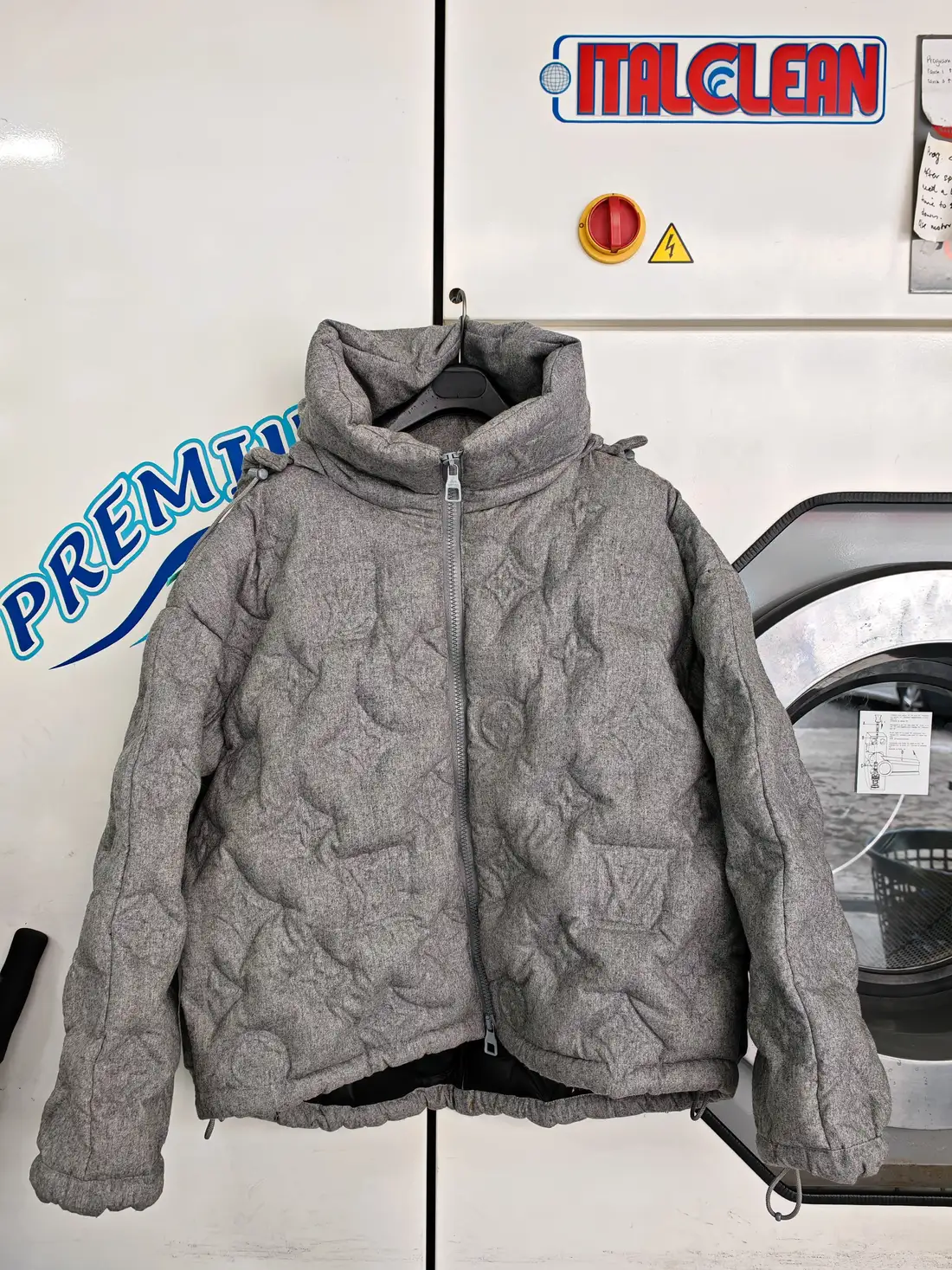
Down works by trapping air in its clusters, so warmth is a function of loft. Wet clusters clump if they are dried fast, and pressing flattens the baffles so the fill no longer sits evenly across the panels. Drying is done low and in stages, and the loft is worked back rather than crushed. A down puffer cleaned and re-lofted by hand shows the same handling on a garment.
Wool
Wool fibres carry surface scales that lift when the fibre is wet and warm; under mechanical action they lock onto neighbouring fibres in a ratchet-like mechanism that is irreversible, and the piece densifies and shrinks. That is why wet wool is not agitated freely. Wool given a shrink-resist treatment, sold as machine-washable or Superwash, has had those scales smoothed or removed, and which of the two you own is rarely obvious from the piece itself.
Silk
Silk is a protein filament, and it is damaged by strong alkalis and by chlorine, so an ordinary high-pH detergent is the wrong tool. Deterioration is also accelerated by heat and moisture, which is why silk fills are cleaned gently and dried under control rather than forced.
Microfibre and standard wadding
The most forgiving of the four, and the reason standard comforters sit at a lower price. They still need full drying: a synthetic fill that comes back damp in Singapore humidity will smell within days.
- The Woolmark Company: Caring for Wool (scales lift with heat and moisture and lock in a ratchet-like mechanism under mechanical agitation; irreversible entanglement and shrinkage)
- Canadian Conservation Institute, Note 13/11: Natural Fibres (silk is damaged by strong alkalis and is particularly vulnerable to chlorine; deterioration accelerated by heat and moisture)
Silk bedding: what you own, and why it is difficult to clean
Silk bedding is sold under a dozen names that are not describing the same thing. Two of them matter before anything is cleaned: what the fibre is, and how it was woven.
Mulberry silk and tussah silk
Mulberry silk is the cultivated filament, spun by Bombyx mori raised on mulberry leaves under controlled conditions, which is what makes it fine and even. Tussah, or wild silk, comes from Antheraea moths raised outdoors; it is darker, coarser and more irregular. Most silk bedding sold in Singapore is mulberry, but the two do not behave the same way in cleaning, and the difference is not always declared.
Charmeuse, habotai and the word "satin"
Satin is a weave, not a fibre. Charmeuse is a satin weave with a lustrous face and a matte back, which is what gives silk sheets their drape and their shine. Habotai is a plain weave, lighter and the same on both sides. A set sold as "satin" can be polyester, and polyester satin is cleaned quite differently from silk charmeuse, so we check the fabric rather than the marketing.
Momme, and why weight matters
Momme is the weight measure sellers quote for silk cloth; bedding is commonly sold in the high teens to low twenties. A heavier cloth has more silk per unit of area and takes wear better than a light one. It also holds more water, which is part of why silk bedding is handled piece by piece rather than by the load.
Why silk is difficult to clean
Silk is a protein filament held together, in its raw state, by a gum called sericin, and the things cotton shrugs off are the things that damage it. Strong alkalis and chlorine attack it, which rules out ordinary detergent and any bleach. Sunlight yellows and degrades it, and it is particularly sensitive to ultraviolet. Heat and moisture accelerate the deterioration. Rubbing silk while it is wet can leave chafing or light spots that cannot be corrected, and washing it at home risks dye bleeding, shrinkage, loss of shape and a limp or roughened surface. Weighted silk, finished with metallic salts to add body, is more fragile again.
Why clean sheets matter most on silk
Because with silk, leaving it is not neutral. Perspiration and antiperspirants contain chloride salts that can weaken silk fibres and change the colour, and a perspiration mark that is invisible on the day can oxidise and turn yellow later, with untreated staining doing lasting damage. Sweat and sebum are also the precursors of textile odour: sebum is difficult to remove once it is in the fibres and it feeds the bacteria that produce the smell, and in Singapore, where relative humidity averages over 80 per cent, that process is quick. A silk set is the one piece of bedding where a regular wash is protecting the fabric, not just freshening it.
How we clean silk bedding
It depends on the piece. We look at the fibre, the weave, the dye and the care label, and then either wet clean the set in a controlled, pH-neutral process or dry clean it. There is no single method that suits all silk, and we will tell you which route your set is taking before we start. Silk is quoted after inspection: the bedsheet and pillowcase prices on our list are the starting point, and silk costs more because of the handling it needs.
If a set has already yellowed, bring it in and we will look at it. What caused the yellowing, how long it has been there and what the fabric is all decide how much is achievable. Not always. We do our best, and we tell you what we find.
- Canadian Conservation Institute, Note 13/11: Natural Fibres (cultivated Bombyx mori and wild tussah silk; fibroin and sericin; damaged by strong alkalis and chlorine; sunlight yellows and degrades silk; particularly sensitive to ultraviolet; weighted silk deteriorates faster)
- Dry Cleaning and Laundry Institute: Silk Care (perspiration and antiperspirants contain chloride salts that can weaken silk fibres and cause colour changes; rubbing silk while wet can cause chafing or light spots that cannot be corrected; home washing can cause shrinkage, fading, dye bleeding, loss of shape and a limp or rough texture)
- Brightwell, "Don't Sweat Perspiration Stain Problems", Kentucky Cooperative Extension Service (a perspiration stain may be invisible at first but can oxidise and turn yellow with time; untreated staining may severely damage silk)
- Van Herreweghen, Amberg, Marques and Callewaert, "Biological and Chemical Processes that Lead to Textile Malodour Development", Microorganisms 8(11) (2020) (sweat and sebum adsorbed on textiles as malodour precursors; sebum components hard to remove and a substrate for microbial growth)
How a bedding clean runs
The same sequence whether a set is dropped off or collected from your door.
-
Assessed by item and fill
We check the size, the fill, the construction and the care label, and look for discolouration as well as soiling. Specialist fills and silk are looked at individually.
-
Priced and confirmed
Standard items are priced from the grid by size. Silk and anything needing restoration work is quoted after inspection, before any work starts.
-
Method chosen
Laundered or dry-cleaned, at a temperature and with a detergent chosen for the fibre and the fill rather than a standard setting.
-
Cleaned in-house at Queenstown
All of it is done at our own facility by our own staff, not sent out to another laundry.
-
Dried fully and finished
Drying is the stage we do not rush, especially on down and on bulky toppers. Nothing goes back damp, because damp bedding in Singapore humidity smells within days.
-
Returned or delivered
Collect it from either outlet, or have it delivered: standard delivery orders come back in about one week from collection.
How much duvet and bedding cleaning costs in Singapore
Everything is priced by size: Single, Super Single, Queen, King. A Queen comforter is $45 dry-cleaned ($30 laundered); a Queen down, wool, silk or microfibre comforter is $65 ($65 covers the specialist fills; $60 laundered). The full grid, in all four sizes and in both dry-clean and laundry columns, is on our price list.
Silk sheets and pillowcases are quoted after inspection rather than from the grid.
Guide pricing — Queen size, dry-clean, from
- Comforter — dry-clean$45
- Down comforter$65
- Duvet cover$30
- Bedsheetfrom $20
- Mattress protector$30
- Mattress topper$130
- Silk beddingOn inspection
Examples from our Singapore workshop
More bedding & homeWhat bedding picks up over months of use, and how it comes back.
 Bedding & home
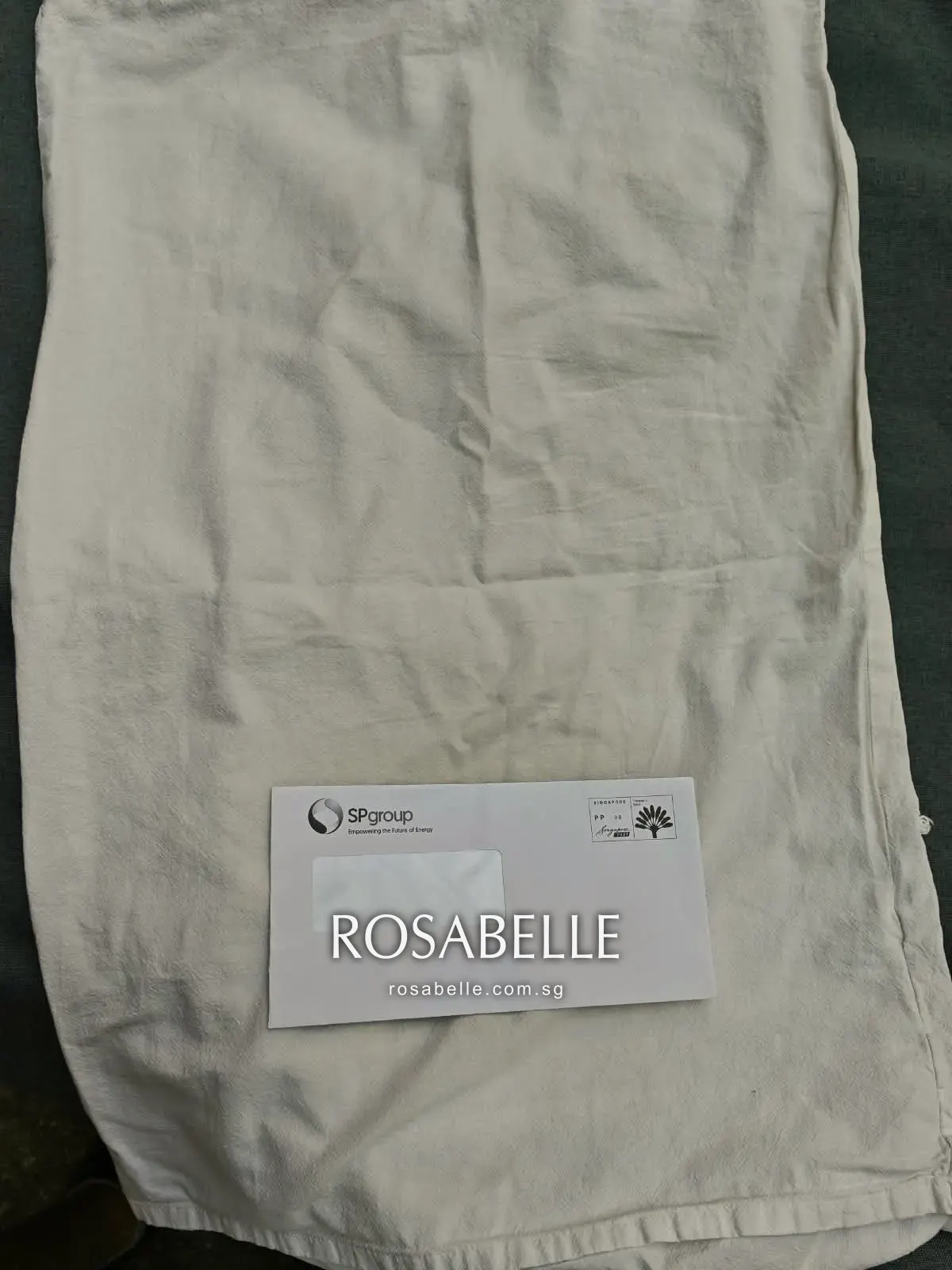
Yellowed bed linen: duvet cover and pillowcases back to white
Set yellowing from body oils and perspiration, worked in stages rather than bleached out in one pass.
 Bedding & home
Duvets and pillows: mould after sea shipping
Bedding that arrived mouldy after a relocation by sea, cleared of tide marks and stitch-line mould.
 Sofa covers & home
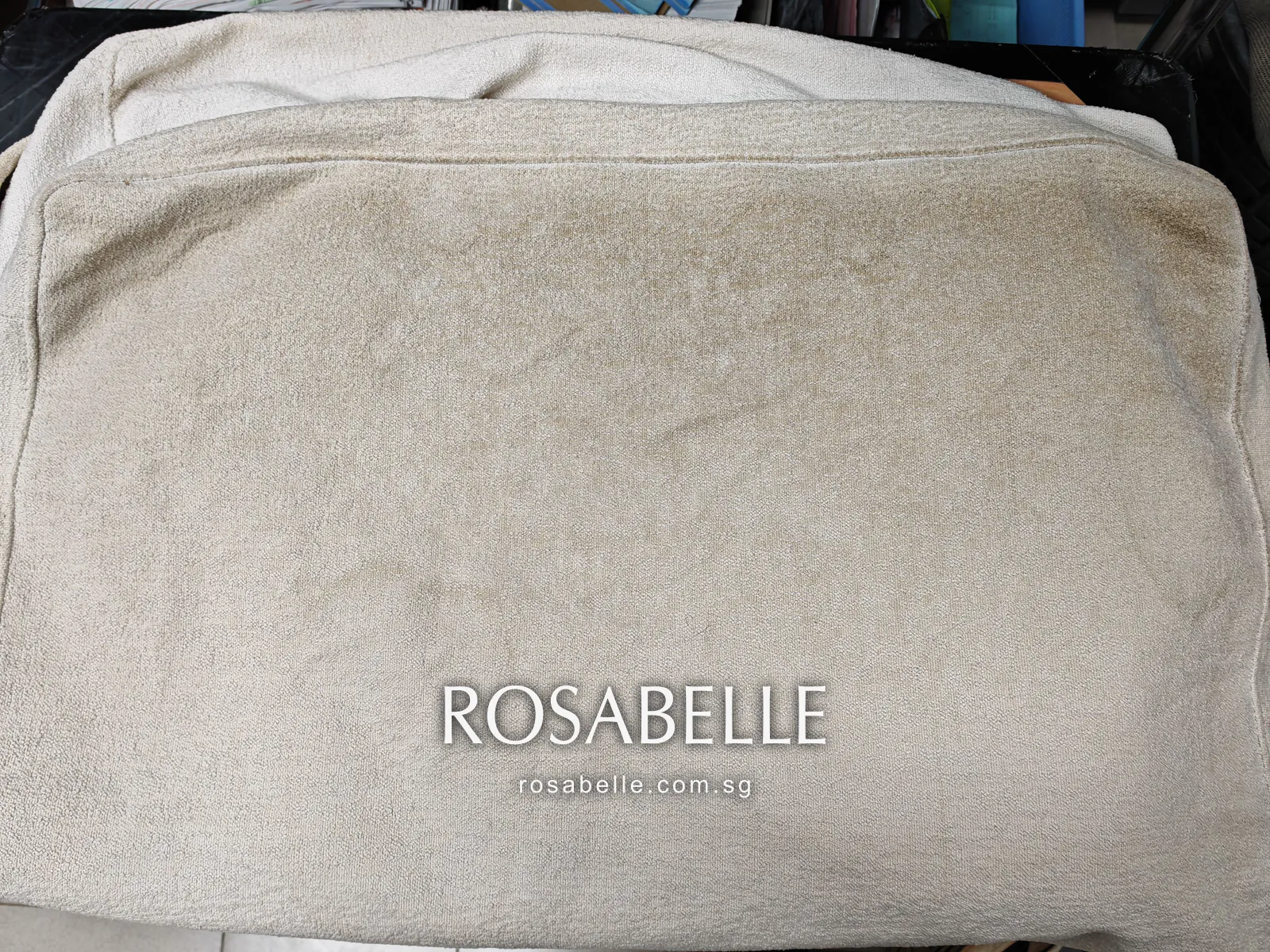
Sofa cushion covers: grey soiling and spill marks
Removable covers grey from daily use and marked by a dried spill, cleaned until both came out.
 Down & loft
Louis Vuitton puffer: down cleaned without a press
A garment rather than a duvet, but the same down handling: dried in stages and re-lofted by hand instead of pressed.
 Care guide
Wet-cleaning vs dry-cleaning: how to choose the method
Why some pieces go to water and others to solvent, and how the method is chosen for a silk or wool fill.
What we do not promise
Yellowing that has oxidised into the fibre over years is part of the cloth, not a layer on top of it. We assess the piece, tell you what we think is achievable and work in stages. Not always. We do our best, and we tell you what we find.
We do not promise that a silk set will come back identical to the day it was bought. Silk is weakened by sunlight, heat, chlorine and perspiration long before it reaches us, and cleaning cannot put back what has already gone. What we can do is choose the method for the piece and tell you the state it is in.
We do not quote a firm turnaround before we have seen the items. Five working days and upwards is the standard for drop-off, and about one week from collection for delivery orders.
Common questions
Duvet & bedding cleaning FAQs
How much does duvet or comforter cleaning cost in Singapore?
Bedding is priced by size: Single, Super Single, Queen and King. A Queen comforter is $45 dry-cleaned or $30 laundered, and a Queen down, wool, silk or microfibre comforter is $65 dry-cleaned or $60 laundered, because specialist fills are priced separately from standard ones. The full grid is on the price list.
What bedding do you clean?
Comforters, duvets and quilts, duvet covers, bedsheets and pillowcases, mattress protectors and toppers, blankets, bedcovers and removable sofa and cushion covers. Fills we handle include down, wool, silk and microfibre as well as standard polyester wadding.
Can down comforters be cleaned safely?
Yes, with fill-appropriate handling. Down works by trapping air in its clusters, so warmth is a function of loft, and wet clusters clump if they are dried fast. Drying is done low and in stages, and the loft is worked back rather than pressed flat, which is why down items are priced separately from standard fills.
Can you clean wool and silk-filled duvets?
Yes. Wool and silk fills are assessed before anything is decided, because both are protein fibres. Wool fibres carry surface scales that lift when the fibre is wet and warm and lock together irreversibly under agitation, unless the wool has had a shrink-resist treatment. Silk is damaged by strong alkalis and by chlorine, so the detergent and the process are chosen for the fill rather than set to a standard cycle.
How do you clean silk bedsheets and pillowcases?
It depends on the piece. Silk sheets are assessed first for fibre, weave, dye and what the care label says, and then either wet cleaned in a controlled, pH-neutral process or dry cleaned. There is no single method that suits all silk, and we will tell you which route a set is taking before we start.
How much does it cost to clean silk bedsheets?
Silk is quoted after inspection. The bedsheet and pillowcase prices on our list are the starting point, and silk costs more because of the handling it needs: from $20 for a Queen bedsheet dry-cleaned, with the final price confirmed once we have seen the set. Send us a photograph or bring it in and we will quote before any work starts.
Why is silk harder to clean than cotton bedding?
Silk is a protein filament, not a plant fibre, so the things cotton shrugs off matter. Strong alkalis and chlorine damage it, sunlight yellows and weakens it, and deterioration is accelerated by heat and moisture. Rubbing silk while it is wet can leave chafing or light spots that cannot be corrected, and home washing risks dye bleeding, shrinkage and a limp, roughened surface. Weighted silk, treated with metallic salts, is more fragile still.
Does sweat damage silk sheets?
It can, which is the argument for washing them rather than stretching the interval. Perspiration and antiperspirants contain chloride salts that can weaken silk fibres and change the colour, and a perspiration stain that is invisible at first can oxidise and yellow over time, with untreated staining doing lasting damage. Sweat and the sebum that comes with it are also what turns bedding stale, because sebum is hard to remove and feeds the bacteria behind the smell.
Can yellowing be removed from bedding?
Sometimes. It depends on what caused it, how long it has been there and what the fabric is: body oils and perspiration oxidise into the fibre, and once that has set the yellowing is part of the cloth rather than sitting on it. We assess the piece, tell you what we think is achievable and work in stages, as we did with a yellowed cotton duvet set. Not always. We do our best, and we tell you what we find.
How often should bedding be cleaned?
Our guidance: sheets, pillowcases and duvet covers fortnightly, a comforter used with a quilt cover every 3 to 6 months, and a comforter used without one monthly. The reason is what bedding absorbs. Sweat and the sebum that comes with it are the precursors of textile odour, sebum is hard to remove once it is in the fibres and it feeds the bacteria that cause the smell, and in Singapore, where relative humidity averages over 80 per cent, that happens faster than most people expect. Dust mite numbers also rise with humidity. These are recommendations rather than rules.
What sizes do you price by?
Single, Super Single, Queen and King. Every bedding item on the price list is graded across all four, so you can see the price for your own bed before you book.
Do you clean mattress protectors and toppers?
Yes. A Queen mattress protector is $30 dry-cleaned or $20 laundered, and a Queen mattress topper is $130 dry-cleaned or $100 laundered. Toppers are bulky and hold a lot of water, which is what the price reflects, and they are dried fully before they come back.
Do you collect bedding from homes?
Yes. Bulky bedding is exactly what our islandwide pickup and delivery is for: weekly, fortnightly or one-off. Pickup and delivery is free on standard orders of $100 and above, with a flat $20 charge below that, and standard delivery orders return in about one week from collection.
Where is the bedding actually cleaned?
In-house at our own Queenstown facility, by our own staff. Bedding is not sent out to another laundry.
How long does bedding cleaning take?
Five working days and upwards for drop-off orders, confirmed when the items are dropped off or collected. Orders that come and go through pickup and delivery return in about one week from collection.
Should bedding be dry cleaned or laundered?
Both are on the price list, and the right answer depends on the item. Laundering suits cotton and linen sheets, covers and most standard fills. Dry cleaning suits pieces that would lose their shape or their finish in water, and specialist fills are assessed individually. If you are not sure, leave it to us: we read the label and the fabric and choose the method, as set out in our wet-cleaning and dry-cleaning guide.