
Dry cleaning & laundry · Singapore
Dry Cleaning & Laundry Services in Singapore
Rosabelle provides dry cleaning, professional wet cleaning, laundering and hand pressing in Singapore for everyday clothing, workwear, shirts, tailoring, dresses, knitwear and selected delicate garments. Every piece is cleaned in-house at our Queenstown facility at 163 Stirling Road — nothing goes to a third-party plant. Drop off at Orchard or Queenstown, or book an islandwide pickup.
Each garment is assessed before a method is chosen, because the fibre, the construction and the kind of soil decide the work rather than the category the piece sits in. We run both a dry-cleaning plant and a dedicated professional wet-cleaning process, so a garment goes to solvent or to water on its merits. Stain treatment happens before general cleaning where a mark needs it, and finishing is done by hand.
Shirts are from $10 dry-cleaned or $8 laundered, trousers from $10 or $8, dresses from $15 or $13, coats and jackets from $20 or $17, and a two-piece suit from $35. Pressing only, without cleaning, is from $7. Standard turnaround is about five working days, with express available for a premium.
Everyday garments, done properly.
What is the difference between dry cleaning and laundry?
Dry cleaning washes a garment in a liquid solvent instead of water. Professional laundering washes it in water, at a controlled temperature and with detergents chosen for the fabric. Both are cleaning; what separates them is what the liquid does to the fibre and to the soil.
Water swells natural fibres. Cotton and wool take it up, expand, and can shrink, felt or distort as they dry, and construction that was built around a fabric at one size does not always survive the fabric changing size. Solvent lifts oil and grease without swelling fibres the way water does, which is why structured tailoring, wool, silk and dye-sensitive pieces usually go to solvent. Water, on the other hand, is better at the soil most everyday clothes actually carry, because perspiration, most food and most drink are water-soluble and solvent is not especially good at them.
So neither method is the better one. A shirt worn all day in Singapore is carrying salt and body soil, and belongs in water. A wool jacket carrying street dust and a dinner mark belongs in solvent. The judgement is which of those two a given garment is, and that is made at assessment rather than at the machine.
When do you need dry cleaning rather than laundry?
A working guide, not a rule that overrides the label. Where the care label and the garment disagree with the table, we follow the garment in front of us and tell you what we are doing.
| Garment or condition | Usual route | Why |
|---|---|---|
| Structured tailoring | Usually dry cleaning | Canvas, interlining and shoulder construction sit under the face cloth and move differently in water |
| Everyday washable cotton | Laundry | Water-soluble soil, and a construction that takes water without distorting |
| Wool and cashmere knitwear | Depends on the piece | Scales lift when wet and warm and lock under agitation, so felting risk sets the method |
| Silk and fine dyes | Assessed first | Water-spotting and dye bleed are the risks, so dye stability is tested before anything else |
| Heavy oil or grease | Usually dry cleaning | Solvent lifts oil and grease; water does not |
| Perspiration and most food | Usually water | The soil is water-soluble, which is the case professional wet cleaning is for |
| Leather, suede, shearling, fur | Separate leather process | Not ordinary textile cleaning, and not our garment cycle at all |
| Wedding gowns | Separate bridal assessment | Construction, beading and age are assessed as restoration work |
What garments do we clean?
Everyday clothing and tailoring in the common constructions. Each piece is assessed before a method is chosen, and the price is confirmed with you if anything about the garment changes it.
Shirts, blouses and everyday trousers
The bulk of the work. Shirts and blouses are from $10 dry-cleaned or $8 laundered, trousers, skirts, slacks and shorts from $10 or $8, and everything is hand-pressed. A shirt worn through a Singapore day is carrying salt and body soil, which is a water job more often than not.
Suits and structured tailoring
A two-piece business suit is from $35. Both halves are cleaned together even when only one looks dirty, because wool shifts tone very slightly with each clean and a jacket and trousers cleaned apart drift away from each other. Finishing is by hand so the canvas and shoulder line hold. Long jackets are from $25, and tuxedos and ethnic suits from $40 for two pieces or $47 for three.
Dresses and formalwear
Dresses are from $15 dry-cleaned or $13 laundered. Evening dresses are from $45, and beaded, embellished or heavily constructed pieces are assessed on the couture route instead, where the trim decides the method.
Wool and knitwear
Wool and cashmere have surface scales that lift when the fibre is wet and warm and lock into each other under mechanical action, which is what felting is and why it does not reverse on its own. Heat and agitation are kept off them. Sweaters are from $15 dry-cleaned or $12 laundered.
Silk, linen and delicates
Assessed for dye stability before a method is chosen, because silk water-spots and fine dyes bleed. Delicate materials may carry an additional charge, always confirmed with you before any work starts.
Pressing only, without cleaning
From $7 for a shirt or blouse. For a garment that is clean but creased, it avoids a cleaning cycle the piece does not need.
What runs on a different process
Leather, suede and fur are cleaned in-house on a completely separate process and run two weeks and upwards. Wedding gowns are assessed as restoration work, from $190. Couture and delicate pieces, winter wear, curtains, carpets and rugs and bedding each have their own page, price and timeline. Clothes caught in smoke from a fire are quoted item by item, often for an insurance claim; see our guide to smoke damage.
Service facts
- Shirts
- From $10 dry-clean, $8 laundered
- Trousers
- From $10 dry-clean, $8 laundered
- Dresses
- From $15 dry-clean, $13 laundered
- Coats & jackets
- From $20 dry-clean, $17 laundered
- Suit, two-piece
- From $35
- Pressing only
- Shirt or blouse from $7
- Methods
- Dry cleaning, professional wet cleaning or laundering, chosen per garment
- Cleaned
- In-house at our Queenstown facility, 163 Stirling Road
- Turnaround
- About five working days; express for a premium
- Access
- Drop off at Orchard or Queenstown, or islandwide pickup and delivery
How dry cleaning and laundry work, step by step
Every garment goes through the same stages. What changes between them is the method, and that is decided at the second stage rather than at the machine.
-
Receipt and itemising
Everything is counted in and recorded against your order, whether it came over the counter at Orchard or Queenstown or off the van.
-
Assessment, and a method for that piece
Fibre, construction, trims, linings, colour and the care label are read together with whatever soil or staining is actually on the garment. That is where solvent, professional wet cleaning or laundering is decided, and where anything that belongs on the leather, bridal or couture route is pulled out.
-
Stain treatment where a mark needs it
Specific marks are worked before general cleaning rather than after, because a general cycle can set some stains and make them harder to reach. What a mark responds to depends on what it is and how long it has been there.
-
Cleaning
In solvent, through the wet-cleaning process or in the laundry, by whichever was chosen at assessment.
-
Hand finishing
Pressed and finished by hand. On tailoring that means working the canvas and the shoulder line back rather than flattening the panel; on shirts it is the collar, cuffs and placket.
-
Final inspection, then return
Every piece is checked before it goes back. If something did not come out, we tell you what we saw rather than returning it quietly.
Assessment always comes first, and our read on your garment applies only to that garment.
Why clothes are cleaned before they are put away
The most common damage we see on a garment that has been in storage was not there when it went in. Perspiration, skin oils and food traces are invisible on the day a piece is hung up, and they do not stay inert.
Sweat and sebum transferred from skin into cloth are the precursors that skin bacteria convert into odour compounds, and sebum in particular is difficult to wash out of synthetic fabrics, so fatty residue that survives a wash stays available as a substrate. Clothes moth larvae feed on wool, furs and stored woollens, and fabric carrying food, perspiration or urine stains is more subject to damage than clean fabric. Woolmark states it directly: food stains and body oils attract moths, so a wool garment should be clean before it is packed away. Singapore sharpens all of it, with relative humidity averaging over 80 per cent.
So the order matters. Clean the garment, dry it completely, then store it loose, dark and breathable rather than sealed. Rosabelle does not offer garment storage; this is guidance for your own wardrobe.
- The Woolmark Company: Caring for Wool
- University of California Statewide IPM Program: Clothes Moths
- Van Herreweghen, Amberg, Marques and Callewaert, "Biological and Chemical Processes that Lead to Textile Malodour Development", Microorganisms 8(11) (2020)
- Canadian Conservation Institute: Agent of deterioration: pests
- Meteorological Service Singapore: Climate of Singapore
How much dry cleaning costs and how long it takes
Standard turnaround is about five working days for ordinary garments. Express is available for a premium, including same working-day service at our Orchard outlet, where same-day dry cleaning starts from $80 and is confirmed for your garment before the work begins. A message sent before 2pm can be same day where the garment allows it; 2pm or later is the next working day.
Prices below are the starting points. Silk, linen, embellished and other delicate materials may carry an additional charge, and anything that changes the price is confirmed with you before cleaning starts. Specialist routes run on their own timelines: leather two weeks and upwards, restoration work typically three weeks and up. The full list is on the price list.
Dry-clean, from
- Shirt / blouse$10
- Trousers / skirt$10
- Dress$15
- Coat / jacket$20
- Jacket — long$25
- Suit — 2pc$35
- Pressing only — shirt$7
Laundered, from
- Shirt / blouse$8
- Trousers / skirt$8
- Dress$13
- Coat / jacket$17
Examples from our Singapore workshop
All cases & guidesDocumented everyday cases from our own workshop. Each result belongs to that garment and its condition, not an outcome to expect from every piece.
 Care guide
Wet cleaning or dry cleaning: how the method is chosen
The decision this whole page rests on, set out in full — what each method is good at, and what the care-label symbols actually permit.
Care guide
Wet cleaning or dry cleaning: how the method is chosen
The decision this whole page rests on, set out in full — what each method is good at, and what the care-label symbols actually permit.
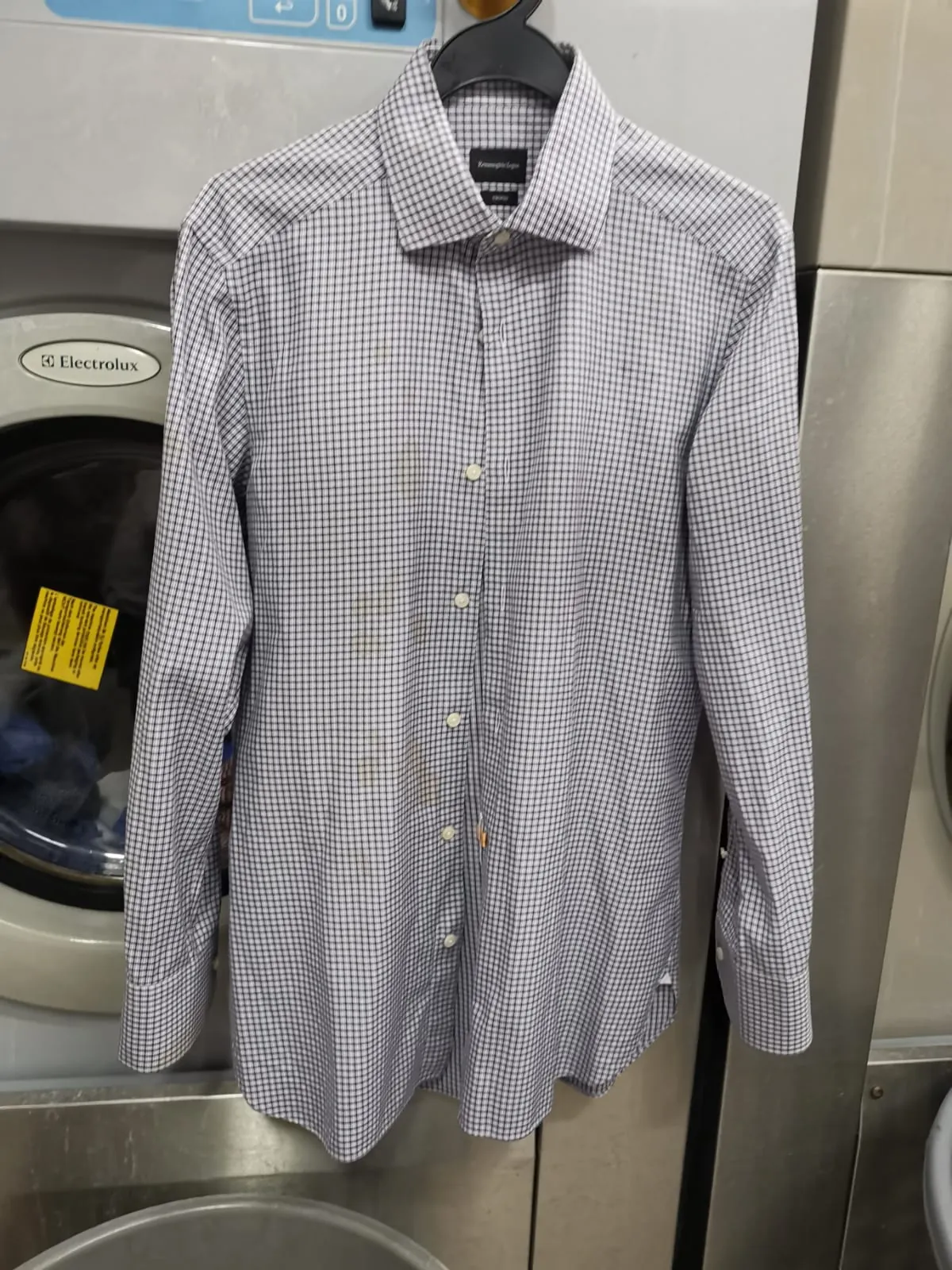 Stain removal
Zegna shirt: stain work after another cleaner declined
An ordinary shirt on the ordinary service, and what changes when oxidised marks have already been through someone else's cycle.
Stain removal
Zegna shirt: stain work after another cleaner declined
An ordinary shirt on the ordinary service, and what changes when oxidised marks have already been through someone else's cycle.
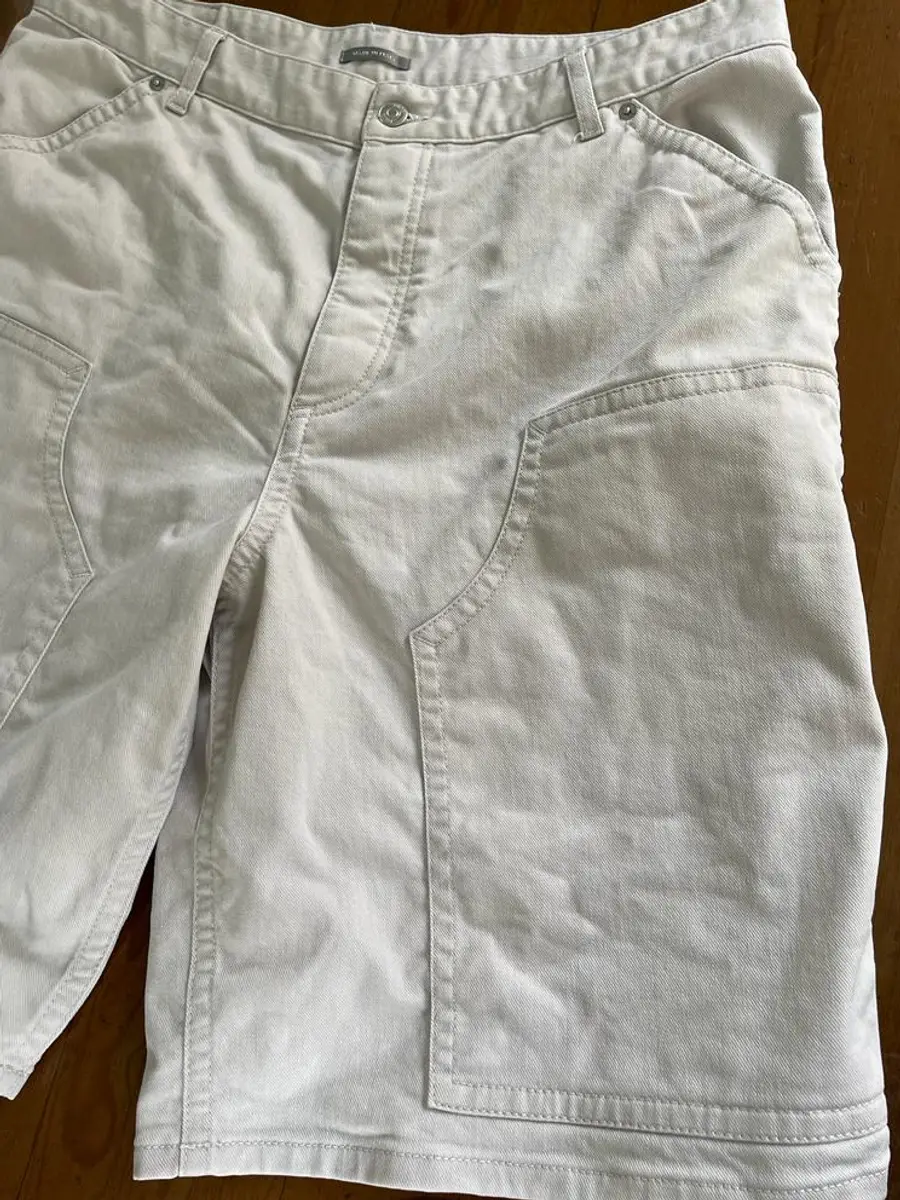 Stain removal
Dior Bermuda shorts: mud, after a home wash
Why a home wash can fix the stain and leave the garment worse, and what it takes to even out cream twill afterwards.
Stain removal
Dior Bermuda shorts: mud, after a home wash
Why a home wash can fix the stain and leave the garment worse, and what it takes to even out cream twill afterwards.
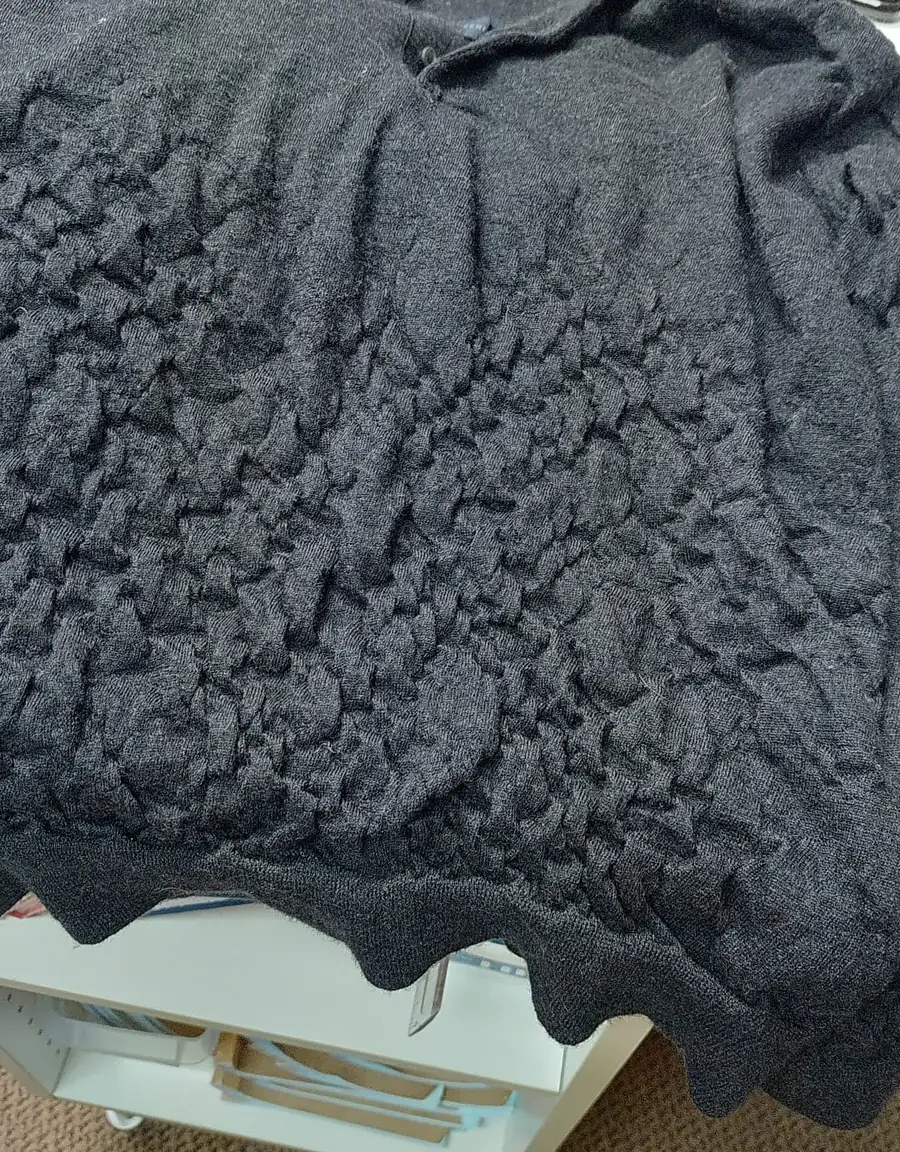 Knitwear
Wool sweater: reblocked after a home wash
The felting risk behind every wool decision on this page, and how far a knit can be relaxed and reblocked once it has happened.
Knitwear
Wool sweater: reblocked after a home wash
The felting risk behind every wool decision on this page, and how far a knit can be relaxed and reblocked once it has happened.
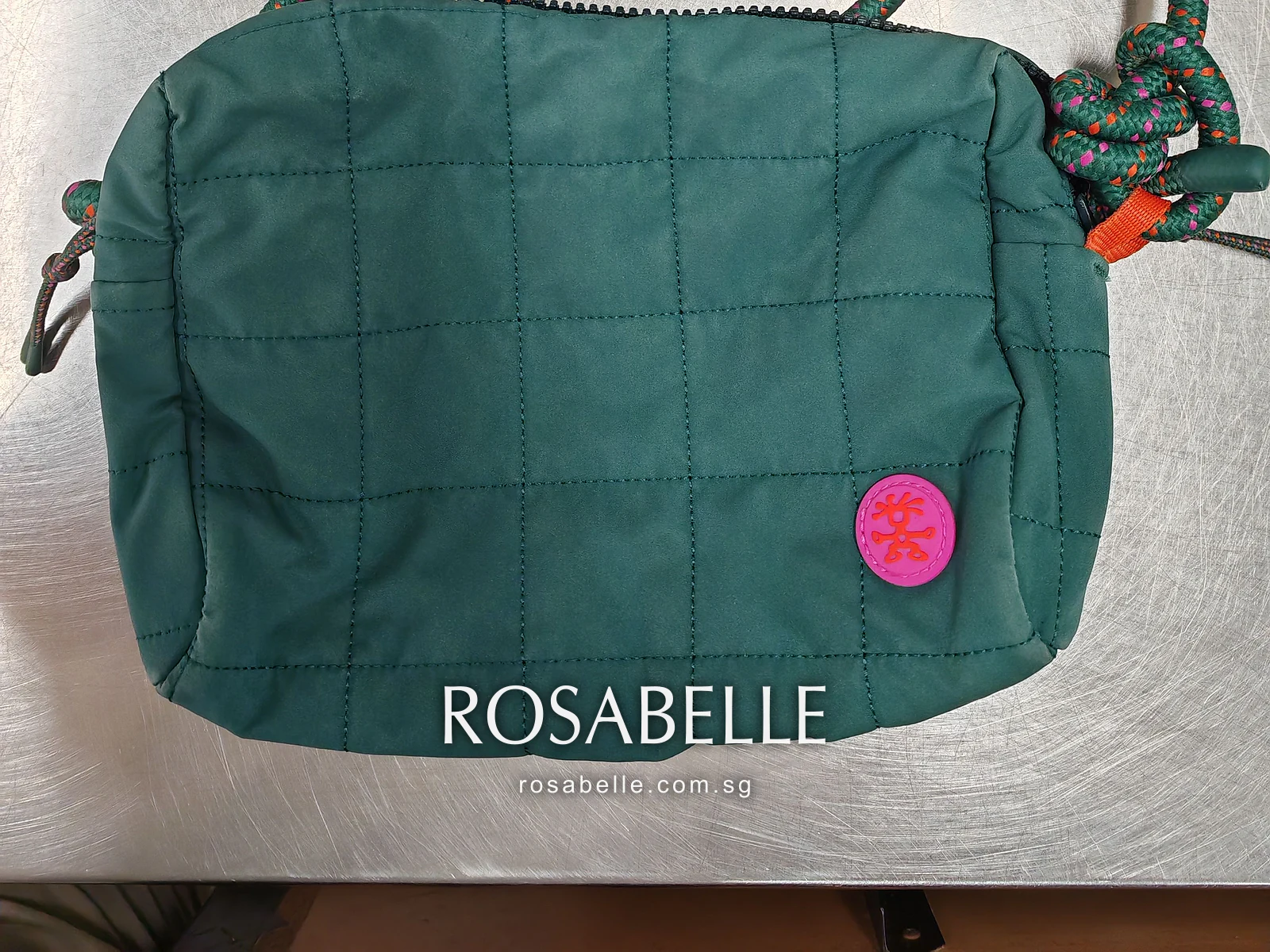 Bags & accessories
Crumpler quilted bag: a routine clean
An everyday fabric bag cleaned inside and out, lining and rope strap included, with nothing to rescue.
Bags & accessories
Crumpler quilted bag: a routine clean
An everyday fabric bag cleaned inside and out, lining and rope strap included, with nothing to rescue.
In their words
What customers say
"My husband had a food stain on one of his formal shirts and we were on the lookout for a good dry cleaning service and that's when we came across Rosabelle Launderette. Right from when I walked in, till I picked up the clothes, the experience was absolutely seamless. The lady Joyce who helped me out was very polite and answered all my queries. The clothes were packed neatly and they managed to get rid of the stain as well! Highly recommend this place for anyone looking to have their clothes dry cleaned."
"Dry cleaned all 5 of my winter downs. Very responsive over WhatsApp, pick up and collection in timely manner. Price reasonable and jacket came back in pristine condition. Delivery person very polite and nice."
What we do not promise
Cleaning takes soil out; it does not put back what has gone. Pilling is fibre that has already broken, and it does not come back. Worn cuffs, thinning elbows, moth holes and split seams are damage rather than soiling, and closing them is repair work. Dye that has faded from wear or sun has left the fibre. Where a stain has been in a garment for a long time, or has already been through heat or a home remedy, what it responds to depends on what it is and what was done to it — we tell you what we can see at assessment, before any work starts. Complete removal is possible on some garments but cannot be guaranteed.
Common questions
Dry cleaning and laundry FAQs
What is the difference between dry cleaning and laundry?
Dry cleaning washes a garment in a liquid solvent instead of water; professional laundering washes it in water. The difference matters because water swells natural fibres such as wool and cotton and can shrink, felt or distort them, while solvent lifts oil and grease without swelling the fibre in the same way. Structured tailoring, wool, silk and dye-sensitive pieces usually go to solvent; cotton shirts, workwear and everyday washables usually go to water, which is better at the water-soluble soil those garments actually carry. At Rosabelle the choice is made per garment at assessment rather than by category, and we also run a dedicated professional wet-cleaning process for pieces that want water under controlled conditions.
How much does dry cleaning cost in Singapore?
Guide prices at Rosabelle start at $10 for a shirt or blouse dry-cleaned and $8 laundered, $10 for trousers or a skirt dry-cleaned and $8 laundered, $15 for a dress dry-cleaned and $13 laundered, $20 for a coat or jacket dry-cleaned and $17 laundered, $25 for a long jacket, and $35 for a two-piece suit. Pressing only, without cleaning, is from $7 for a shirt or blouse. Silk, linen, embellished and other delicate materials may carry an additional charge, always confirmed with you before any cleaning starts. The full list is on the price list.
How long does dry cleaning take?
About five working days as standard, which is our normal turnaround for ordinary garments. Express is available for a premium, including same working-day options at our Orchard outlet. Specialist work runs longer: leather, suede and fur are two weeks and upwards, and restoration work typically three weeks and up. If you need a piece back for a particular date, say so when you hand it in and we will tell you whether it is possible.
Do you offer express or same-day dry cleaning?
Yes. Express turnaround is available for a premium, with same working-day service at our Orchard outlet. Same-day dry cleaning starts from $80, and prices vary with the garment, so it is confirmed before the work starts. A message sent before 2pm is same-day where the garment allows it; 2pm or later is the next working day. Full details are on the express and tourist laundry page.
Do you offer pressing only, without cleaning?
Yes. Shirts and blouses can be professionally hand-pressed without being cleaned, from $7. It is the right option for a garment that is clean but creased — out of a suitcase, or off a hanger it has been crushed on — and it avoids putting a piece through a cleaning cycle it does not need.
Do you clean suits?
Yes. A two-piece business suit is from $35, and both pieces should always be cleaned together even when only one looks dirty, because wool changes tone very slightly with each clean and a jacket and trousers cleaned apart will drift away from each other over time. A structured jacket carries canvas, interlining and shoulder construction under the face cloth, and those layers move differently from the wool, so the finishing is done by hand to put the line back rather than pressed flat.
How often should a suit be dry cleaned?
Less often than most people think: every 3 to 6 wears for regular rotation, or promptly after visible soiling, spills or heavy perspiration. Between cleans, brushing does most of the maintenance — Woolmark recommends brushing wool lengthwise with a soft garment brush after wearing, to take off surface soil that might otherwise become a stain, and resting a wool garment for 24 hours between wears so the fibre recovers its shape. Pressing only, from $7 for a shirt, covers the case where a garment is clean but creased. One exception matters: if a suit will not be worn again for some time, clean it before it goes away, even if it looks spotless.
Do you clean silk, wool and cashmere?
Yes. Silk is a protein fibre that water-spots and can lose its lustre or bleed dye if it is handled wrongly, so it is assessed for dye stability before a method is chosen. Wool and cashmere have surface scales that lift when the fibre is wet and warm and lock together under mechanical action, which is what felting and shrinking are, so heat and agitation are kept off them. Delicate materials may carry an additional charge, confirmed with you first.
What is wet cleaning, and how is it different from dry cleaning?
Wet cleaning is a professional water-based process using controlled temperature, gentle agitation and specialised detergents, and it is not the same as home washing. Dry cleaning uses a liquid solvent instead of water. We run a dedicated wet-cleaning process alongside the dry-cleaning plant, because water is better on water-soluble soil — perspiration, most food and drink — while solvent is better on oil and grease and safer on construction that water would distort. Some garments are safer in solvent, some respond better to professional wet cleaning, and part of our job is choosing correctly for each piece rather than defaulting to one method.
Should clothes be cleaned before long-term storage?
Yes, and not only suits. Perspiration, skin oils and food traces are often invisible when fresh, but they do not stay harmless. Sweat and sebum carried into cloth are the precursors skin bacteria turn into odour, and some sebum is difficult to wash out of synthetics, so residue left in a fibre stays available. Clothes moth larvae feed on wool and other animal fibres, and fabric carrying food, perspiration or urine stains is more subject to damage; Woolmark puts it plainly — food stains and body oils attract moths, so a wool garment should be clean before it is packed away. Singapore makes this sharper, with relative humidity averaging over 80 per cent. Clean the garment, dry it fully, and store it loose and breathable rather than sealed.
Can yellowing from storage be removed?
Storage yellowing is usually old perspiration, body oil or food residue that has oxidised in the fibre over months or years, so it is a change that has already happened in the cloth rather than soil sitting on top of it. How much comes out depends on the fibre, how long it sat, what the residue was and whether anything was applied to it in the meantime. Bring the piece in and we will tell you what we can see before any work starts. Complete removal is possible on some garments but cannot be guaranteed.
Why is dry cleaning so expensive?
Dry cleaning costs more because it is a different job, not a bigger washing machine. Solvent-based cleaning, garment-by-garment assessment, stain treatment, and hand-pressing all take trained labour and time; a shirt passes through several skilled hands before it's returned. Two cleaners can quote very different prices because the work behind the price often isn't the same.
Do prices change for delicate fabrics?
Silk, linen, embellished, and other delicate materials may carry additional charges, always confirmed with you before cleaning.
Where is my dry cleaning actually done?
In-house, at our own Queenstown facility at 163 Stirling Road. Nothing is sent to a third-party plant. Garments dropped at the Orchard shop in Far East Shopping Centre, and everything collected on our pickup and delivery service, come back to Queenstown to be cleaned and finished, then go back to the outlet or out to you.
Do you collect and deliver?
Yes. Islandwide pickup and delivery is available, free on standard orders of $100 and above, with a $20 delivery charge below that. Collection is usually the next day, with the window agreed over WhatsApp, and our own driver does the collection. You can also drop off at either shop, Queenstown at 163 Stirling Road or Orchard at Far East Shopping Centre.
Which garments do not go through ordinary dry cleaning?
Leather, suede, shearling and fur are cleaned in-house on a completely separate process by our garment care team who specialise in leather and hides, and run two weeks and upwards. Wedding gowns are assessed as restoration work and priced from $190 after inspection. Couture, beaded and heavily constructed pieces go to our couture and delicate route. Curtains, carpets, rugs and bedding are handled as home textiles. Each has its own page, price and timeline.
Is your dry cleaning environmentally friendly?
Yes. We use environmentally friendly cleaning methods built on an organic solvent, recovered, purified and reused in a closed loop rather than released. It is gentle on the garment as well: solvent lifts oil and grease without swelling fibres, so there is less unnecessary wear, and pieces come back looking, feeling and smelling fresh and clean. The larger factor is still that a garment cleaned properly lasts longer, since restoring a piece rather than replacing it saves more than the difference between any two cleaning methods.
Is dry cleaning bad for the environment?
It depends entirely on the machine and how it's run. Old dry cleaning equipment released chemicals to the environment; modern systems use closed-loop machines that recover, purify and reuse the solvent. A well-maintained closed-loop machine, a water-based wet-cleaning system, and a garment that stays in use are all more environmentally friendly than a stained garment which ends up in the landfill because it cannot be cleaned properly.