
Journal · Knitwear ·
Wool Sweater: Reblocking After Shrinking in a Home Wash
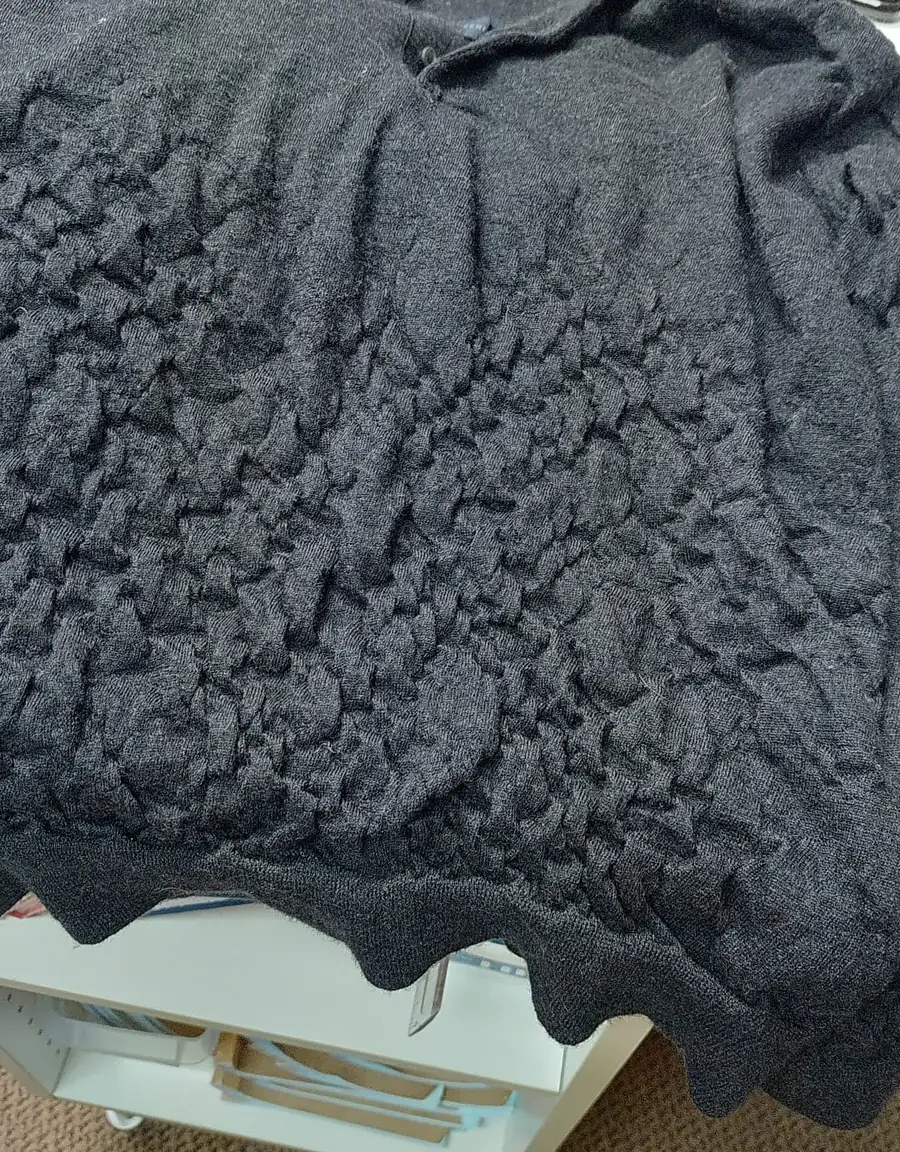
A fine wool knit, washed at home, came out shrunken and puckered, the texture wool takes on when its fibres lock together. This one was saved. Not all of them can be.
What came in
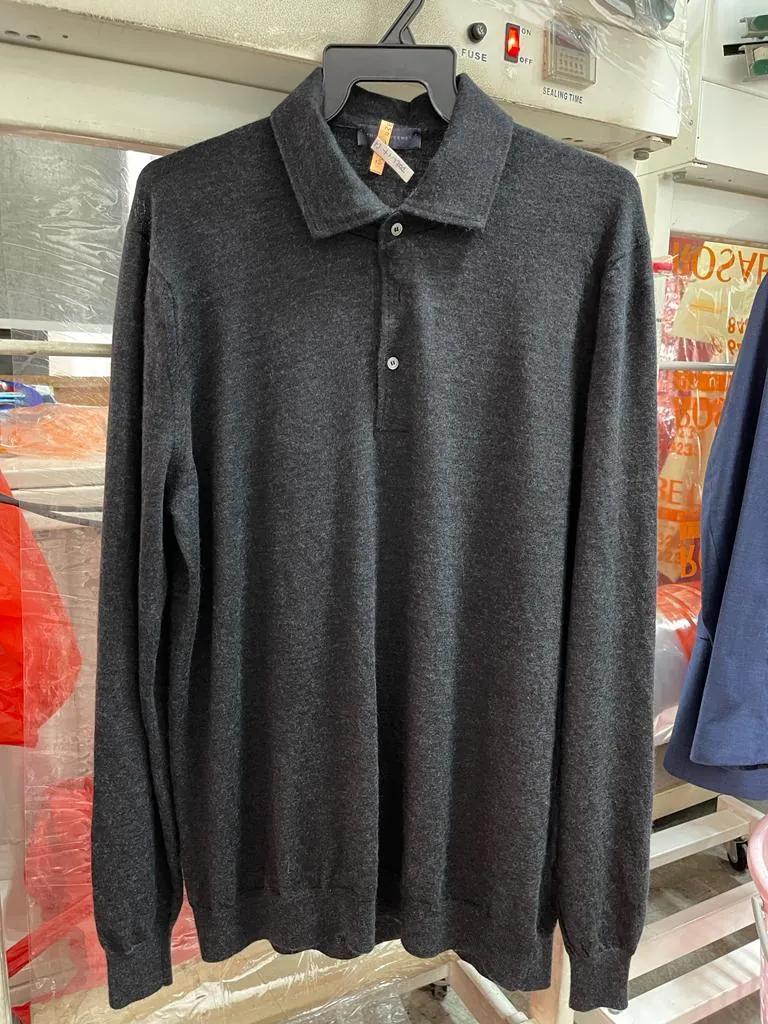
A fine wool long-sleeve knit that had gone through a home wash it wasn't built for. It came to us shrunken and covered in that unmistakable puckered, bubbled texture; the photo on the left says more than a paragraph could. The owner's question was one we hear often: is it gone, or can it be saved?
Why wool does this
Wool fibres are covered in microscopic scales. Heat, water, and agitation together make those scales ratchet against each other and lock, so the fabric tightens and felts. That's why a sweater comes out of the wrong wash smaller, denser, and puckered. The structure of the fabric itself has changed, which is also why no amount of stretching by hand at home brings it back.
The work
Recovery, when it's possible, means coaxing rather than forcing: relaxing the fibres with the right treatment, then reblocking the garment, easing it back toward its original dimensions, and drying it under control so it holds the shape. This knit hadn't fully locked, and it responded. What went home was a smooth, wearable sweater again.
Shape can be the limiting factor even when shrinking is not the problem. Our Issey Miyake Pleats Please case describes removing heavy soiling while preserving heat-set pleats, a different construction with different limits.
The honest note
Not all wool can be saved once it's been washed incorrectly, at home or anywhere else. Felting past a certain point is permanent: the scales have locked, and no treatment responsibly undoes it. This one recovered because the felting hadn't crossed that line. We'll always assess and tell you honestly which side of the line your knit is on, but the cheapest way to restore a wool sweater is the boring one: don't let it meet the wrong wash in the first place. Wool knits are exactly the garments professional cleaning exists for.
Case practitioner and technical review: Zach Lim.
Related cases
More like this
Common questions
Frequently asked
Can a shrunken wool sweater be fixed?
Sometimes, depending on how far it has felted. If the fibres have tightened but not fully locked, the garment can be relaxed and reblocked back toward its original dimensions. This fine wool knit came in shrunken and puckered from a home wash, hadn't fully locked, and went home smooth and wearable again.
Why does wool shrink and pucker in the wash?
Wool fibres are covered in microscopic scales, and heat, water and agitation together make those scales ratchet against each other and lock, so the fabric tightens and felts. That is not a stain sitting on the surface, it is the structure of the fabric itself changing, which is why no amount of stretching by hand at home brings it back.
Can felted wool always be reversed?
No. Felting past a certain point is permanent: the scales have locked and no treatment responsibly undoes it. This sweater recovered because the felting hadn't crossed that line. We'll always assess and tell you honestly which side of the line your knit is on.
How do I stop a wool sweater shrinking?
Don't let it meet the wrong wash in the first place, because heat and machine agitation are what felt wool. Wool knits are exactly the garments professional cleaning exists for, and the cheapest way to restore one is to avoid the home wash that damages it.
How much does it cost to fix a wool sweater that shrank in the wash?
Sweater cleaning at Rosabelle in Singapore starts from $12 for laundry and $15 for dry cleaning, with a standard turnaround of about five working days. Reblocking a shrunken knit is quoted after the piece is assessed, because not every felted sweater can be recovered. Wool shrinks when heat, water, and agitation lock its surface scales together, and how much of the original length comes back depends on how far that felting has already gone. A knit that has felted solid cannot be returned to its original size by any responsible method.