
Journal · Stain removal ·
Dior Bermuda Shorts: Fixing Mud and Home-Wash Stains
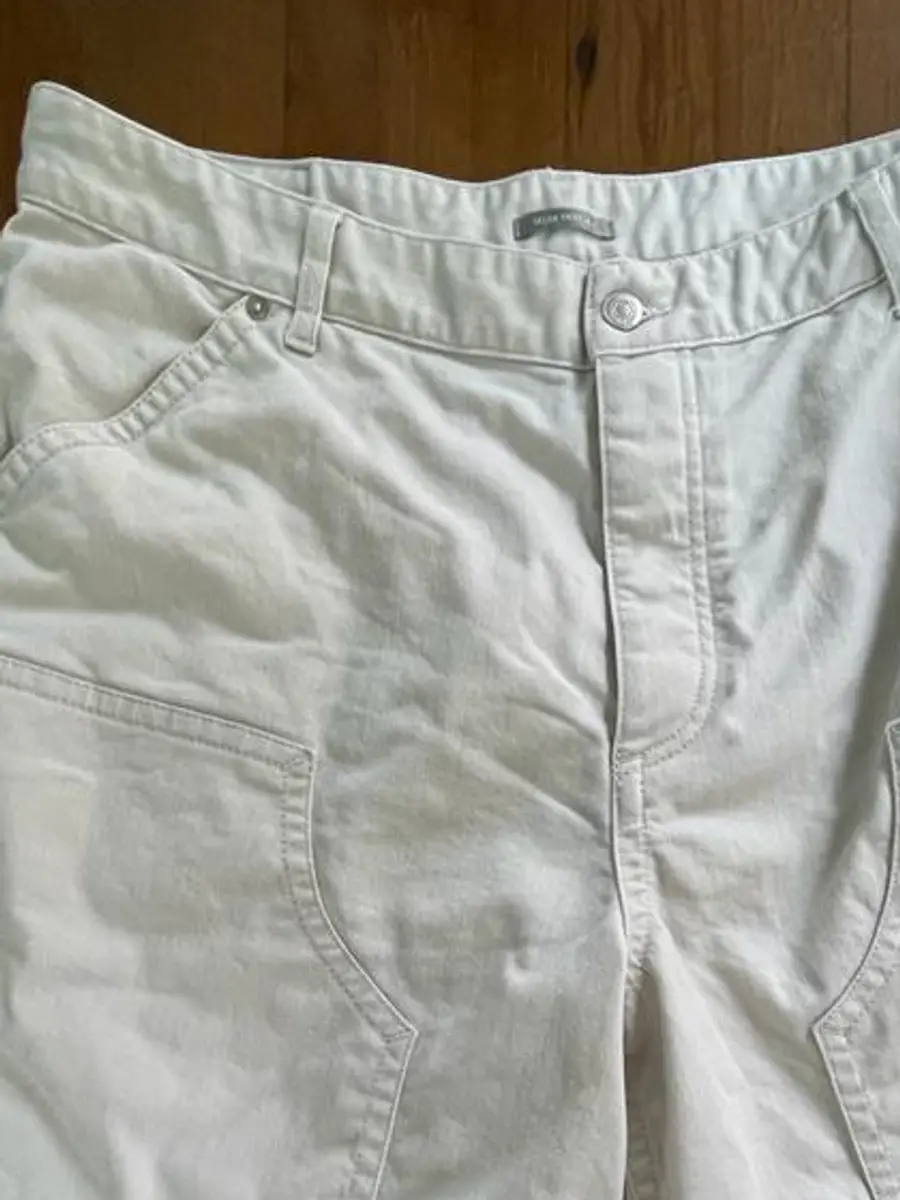
A pair of Christian Dior cream twill Bermudas that got muddy at a wet Grand Prix weekend. By the time they reached us, the mud was gone: the owner had washed it out at home. That was the problem.
What came in
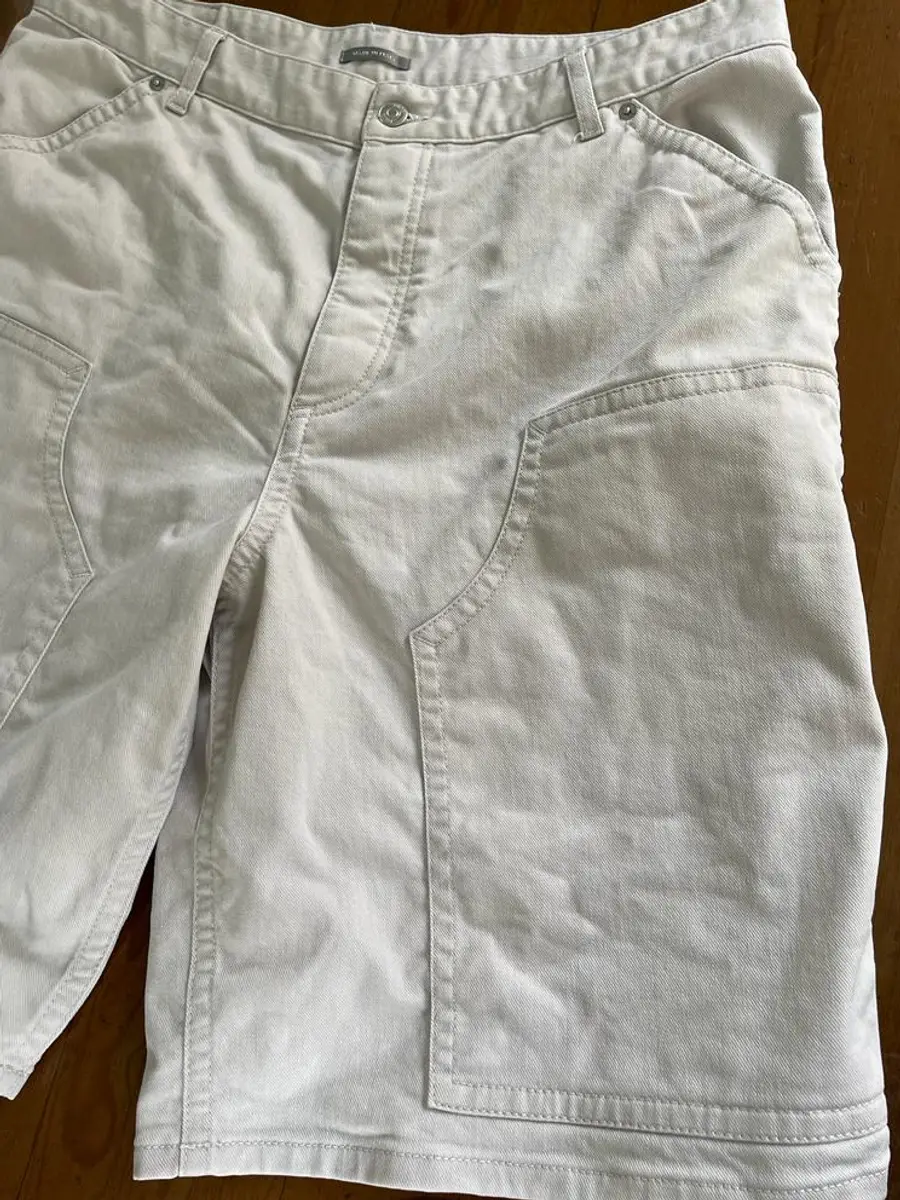
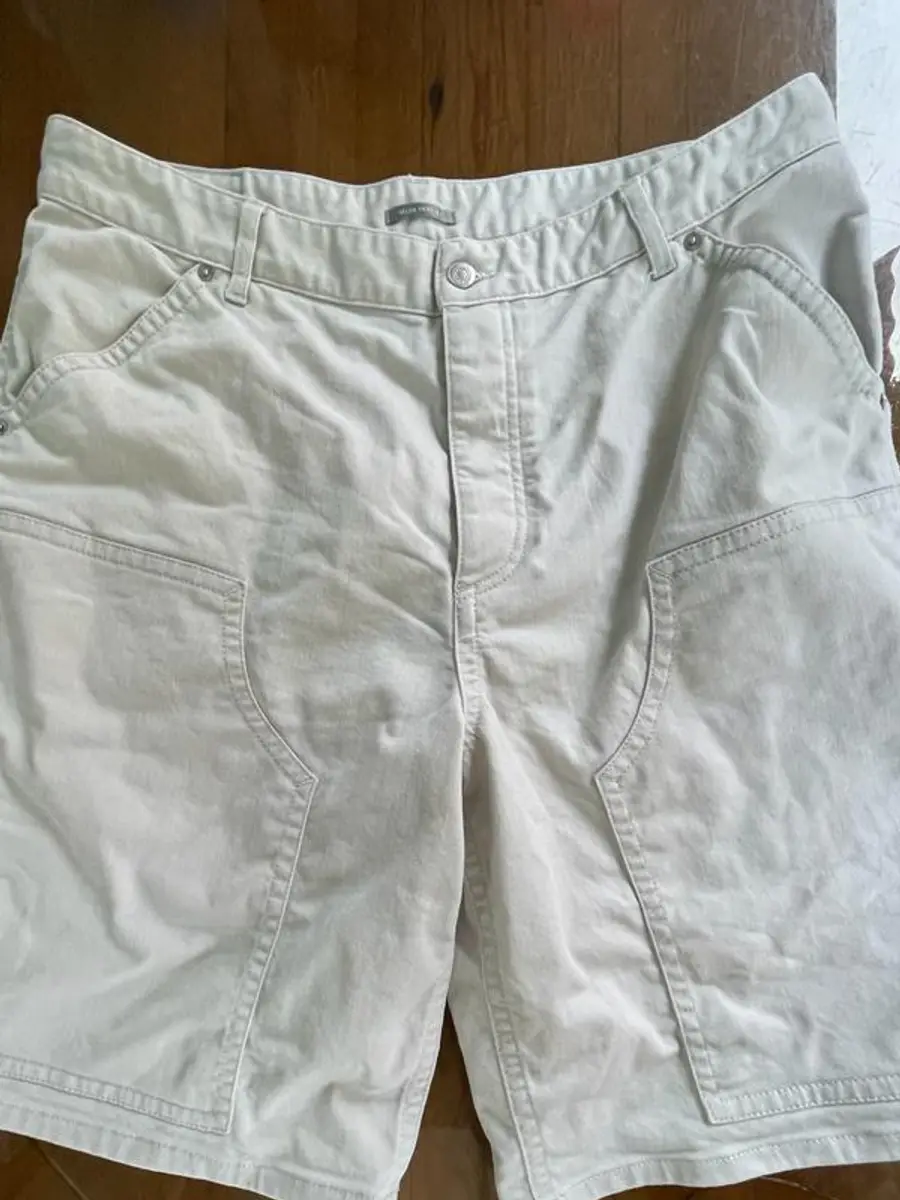
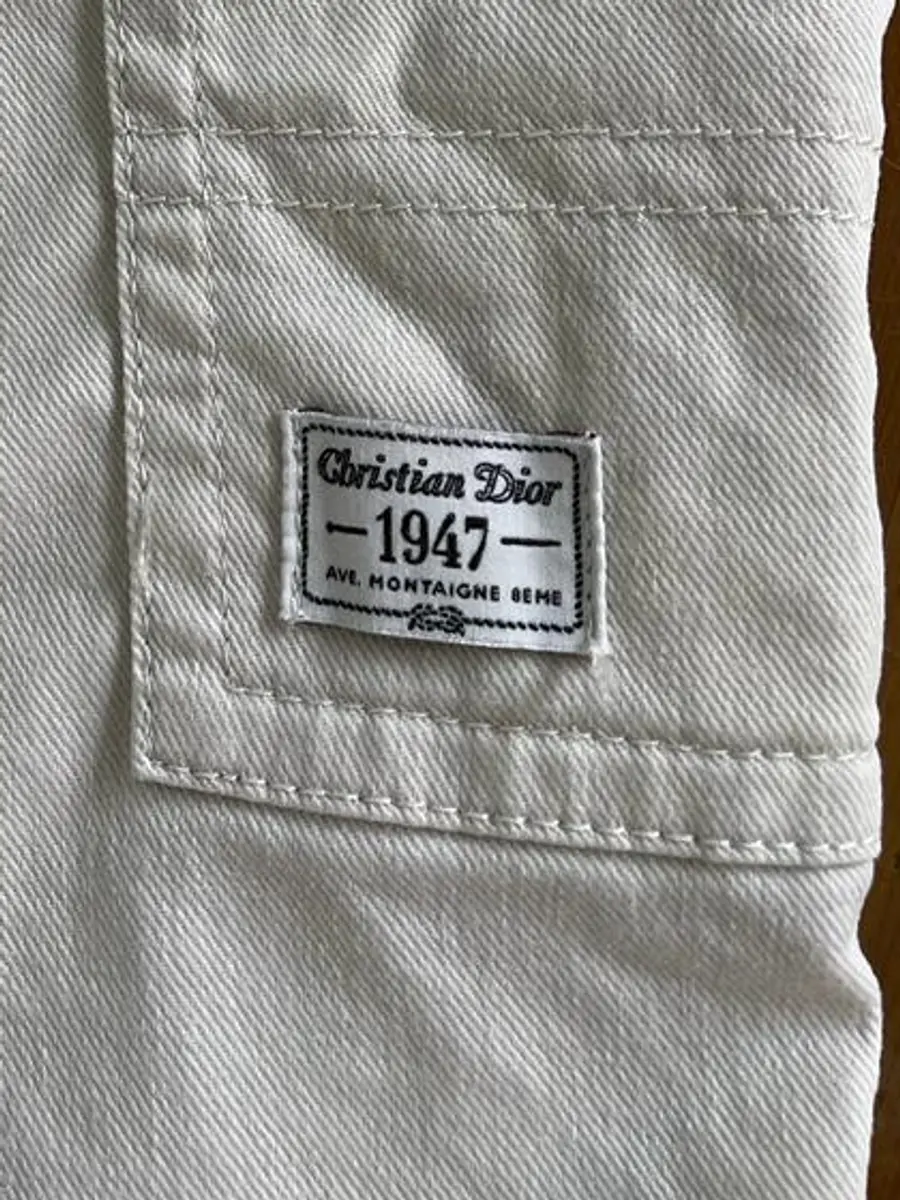
Cream cotton twill Bermudas from Dior's 1947 line. They were worn to a Grand Prix weekend, it rained, and the shorts took mud on the front and back.
Then, before they came anywhere near us, they were washed at home.
That is the whole case. What arrived was not muddy shorts but something harder to fix: the fabric had gone patchy and uneven grey across both legs, with faint shadows where the mud had been.
Why washing mud is the mistake
Mud is three things at once: mineral (fine clay and silt), organic matter, and whatever was dissolved in the water that carried it. Each needs a different treatment, and two of them react badly to washing.
Wet clay does not lift; it spreads. Add water and the fine particles move deeper into the weave, and a cotton twill has plenty of room to hold them. Rubbing wears down the surface of a dyed, garment-washed cloth, so it lightens only where you rubbed. Then it dries, the organic matter oxidises, and everything sets.
So the piece that reaches us no longer has a stain you can point to. It has a stain plus a colour problem, and the colour is the harder half. That is why we ask people not to wash it first: mud on the cloth is a stain removal job, while mud washed into the cloth becomes a colour job, and colour is far less forgiving.
The work
The order mattered more than the chemistry. First, no more water: the remaining mineral had to come out of the weave dry. Then the organic staining, worked in stages, front and back separately, checking the fabric's response between passes instead of committing to one aggressive treatment.
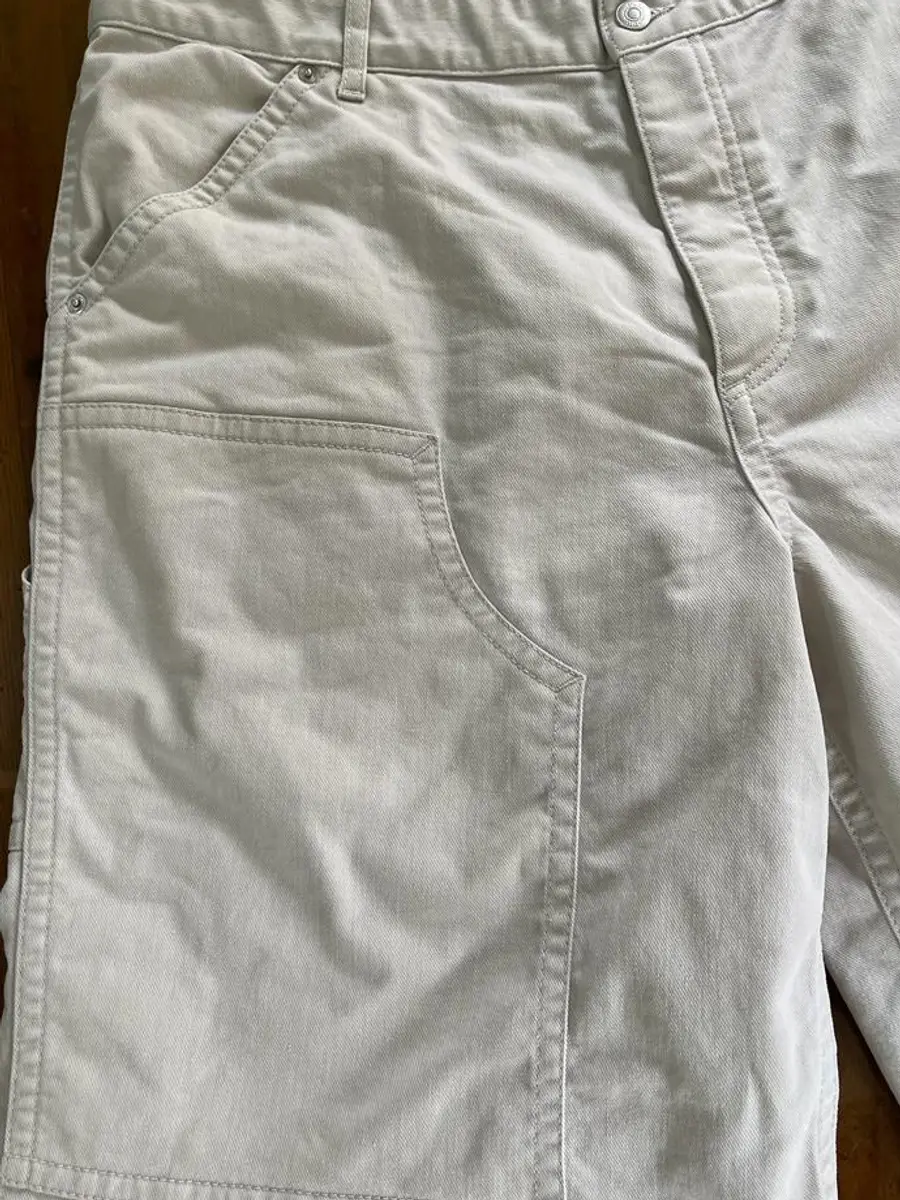
Then the difficult part. You cannot put finish back where it has been rubbed away; you can only bring the rest of the cloth down to match it, evenly, across both legs, until the patchiness is gone. That took most of the time, and it does not show in photos: the shorts were already "clean" long before they were finished.
The honest note
This pair came back. Many don't. The twill was heavy and in good condition, and the rubbing had dulled the surface without wearing through it, so there was still something to level out. If the wash had been hotter, the scrubbing harder, or the shorts left wet and folded for a fortnight, the outcome would have been worse. Some of what a home wash does cannot be undone by anyone.
So if it happens to you, at a wet field, a race weekend, or a downpour on the way to dinner, the instruction is simple. Let it dry, knock off what falls off on its own, and bring it in. Don't wash it, scrub it, soak it, or reach for anything labelled oxi. The first wash decides how hard the rest of the job gets. We would much rather see the mud. Mud, we can work with, as this wedding gown train restoration shows.
Case practitioner and technical review: Zach Lim.
Related cases
More like this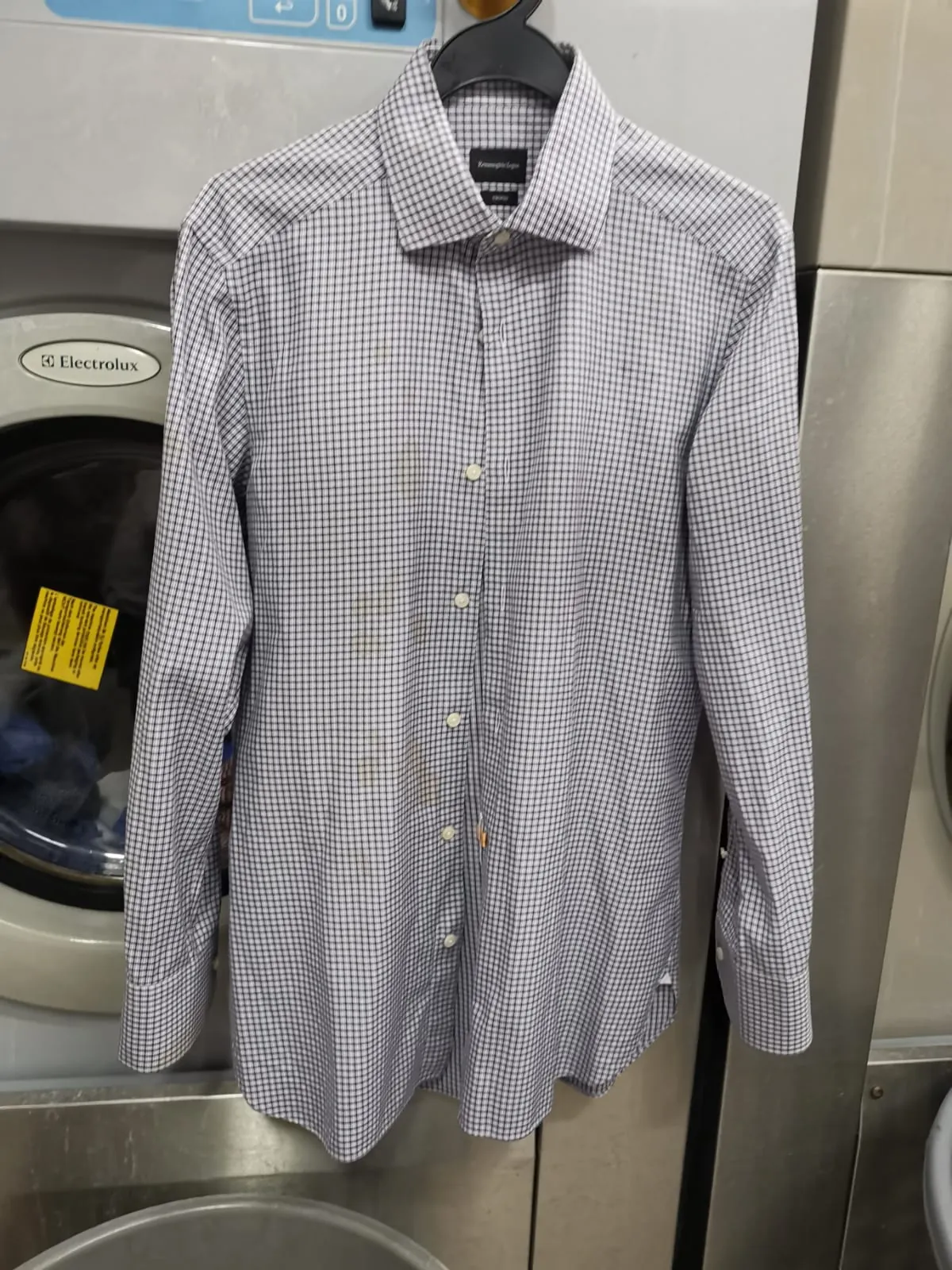
Common questions
Frequently asked
How do you get dried mud stains out of trousers or shorts?
Dry first, not wet. Mud is mineral clay, organic matter and dissolved residue, and adding water spreads the fine clay deeper into the weave. The mineral has to come out of the weave dry, then the organic staining is worked in stages, front and back separately, checking the fabric's response between passes rather than committing to one aggressive treatment.
I washed a mud stain at home and now the fabric looks patchy, can that be fixed?
Sometimes, and it is harder than the original mud. Washing spreads wet clay, and rubbing wears down the surface of dyed cloth so it lightens only where you rubbed, leaving it patchy. You cannot put finish back where it has been rubbed away, only bring the rest of the cloth down to match evenly, which is slow work. These Dior Bermudas levelled out because the twill was heavy and hadn't worn through.
Why does washing mud out at home make it worse?
Because wet clay doesn't lift, it spreads, and rubbing drives it deeper while dulling the surface unevenly. Then it dries, the organic matter oxidises, and everything sets. The mud is the easy part; the damage from washing it in wrong is what is hard to reverse.
Can the damage from a home wash always be undone?
No. Some of what a home wash does cannot be undone by anyone. This pair came back because the twill was in good condition and the rubbing had dulled the surface without wearing through it. If the wash had been hotter, the scrubbing harder, or the shorts left wet and folded for weeks, the outcome would have been worse.
Can a stain still be removed after the garment has been washed at home?
Washing at home first changes the job. Heat and detergent set organic staining into the fibre, and rubbing drives mineral soil deeper into the weave, so a stain can end up patchy instead of in one place. These Christian Dior cream twill Bermudas came back from a wet outdoor weekend covered in mud, were washed at home, and arrived with patchy grey discolouration that had to be brought level rather than simply lifted. Shorts and Bermudas start from $8 for laundry and $10 for dry cleaning at Rosabelle in Singapore, with stain work quoted after inspection and a standard turnaround of about five working days.