
Journal · Bridal restoration ·
Wedding Gown Restoration: Removing Mud from the Gown Train
A wedding gown with a long train, brought in after an outdoor ceremony left the hem and train caked in mud, and returned white.
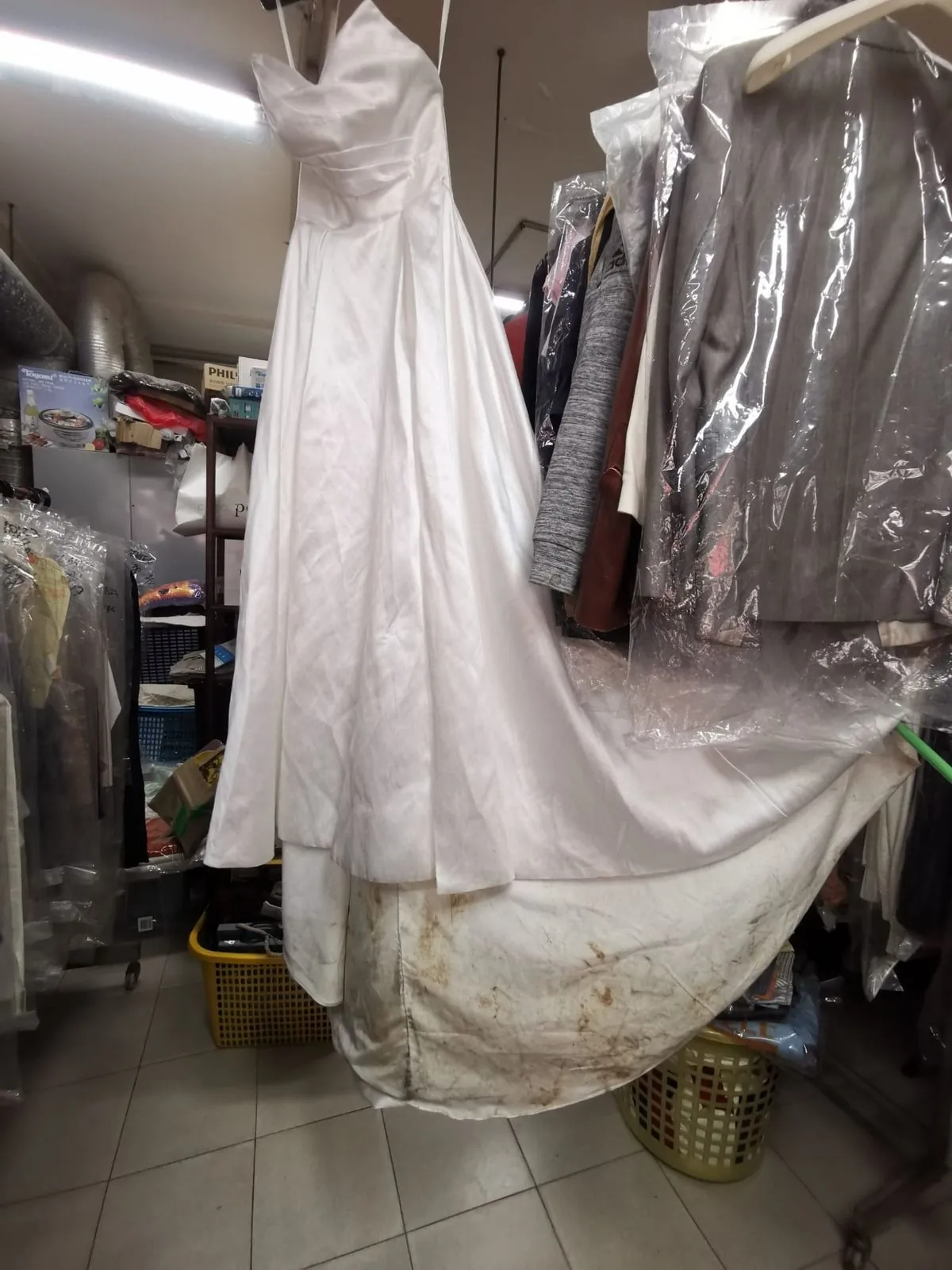
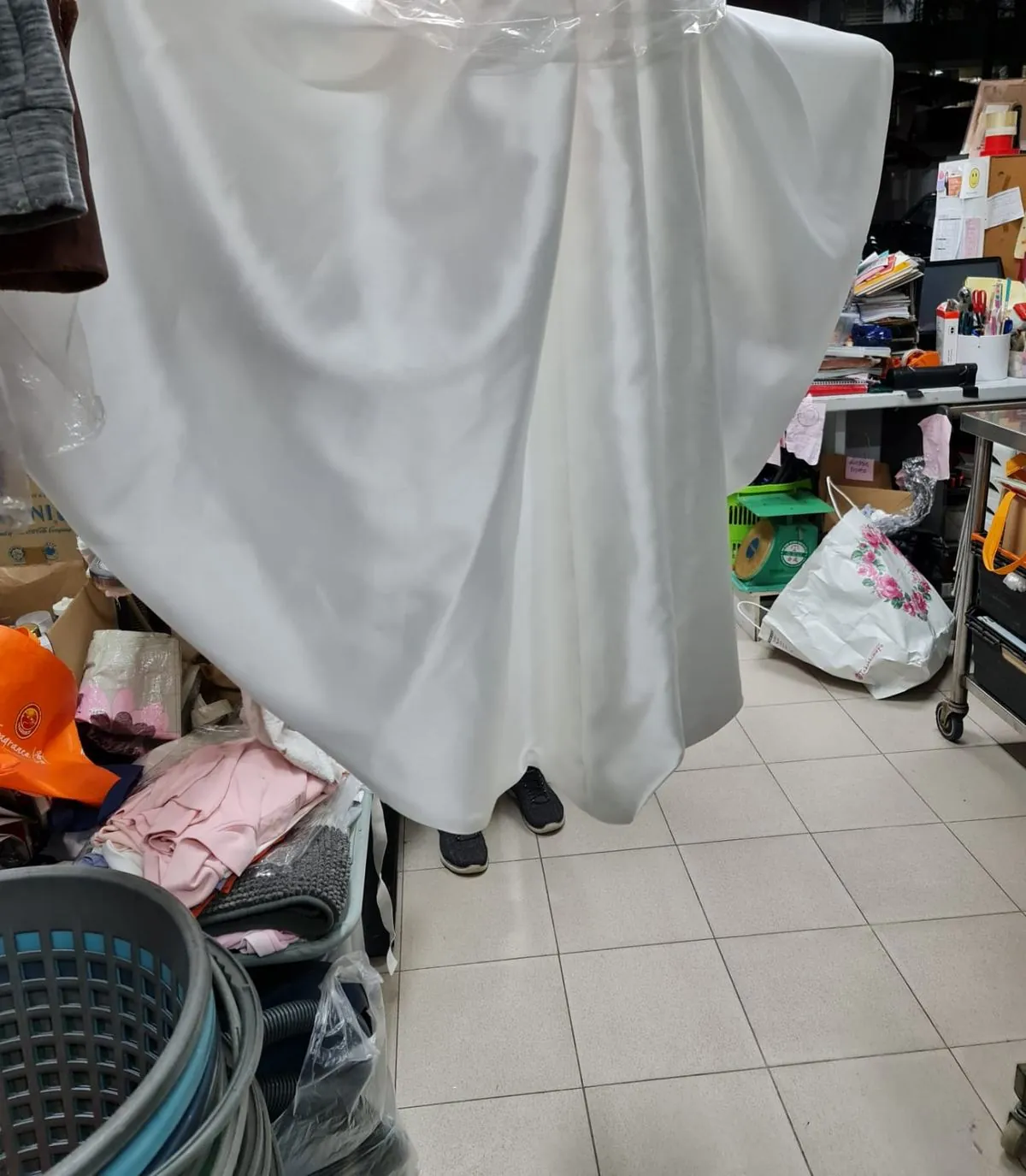
What came in
An outdoor ceremony and a long train are a beautiful combination with one predictable casualty. This gown arrived with the train and underlayers carrying heavy mud, ground in along the hemline where the fabric had dragged, with soil worked deep into the weave rather than sitting on the surface.
Why mud is deceptive
Mud looks like a surface problem but behaves like two separate stains: mineral soil that abrades fibres if rubbed, and organic matter that bonds and yellows if treated with heat too early. Attacking it aggressively, which is the instinct most people have, grinds the particles deeper and sets the organic staining. The train's layered construction added a third problem: moisture trapped between layers has to be drawn out evenly, or watermarks replace the mud.
The work
The gown was assessed layer by layer, the dried soil released gently before any wet treatment, the organic staining treated in stages, and the full skirt cleaned and dried under control so the layers dried evenly. Finished by hand, as every gown here is, and returned sealed in a hanging cover.
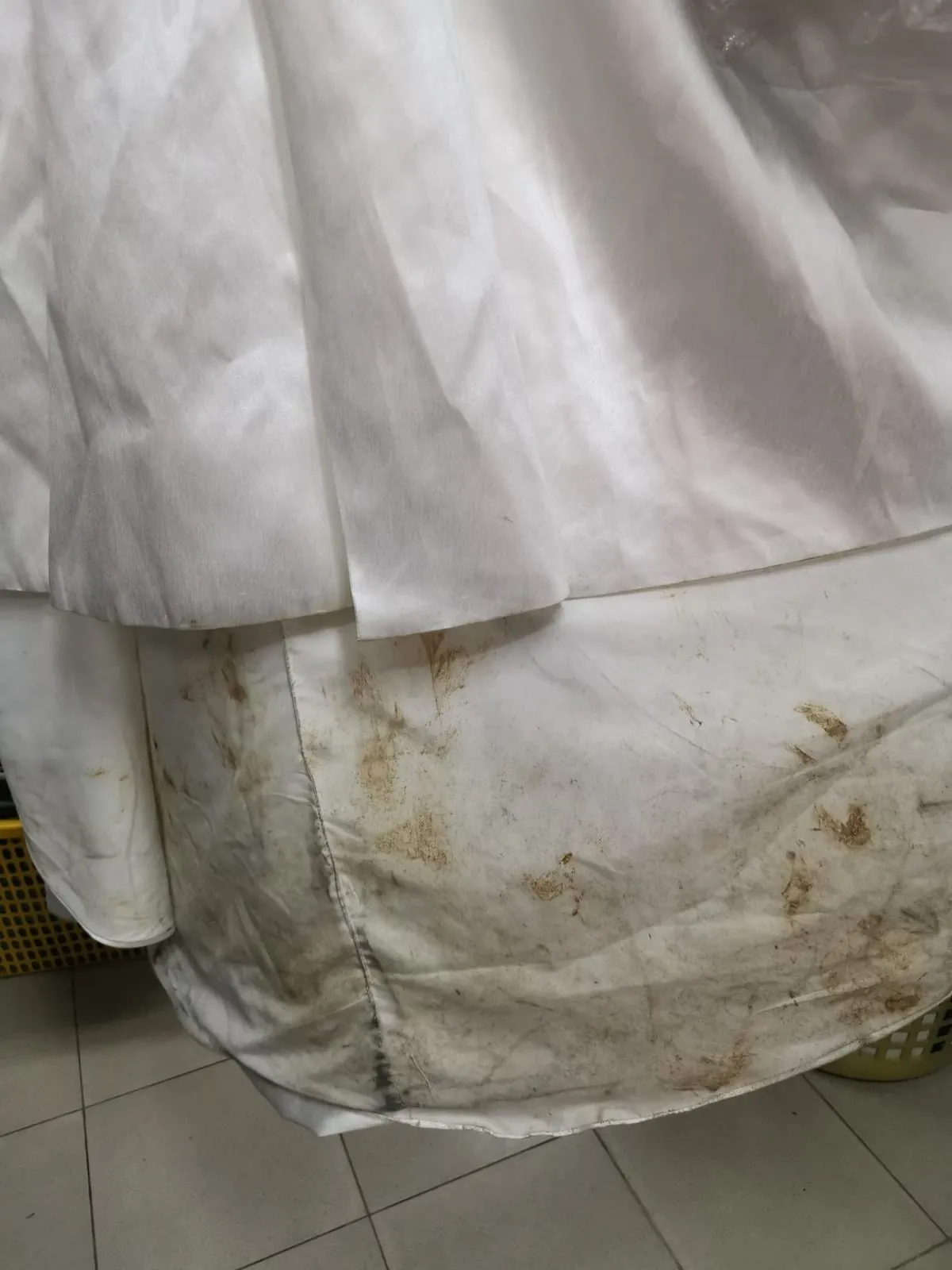
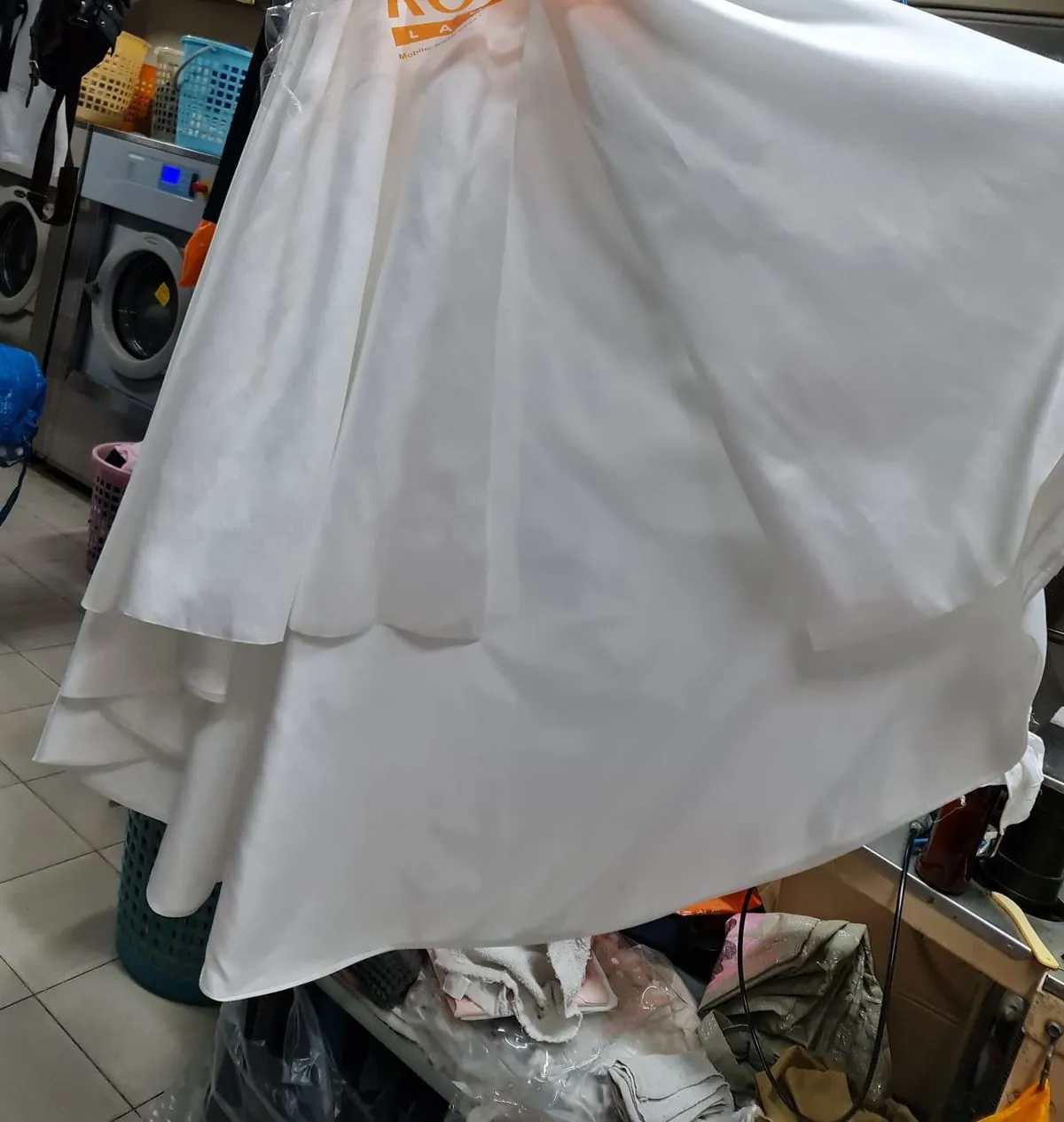
An indoor reception can leave a train heavily soiled too. Compare this outdoor mud case with grey floor soiling along a layered wedding-gown hem and train, where the case notes follow treatment of the edge and controlled drying of the layers.
The honest note
Early treatment improved the odds here a lot: mud left for months oxidises and bonds, and recovery gets harder. But no stain is predictable. Fibre, dye, construction, and what the stain has already done to the fabric all decide what's possible, and cleaning itself carries risk, since a stain can quietly weaken fabric that looks sound until agitation. This gown responded as well as we could have hoped. Like every case in this journal, it's a record of one piece, not a promise about the next. If your gown met a field, a beach, or a rainy carpark on the day, sooner is still better.
Case practitioner and technical review: Zach Lim.
Related cases
More like this

Common questions
Frequently asked
Can a wedding gown be cleaned after an outdoor wedding leaves it muddy?
Every gown is different. This gown arrived with heavy mud ground into the train and hem after an outdoor ceremony, and was returned white. It was assessed layer by layer, the dried soil released gently before any wet treatment, the organic staining treated in stages, and the full skirt dried under control so the layers dried evenly.
How do you get mud stains out of a wedding dress?
Carefully, because mud is really two stains: mineral soil that abrades fibres if rubbed, and organic matter that bonds and yellows if treated with heat too early. Attacking it aggressively grinds the particles deeper and sets the staining. The right approach releases the dried soil first, then works the organic staining in stages, then dries the layered skirt evenly so watermarks don't replace the mud.
Should I try to wash the mud off my gown myself first?
Better not to. Rubbing or hot water sets the organic staining and can grind mineral soil deeper into the weave, turning a routine clean into a difficult one. Early professional treatment improves the odds a lot, because mud left for months oxidises and bonds and recovery gets harder. If your gown met a field, a beach or a rainy carpark, sooner is better than DIY.
Is stain removal from a gown ever guaranteed?
No. Fibre, dye, construction and what the stain has already done to the fabric all decide what's possible, and cleaning itself carries risk, since a stain can quietly weaken fabric that looks sound. This gown responded as well as we could have hoped, but like every case in this journal it is a record of one piece, not a promise about the next.
How long does wedding gown cleaning take in Singapore?
Five working days and upwards at Rosabelle, depending on the complexity of the gown and the scope of the work. A heavily soiled gown takes longer, because a layered skirt has to be dried under control so the layers dry evenly and watermarks do not replace the stain that was removed. Wedding gown cleaning starts from $190, confirmed after inspection, and the timeline is confirmed at drop-off once the gown has been assessed.