Journal · Exotic materials ·
Blue Fox Fur Parka: Specialist Fur Cleaning
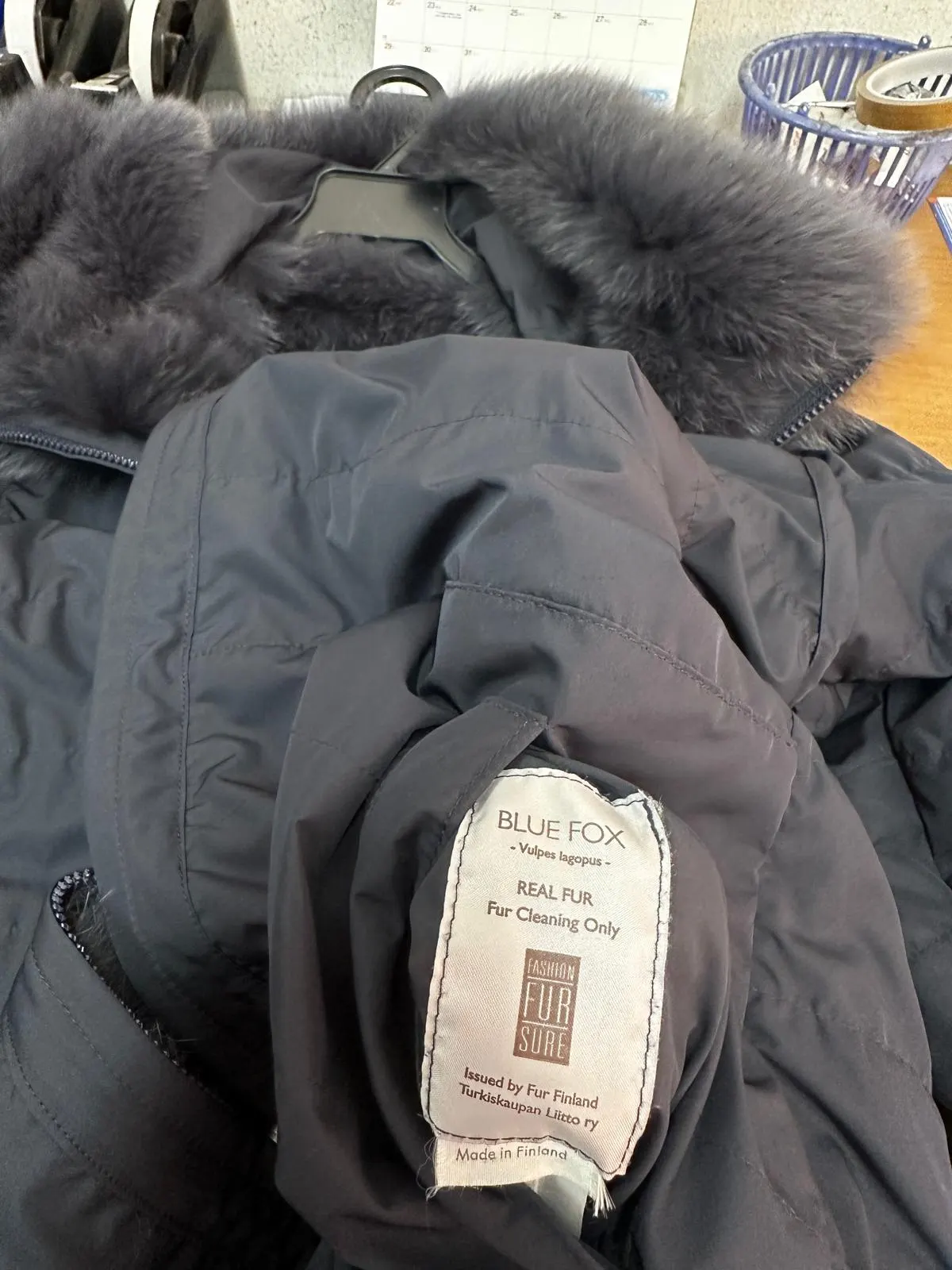
A Finnish winter parka, fully lined and hooded in blue fox, in for specialist cleaning before its owner flew north. Its care label says Fur Cleaning Only. This is what that means in practice, and what happens when you follow it.
What came in
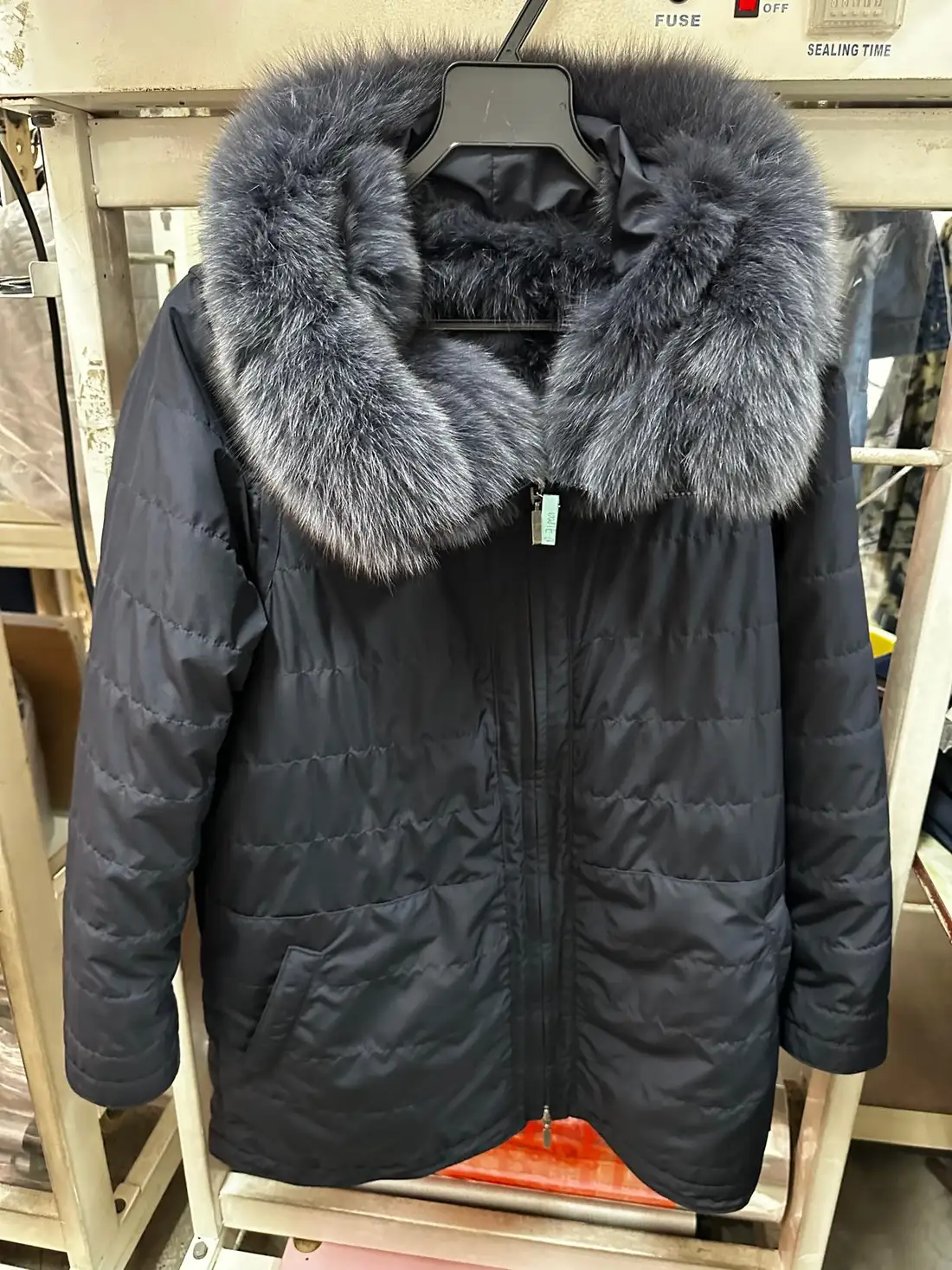
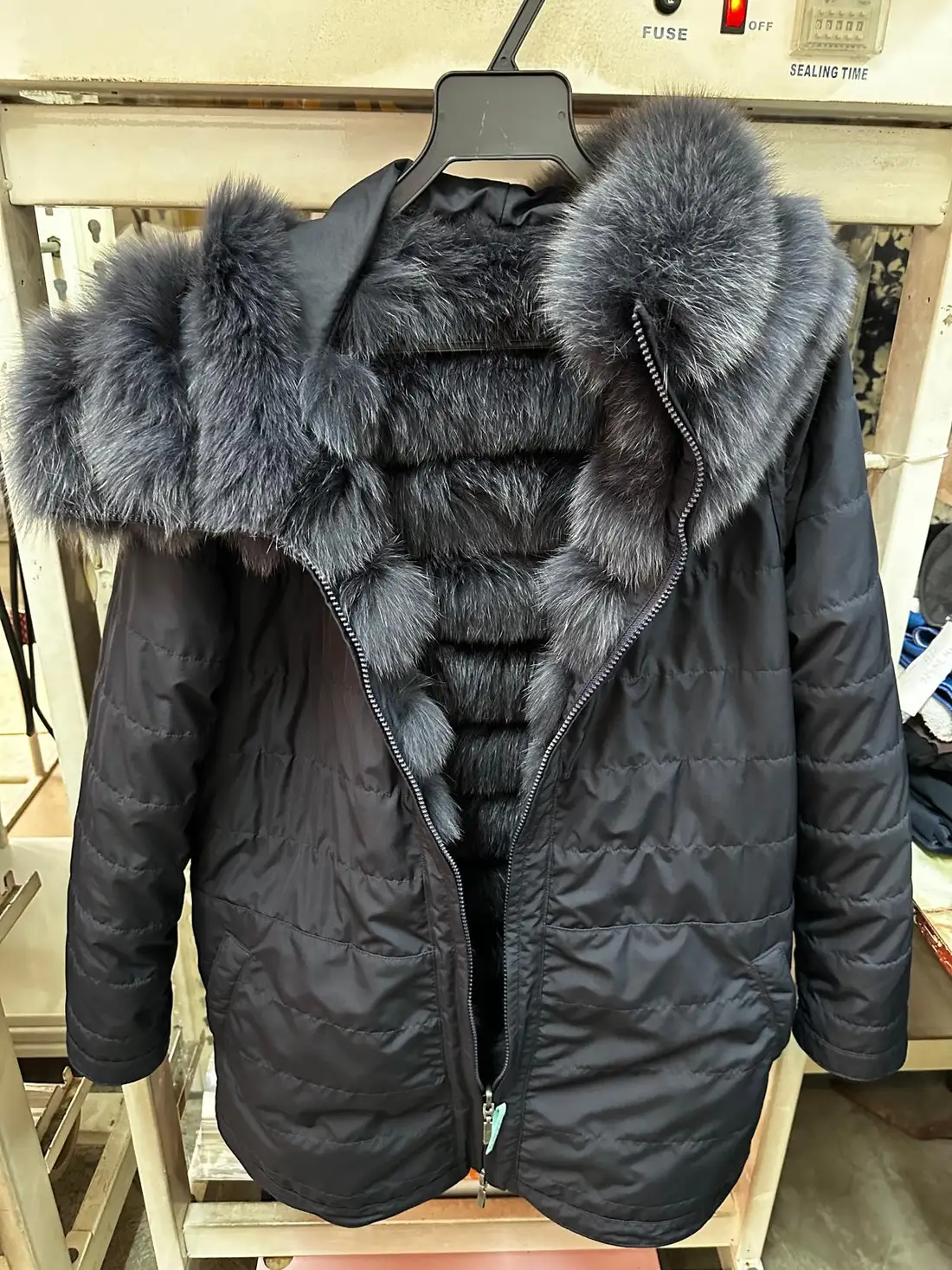
A serious cold-weather piece, built in layers: a weatherproof quilted shell outside, and inside, a full lining, hood and collar of blue fox. The sewn-in label is about as direct as they come: BLUE FOX — Vulpes lagopus — REAL FUR — Fur Cleaning Only. The manufacturer knew what an ordinary dry-cleaning machine would do to this jacket, and wrote the label to prevent it.
Why fur is its own discipline
Real fur is a tanned skin with the animal's hair still attached, closer to a shearling than to anything woven. The hair carries natural oils that give it lustre and loft, and the hide beneath needs those same oils to stay supple. Conventional dry-cleaning solvent strips both in one pass: the guard hairs go dull and brittle, the undercoat mats, and the skin dries toward cracking. Heat finishes the job. That's why fur cleaning is a separate craft, using gentler agents, hand methods, and slow drying.
The work
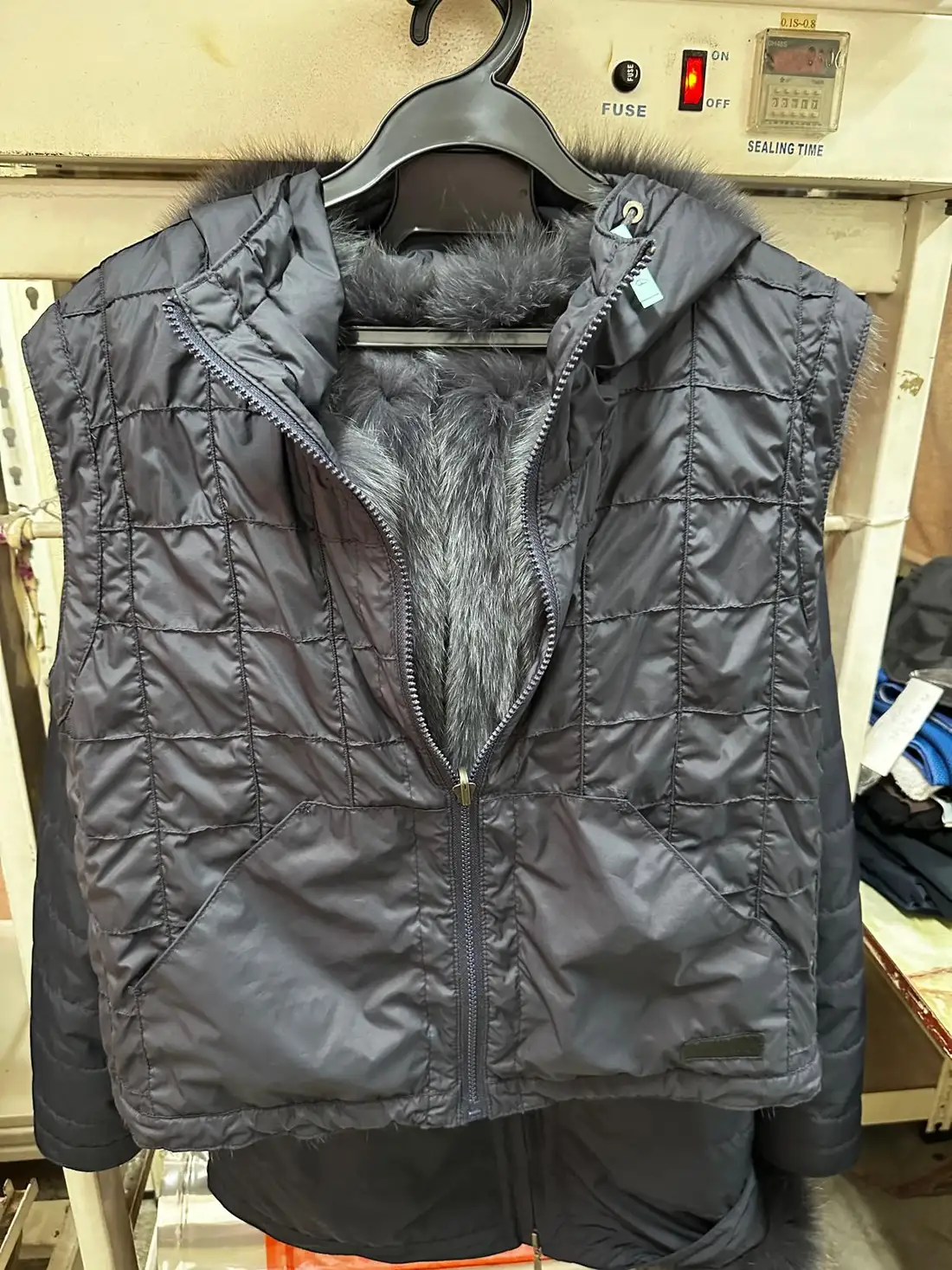
Each layer needed different handling, so each got it: the quilted shell cleaned as a technical fabric, and the fur cleaned as fur. Soil was lifted from the hair without flooding the hide, the undercoat worked back to loft, the guard hairs left glossy, and the skin conditioned so it stays soft through another winter. The parka went home with its volume back, which for fur is the whole point: flat fur is a sign of damage, not a look.
The honest note
In Singapore, a piece like this sits in a wardrobe eleven months a year, and the tropics are hard on stored fur. Humidity invites mould into hair and hide, heat dries the skin, and a season of neglect shows up as shed patches that don't grow back. The rule is the one every case in this journal keeps arriving at: never store anything uncleaned, and give fur professional attention before it goes away, not after it comes out wrong. If your label says fur cleaning only, believe it, and bring it to someone who cleans fur.
Case practitioner and technical review: Zach Lim.
Related cases
More like this
Common questions
Frequently asked
Can you dry clean a real fur coat or parka?
No. Conventional dry-cleaning solvent strips the natural oils in one pass: the guard hairs go dull and brittle, the undercoat mats, and the skin dries toward cracking, with heat finishing the job. That is why many fur pieces carry a Fur Cleaning Only label, and why fur cleaning is a separate craft using gentler agents, hand methods and slow drying.
What does 'Fur Cleaning Only' on a care label mean?
It means exactly what it says: the manufacturer knows an ordinary dry-cleaning machine would ruin the piece. Real fur is a tanned skin with the hair still attached, closer to shearling than to anything woven, and it needs the natural oils in both hair and hide preserved. If your label says fur cleaning only, believe it and bring it to someone who cleans fur.
How is a fur-lined parka actually cleaned?
Layer by layer, each part handled differently: the quilted shell cleaned as a technical fabric and the fur cleaned as fur. Soil is lifted from the hair without flooding the hide, the undercoat worked back to loft, the guard hairs left glossy, and the skin conditioned so it stays soft. Flat fur is a sign of damage, so restoring the volume is the whole point.
How should fur be stored in a humid climate like Singapore?
Never uncleaned, and with professional attention before it goes away rather than after it comes out wrong. In the tropics a fur sits in a wardrobe most of the year, and humidity invites mould into hair and hide while heat dries the skin; a season of neglect shows up as shed patches that don't grow back.
Where can you get real fur cleaned in Singapore?
Rosabelle cleans real fur in Singapore as a specialist process, separate from both dry cleaning and leather cleaning. Fur cannot go through conventional dry-cleaning solvent, which strips the natural oils from the pelt and leaves the hair brittle and the skin stiff. The pelt and the guard hairs are treated so the skin stays supple and the hair keeps its loft. Fur is priced after inspection because condition and pelt type vary so widely, and the work runs two weeks and upwards. Storing fur in Singapore's humidity without airflow causes most of the damage we see.