
Journal · Accessories ·
Designer Hats: Cleaning Straw, Felt and Cotton After Storage
Chanel, Hermès, Balenciaga, Prada, SMFK — a wardrobe of hats brought in together after a long stretch on a shelf. Three different materials, three different problems, and not one of them can be washed.
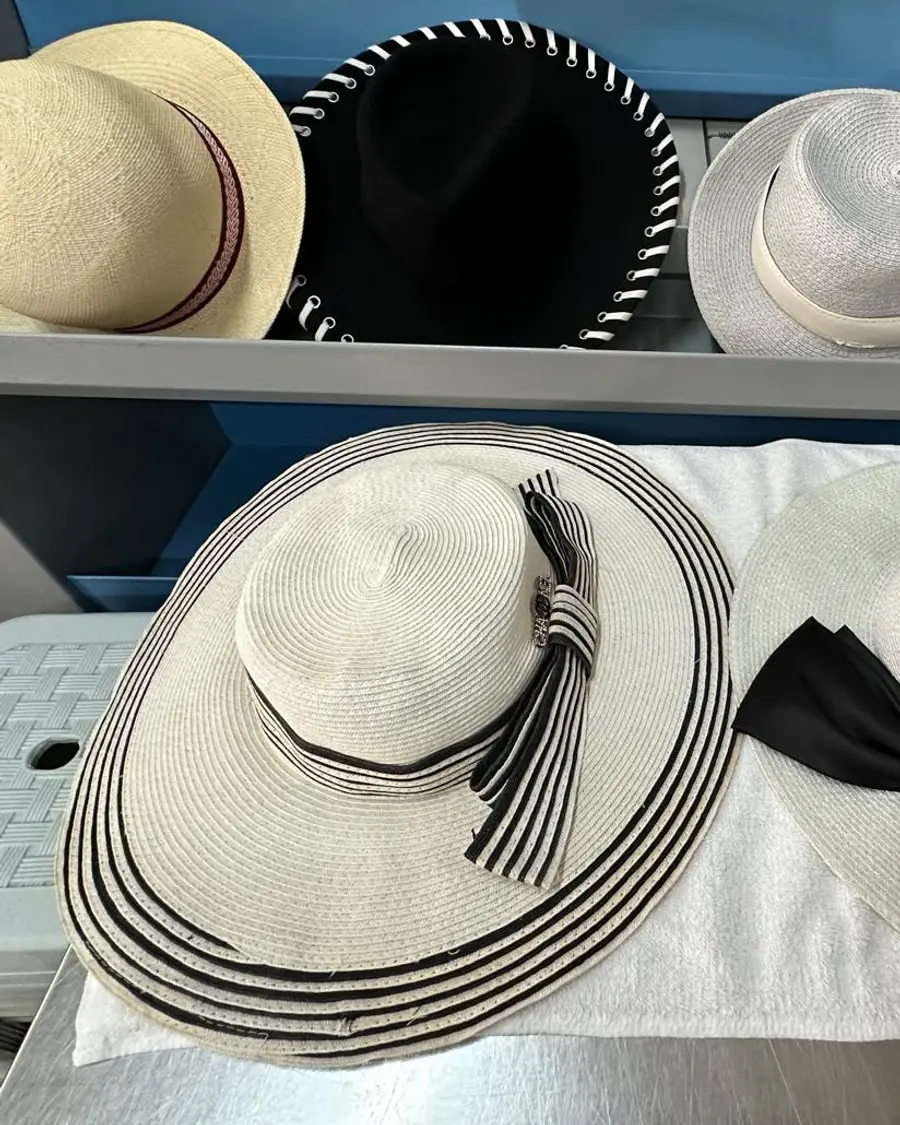
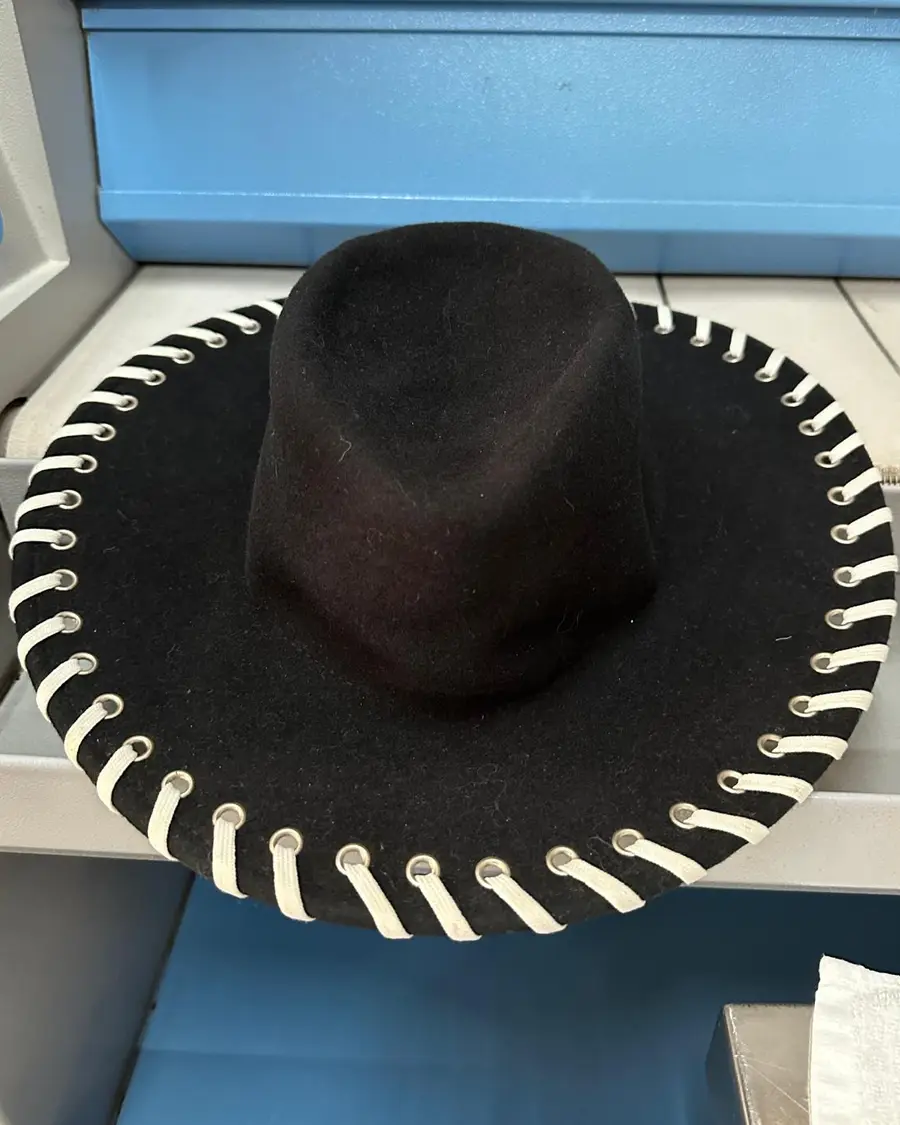
What came in
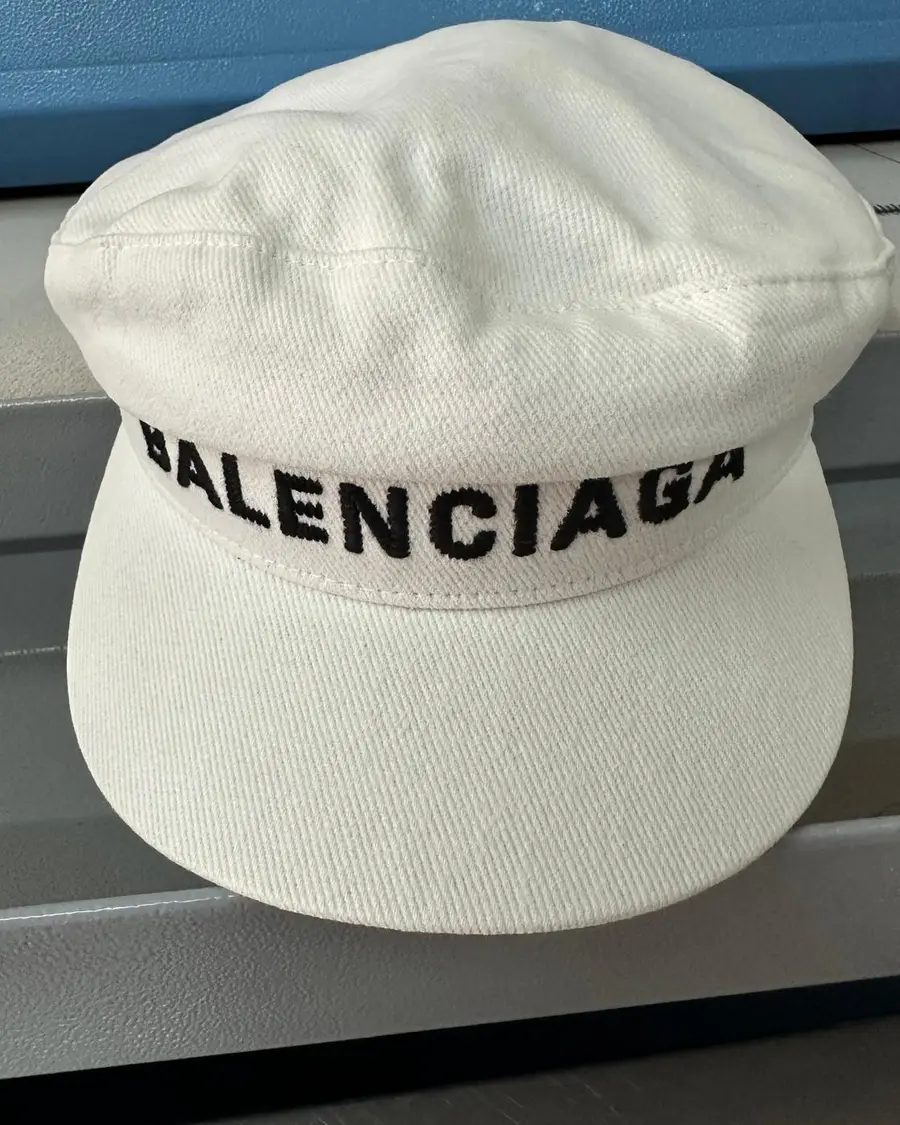
Not one hat but a collection of them, delivered together: wide-brimmed straw with grosgrain bands, a black wool felt with cream whipstitching around the edge, cream boaters, and structured caps in white cotton twill. Several summers' worth of hats, all belonging to the same wardrobe, all arriving at once.
They had one thing in common, and it is the reason they were here. Every one of them had spent a long time on a shelf.
Storage is where hats fail
A hat is the most-stored thing most people own. It gets worn for one holiday, one wedding, one week of a European summer — and then it sits, untouched, for eleven months. That gap is where the damage happens, and it happens quietly.
Straw yellows. It is a natural fibre, and the things it collects in wear are invisible on the day: hair oil at the crown, sun cream along the brim, perspiration in the inner band. Put away without cleaning, in our humidity, those residues oxidise over months and the straw shifts from cream to a dull ochre. The hat went into the cupboard looking perfectly clean. It is the residue, not dirt, that develops into the colour you find later. This is the same mechanism that turned a Margiela tote yellow in storage, and it catches hats far more often, because nobody thinks to clean a hat before putting it away.
Felt has a different failure. Wool felt holds dust down in the pile rather than on the surface, so a felt hat rarely looks dirty — it looks tired, flat, slightly grey in the light. And a grosgrain band holds the sweat line that never showed when the hat was new.
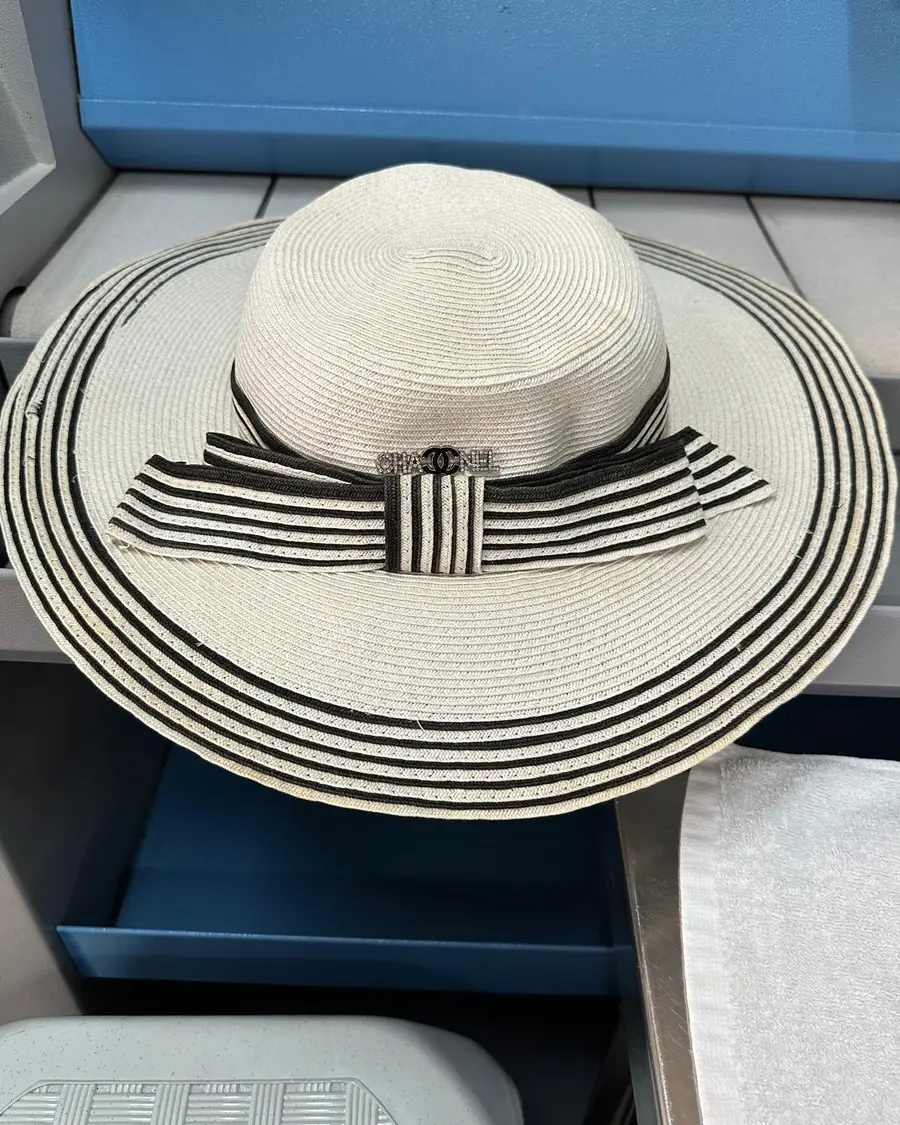
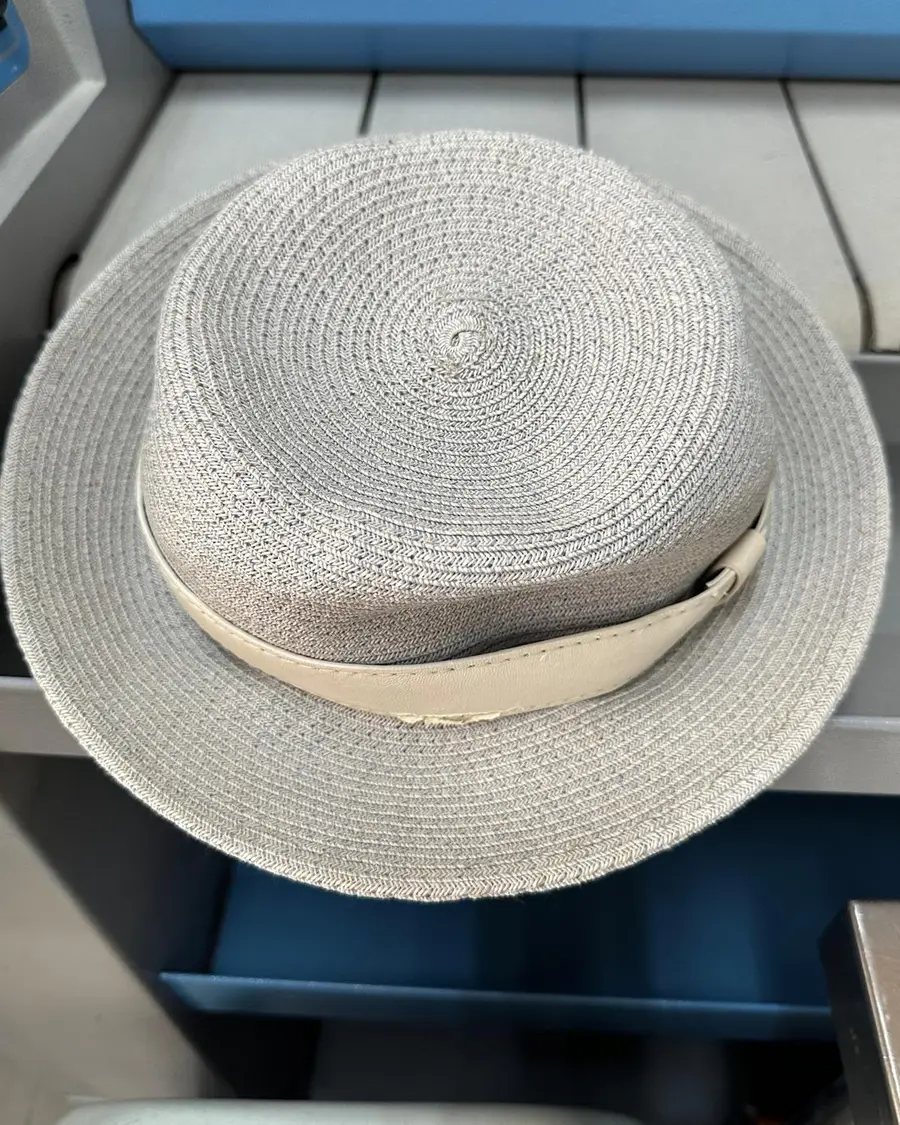
Three materials, three approaches
Straw is worked by hand in sections, with the crown supported throughout, and dried slowly back into shape. Felt is treated dry wherever possible — the dust is lifted out of the pile rather than flushed through it, and the nap brushed back one way so the surface reads evenly again. Cotton twill caps are the most forgiving of the three and still need blocking afterwards, because a soft cap that dries unsupported dries crooked.
Trims are handled separately from the body in every case: grosgrain bands, leather sweatbands, ribbon, and the whipstitched edging on the felt each want something different from the material they are attached to.
Why a hat can't simply be washed
Because with a hat, the shape is the product. A garment has seams to open, a lining to work behind, and a form that returns when you press it. A hat has none of that. It was blocked over a wooden form and it holds that shape through the fibre alone — so anything wet enough to clean it thoroughly is wet enough to let it go. Straw relaxes and the brim goes wavy. Felt shrinks and the crown will not come back.
So the work is done by hand, on the block, with the shape supported from the moment it starts. It is slow, and it is the only way that ends with a hat still the shape its maker intended. This is the same category of judgement as any other piece that can't be treated by machine — the reasoning behind our couture and delicate care generally.
The honest note
Surface soiling and the grey that builds along a much-handled brim come away well. Yellowing is less predictable. Caught within a season or two it usually lifts to an even cream; left for years, it can lighten and even out without going all the way back, because the discolouration has had time to work into the braid rather than sitting on it. We will tell you which of those we think you are looking at before we start, and we would rather say so plainly than promise you the hat you remember.
The prevention is simple: clean a hat before it goes on the shelf, not after it comes off. If yours have been up there since the last trip, take one down and look at the crown in daylight. That is usually the moment people call us.
Case practitioner and technical review: Zach Lim.
Related cases
More like this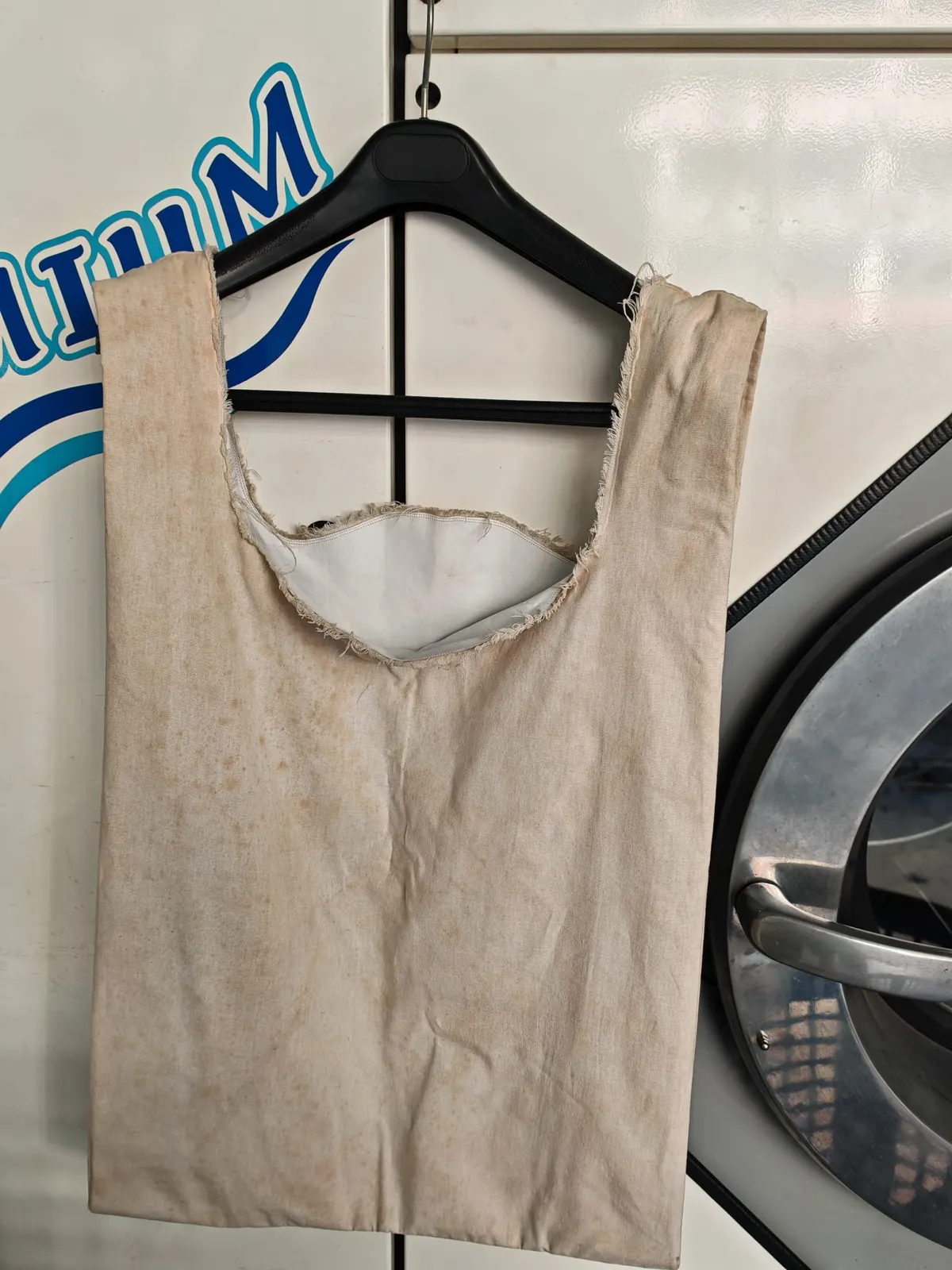
Common questions
Frequently asked
Can you clean a straw hat?
Yes, but not by washing it. A straw hat is a blocked shape held only by the fibre itself, so soaking it is what makes it collapse or go wavy at the brim. Straw is cleaned by hand, worked in sections with the crown supported, then dried slowly in shape. Surface soiling and the grey along a much-handled brim usually lift well; yellowing that has set deep into the braid over years may lighten rather than disappear.
Why do straw hats turn yellow in storage?
Because straw is a natural fibre and the marks it collects are invisible when fresh. Hair oil, sun cream and perspiration sit in the crown and along the inner band, and in Singapore's humidity they slowly oxidise over months in a cupboard, turning cream straw a dull ochre. The hat looked clean when it was put away. The yellowing is that residue developing, which is why cleaning before storage matters far more than cleaning after it.
How is a felt hat cleaned?
Dry, and with the nap in mind. Wool felt holds dust deep in its pile rather than on the surface, so it is lifted out by hand rather than flushed with liquid, then the nap is brushed back in one direction so the surface reads evenly. Water is kept away from felt wherever possible: it relaxes the fibres and a wet felt hat can shrink and lose its blocked shape permanently.
Can designer hats be dry cleaned?
Not in a dry-cleaning machine. The tumbling action alone would crush the crown and distort the brim, whatever the solvent did to the trim. Hats are handled as individual objects at Rosabelle Launderette: cleaned by hand, with the shape supported throughout, and any grosgrain band, leather sweatband or ribbon trim treated separately from the body of the hat.
Can a hat that has lost its shape be reshaped?
It depends on the material and what caused the change. Felt and straw hold a shape formed on a block, and a hat that has been crushed or damp has had that shape moved. A crease that has cracked the fibre is different: straw that has snapped along a fold is broken material, not a moved shape. Bring a misshapen hat in before trying to bend it back at home.
How much does it cost to clean a hat in Singapore?
Cap and hat cleaning at Rosabelle in Singapore starts from $25 for laundry and $35 for dry cleaning, with a standard turnaround of about five working days. Hats are hand cleaned rather than washed, because immersing a hat collapses the blocked shape it was built on and neither straw nor felt returns to it. Straw yellows in storage particularly fast in Singapore's humidity, which draws out and oxidises the natural sugars in the fibre. Each hat is assessed for its material and construction before any treatment.