
Winter wear & outerwear · Singapore
Winter Wear, Down Jacket & Outerwear Cleaning in Singapore
Rosabelle cleans winter coats and overcoats, down jackets and puffers, wool and cashmere knitwear, windbreakers and cold-weather accessories in Singapore. Every piece is cleaned in-house at our Queenstown facility, either before a trip or before it goes back into the wardrobe for the rest of the year. Drop off at Orchard or Queenstown, or book an islandwide pickup.
What a piece needs follows from its fill, shell fabric, trims and care label rather than from the category it sits in. Some down pieces are wet cleaned and others dry cleaned; either way the work is in the drying, which is slow and staged, with the loft worked back by hand rather than pressed. Wool and cashmere are handled so the fibre is not felted, and structured overcoats are finished by hand so the canvas keeps its line. Leather, shearling and fur go through our separate leather process.
Winter jackets are from $30 dry-cleaned or $25 laundered, overcoats from $40, down jackets from $40 dry-cleaned or $35 laundered, and down overcoats from $50. Standard turnaround is about five working days; leather, shearling and fur run two weeks and upwards. We do not store garments — the storage guidance below is for your own wardrobe.
Eleven months in storage, three weeks in the cold.
What winter wear do we clean?
Cold-weather clothing in the common constructions, cleaned for the trip ahead or for the eleven months in the wardrobe afterwards. Each piece is assessed before a method is chosen, because the fill, the shell and the trims decide the work and two jackets of the same shape can need opposite things.
Down jackets and puffers
Down insulates by holding air, so the whole job is about not crushing it. Some brands are wet cleaned and some dry cleaned: in our workshop a Uniqlo or Helly Hansen down piece is usually wet cleaned, while a Moncler is dry cleaned. We read the shell, the trims and the label and tell you which it is going through. From $40 dry-cleaned, $35 laundered.
Wool and cashmere overcoats
A tailored coat carries canvas, interlining and shoulder construction that give it its line, and the wool face cloth has to be cleaned without felting it while those layers move differently underneath. Hand finishing is what puts the line back. From $40, or $50 for a down-filled overcoat.
Wool and cashmere knitwear
Sweaters, cardigans and fine knits, handled so the fibre is not felted. Sweaters from $15 dry-cleaned or $12 laundered. A knit already shrunken in a home wash is assessed for reblocking rather than cleaned as routine.
Windbreakers and shell jackets
Coated and laminated shells, where the coating sets the temperature and the handling. From $25 dry-cleaned or $20 laundered.
Scarves, shawls, hats and gloves
Shawls and mufflers from $18, caps and hats from $35, wool gloves from $10. Leather gloves are from $30 and run on the leather process.
Leather, shearling and fur outerwear
Accepted, on a completely separate process from garments and worked by our garment care team who specialise in leather and hides. Leather jackets from $160, small sheepskin items from $60, fur and exotic hides priced on inspection, and two weeks and upwards rather than five working days. See leather, suede and fur cleaning.
What we do not offer
We do not store garments between seasons. Cleaning also does not close a moth hole or rebuild a worn elbow; repairs are assessed and quoted separately through alterations.
Winter wear cleaning at a glance
- Winter jackets
- From $30 dry-clean, $25 laundered
- Down jackets
- From $40 dry-clean, $35 laundered
- Overcoats
- From $40; down from $50
- Knitwear
- Sweaters from $15 dry-clean, $12 laundered
- Method
- Wet or dry cleaned, set by the brand, shell, trims and label
- Cleaned
- In-house at our Queenstown facility
- Turnaround
- About five working days; leather, shearling and fur two weeks and upwards
- Access
- Drop off at Orchard or Queenstown, or islandwide pickup and delivery
- Not offered
- Seasonal garment storage
How winter wear cleaning works, step by step
Every piece goes through the same stages. What changes between them is the method, and that is set at the first stage rather than at the machine.
-
Assessment, and a method for that piece
Fill, shell fabric, trims, linings and the care label are read together, along with any staining, odour or earlier home treatment. That is where wet or dry cleaning is decided, and we tell you which at drop-off.
-
Leather, shearling and fur separated out
Hides do not go through the garment cycle. Anything with a leather, shearling or fur component is routed to the leather process and quoted on its own timeline.
-
Cleaning matched to the construction
Cleaned by the method chosen at assessment, with stain work done before general cleaning where a mark needs it rather than after.
-
Slow, staged drying and re-lofting
This is the stage that decides how a down piece comes back. Drying is low and staged rather than fast, and the fill is teased back into even loft by hand instead of by heat.
-
Hand finishing, then a final inspection
Structured coats are finished by hand so the canvas and shoulder line hold. Down and embossed or coated shells are not pressed, because pressure flattens the baffles and the relief. Every piece is checked before it is returned.
Assessment always comes first, and our read on your piece applies only to that piece.
How down, wool and structured coats differ
These three sit on the same rail in a wardrobe and want three different things in a workshop.
Down cleaning and re-lofting
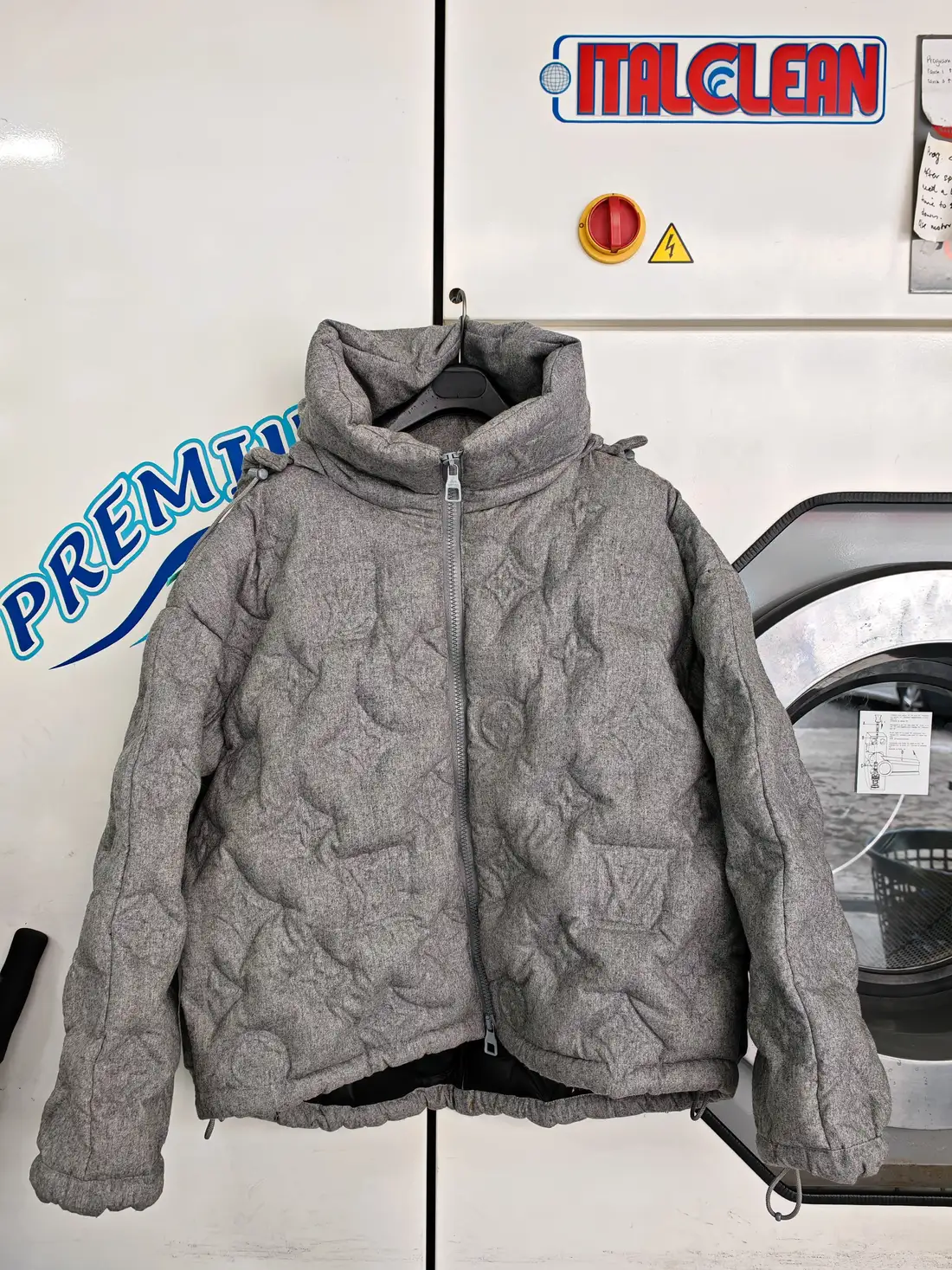
Down works by trapping air in its clusters, so warmth is a function of loft. Wet clusters clump if they are dried fast, and a press flattens the baffles so the fill no longer sits evenly across the panels, which is why drying is done low and in stages with the loft worked back by hand. A limited-edition Louis Vuitton puffer with its monogram embossed into the shell went through exactly that: neither the press nor the hot tumble was available, because either would have taken the embossing as well as the loft.
Wool and cashmere
Wool fibres carry surface scales that lift when the fibre is wet and warm; under mechanical action they lock onto the scales of neighbouring fibres in a ratchet-like mechanism that is irreversible, and the fabric densifies and the garment shrinks. That is the reason wet wool is not agitated freely. It is not a rule about the fibre name, though: wool given a shrink-resist treatment, sold as machine-washable or Superwash, has had those scales smoothed or removed. Which of the two you own is rarely obvious from the garment, so the label and the fabric are read before anything is decided. Reblocking a felted knit is a good deal harder than protecting one.
Structured overcoats
A tailored overcoat holds its shape through canvas, interlining and a shaped shoulder, and those layers move differently from the face cloth when they are cleaned. Hand finishing is what puts the line back, and it is done to the coat rather than to a standard setting.
- The Woolmark Company: Caring for Wool (scales lift with heat and moisture and lock in a ratchet-like mechanism under mechanical agitation; irreversible fibre entanglement and shrinkage)
- The Woolmark Company: Machine Washable Wool (shrink-resist or Superwash treatments smooth or remove the scales so the wool can be machine washed)
Why winter clothes are cleaned before they go into storage
A winter wardrobe in Singapore is worn for two or three weeks a year and spends the rest of the time in a cupboard, so storage is where most of the risk sits rather than the wearing. The damage starts with what is invisible on packing day: perspiration, body oil, food and drink residue.
Sweat and sebum move from skin to cloth and are adsorbed into the fibre, where they act as the precursors skin bacteria convert into the compounds we smell. Some sebum is difficult to remove from synthetic shells in particular, so fatty residue that survives a clean stays behind as a substrate for microbial growth, and clothes left in humid conditions are known to develop malodour. Singapore's relative humidity averages over 80 per cent, and mould growth increases in vigour above 75 per cent. That is also why airing a coat or spraying it does not end the smell: both act on the air and the surface, and the residue is sitting in the fibre.
Pests read soiling the same way. Clothes moth larvae feed on wool clothing, furs and stored woollen items, and fabrics carrying food, perspiration or urine stains are more subject to damage, because insects are less likely to feed on clean fabric than on heavily soiled fabric. Soiling also increases susceptibility to pest attack in silk and cotton. A clean coat is not immune; it is simply a poorer meal.
How to store winter clothes in Singapore's humidity
- Clean it before it goes away, not when it comes out. The clean that protects the garment is the one before the eleven months, not after.
- Make sure it is completely dry. Anything still holding moisture when it is put away is the start of the problem.
- Breathable cover, never sealed plastic or a vacuum bag. Moisture trapped in a sealed container is how mildew starts, and prolonged compression can damage down.
- Keep down and padded pieces loose. Hang them with room around them, or lay them flat rather than squeezed between other coats.
- Dark, ventilated, off an external wall where you can. Keeping the air in the cupboard dry is the point; many people keep a desiccant in there for the same reason.
- Look at the pieces once or twice a year, rather than opening the bag the night before a flight.
We do not store garments, so none of this is a service we are selling you. It is what we would do with our own coats in this climate. A vintage leather jacket that came in carrying musty storage odour is what the alternative smells like.
- Van Herreweghen, Amberg, Marques and Callewaert, "Biological and Chemical Processes that Lead to Textile Malodour Development", Microorganisms 8(11) (2020) (sweat and sebum adsorbed on clothing as malodour precursors; sebum components hard to remove, remaining as a substrate for microbial growth; clothes left in humid conditions develop malodour)
- Meteorological Service Singapore: Climate of Singapore (mean annual relative humidity around 82 per cent)
- University of California Statewide IPM Program: Clothes Moths (clothes moths feed on wool clothing, furs and stored woollen items; fabrics with food, perspiration or urine stains are more subject to damage; insects are less likely to feed on clean fabrics than heavily soiled ones)
- Canadian Conservation Institute: Agent of deterioration: pests (soiling increases susceptibility to pest attack, in particular silk and cotton; mould growth increases in vigour above 75 per cent relative humidity)
- Rab: How to store your sleeping bag (prolonged compression can damage down; breathable storage rather than a plastic bag, where trapped moisture can cause mould)
- University of Nebraska-Lincoln Extension, G1820: Care of Quilts: Storage and Display (moisture trapped in sealed plastic bags and mildew)
How much winter wear cleaning costs and how long it takes
Winter wear is priced per piece, by item and by whether it is dry-cleaned or laundered. Laundered rates are lower and are used where the fabric allows it, which is a decision made at assessment rather than a cheaper option to choose off a list. Down carries its own rate because the drying takes longer.
Additional charges for heavy soiling, stain work or delicate trims are quoted after assessment and confirmed with you before any work starts. Leather, shearling and fur are priced on the leather scale, from $160 for a jacket, with fur and exotic hides quoted on inspection.
Standard turnaround is about five working days. Leather, shearling and fur outerwear runs two weeks and upwards, and a timeline is confirmed at drop-off. If a piece is needed before a flight, say so when you hand it in rather than afterwards.
Guide pricing — dry-clean, from
- Overcoat$40
- Overcoat — down$50
- Winter jacket$30
- Winter jacket — down$40
- Windbreaker$25
- Sweater$15
- Shawl / muffler$18
- Cap / hat$35
- Gloves — wool$10
- Gloves — leather$30
Guide pricing — laundered, from
- Overcoat — down$45
- Winter jacket$25
- Winter jacket — down$35
- Windbreaker$20
- Sweater$12
- Shawl / muffler$14
- Cap / hat$25
Examples from our Singapore workshop
More like thisDocumented outerwear and knitwear cases from our own workshop. Each result belongs to that piece and its condition, not an outcome to expect from every item.
 Outerwear
Louis Vuitton puffer: down cleaned without a press
Down fill under an embossed shell: cleaned, then dried in stages and re-lofted by hand, because heat or pressure would have taken both the loft and the relief.
 Knitwear
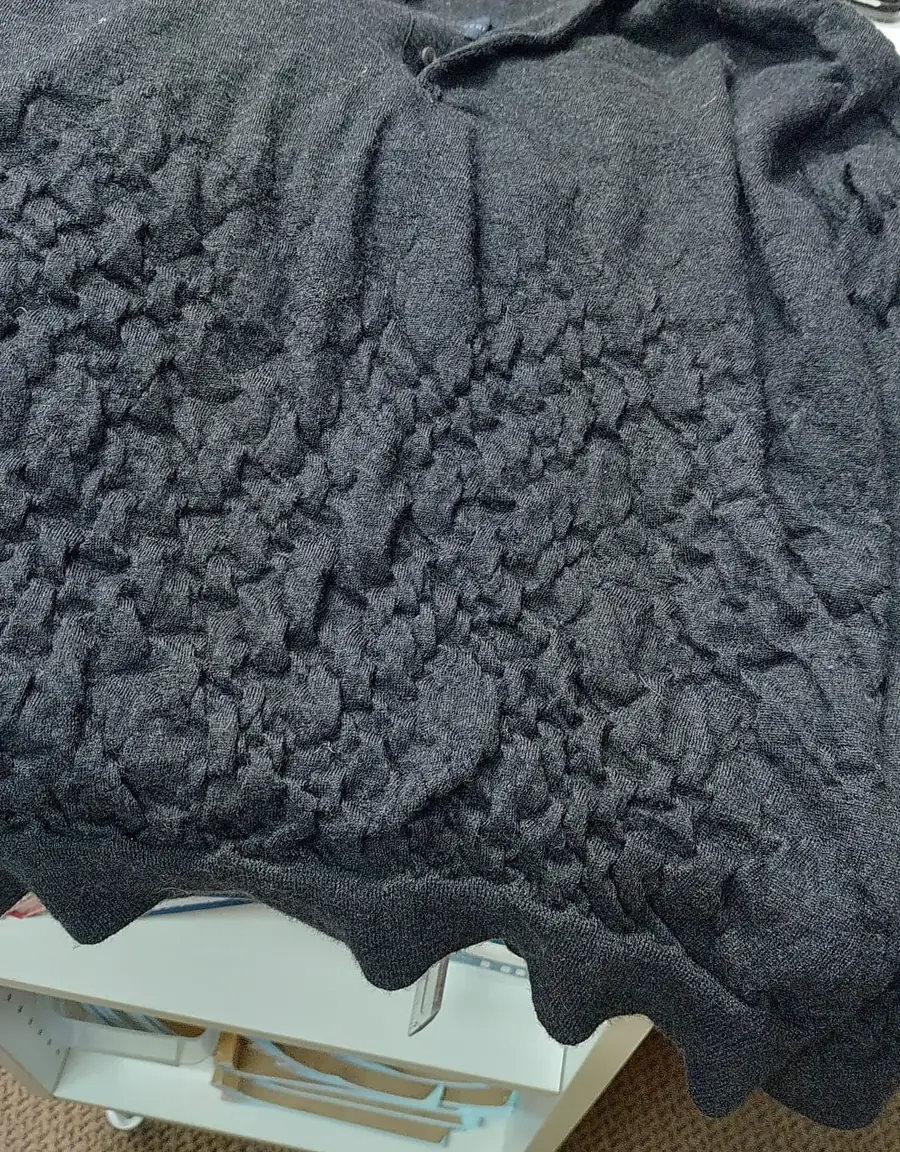
Wool sweater: reblocked after a home wash
What it takes to relax and reblock a felted knit, and why not every shrunken wool garment can be brought back.
 Knitwear
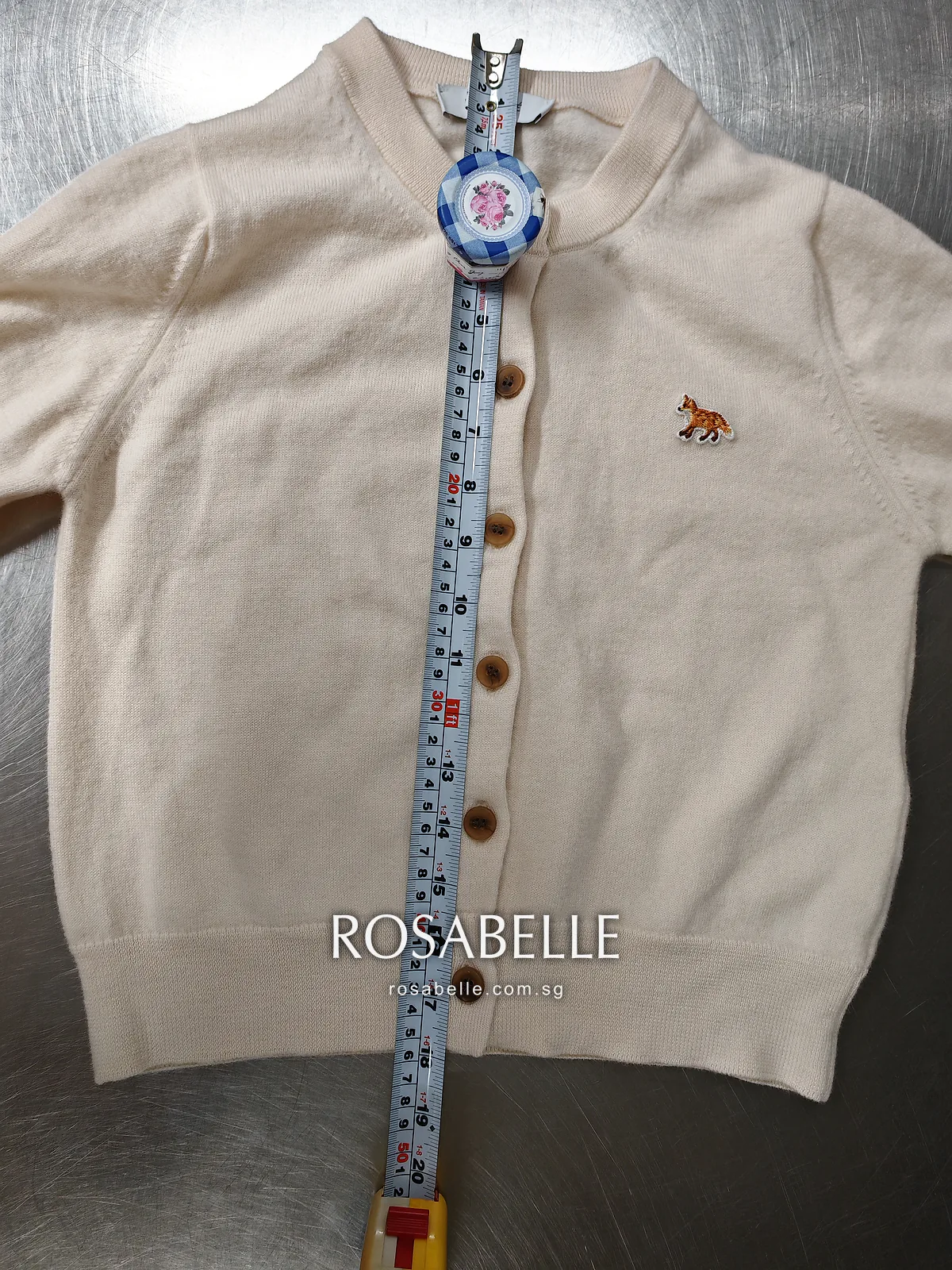
Maison Kitsuné cardigan: reblocked to size
A merino cardigan that shrank in a hand wash, relaxed and reblocked back to its original size S.
 Knitwear
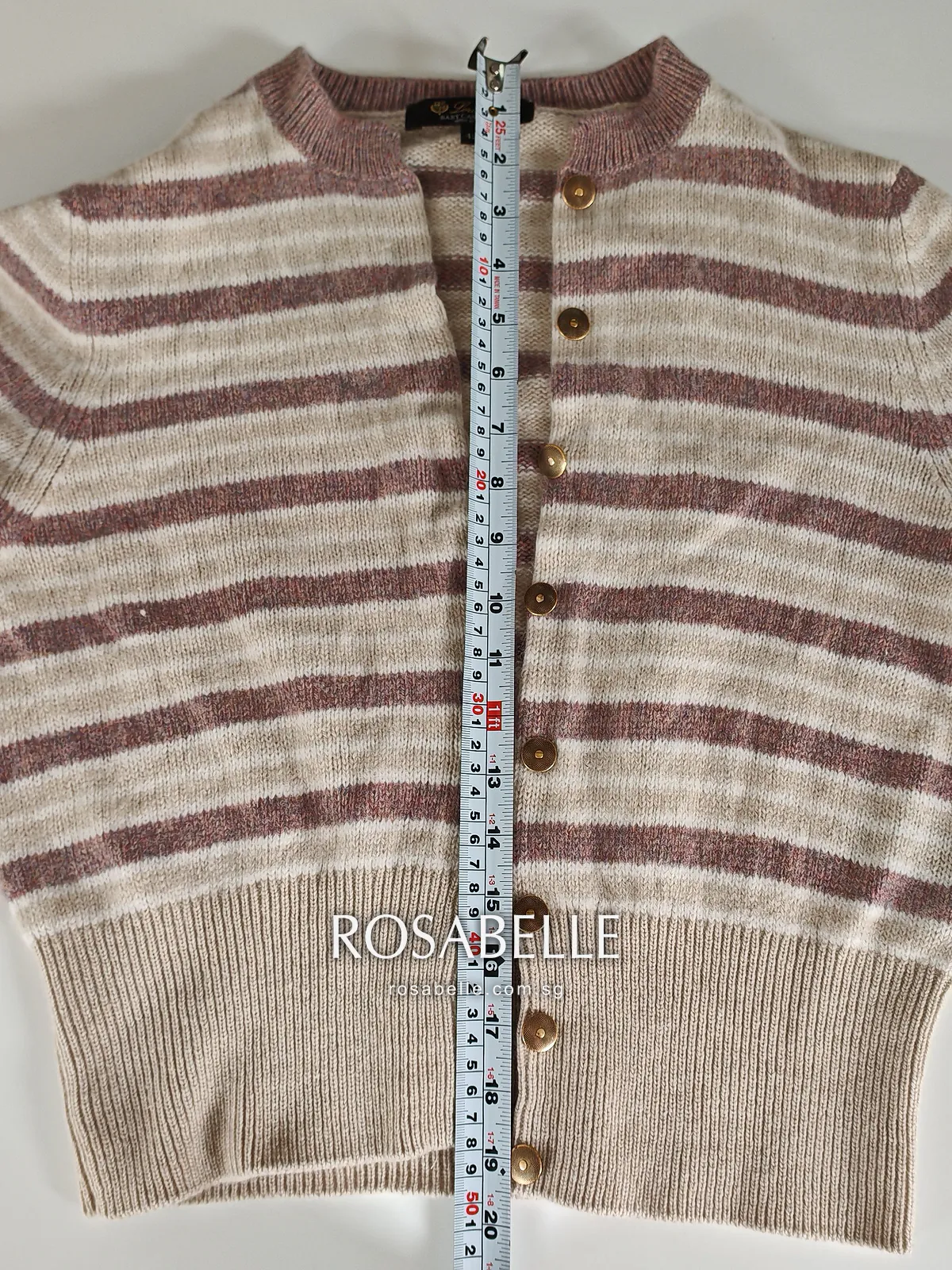
Loro Piana cashmere cardigan: reblocked
A 100% cashmere cardigan that shrank in a home machine wash, relaxed and reblocked; its size improved significantly.
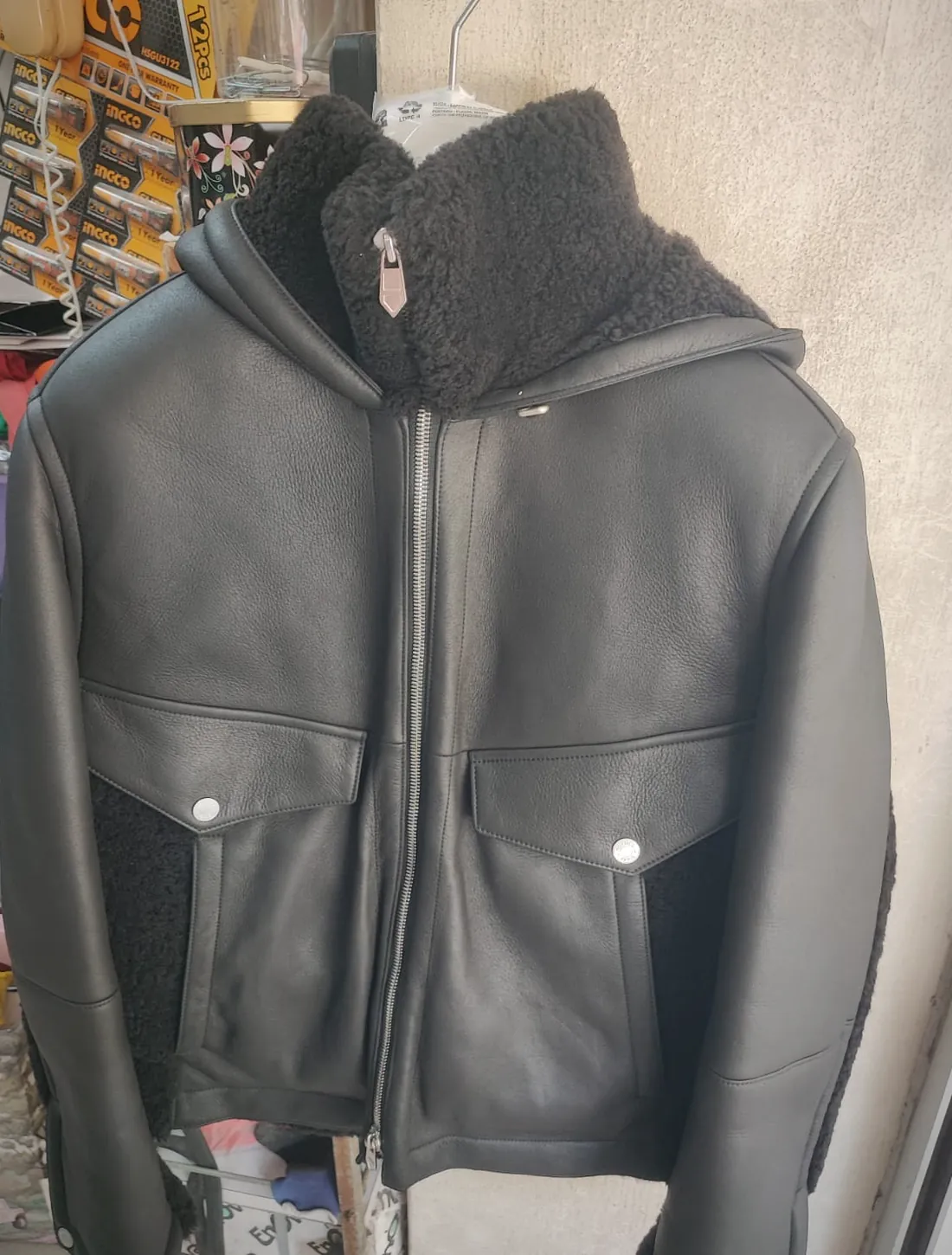 Leather & fur
Hermès shearling: skin and fleece in one piece
Double-faced lambskin cleaned and conditioned on the leather process rather than the garment cycle.
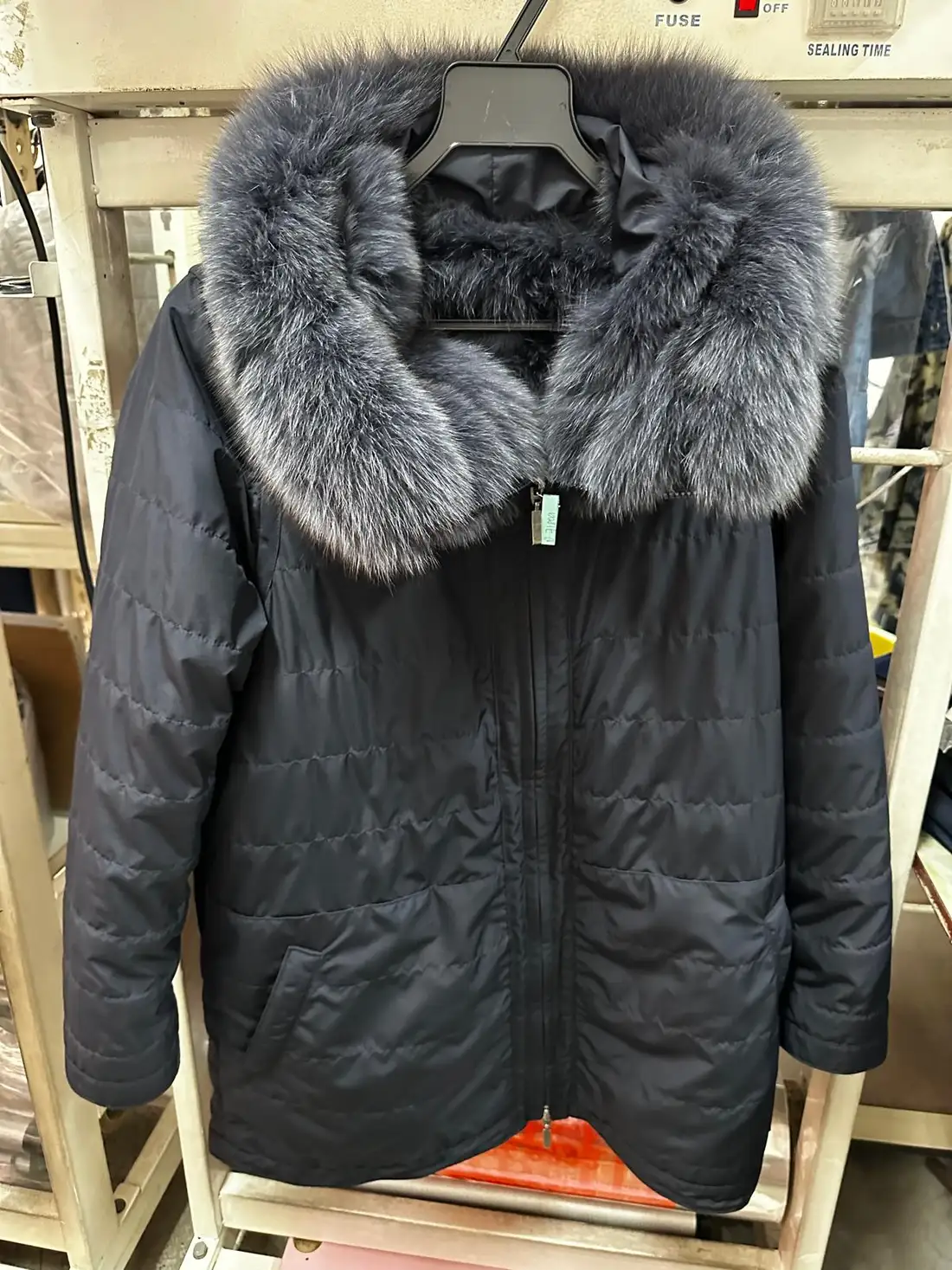 Leather & fur
Blue fox parka: specialist fur cleaning
A fur-lined and hooded winter parka cleaned and conditioned as real fur, and why fur here is dealt with before storage rather than after.
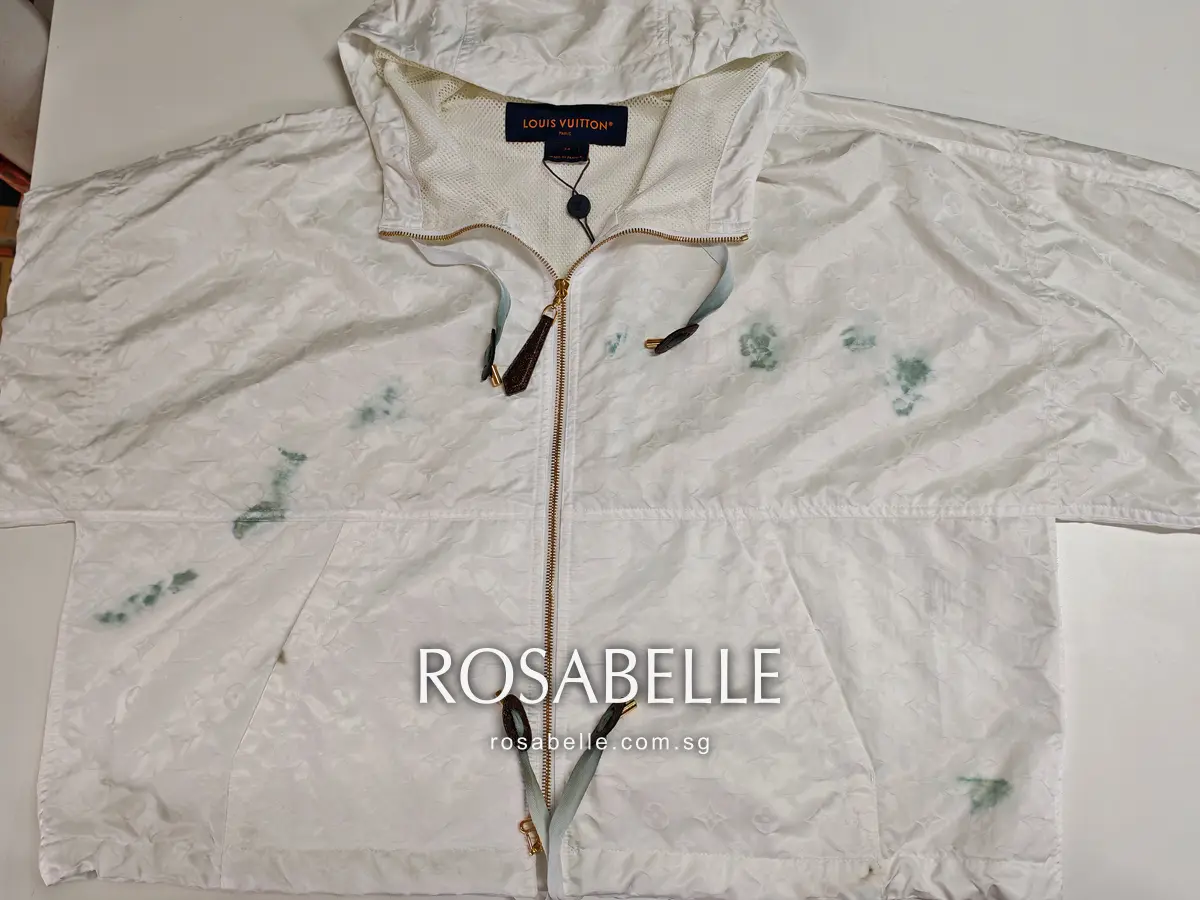 Outerwear
Louis Vuitton parka: colour run from bleached toggles
Dye bleeding from leather toggles across a polyamide shell: stopped first, then lifted, and all of the colour run came out of this parka.
In their words
What customers say
"Dry cleaned all 5 of my winter downs. Very responsive over WhatsApp, pick up and collection in timely manner. Price reasonable and jacket came back in pristine condition. Delivery person very polite and nice."
What we do not promise
Cleaning takes soil out; it does not put back what has gone. Down that has spent years compressed, or has lost fill through a seam, will not return to the loft it had new. Pilling is fibre that has already broken. Moth holes and worn elbows are damage rather than soiling, and closing them is repair work. Wool that has felted can sometimes be relaxed and reblocked and sometimes cannot, and how far it goes depends on the knit and on what was already done to it. Where odour or staining has been in a shell for a long time, we tell you what we see at assessment before any work starts: complete removal is possible on some garments but cannot be guaranteed.
Common questions
Winter wear and outerwear cleaning FAQs
How much does it cost to dry clean a winter coat in Singapore?
Overcoats start from $40 dry-cleaned at Rosabelle in Singapore, and from $50 for a down overcoat. Winter jackets start from $30 dry-cleaned or $25 laundered, down winter jackets from $40 dry-cleaned or $35 laundered, windbreakers from $25 and sweaters from $15. Shawls and mufflers are from $18, caps and hats from $35, and wool gloves from $10. Standard turnaround is about five working days, and the full winter wear grid is on the price list.
Can a down jacket or down puffer be dry cleaned?
Some are dry cleaned and some are wet cleaned, and which one your jacket needs depends on the brand, the shell fabric, the trims and the care label rather than on the fill alone. In our workshop a Uniqlo or Helly Hansen down piece is usually wet cleaned, while a Moncler is dry cleaned. What matters more than the choice of medium is the drying: down clumps if it is dried fast and flattens under a press, so it is dried slowly in stages with the loft worked back by hand. We read the piece at drop-off and tell you which method it is going through. Down winter jackets are from $40 dry-cleaned or $35 laundered, and down overcoats from $50.
How do you clean a down jacket without flattening it?
Down insulates by holding air in its clusters, so the risk sits in the drying and finishing rather than in the cleaning. Heat and speed make the wet clusters clump together, and a press flattens the baffles so the fill no longer sits evenly across the panels. The jacket is dried slowly, low and in stages, with the fill teased back into even loft by hand instead of by heat. A limited-edition Louis Vuitton puffer with its monogram embossed into the shell went through exactly that, because a press would have erased the embossing as well as the loft.
Should winter clothes be cleaned before or after storage?
Before. Perspiration, body oil and food residue are invisible on the day a coat is packed away, and the months it then spends in a Singapore wardrobe give them time to settle into the fibre. Sweat and sebum carried into cloth are the precursors skin bacteria turn into smell, and some of it is difficult to wash out of synthetic shells, so what is left behind stays available. Clothes moth larvae feed on wool, furs and stored woollens, and fabrics carrying food, perspiration or urine stains are more subject to damage; insects are less likely to feed on clean fabric than on heavily soiled fabric. A coat that goes away clean comes out ready to wear.
How should winter clothes be stored in Singapore's humidity?
Clean them first, dry them completely, then store them loose, dark and breathable. Singapore's relative humidity averages over 80 per cent, and mould growth increases in vigour above 75 per cent, so a closed wardrobe here sits in that range for much of the day. Use a breathable cotton cover rather than sealed plastic or a vacuum bag, because moisture trapped in a sealed container is how mildew starts, and prolonged compression can damage down. Hang coats with room around them or lay bulky pieces flat, keep the cupboard off an external wall where you can, and look at the pieces once or twice a year rather than the night before a flight. Rosabelle does not store garments; this is guidance for your own wardrobe.
Can a shrunken wool sweater be restored?
Wool's surface scales lift when the fibre is wet and warm, and mechanical action locks them into each other in a ratchet that does not unlock, which is why the fabric densifies and the garment comes out smaller. Relaxing and reblocking a felted knit works on the shape rather than on that bond, so how much comes back depends on how far the felting went, the knit structure and what was done to it at home. On one fine wool sweater shrunken and puckered by a home wash the shape was brought back. We assess the knit before any work starts, and not every shrunken wool garment can be recovered.
Do you clean cashmere?
Yes. Cashmere is a fine animal fibre with the same scale structure as wool, so it felts under the same combination of moisture, heat and mechanical action, and it pills where it rubs because the fibres are short and soft. Sweaters are from $15 dry-cleaned or $12 laundered. Pilling is fibre that has already broken and cleaning does not put it back.
Do you clean leather, shearling and fur outerwear?
Yes, but not in an ordinary garment cycle. At Rosabelle, leather, suede, shearling and fur are cleaned in-house on a completely separate process by our garment care team who specialise in leather and hides, with the method tailored to each piece after assessment. Any cleaning draws out some of the oils that keep a hide supple, so every piece is reconditioned afterwards. Published guide prices start at $160 for a leather jacket and $60 for small sheepskin items, with fur and exotic hides priced on inspection, and this work runs two weeks and upwards rather than the five working days an ordinary winter garment takes.
Why do stored winter clothes smell musty in Singapore?
Because residue and humidity work together. Sweat and sebum transferred from skin to cloth are adsorbed into the fibre and act as precursors that skin bacteria convert into odour compounds, and some sebum is hard to remove from synthetic shells, so fatty residue stays behind as a substrate for microbial growth. Clothes left in humid conditions are known to develop malodour, and Singapore's relative humidity averages over 80 per cent. Airing and fabric spray act on the air and the surface; the residue sitting in the fibre is what the smell is coming from.
How long does winter wear cleaning take?
About five working days for winter garments, which is our standard turnaround. Leather, shearling and fur outerwear runs two weeks and upwards on the separate leather process, and a timeline is confirmed at drop-off. If you need a piece back before a flight, say so when you hand it in.
Do you collect and deliver winter wear?
Yes. Islandwide pickup and delivery is available, which suits bulky coats and a wardrobe going away for the season. Winter pieces can also be dropped at either shop, Queenstown at 163 Stirling Road or Orchard at Far East Shopping Centre, and collected there or delivered back to you.