
Journal · Case study · Stain removal · Published
Removing Red Wine Stains From a Dolce & Gabbana Linen Coat in Singapore
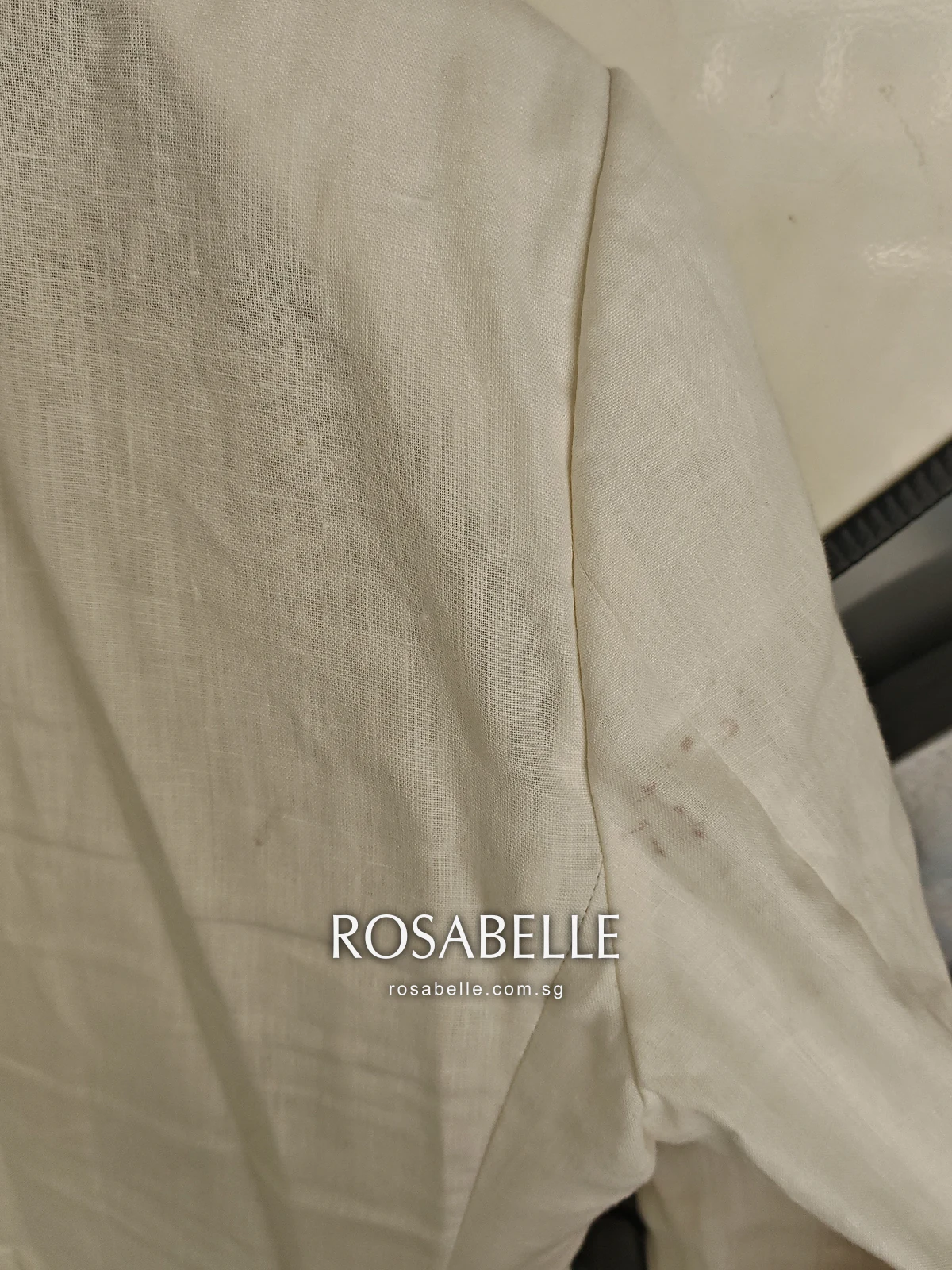
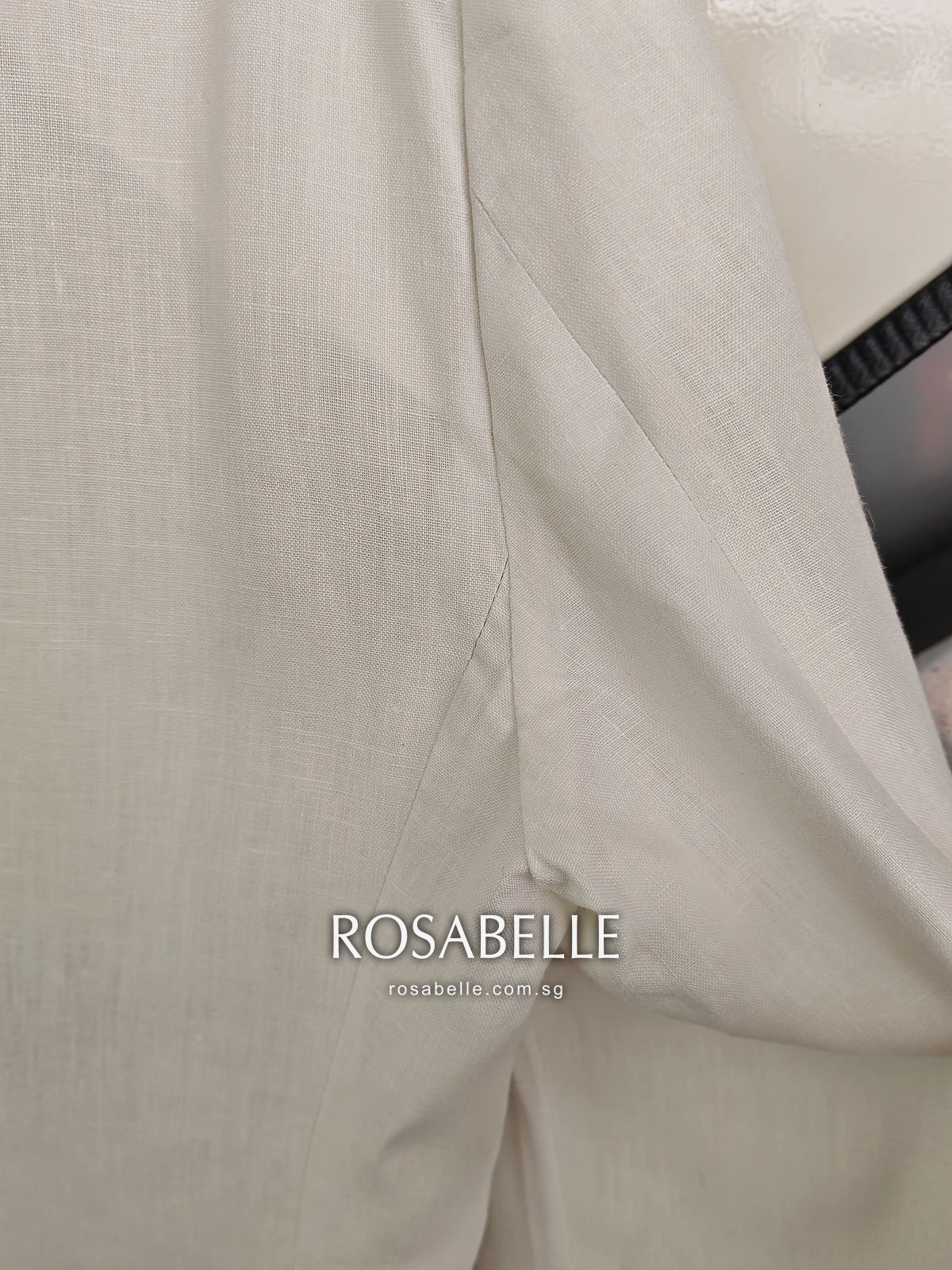
Every red wine spot on this cream Dolce & Gabbana linen coat was removed. The coat is double-breasted, in 100% linen, and arrived with spots on the lower front around the pocket and on the sleeve.
The stains were a week or two old and nothing had been tried on them at home. This page records what happened to this coat, not an outcome to expect from every wine stain.
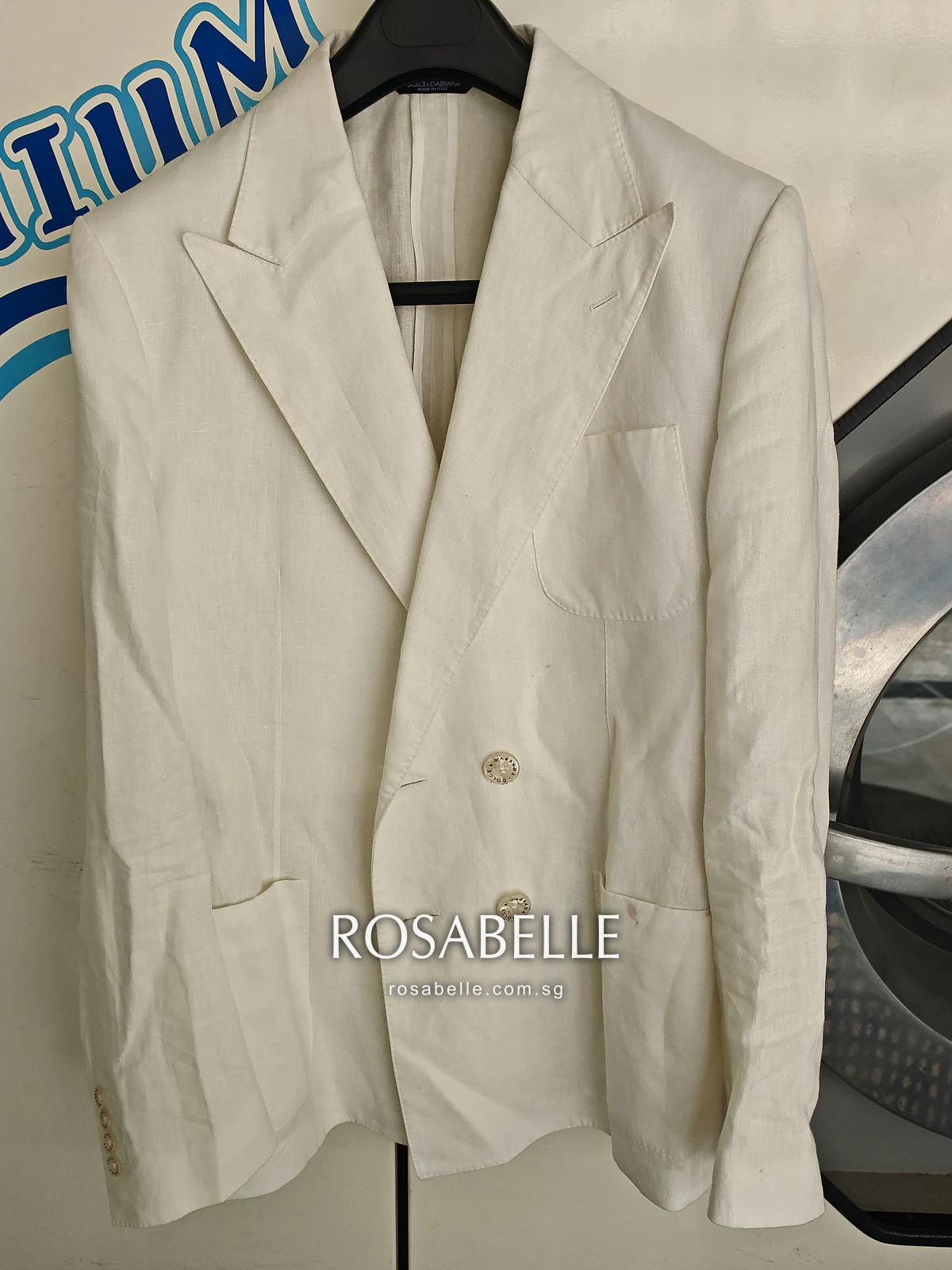
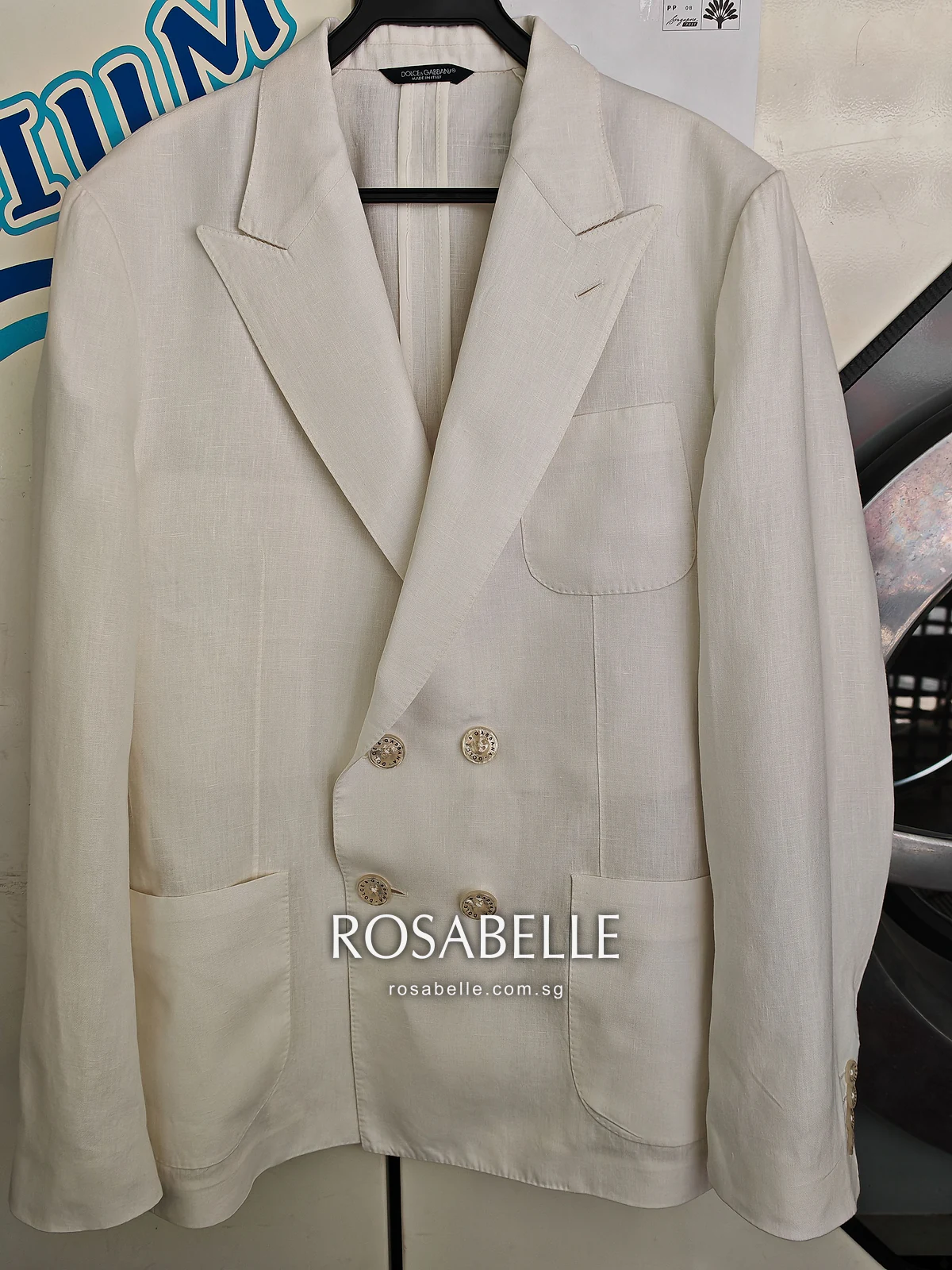
All photographs are shop records, shown as captured with no colour correction. They were taken on different days in shop light, so the cream reads slightly differently between frames; what they show is whether each spot is there.
What condition was the Dolce & Gabbana coat in when it arrived?
The coat is a cream Dolce & Gabbana double-breasted coat in 100% linen, with peak lapels, patch pockets and logo buttons. It came in with red wine spots in two areas: along the top of the lower patch pocket beside the buttons, and in a scatter on the sleeve. The stains were a week or two old.
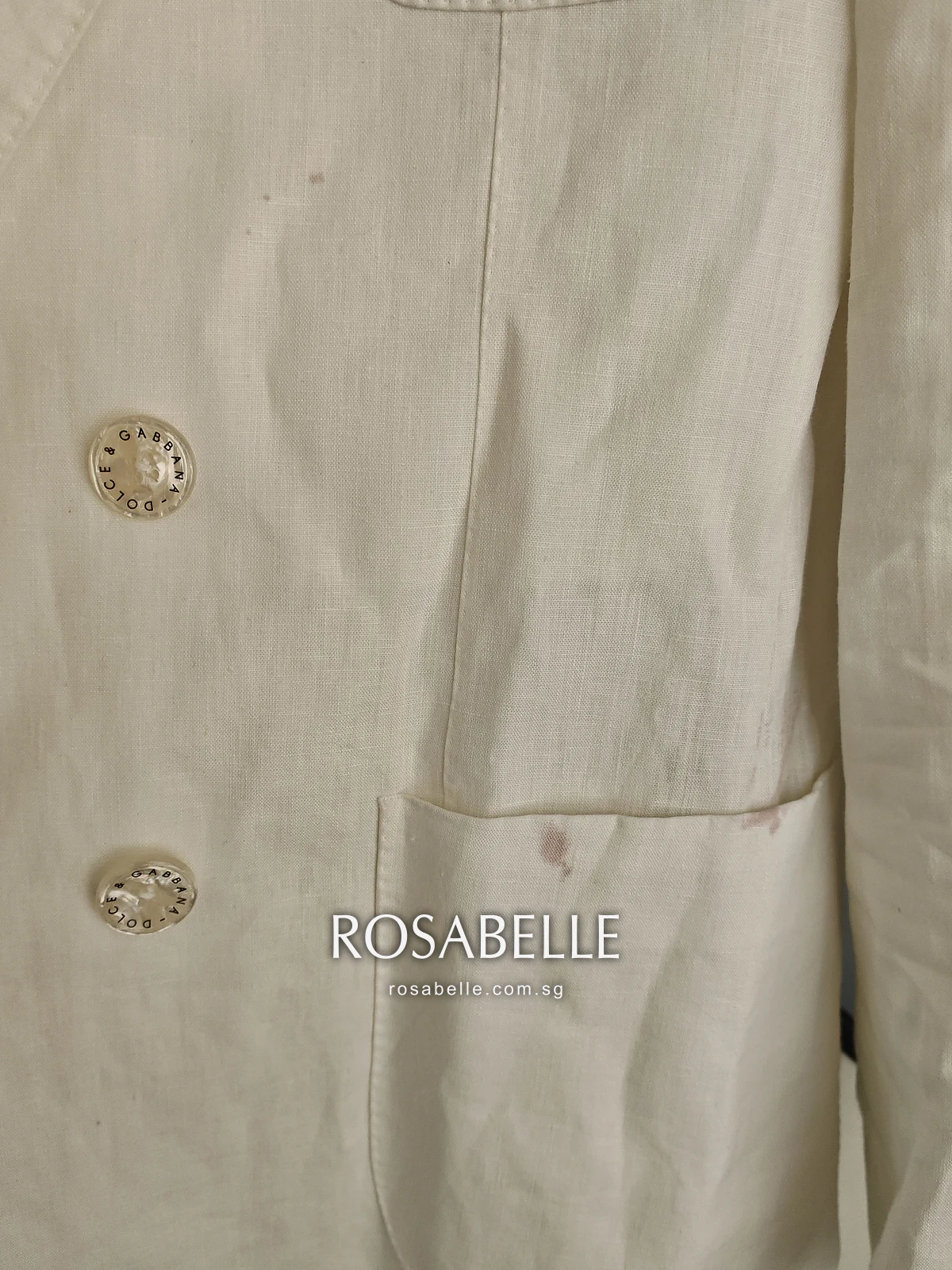
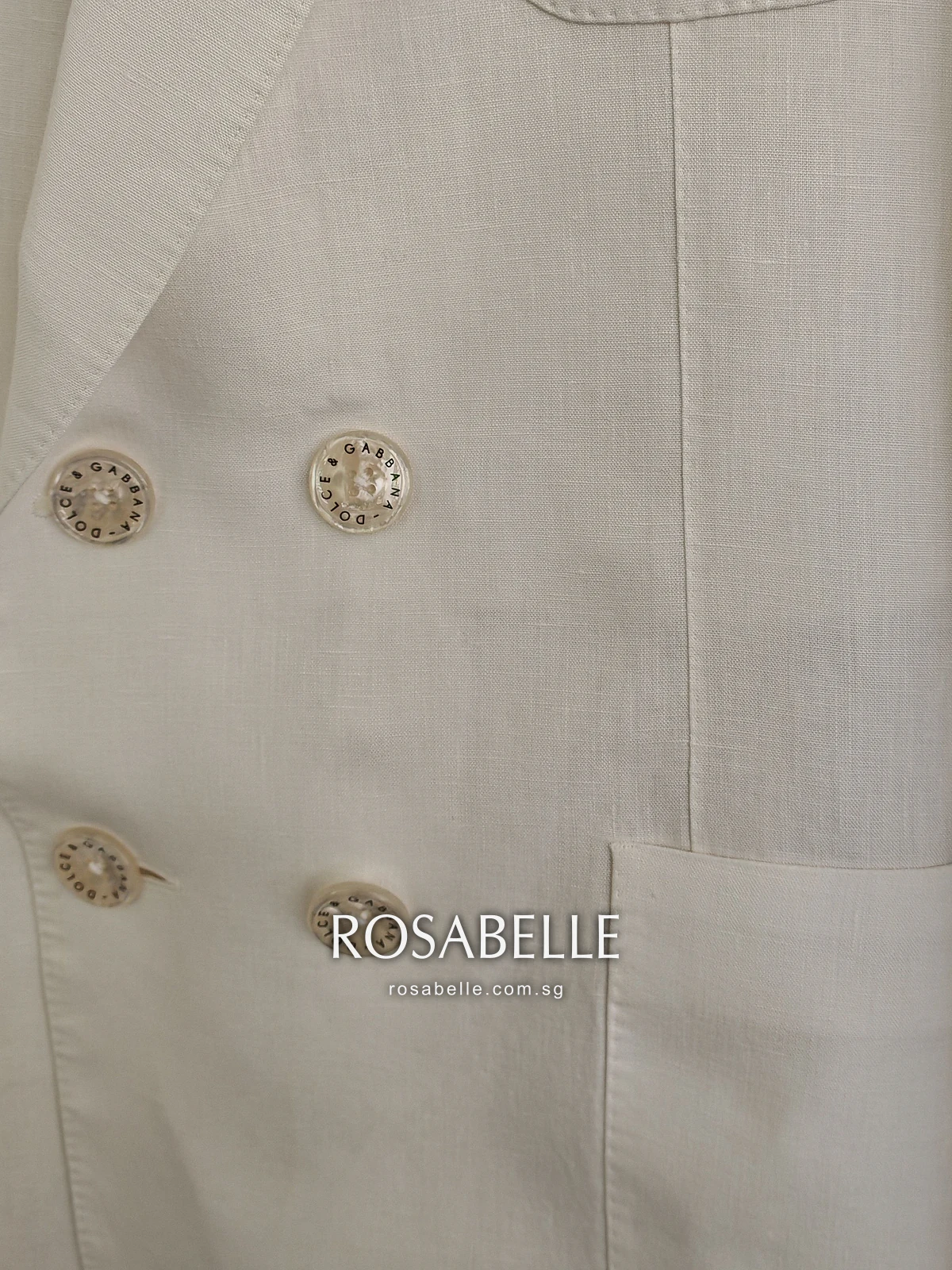
Why is red wine difficult to remove from linen?
Red wine carries pigments from the grape skins and tannins, and the tannins help hold the colour on the fibre. Heat sets the stain further, which is why a hot wash or an iron makes wine harder to move. Linen is a plant fibre that takes up liquid readily, so a spill soaks into the yarn rather than sitting on top of it.
A pale linen also shows every edge. Treating a spot unevenly can leave a ring where the damp area dried, which on cream linen is as visible as the stain was.
Why does a tailored linen coat need more care than a linen shirt?
A tailored coat is built in layers. Behind the linen there can be canvas, interfacing and shoulder shaping, and each can respond to water differently from the shell. If one layer shrinks or puckers and the others do not, the front no longer hangs as it was cut. So the question on this coat was not only whether the wine would come out, but whether the coat would keep its shape.
How did Rosabelle remove the wine stains?
Treating each area on its own
The pocket and the sleeve were treated as separate areas, each until its spots were gone.
Finishing without rings
Each area was worked so that it dried evenly into the surrounding linen, so no tide line was left where the treatment stopped.
Keeping the coat's shape
The coat was finished to hang as it was cut, with the lapels and front edges in line.
What did Rosabelle deliberately avoid, and why?
- Heat before the stains were out. Heat sets wine stains.
- Rubbing the spots. It spreads the stain and roughens the linen surface.
- Soaking the coat. A tailored front is built in layers that can react to water differently.
- Salt and household stain products. They add something else to take out, and some can change the colour of pale linen.
What was the result?
Every red wine spot was removed, at the pocket and on the sleeve, with no ring left around the treated areas. The coat went back holding its shape.
What does this case show about red wine stains?
Wine that has not been heated or treated at home leaves the most options, even after a week or two. The best thing this coat's owner did was nothing: no rubbing, no remedies and no iron. The result on this coat is evidence about this piece, not a forecast for every wine stain.
How should you care for a linen coat?
Do:
- Blot a spill with a clean white cloth, without rubbing.
- Bring a stained coat in as it is, and say what was spilled and when.
- Hang a linen coat on a shaped hanger with room around it.
Don't:
- Iron or steam over a stain.
- Add salt, hot water or a household stain remover.
- Wash a tailored coat at home unless its label allows it.
The honest note
Can every red wine stain be removed from linen?
Not always. We do our best, but many factors will affect the outcome. Complete removal is possible on some garments but cannot be guaranteed. How old the stain is, whether it has been heated or treated at home, the dye in the fabric and how the garment is made all change the work. This coat's stains were untreated and came out completely; each garment is assessed on its own before any work starts.
Case documented by Rosabelle Launderette's garment-care team. Case practitioner and technical review: Zach Lim.
Cleaned in-house at Rosabelle Launderette, Singapore, established 1998. This case records one garment in one condition and is not a guarantee of outcome.
Published and technically reviewed 29 September 2026.
Sources & further reading
Related stain-removal cases
More stain-removal cases
Common questions
Questions about red wine stains on linen
How do you get red wine out of a linen coat?
Red wine carries grape pigments and tannins, and the tannins help hold the colour on the fibre; heat and time set the stain further. Linen is a plant fibre that takes up liquid readily, so wine soaks into it rather than sitting on top. On this cream Dolce & Gabbana linen coat every wine spot was removed. What the work involves changes with the age of the stain, the coat's construction and anything tried at home, so each coat is assessed before any work starts.
Can old red wine stains be removed?
An older wine stain has had longer to bond, and one that has been through heat, from a dryer, an iron or a hot wash, is set further. The stains on this coat were a week or two old and had not been treated or heated, and all of them came out. Complete removal is possible on some garments but cannot be guaranteed.
What should I do if I spill red wine on a linen jacket?
Blot the liquid with a clean white cloth, without rubbing, and keep the jacket away from heat. Do not add salt, hot water or household stain products, and do not iron it. Bring it in as it is and tell us what was spilled and when.
Can a linen coat be washed at home?
Follow the care label. A tailored linen coat is more than its fabric: canvas, interfacing, shoulder shaping and lining can each react to water differently from the linen, and linen itself creases heavily and can shrink. For a structured coat, professional cleaning is the safer choice.