
Journal · Case study · Stain removal · Published
Watermark Removal From a Christian Dior Wool and Silk Dress in Singapore
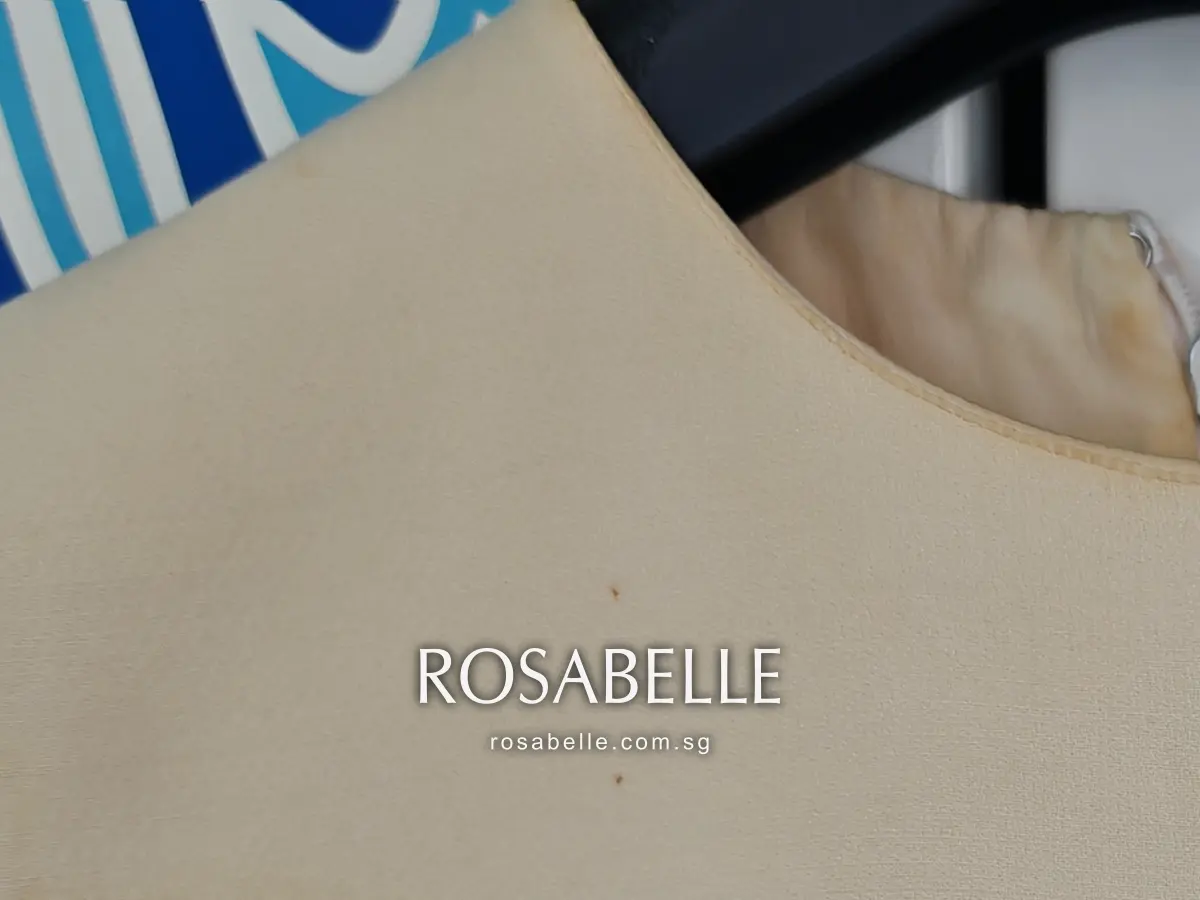
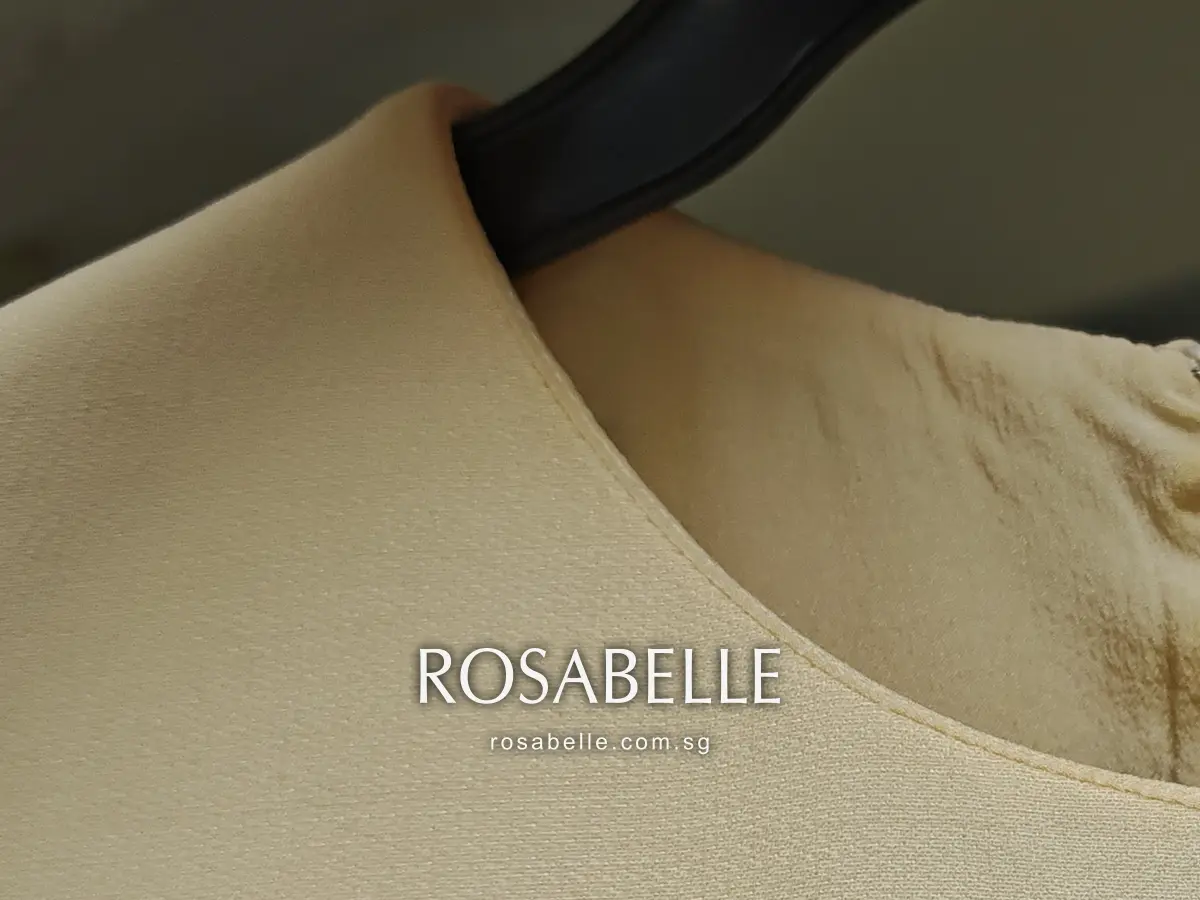
The strong watermark on this Christian Dior wool and silk dress was removed, although a faint trace of some spots on the front remained. The dress arrived darker yellow from storage, with perspiration rings under both arms, a soiled neckline, the watermark along its hem and spots on the front. Nothing had been tried on it before. The yellowing, the underarm rings and the neckline soiling were also removed, and the dress came back to its original cream.
The outer was a wool and silk blend and the lining was silk. That combination ruled out more aggressive treatment, so the result was judged against what the whole dress could tolerate. It records what happened to this dress, not an outcome to expect from every wool and silk garment.
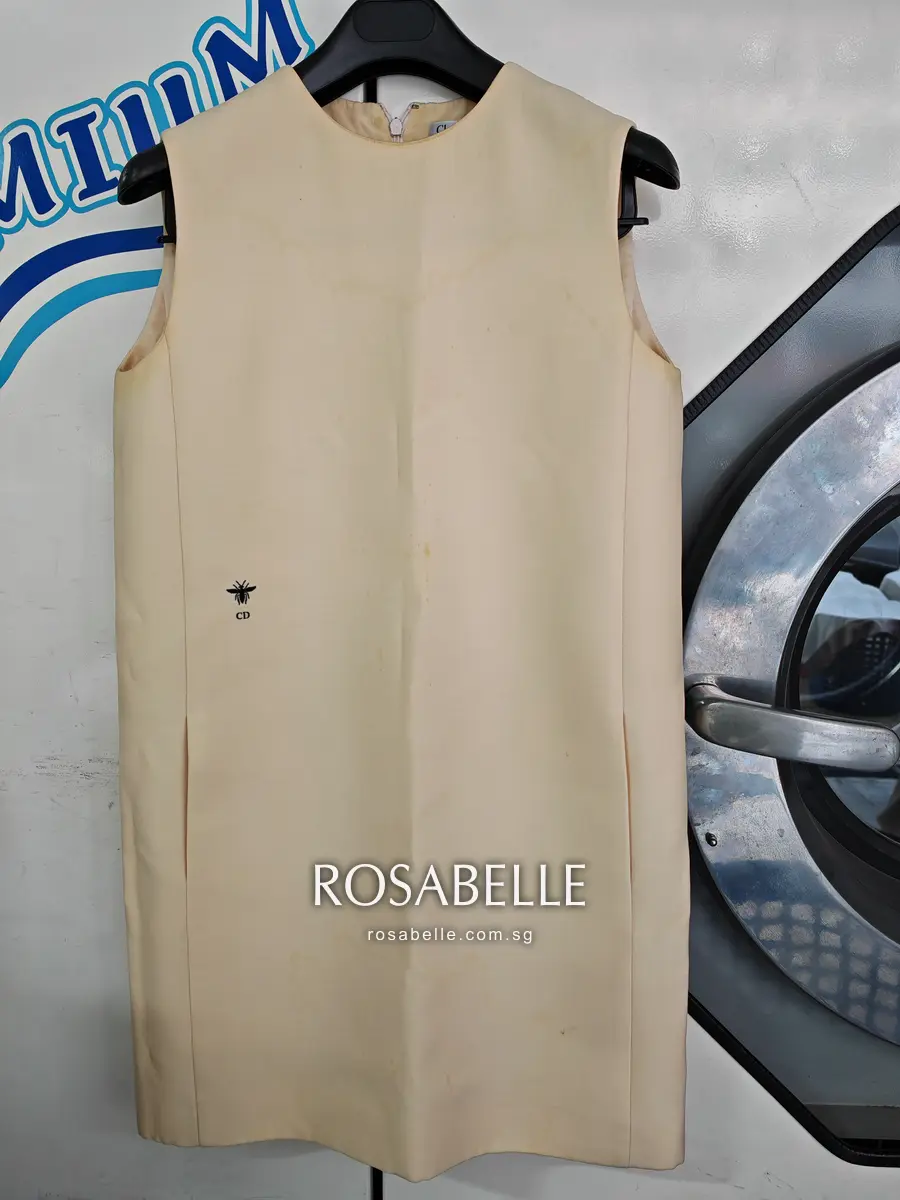
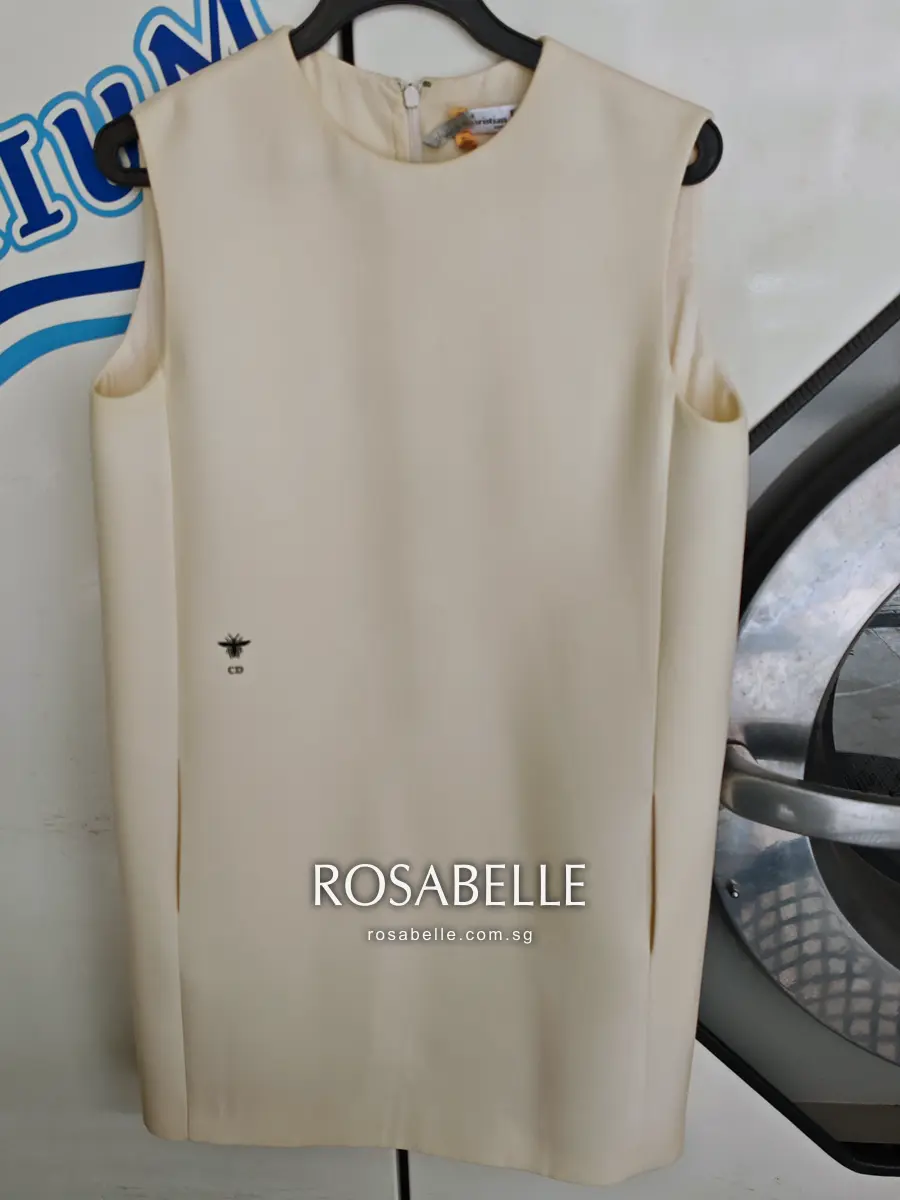
Before photographs taken 3 and 7 September 2026, after photographs 18 September 2026. The front and back pairs are colour-corrected against the same white surface in each frame; the close-ups are shown as captured. How the photographs were handled.
What condition was the Christian Dior dress in when it arrived?
The dress had five separate problems, and nothing had been tried on it before. It is a sleeveless Dior shift with a centre-back zip and the embroidered CD bee on the front, made in cream wool and silk with a silk lining.
- Storage yellowing. The whole dress had turned a noticeably darker yellow than its original cream.
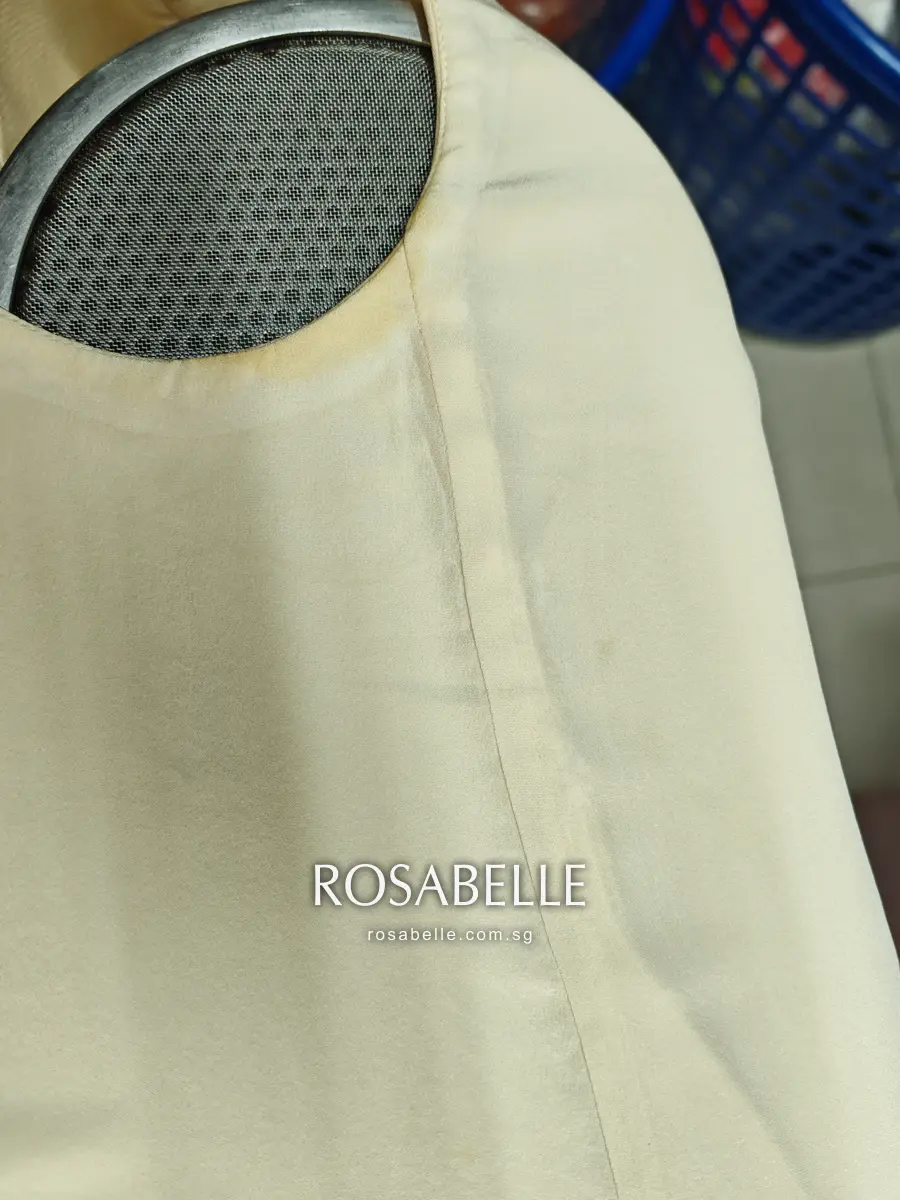
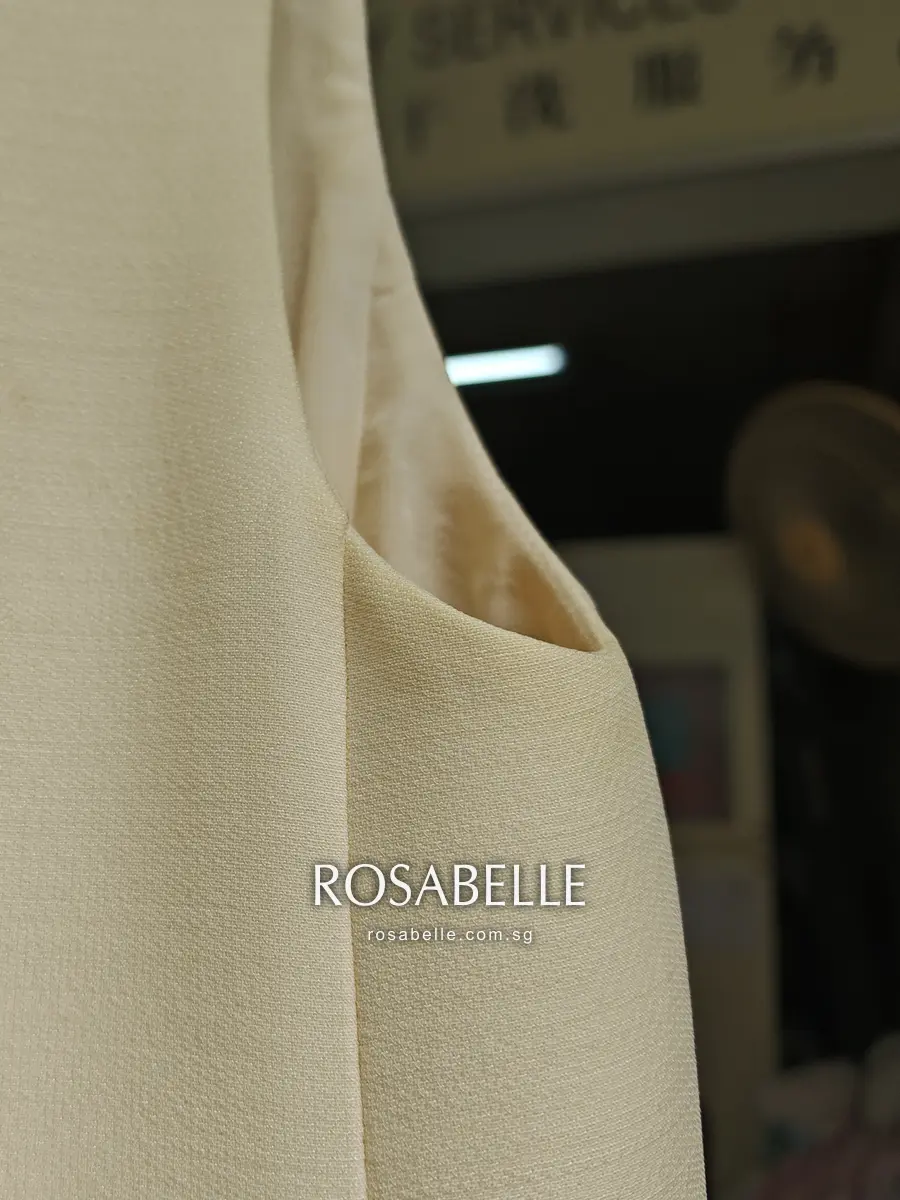
- Underarm rings. Both armholes carried yellow-brown perspiration rings along the seam.
- Neckline soiling. Soil from wear along the neckline.
- Hem watermark. Soiling along the hem, with a strong watermark.
- Front spots. Small spots on the front panel.
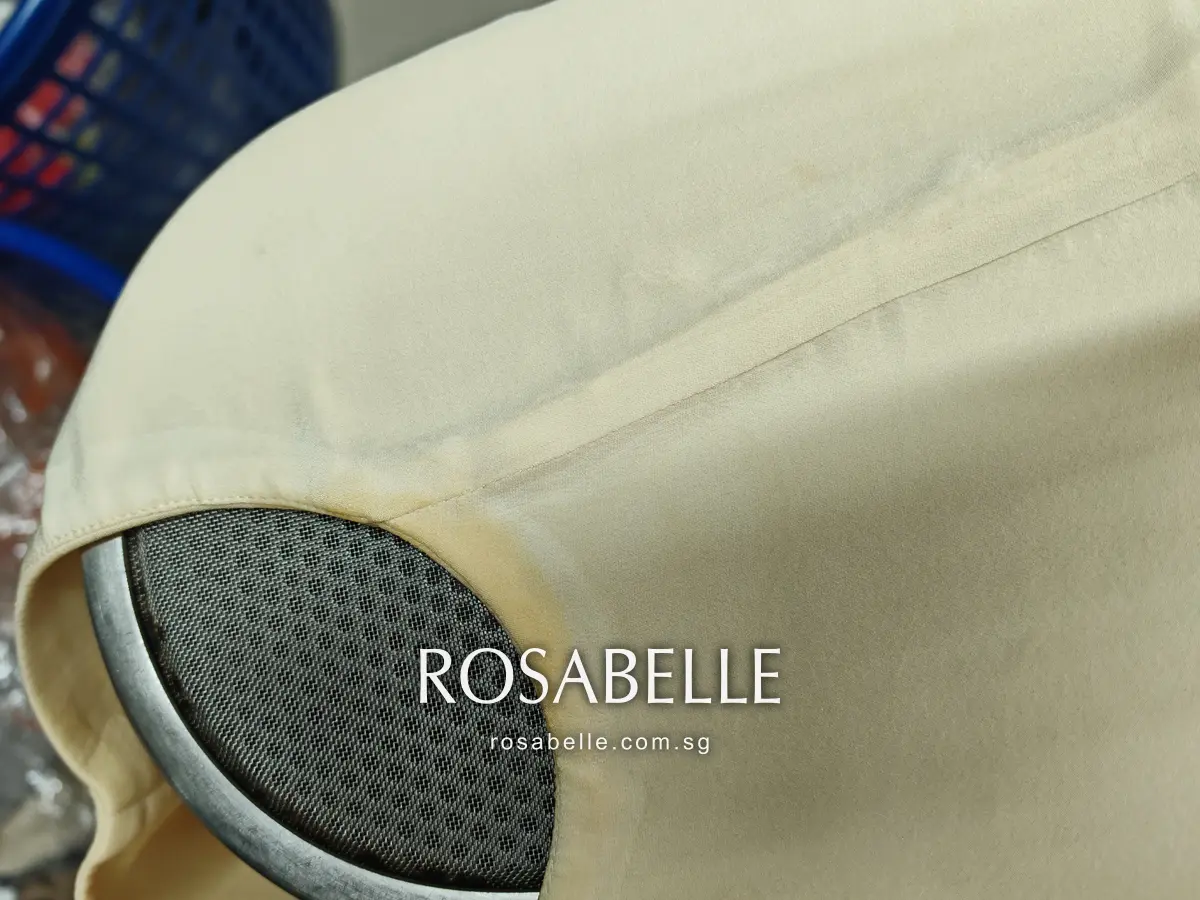
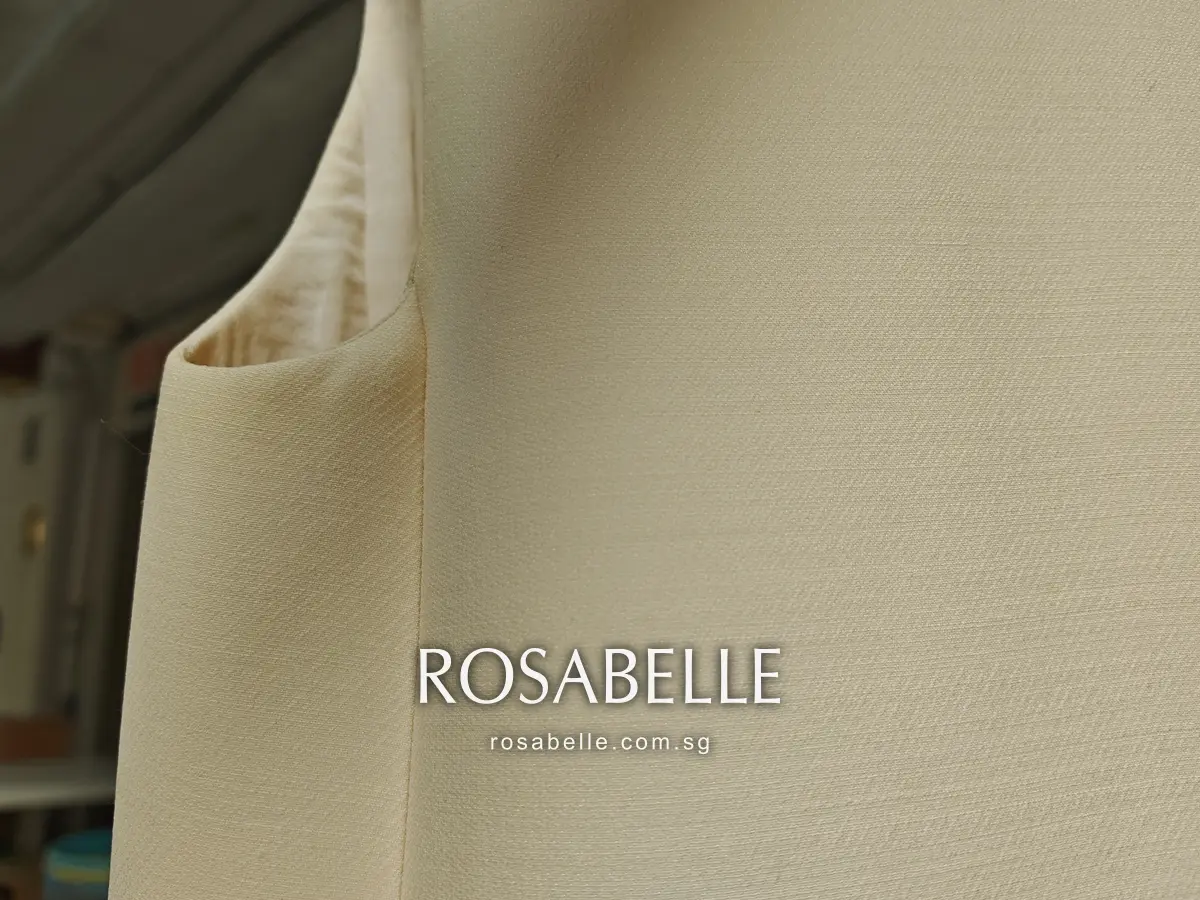
Why does a cream wool and silk dress turn yellow in storage?
A pale dress usually yellows in storage because perspiration and skin oils that were invisible when it was put away darken over the following months. Wool and silk are both protein fibres. In our workshop experience, a garment stored after wearing without cleaning is the most common source of this kind of yellowing.
Underarm rings are a specific case. Perspiration reacts with the aluminium salts in antiperspirant, and the mark sets further with time and heat.
What is a watermark on a dress?
A watermark, or tide line, is a ring of soil left at the edge of an area where fabric got damp and dried unevenly. It is a different problem from yellowing. On a hem it usually comes from a splash or a wet floor, and dabbing it with more water tends to make a second ring.
Why is a silk-lined wool and silk dress difficult to clean?
The shell and the lining are different fabrics that are cleaned together, so every decision has to suit both. The care label rules out washing, bleach and tumble drying. Wool can shrink and felt when exposed to water, heat and agitation together. Silk can lose its sheen and marks easily. If the shell and lining respond differently, the hem stops hanging straight.
The watermark added a further risk. Any treatment applied unevenly to one area can leave a new tide line of its own. So the question was not only whether each mark would come out, but whether the whole dress would finish evenly.
How did Rosabelle clean the dress?
Assessing the shell and lining together
The composition and care symbols set the limits first. A treatment strong enough for a mark on the wool and silk shell was only used if the silk lining could tolerate it too.
Treating each mark for its own cause
The storage yellowing, the perspiration rings, the neckline soiling, the watermark and the front spots each came from something different, and each was treated to suit its cause.
Finishing the dress evenly
The whole dress was treated so that it finished evenly, which is what stops a watermark being replaced by a new one. It was pressed within the cool-iron limit on the label.
What did Rosabelle deliberately avoid, and why?
- Household washing or soaking. The label says do not wash, and it is the route to a shrunken, felted shell.
- Bleach. The label prohibits it, and chlorine bleach damages protein fibres such as wool and silk.
- Working the hem on its own. Treating only the watermarked edge tends to leave a second tide line.
- Heat to force out the yellowing. Heat can set perspiration stains rather than lift them.
- Pushing the front spots further. Once the spots had faded to a faint trace, more treatment put the silk at greater risk than the mark was worth.
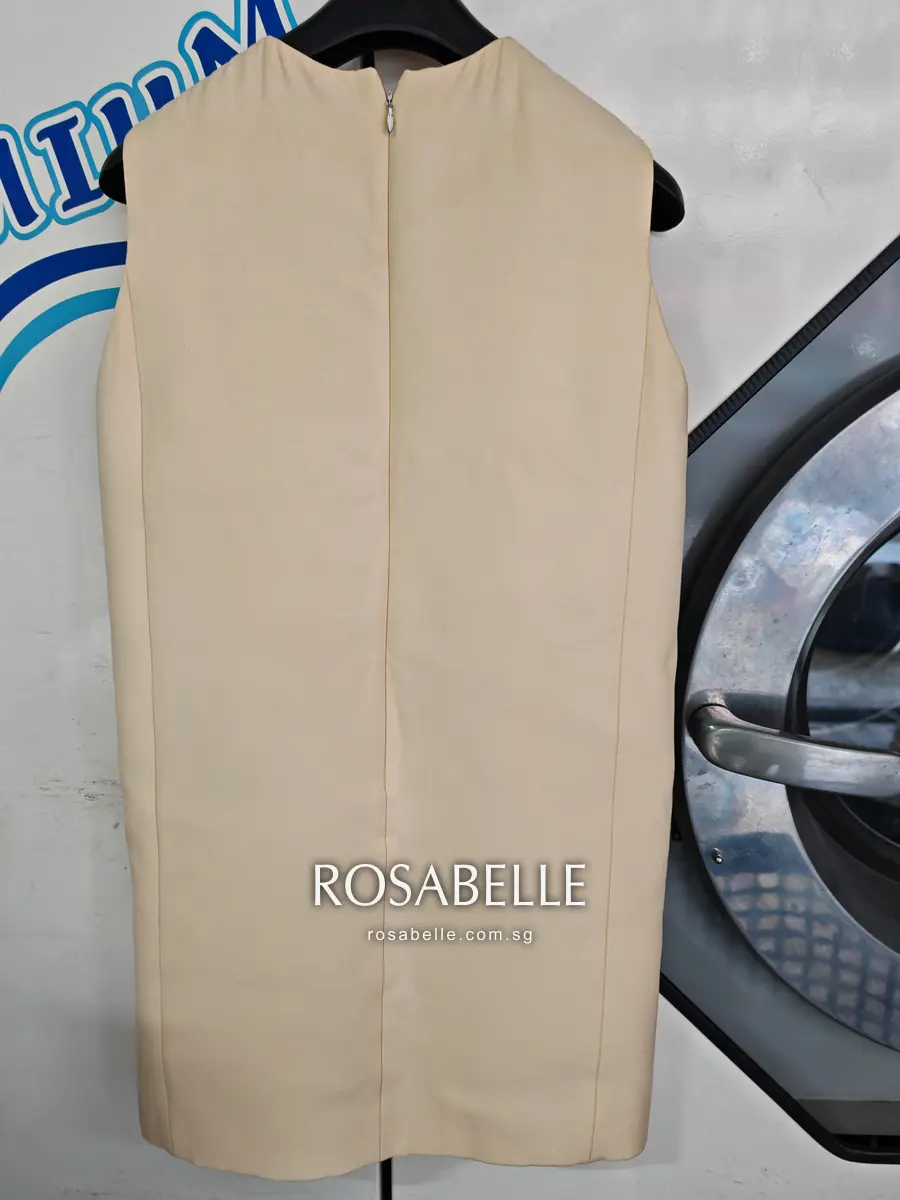
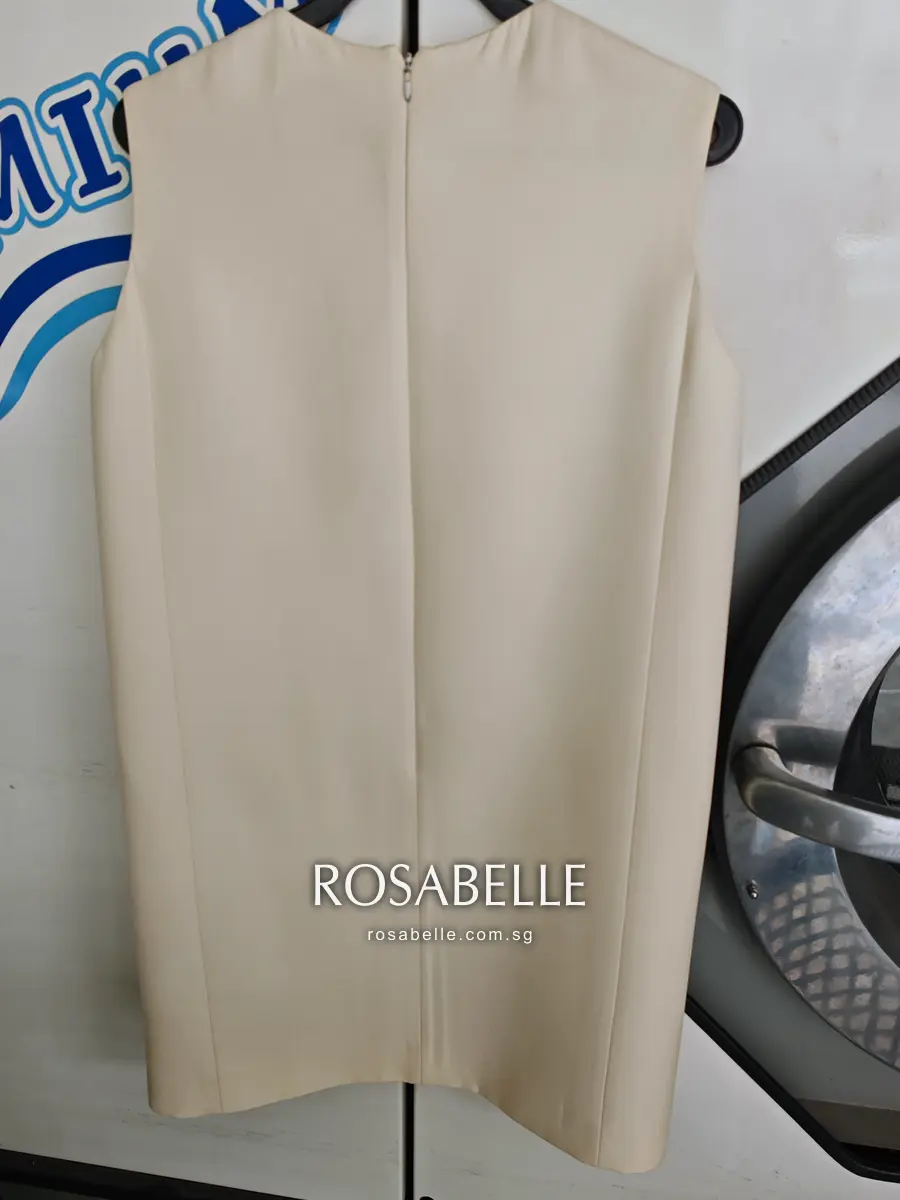
What was the result?
The dress came back to its original cream, and four of the five problems were removed completely.
- Storage yellowing: back to the original cream.
- Underarm rings: removed at both armholes.
- Neckline soiling: removed.
- Hem watermark: removed, with no new tide line.
- Front spots: a faint trace remains, visible on close inspection.
What does this case show about cleaning wool and silk?
Storage yellowing on a pale wool or silk garment is often residue rather than damage, and residue can come out. The best time to clean is before a garment goes into storage, not after it has yellowed.
The case also shows that one garment can clear completely on some marks and only partly on another. If you bring in a similarly marked dress, ask what is likely to improve, what may remain, and what limits the treatment. The result on this dress is evidence about this piece, not a forecast for every wool and silk garment.
How should you care for a wool and silk dress between cleans?
Do:
- Follow the dress's own care label, not advice written for washable wool. Woolmark's care guidance also starts from the label.
- Have it cleaned before storing it, even if it looks clean.
- Store it in a breathable cotton cover, out of direct sunlight, with air around it.
- Let antiperspirant dry fully before dressing.
- Tell your cleaner when you first noticed a mark, what may have caused it, and whether anything has already been applied. If you don't know the cause, say so.
Don't:
- Wash it at home against a do-not-wash label.
- Dab a mark or watermark with water.
- Iron over a stain; heat sets it.
- Leave it in the sun to lighten yellowing.
The honest note
Can every yellowed wool and silk dress be restored?
No, and complete removal is not something we promise. This dress cleared because its yellowing was residue in the fabric, not a change in the fibre itself. Where light or age has altered a protein fibre, cleaning does not reverse it. The front spots show the limit on this dress: they faded to a faint trace, and pushing further would have risked the silk. A different dress needs its own assessment, and a photograph alone is not enough to judge it.
The photographs are working shop records, taken on different days. The camera set its own white balance each time, and the after frames came out warmer than the dress is in hand. The front and back photographs were corrected against the white panel of the washing machine behind the dress, using the same patches in every frame, and the after frames were matched in brightness to the before frames. Only the colour cast and overall exposure were changed. Nothing was sharpened, masked or retouched. Measured against that panel, where a neutral white reads 1.00, the blue-to-red ratio of the fabric rose from 0.81 to 0.89 on the front and from 0.81 to 0.87 on the back. Cream is not white, so it does not read 1.00. The armhole and neckline close-ups had no neutral surface in the frame and are shown as captured, so their colour should not be compared; what they show is whether the mark is there.
Case documented by Rosabelle Launderette's garment-care team. Case practitioner and technical review: Zach Lim.
Cleaned in-house at Rosabelle Launderette, Singapore, established 1998. This case records one garment in one condition and is not a guarantee of outcome.
Published and technically reviewed 18 September 2026.
Sources & further reading
Related yellowing cases
More stain-removal cases

Common questions
Questions about cleaning wool and silk dresses
How do you remove a watermark from a wool or silk dress?
A watermark, or tide line, is a ring of soil left where damp fabric dried unevenly. Dabbing it with more water usually makes a second ring. The strong watermark at the hem of this Dior dress was removed by treating the whole dress so it finished evenly, not by working the edge on its own.
Can a yellowed cream dress be restored to its original colour?
Often, if the yellowing is soil and residue in the fabric rather than a change in the fibre itself. This Christian Dior wool and silk dress had turned a darker yellow in storage and came back to its original cream after cleaning. Where light or age has altered the fibre, cleaning cannot reverse it, so every garment is assessed first.
How do you remove yellow underarm stains from a silk dress?
Underarm yellowing usually comes from perspiration reacting with the aluminium salts in antiperspirant, and it sets further with time and heat. On this Dior wool and silk dress the rings at both armholes were removed completely. Bleach, lemon juice or a hot iron can fix the stain or damage silk, so avoid them before a professional has seen the garment.
Can I wash a wool and silk dress at home?
Follow the care label. This Dior dress, 77% wool and 23% silk with a 100% silk lining, is labelled do not wash, do not bleach, do not tumble dry and professional dry clean. Wool can shrink and felt with water, heat and agitation, and a shell and lining that react differently can pull the hem out of line.
Why does the silk lining matter when cleaning a dress?
The lining is cleaned with the dress, so every decision has to suit both fabrics. On this Dior dress the wool and silk shell and the silk lining were assessed together. A treatment strong enough for a mark on the shell was only used if the lining could tolerate it too.
Can all stains be removed from a wool and silk dress?
Not always, and complete removal is not something we promise. On this Dior dress the storage yellowing, underarm rings, neckline soiling and hem watermark were all removed, but a faint trace of some spots on the front remains. Pushing further would have put the silk at more risk than the mark was worth.
How should I store a wool and silk dress in Singapore?
Clean it before storing it, because perspiration and body soil left in the fabric are what turn yellow over months. Singapore's mean relative humidity is about 82%, so use a breathable cotton cover rather than plastic, keep it out of direct sunlight, and leave air around it in the wardrobe.