
Journal · Stain removal ·
Elizabeth and James Dress: Removing Yellowing From a Coloured Garment
A pale blue dress with yellowing front and back. The marks came out first, then the whole dress was cleaned.

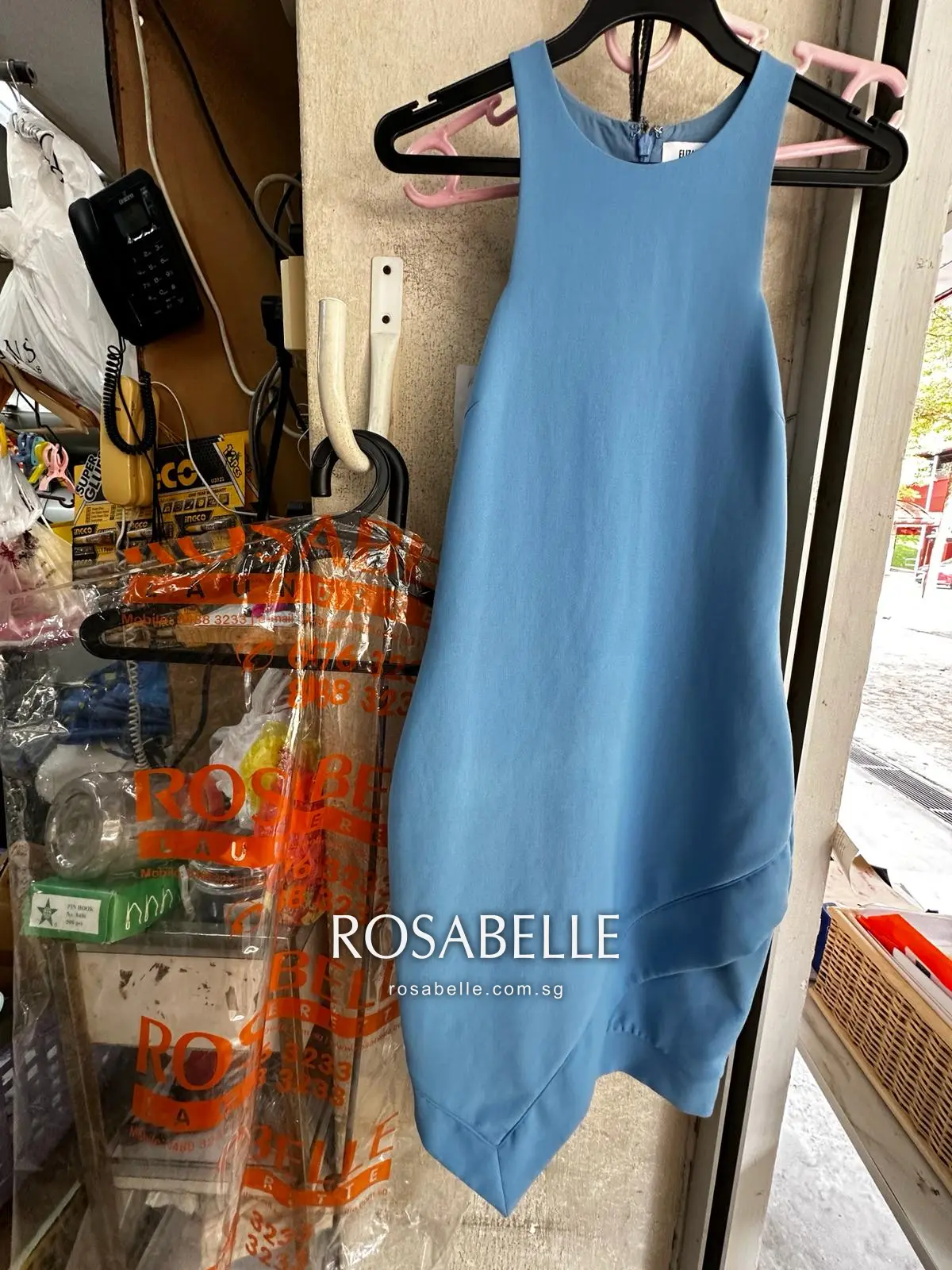
What came in
A pale blue sleeveless dress with an asymmetric hem, in with yellowing on the front and the back. The heaviest marking sat around the armhole and down the side seam, where perspiration had gone into the cloth and then been left to age. On a garment this colour it reads as a dull patch rather than an obvious stain, which is part of why it had been left. In Singapore the clock runs faster than most people expect. A dress worn once to an evening event and hung straight back into a wardrobe sitting at over 80 per cent humidity will start showing it within months.
Why the colour is the hard part
Underarm yellowing is mostly not sweat. It is what happens when the proteins in perspiration meet the aluminium salts in antiperspirant, which is why the mark is yellow rather than grey and why it keeps darkening long after the garment has been washed. On a white shirt that only has to be removed. Here there were two things in the cloth, the yellowing and the dye, and they answer to many of the same treatments. Push too hard and the yellow lifts along with the blue, leaving a pale halo exactly where the stain used to be. That is also why the remedies most often recommended for underarm marks, hydrogen peroxide and oxygen bleach, are the wrong tool on a dyed garment. They work by bleaching, and they cannot tell the two apart.
The work
The yellowing was treated first, on the marks themselves, in stages, with the colour checked between each one so it came up gradually rather than in a single aggressive step. Only once the marks were fully out did the dress go through a complete clean. That order matters. Lifting a stain and stopping there leaves a clean patch on a dress that has been worn all evening, and in daylight the patch is as visible as the stain was. Finished by hand.
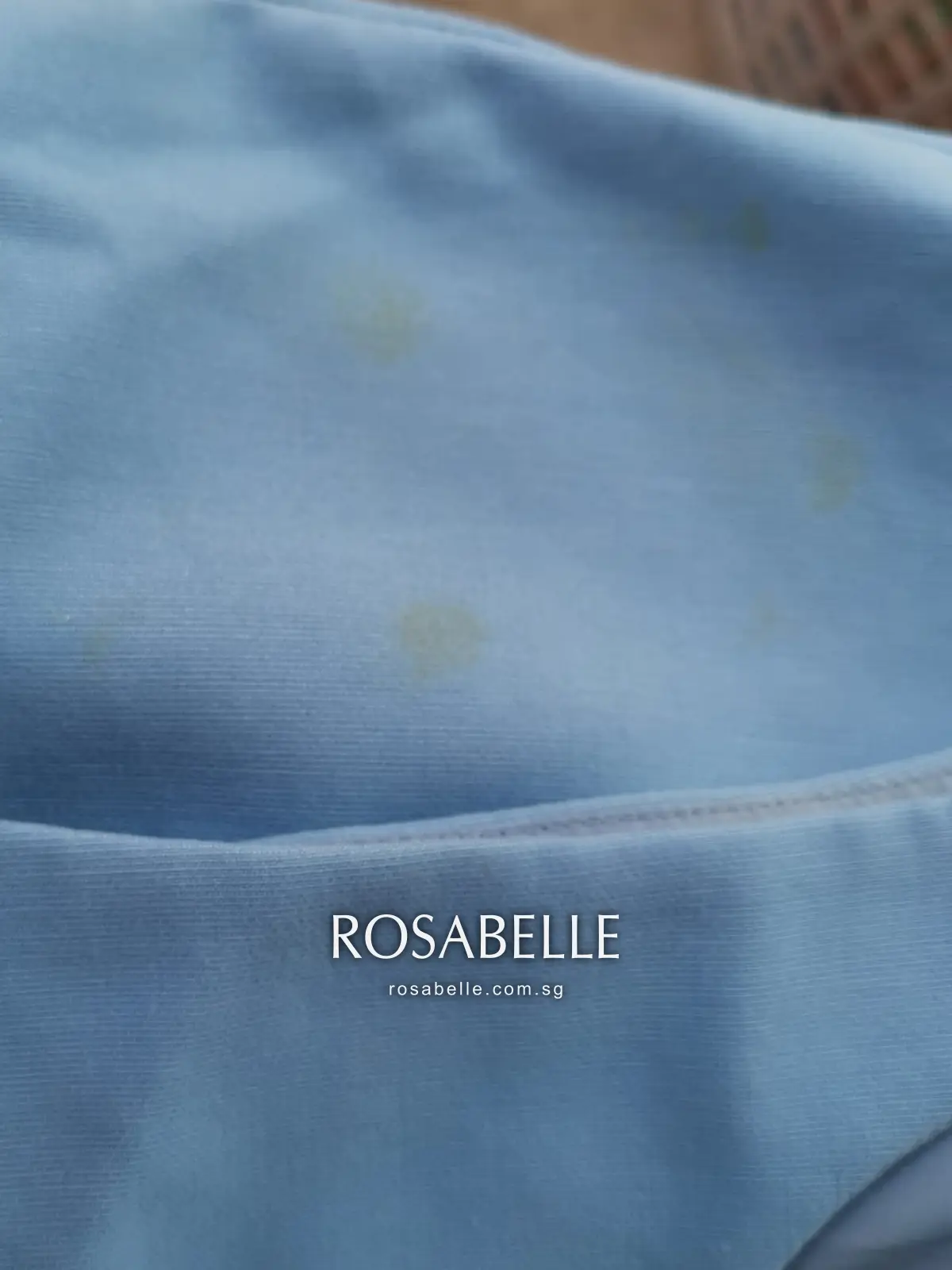
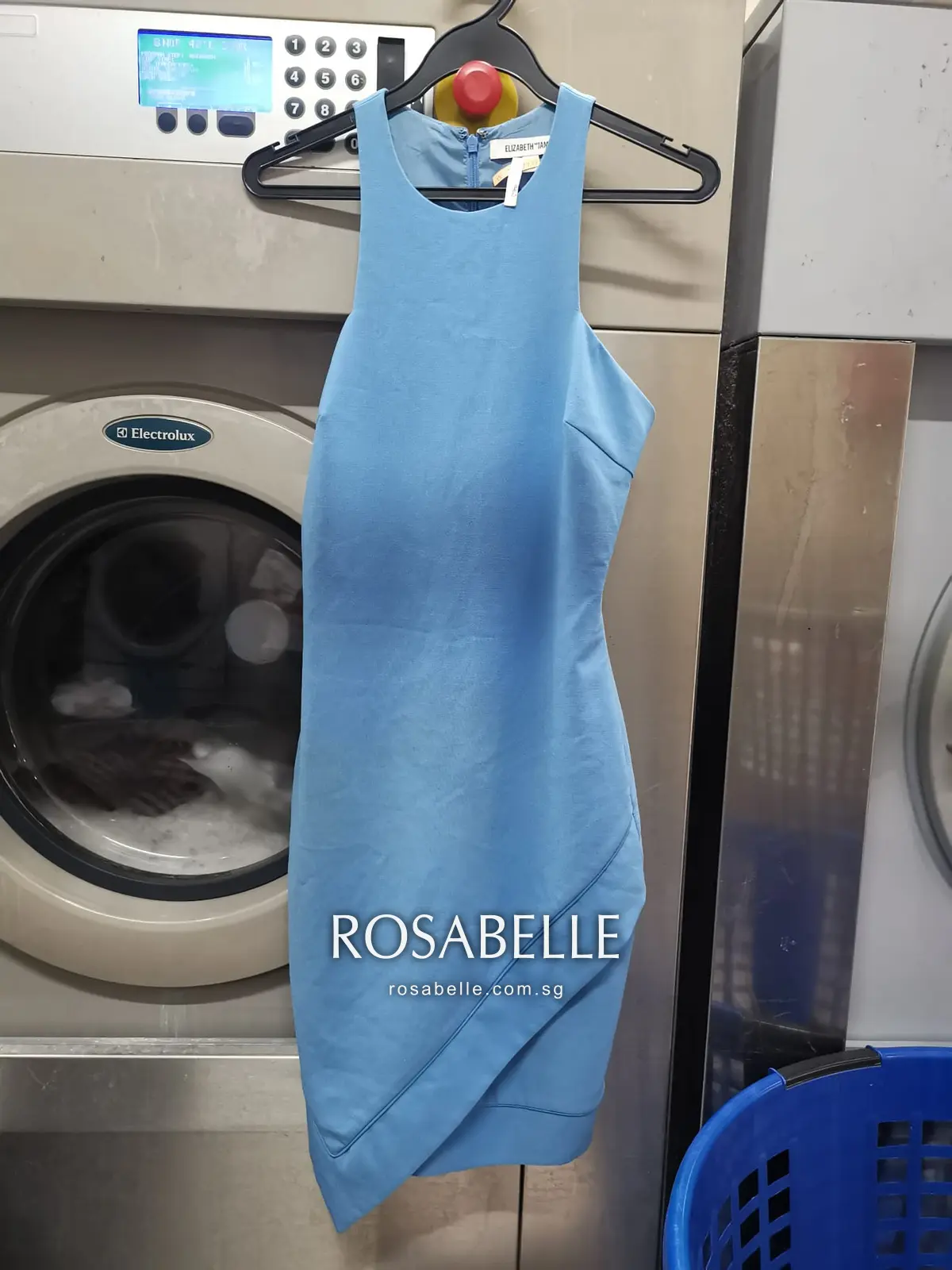
The honest note
Perspiration yellowing gets harder the longer it sits, because it oxidises and bonds to the fibre, and on a dyed garment the margin between removing the stain and removing the colour narrows as it goes. This dress came back with the marks gone and the blue even. Fibre, dye and how long the mark has been there decide what is possible, so like every case in this journal it is a record of one piece rather than a promise about the next. If you are putting clothes away in Singapore, have them cleaned before they go in rather than after, keep the wardrobe under about 55 per cent humidity, and use a breathable cover instead of the plastic sleeve they came home in. A note on the photographs: they are working records from the shop, taken on the day at whatever bench or rail was free, so the light and the background change between frames. Nothing has been colour-corrected, lightened or retouched.
Case practitioner and technical review: Zach Lim.
Related cases
More like this
Common questions
Frequently asked
How do you get yellow underarm stains out of a coloured dress?
Treat the marks first and on their own, in stages, checking the colour between each one, then clean the whole garment afterwards. Hydrogen peroxide and oxygen bleach are the usual advice for white shirts, but on a dyed garment they lift the dye along with the yellow and leave a pale patch where the stain was. Stopping at the stain is the other common mistake, because a spot-cleaned dress that has been worn all evening comes back with a clean patch on dirty cloth.
Will removing a yellow stain bleach the colour out of the fabric?
It can, and that is the main risk on anything dyed. The yellowing and the dye sit in the same fibre and react to many of the same treatments, so the work has to stop at the point where the stain has gone and the colour has not moved. On this pale blue Elizabeth and James dress the marks cleared and the blue stayed even, but the margin is real and it narrows the longer a stain has been left.
Why do clothes turn yellow in the wardrobe in Singapore?
Because perspiration, deodorant and body oils are usually still in the cloth after an ordinary wash, and they are colourless when fresh. Over months they oxidise into yellow marks at the underarm, collar and waistband. Singapore humidity, which averages over 80 per cent, speeds that up, and a plastic garment sleeve makes it worse by holding moisture against the fabric. Clothes that looked clean going in come out marked.
Should I have the whole garment cleaned or just the stain removed?
Both, in that order, for anything that has actually been worn. Spot treatment lifts the mark but leaves the rest of the garment carrying everything a day of wear put into it, so you get a clean patch on a dress that is not clean, and it shows in daylight. On this dress the yellowing was taken out first and the whole garment was cleaned afterwards, which is why it came back even rather than repaired.
Is stain removal ever guaranteed?
No, and we would rather say so before the garment is left. Fibre, dye, construction and what the stain has already done to the cloth all decide what is possible, and cleaning itself carries risk, since a stain can quietly weaken fabric that still looks sound. Sometimes the honest answer is that a mark cannot be removed safely, and we say that instead of trying.