
Journal · Bedding & home ·
Yellowed Bed Linen: Duvet Cover and Pillowcases Back to White
A tufted cotton duvet cover and its pillowcases came in dull yellow, with a grey cast across the plain panels. Nothing was stained; the whole set had stopped being white. It took several washing passes to bring it back. White bed linen is the hardest thing in the shop to photograph honestly, so a plain white envelope lies on the fabric in every picture below, and every picture has been colour-corrected against it.
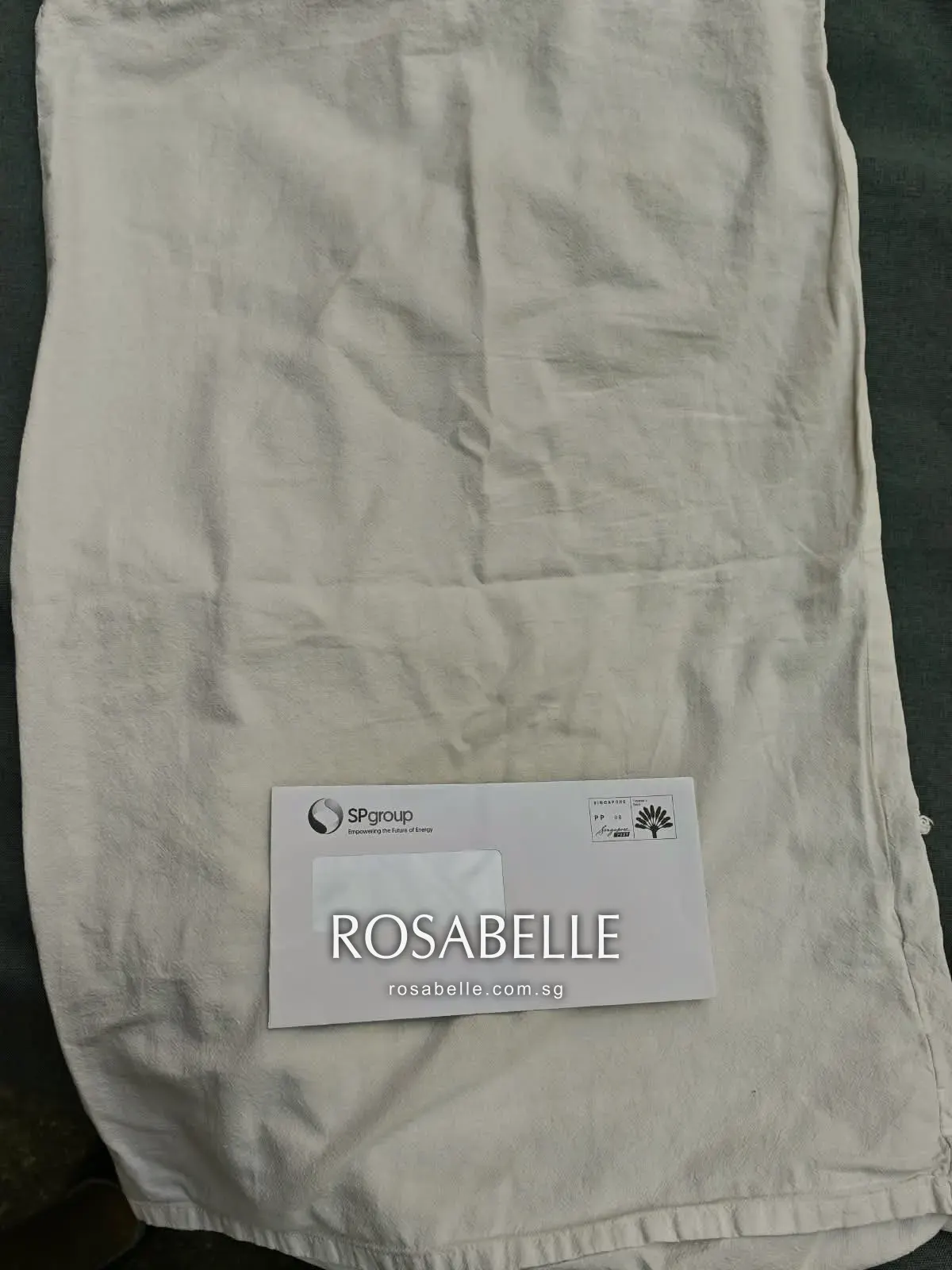

What came in
The set is cotton: a duvet cover with tufted chenille scrollwork across its face, plain cloth on the reverse, and pillowcases in the same plain weave. Nothing was torn, and there was no mark to point at. The whole set had gone off-white together, a warm yellow through the body of the cloth with a duller, greyer cast where the plain panels had taken the most use and the most washing.
It came in for bedding cleaning with whitening work. There was no spot to treat. Bedsheets, quilt covers and pillowcases all fail this way in Singapore, and they fail slowly enough that nobody in the house notices. It is also the hardest kind of job to prove in a photograph, which is why there is an envelope in all six of them.
The white envelope in the photographs
A phone camera decides for itself what white is. Its automatic white balance moves from frame to frame, warming a shot taken in shade and cooling one taken under a bulb. Either adjustment can make yellowed cloth photograph as white, or white cloth photograph as blue. So a before shot taken indoors and an after shot taken outside cannot be compared as they come off the camera.
We put a plain white window envelope on the fabric in each shot. Ordinary business paper is a dependable white, and it is the same envelope in every frame. Each photograph has then been corrected until that envelope reads as a neutral grey. Only the colour cast was moved. Nothing was lightened, sharpened, masked or retouched, and the two frames in each pair are matched to the same envelope brightness so they can be read side by side.
What is left is the fabric’s own colour, next to a known white, in both photographs. In the before pictures the cloth is warmer and duller than the paper lying on it. In the after pictures that difference is gone. The edge of the envelope is where it reads most plainly.


Why white bed sheets and duvet covers turn yellow
Bed linen yellows from what it absorbs while you sleep in it. Perspiration, skin oils, and the residue of lotions, hair products and sunscreen all go into the cloth colourless, stay invisible for a while, then oxidise over months into a yellow held inside the fibre. Singapore runs that cycle faster than a temperate climate does. You perspire into your bedding all year, and the humidity means the cloth rarely dries out completely between uses. It is why we tell people here to wash bedsheets and quilt covers fortnightly.
The grey is a separate fault, and usually a laundry one. Detergent and loosened soil that never rinse out fully build up in the cloth wash after wash and dull the white from inside. People answer that with more detergent or another short cold cycle, which adds to the residue that caused it. Optical brighteners in household detergent then hide both faults for a while by laying a blue-white tint over the top. That is why a set can look acceptable in the bedroom and read plainly yellow the moment you put a sheet of white paper on it.
The work
Whitening cotton is a matter of repetition. One aggressive chlorine pass will move a set from yellow to white and take some of the fabric’s life with it. Cotton loses tensile strength every time it is over-oxidised, and on a tufted cover the damage shows first at the tufts, where the pile does the most work. Chlorine bleach can also set a yellow permanently into cotton instead of lifting it, and that is the usual reason a set arrives here already beyond help.
So the set was cleaned, assessed, rinsed out fully and put through again, several times over, with the residue carried out of the cloth between passes instead of left to accumulate. The plain panels and the tufted face came back at different rates. That is normal: pile holds both soil and rinse water, and needs longer than the flat cloth beside it. We stopped when the fabric read as the same white as the reference paper.


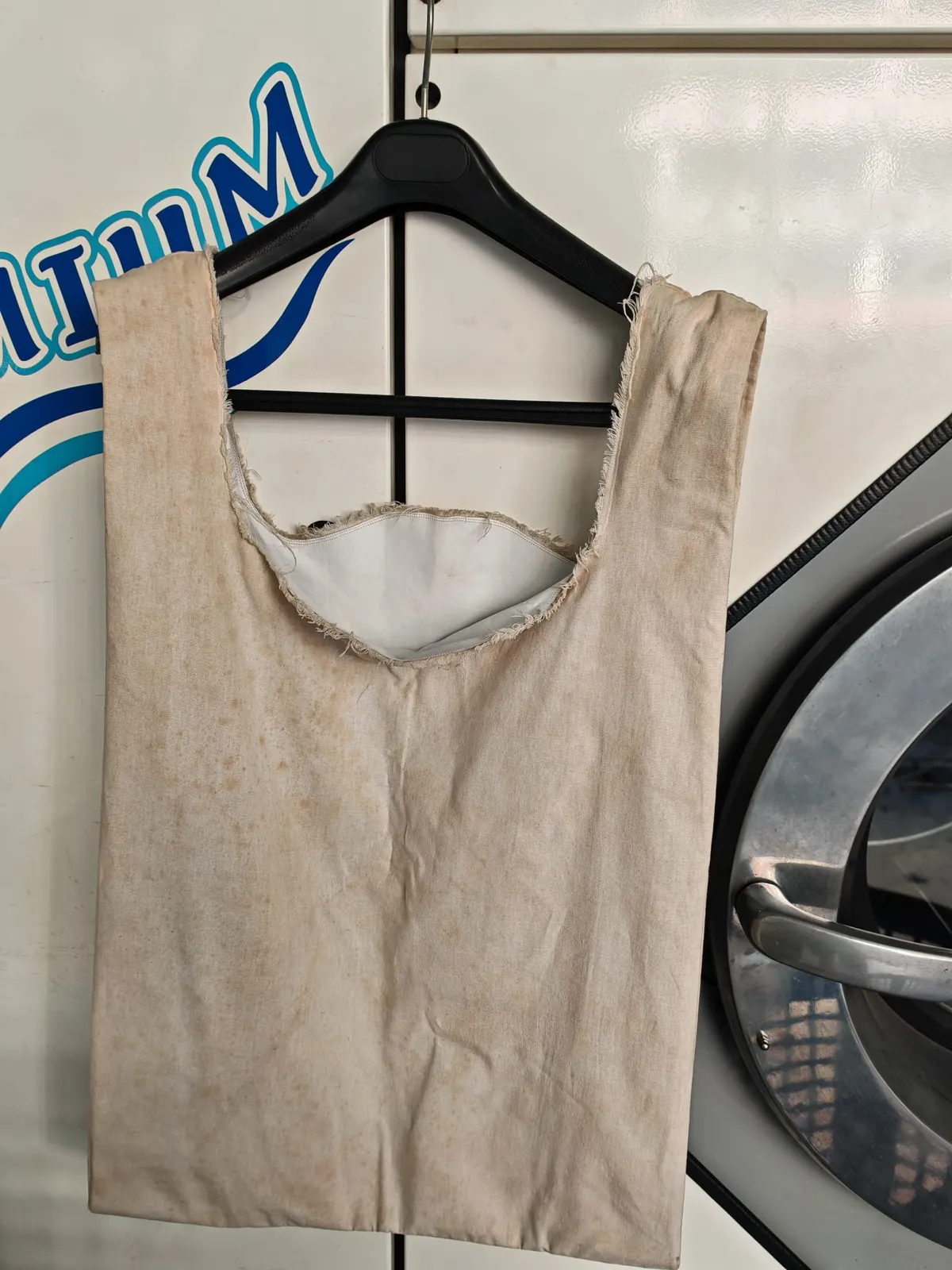
Because the job runs on repeat passes it took longer than the five working days and upwards a straightforward bedding clean takes. We confirm a timeline once the items are in front of us. The same method, repeated controlled passes with an assessment between rounds, cleaned a yellowed Vivienne Westwood wedding gown and a tote that yellowed in storage. How any piece gets assigned a method is set out in wet cleaning versus dry cleaning.
The honest note
Not every yellowed set comes back this far. This was sound cotton carrying oxidised body soil and detergent build-up, the two faults that do respond to repeated washing. Yellowing that has gone brown is further along the same chemistry and lifts partially at best. Cotton that has had years of household chlorine bleach can hold a yellow no amount of washing removes, and the fibre is weaker for it. Scorch from a hot iron or an over-hot dryer is heat damage to the fibre itself, not soil sitting on it, and does not wash out at all.
We look at a set, tell you what we think is achievable, and quote for that. If the answer is only part of it, you hear that before we start.
Case practitioner and technical review: Zach Lim.
Related cases
More like this
Common questions
Frequently asked
How do you whiten yellowed bed sheets?
By washing them repeatedly under control instead of bleaching them once. The yellow in white cotton bed linen is oxidised body soil and detergent residue held inside the fibre, and it comes out in stages: clean, assess, rinse fully, go again. The duvet cover and pillowcase set in this case needed several passes before the cloth matched the white paper we photograph it against. One strong chlorine pass is faster, costs the cotton strength it never gets back, and can fix the yellow into the fibre for good.
Why do white bed sheets turn yellow?
Because of what they absorb while you sleep. Perspiration, skin oils and the residue of lotions, hair products and sunscreen go into the cloth colourless, then oxidise over months into a yellow held inside the fibre. Singapore runs that cycle faster than a temperate climate does, because you perspire into bedding all year and the humidity means the cloth rarely dries out completely between uses. We tell customers to wash bedsheets and quilt covers fortnightly here.
Why do white sheets go grey instead of yellow?
Grey usually comes from the wash, not the body. Detergent and loosened soil that never rinse out fully build up in the cloth wash after wash and dull the white from inside. Adding more detergent, or running another short cold cycle, adds to the residue that caused it. On the set in this case the grey cast sat across the plain panels, which take the most contact and the most washing.
Does bleach whiten yellowed bed sheets?
Household chlorine bleach usually makes them worse. It reacts with the body-oil and protein residue already in the cloth and can set a yellow into cotton permanently, and it costs the fibre strength every time. The sets that reach us beyond saving have generally been bleached at home for years. Repeated controlled washing with a full rinse is slower and is what actually lifts oxidised body soil out of white bed linen.
Can yellowed bed sheets be saved, or should you replace them?
It depends what caused the yellowing. Oxidised body soil and detergent build-up in sound cotton respond to repeated controlled washing, which is what the duvet set in this case needed. Yellowing that has already turned brown, cotton weakened by years of household chlorine bleach, and scorch from a hot iron or dryer are damage to the fibre itself, and washing does not reverse them. We look at a set and tell you what we think is achievable before we start.
How often should you wash bed sheets in Singapore?
Fortnightly for bedsheets and quilt covers. A comforter used under a quilt cover needs cleaning every three to six months; used without one it absorbs perspiration and body oils directly and needs it monthly. Singapore’s heat and humidity push all of those intervals one way, and stretching them is what produces the kind of yellowing this case study is about.
How much does bedsheet laundry cost in Singapore?
Rosabelle prices bedding by size, not by weight. Laundered, a bedsheet or flatsheet is $8 Single, $10 Super Single, $12 Queen and $16 King; a Queen quilt or duvet cover is $16 and a pillowcase is $3. Dry cleaning is priced separately on the same four sizes. Whitening work on a yellowed set is quoted after we have seen it, because the price depends on how far the discolouration has gone, and bulky bedding is what our islandwide pickup and delivery is for.
How long does bedsheet and duvet cover cleaning take?
Five working days and upwards for an ordinary bedding clean. Whitening yellowed bed linen takes longer, because it runs on repeat passes with an assessment between each one and needs as many rounds as the cloth needs. We confirm a timeline once we have seen the items, at collection or at drop-off.
Can you trust before-and-after laundry photographs?
Not without a colour reference in the frame. A phone camera sets its own white balance shot by shot, so it will neutralise a warm room and make yellowed cloth look white, or cool a shaded shot and make white cloth look blue. Every photograph on this page has a plain white envelope lying on the fabric, and each one has been corrected until that envelope reads neutral grey. What is left between the cloth and the paper beside it is the fabric’s own colour.