
Journal · Case study · Stain removal · Published
Removing Food Stains From a Hermès Silk Skirt in Singapore
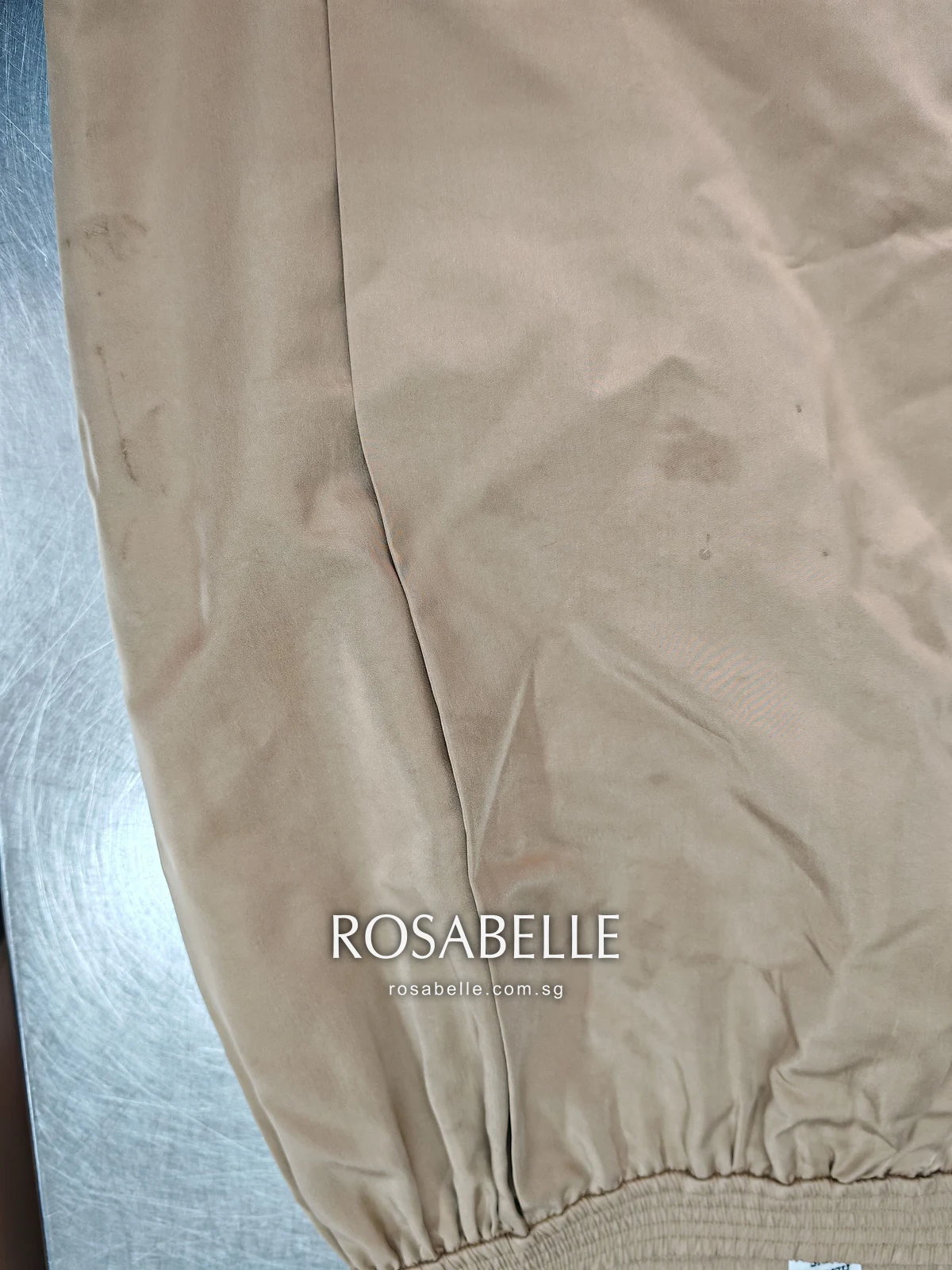
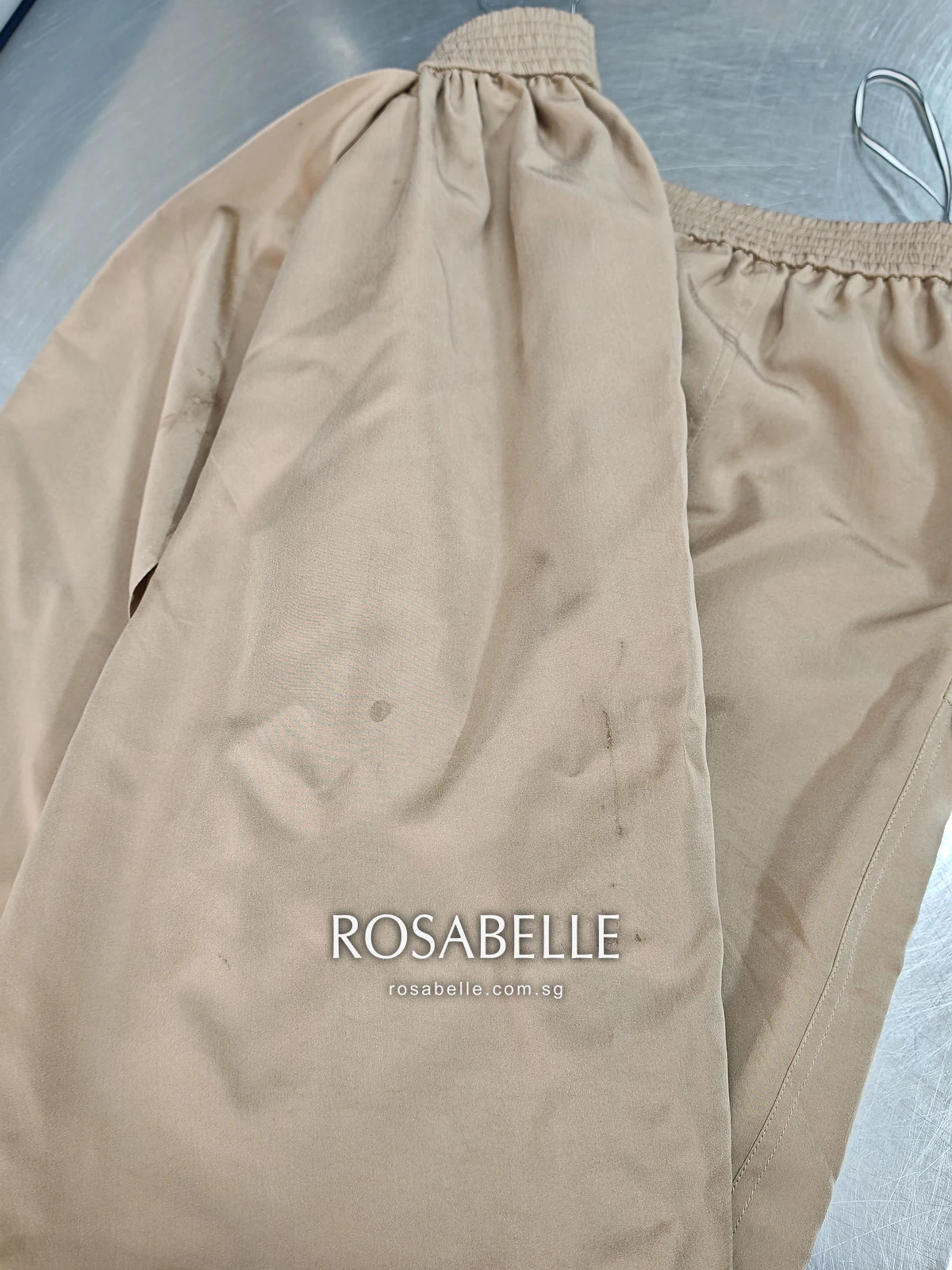
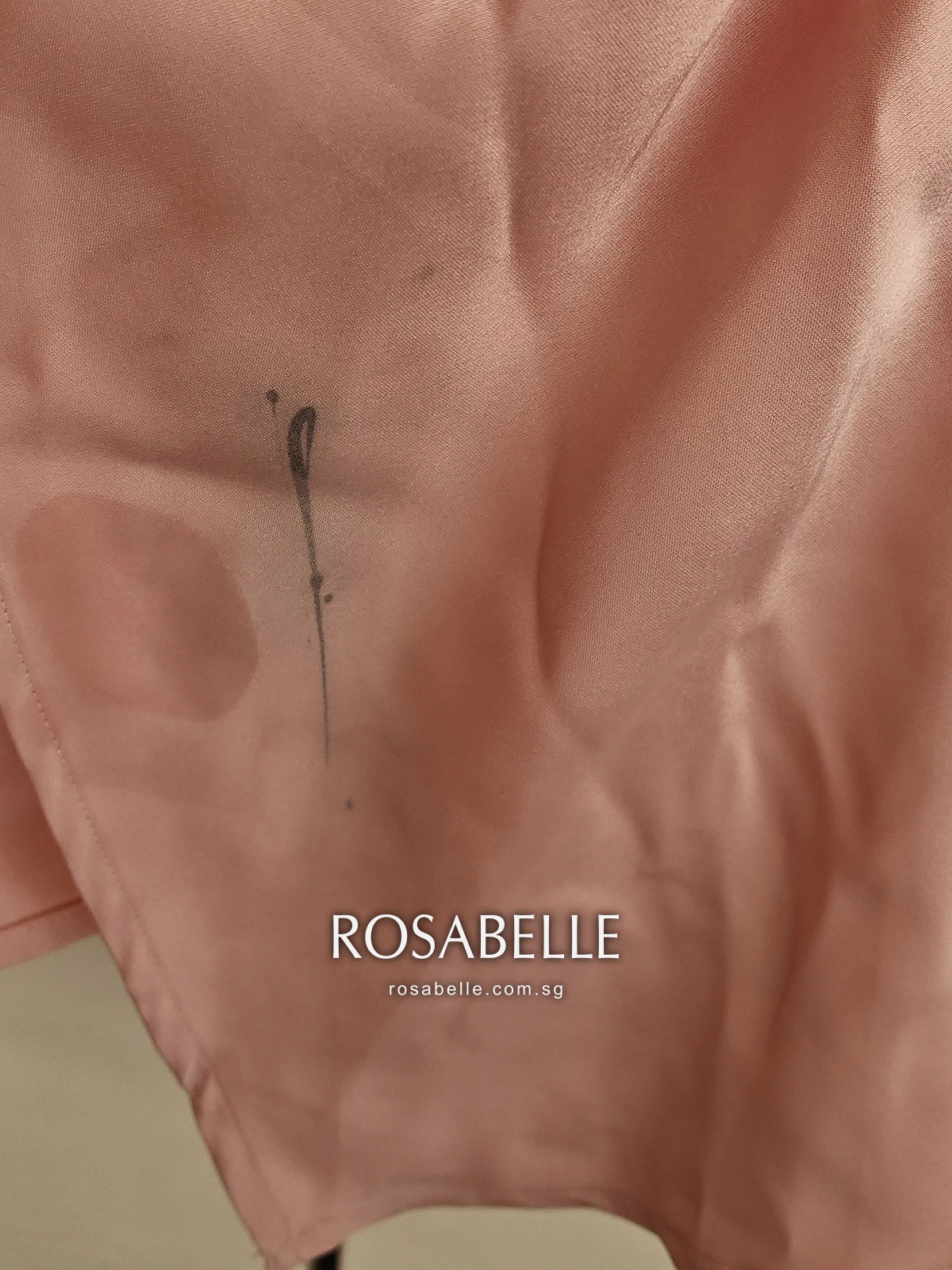
Every food stain on this almost new Hermès silk skirt was removed. The skirt had been worn once, to a dinner, and came in with food marks on the front, the back and the wrap panel.
Nothing had been tried on the stains at home, and the skirt’s care label ruled out washing and professional wet cleaning. This page records what happened to this skirt, not an outcome to expect from every food stain on silk.
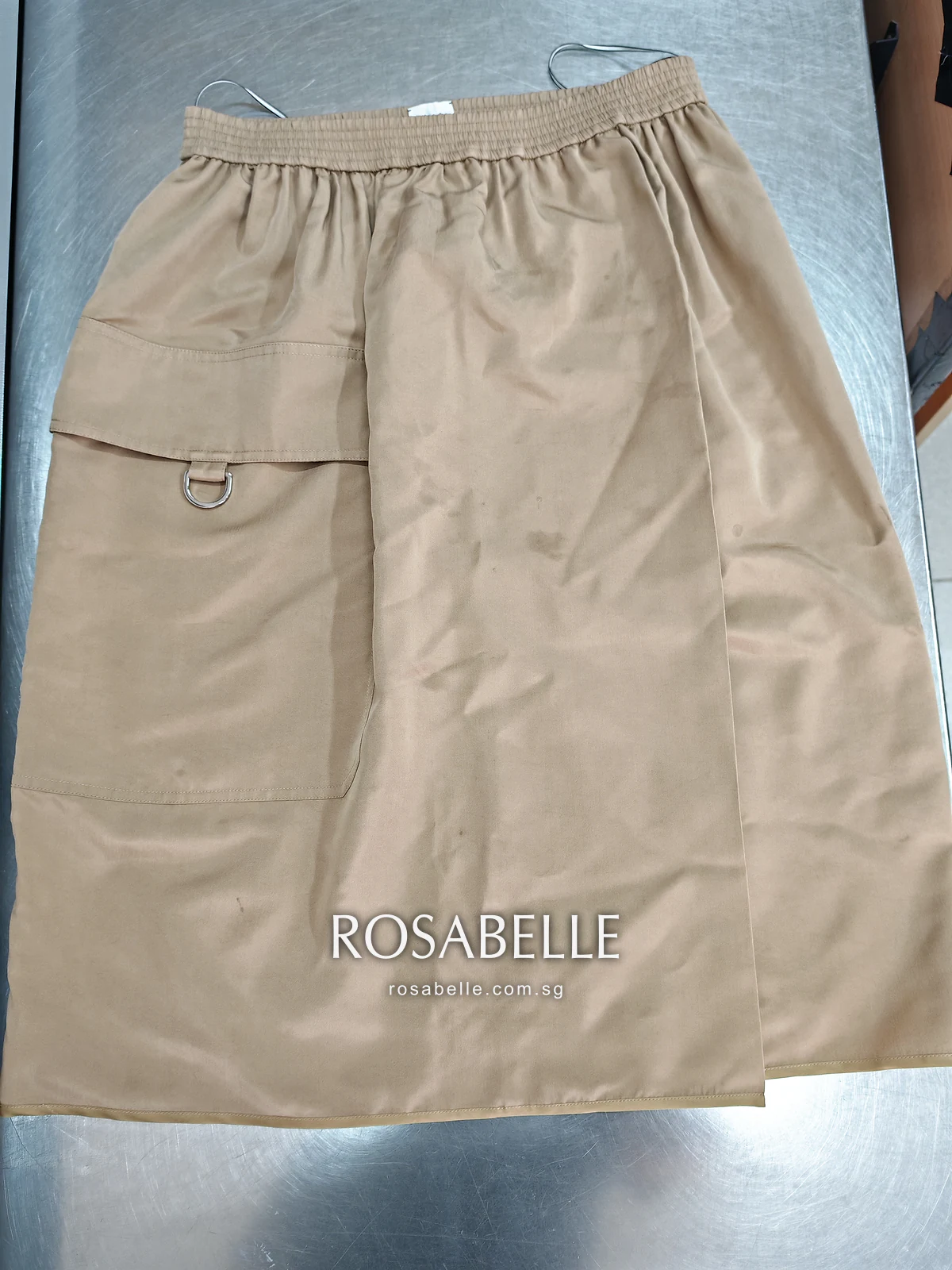
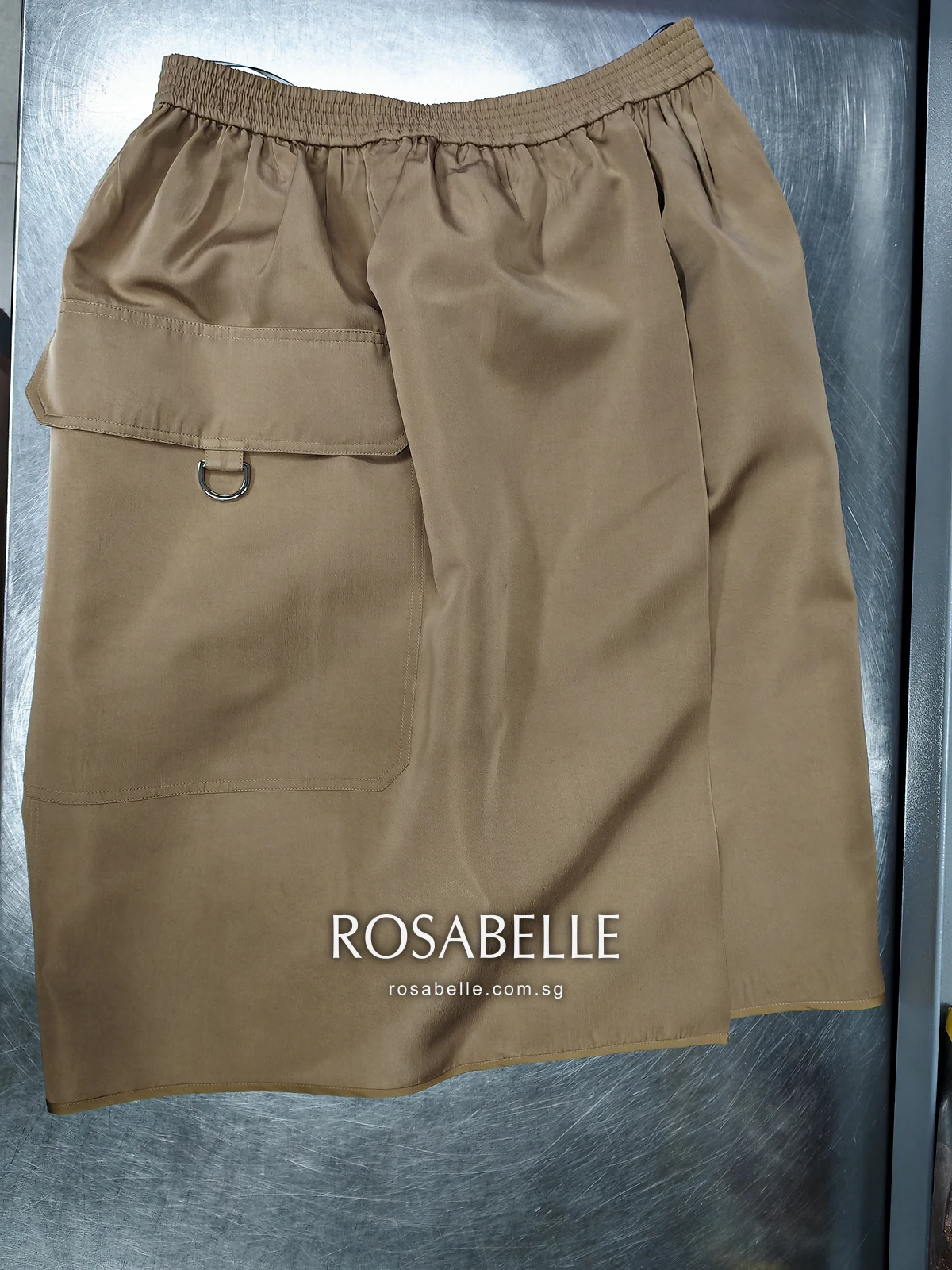
All photographs are shop records taken on the steel work table on different days, so the camel reads slightly differently between frames; what they show is whether each mark is there.
What condition was the Hermès skirt in when it arrived?
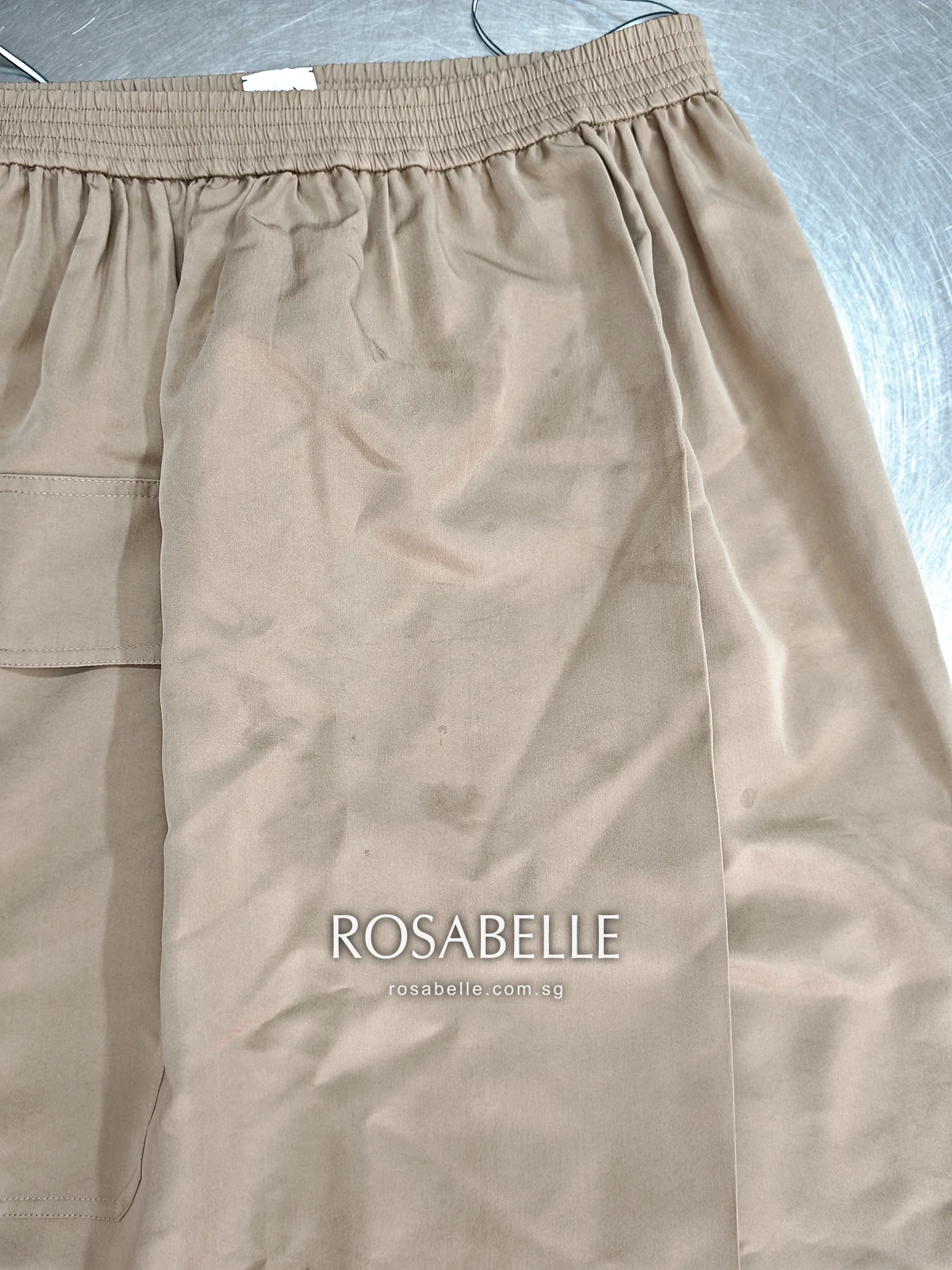
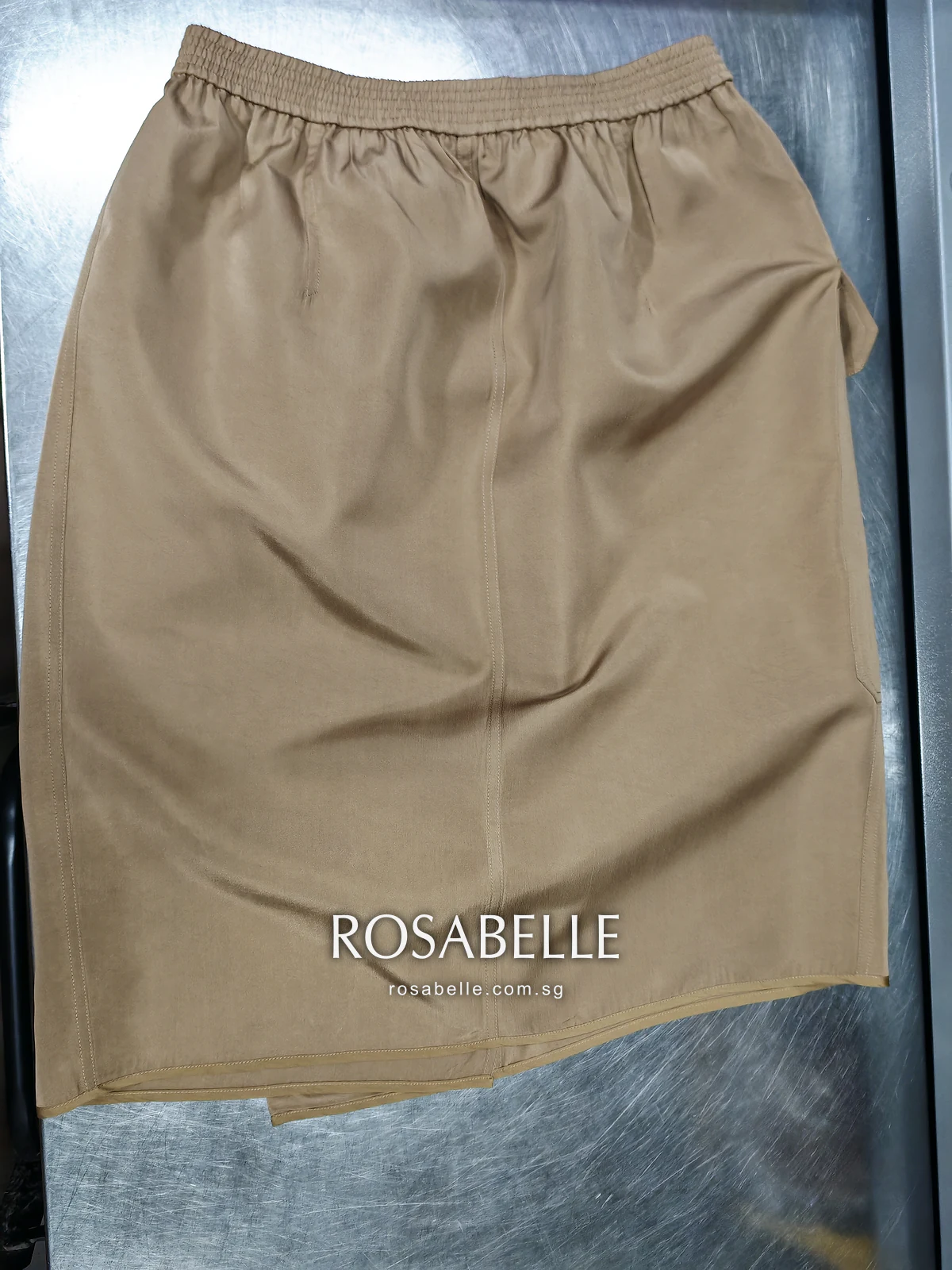
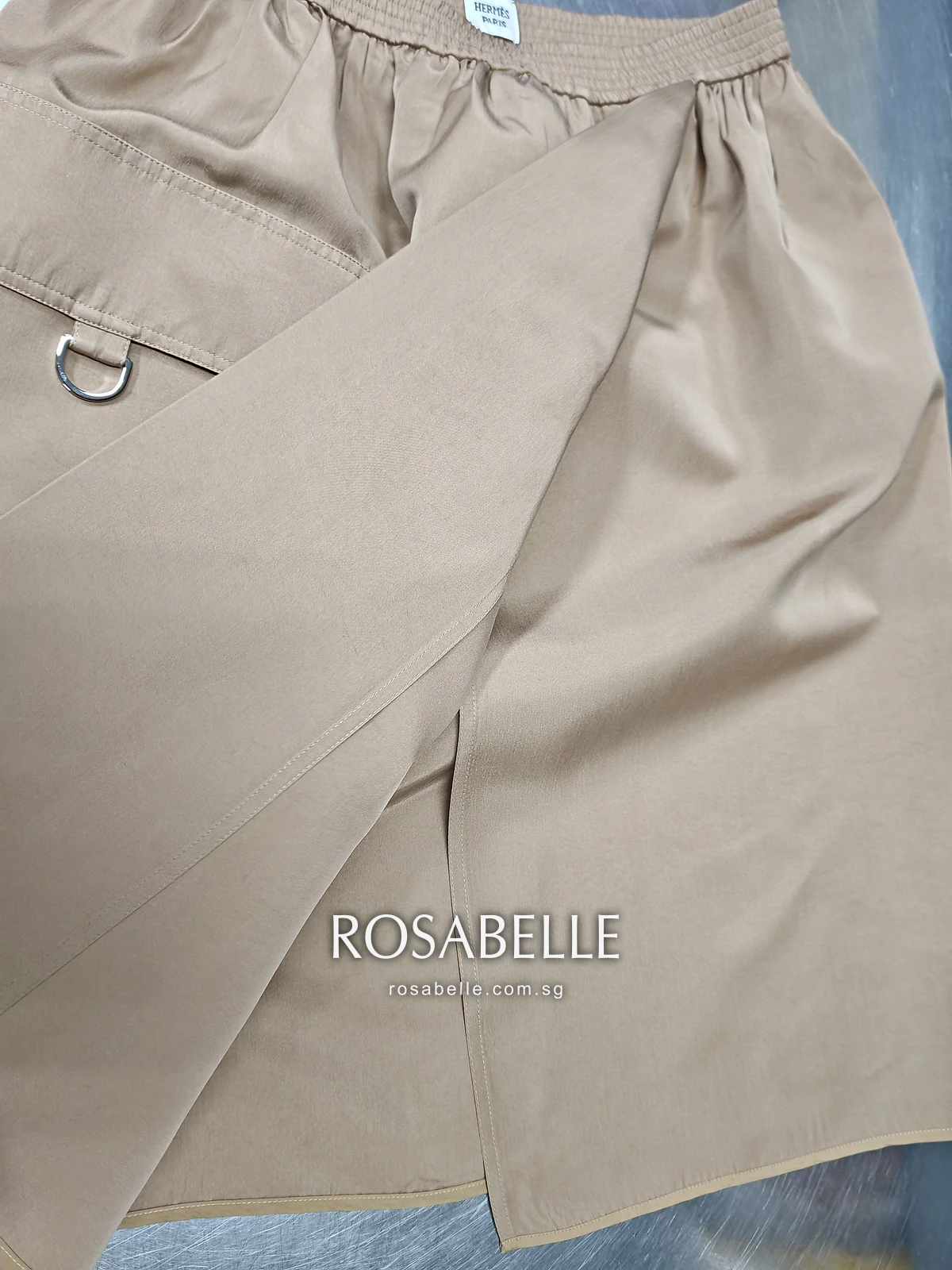
The skirt is an Hermès design in 100% silk, made in Italy, with an elastic waist, a wrap front and a patch pocket carrying a metal D-ring. It was almost new. It had been worn to a dinner and came back with food marks: spots scattered across the back, marks on the front, and a cluster on the wrap panel.
Why are food stains on silk difficult to remove?
Most food leaves more than one thing behind. Oil and fat do not lift with water; sugars, proteins and colour from sauces can set further with heat and time. A single spot can need more than one kind of attention.
Silk narrows the options. It is a protein fibre that is damaged by chlorine bleach and strong alkalis, and its smooth surface loses sheen where it is rubbed. Water spreads through silk and dries with an edge, which can leave a ring larger than the original spot.
What did the care label decide?
The label rules out washing, bleach and tumble drying, and it also rules out professional wet cleaning, which is the water-based process some cleaners use for delicate garments. The label also asks for the accessories to be protected before cleaning, which on this skirt means the metal D-ring on the pocket, and for pressing on the right side with a protective cloth at a low setting.
How did Rosabelle remove the food stains?
Working within the label
Every step was chosen within what the label allows.
Treating each area on its own
The front, the back and the wrap panel were treated as separate areas, each until its marks were gone, and finished so that no ring was left where the treatment stopped.
Protecting the D-ring
The metal D-ring was protected before cleaning, as the label asks, so it could not mark or catch the silk.
What did Rosabelle deliberately avoid, and why?
- Water on the spots. On silk it spreads and dries with a ring.
- Rubbing. It dulls the silk surface where it is worked.
- Bleach and strong alkalis. They damage silk, and the label rules out bleach.
- Heat before the stains were out. Heat can set food residues.
- Pressing directly on the silk. The label asks for a low setting on the right side with a protective cloth.
What was the result?
Every food stain was removed, on the front, the back and the wrap panel, with no rings left around the treated areas.
What does this case show about food on silk?
A fresh food stain that has not been treated at home leaves the most room to work, and on silk the care label sets the limits before the stain does. The best thing this skirt's owner did was bring it in untouched. The result on this skirt is evidence about this piece, not a forecast for every food stain on silk.
How should you care for a silk skirt?
Do:
- Lift off anything solid and blot a spill, without rubbing.
- Bring a stained silk piece in as it is, and say what was spilled if you know.
- Store silk out of direct light, on a padded hanger or folded with tissue.
Don't:
- Dab a food mark on silk with water or soap.
- Use a stain pen, salt or bleach on silk.
- Iron or blow-dry over a stain.
The honest note
Can every food stain be removed from silk?
Not always. We do our best, but many factors will affect the outcome. Complete removal is possible on some garments but cannot be guaranteed. What the food was, how long it has been there, whether it has met heat or water, the dye in the silk and what the label allows all change the work. This skirt's stains were fresh and untreated and came out completely; each garment is assessed on its own before any work starts.
Case documented by Rosabelle Launderette's garment-care team. Case practitioner and technical review: Zach Lim.
Cleaned in-house at Rosabelle Launderette, Singapore, established 1998. This case records one garment in one condition and is not a guarantee of outcome.
Published and technically reviewed 26 September 2026.
Sources & further reading
Related stain-removal cases
More stain-removal cases
Common questions
Questions about food stains on silk
Can food stains be removed from a silk skirt?
Most food leaves more than one thing behind: oil or fat, which water does not lift, and sugars, proteins or colour, which can set with heat and time. Silk is a protein fibre that marks easily and loses its sheen when rubbed, so the stain and the fabric limit the work together. On this almost new Hermès silk skirt every food mark from one dinner was removed. What the work involves changes with the food, how long it has been there and anything tried at home, so each piece is assessed before any work starts. Complete removal is possible on some garments but cannot be guaranteed.
What should I do if I spill food on a silk skirt?
Lift off anything solid with a clean edge and blot, without rubbing. Do not add water, soap, salt or a stain pen, and keep the silk away from heat, including an iron or a hair dryer. Bring it in as it is and say what was spilled if you know.
Why does water leave a mark on silk?
Water moves soil and finishes through the silk as it spreads, then leaves them at the edge where it dries, which shows as a ring. It can also change how the surface reflects light. That is why dabbing a food spot with water often leaves a larger mark than the spot itself.
Can a Hermès silk skirt be washed at home?
Follow the care label. This skirt's label says do not wash, do not tumble dry and professional dry clean only, and it rules out professional wet cleaning too. It also asks for the accessories to be protected before cleaning and for ironing on the right side with a protective cloth.