
Journal · Case study · Knitwear · Published
Reblocking a Shrunken Loro Piana Cashmere Cardigan in Singapore
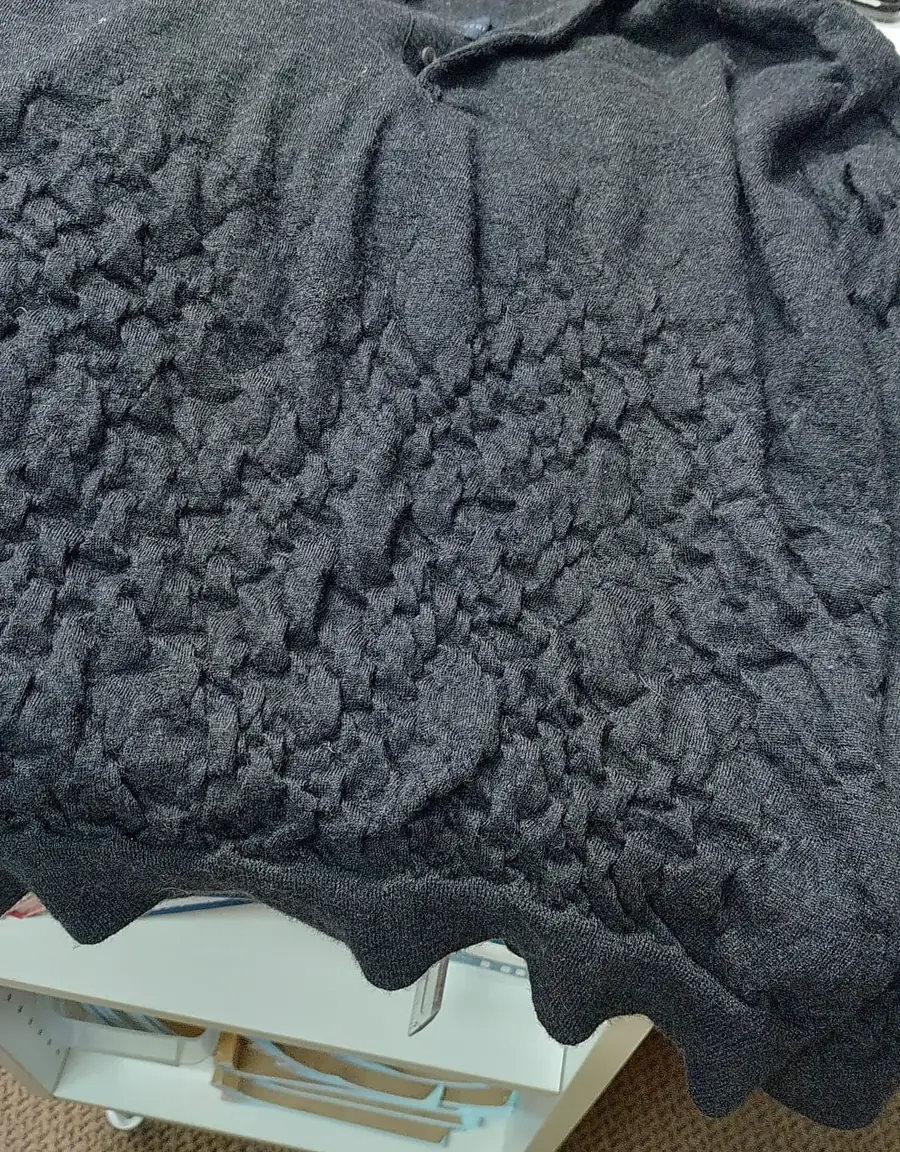
This Loro Piana cardigan in 100% cashmere shrank in a machine wash at home, and after it was relaxed and reblocked its size improved significantly. It came in smaller in the body and sleeves, and was measured along the button placket, across the chest and along both sleeves before any work started.
This page records what happened to this cardigan, measured on the same table before and after, not an outcome to expect from every shrunken cashmere knit.
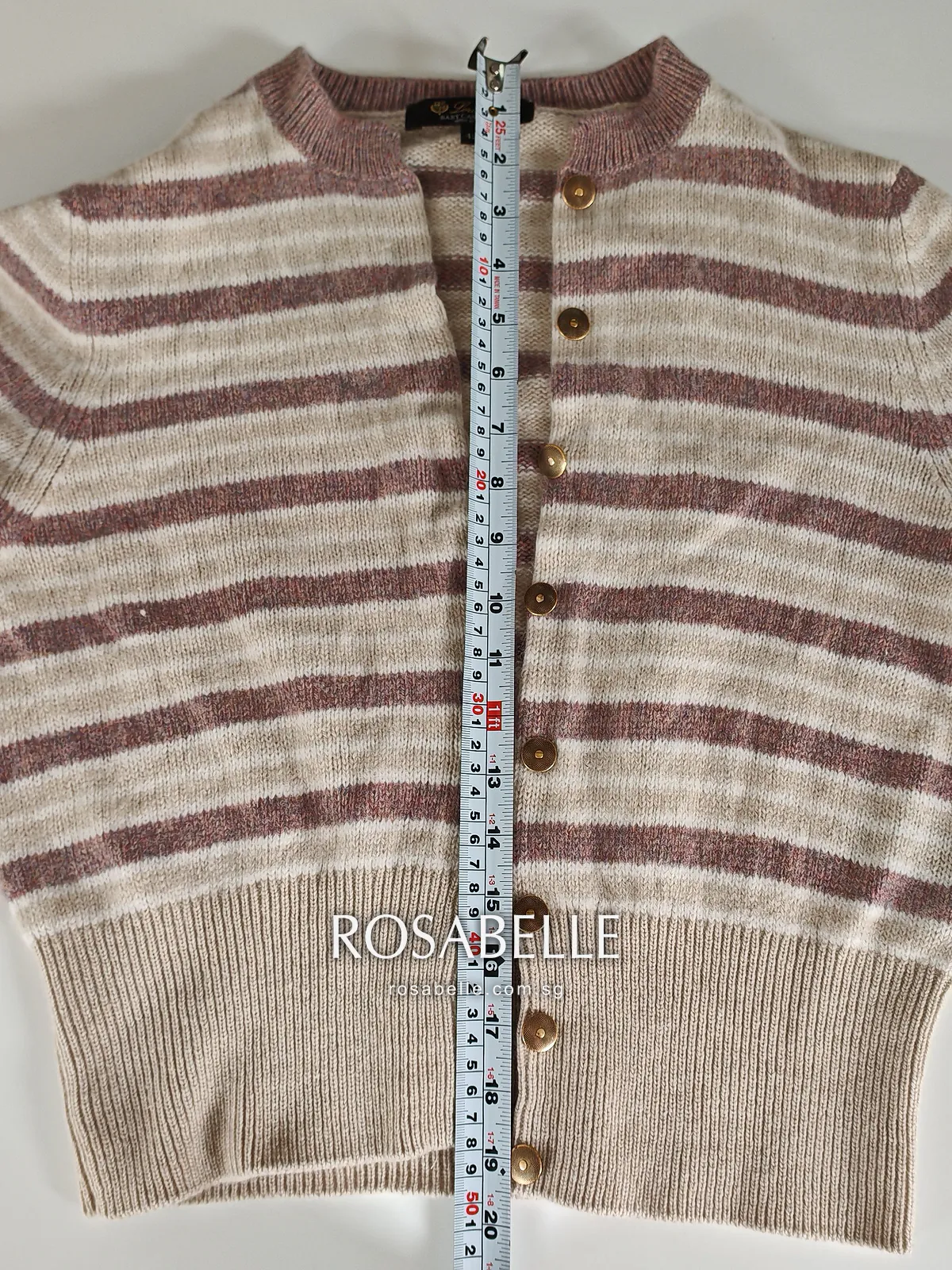
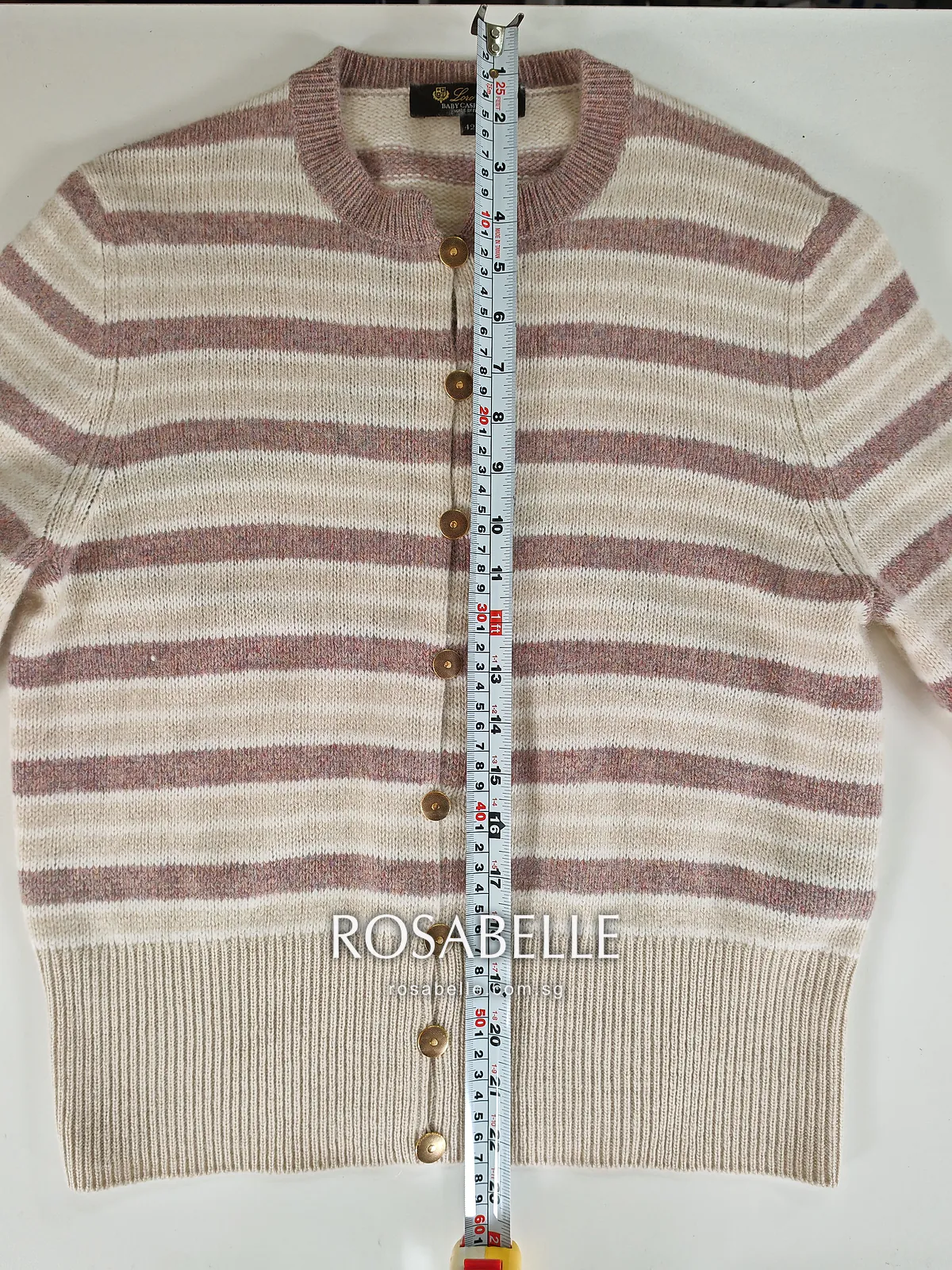
What condition was the Loro Piana cardigan in when it arrived?
The cardigan had been through a washing machine at home and come out smaller. It is a striped Loro Piana cardigan in 100% cashmere, with a crew neck, a button front, ribbed cuffs and a deep ribbed hem.
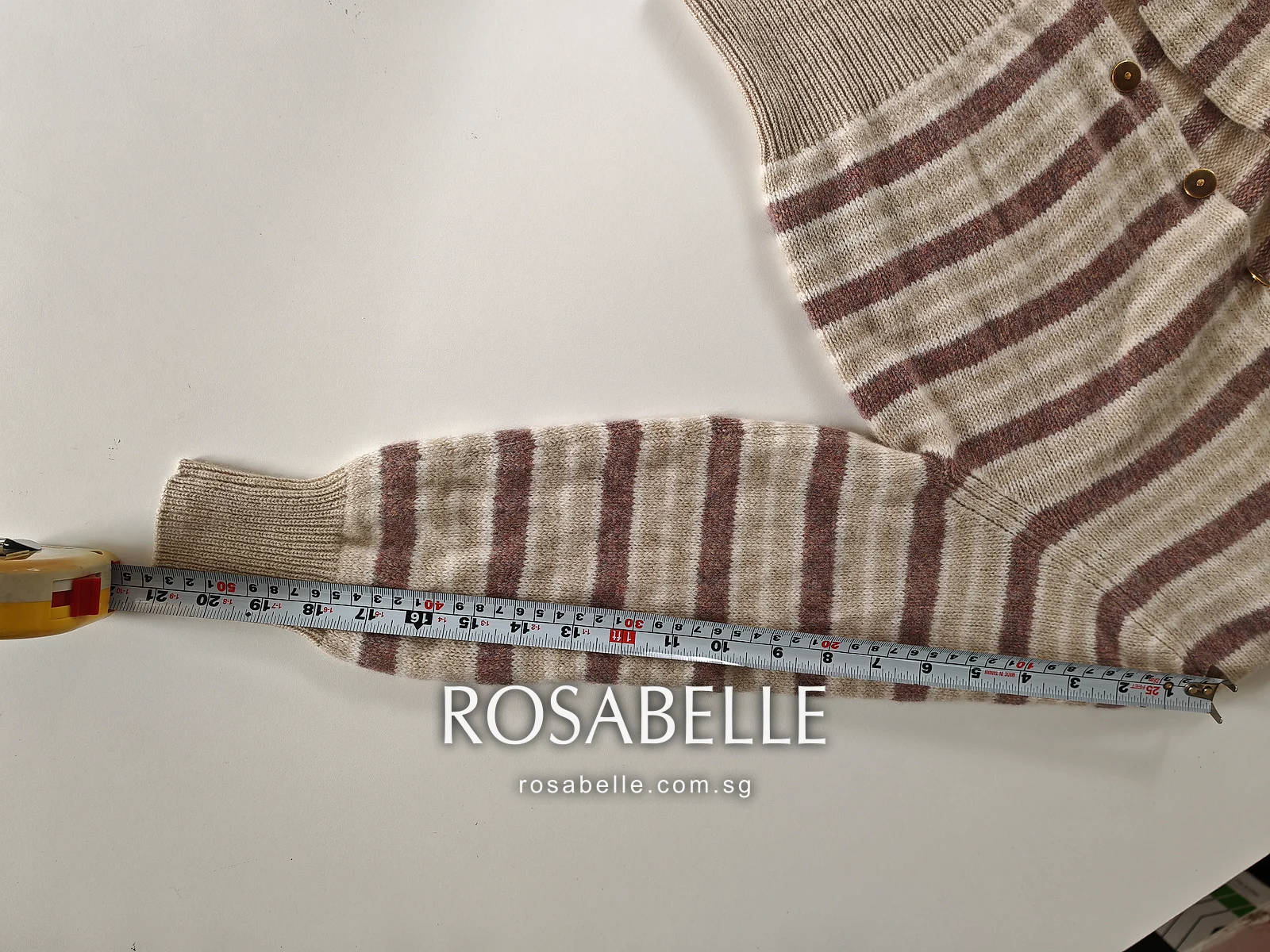
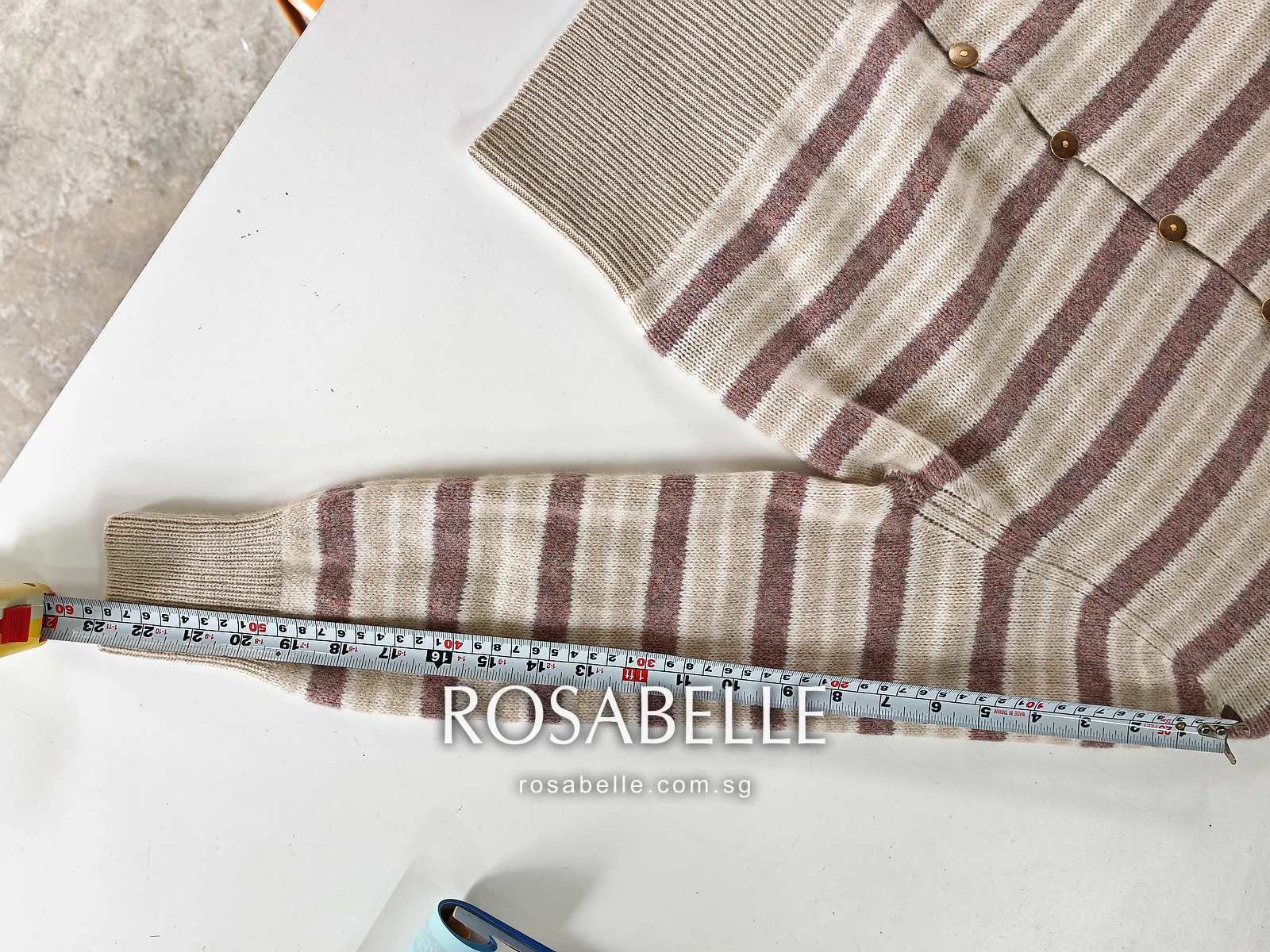
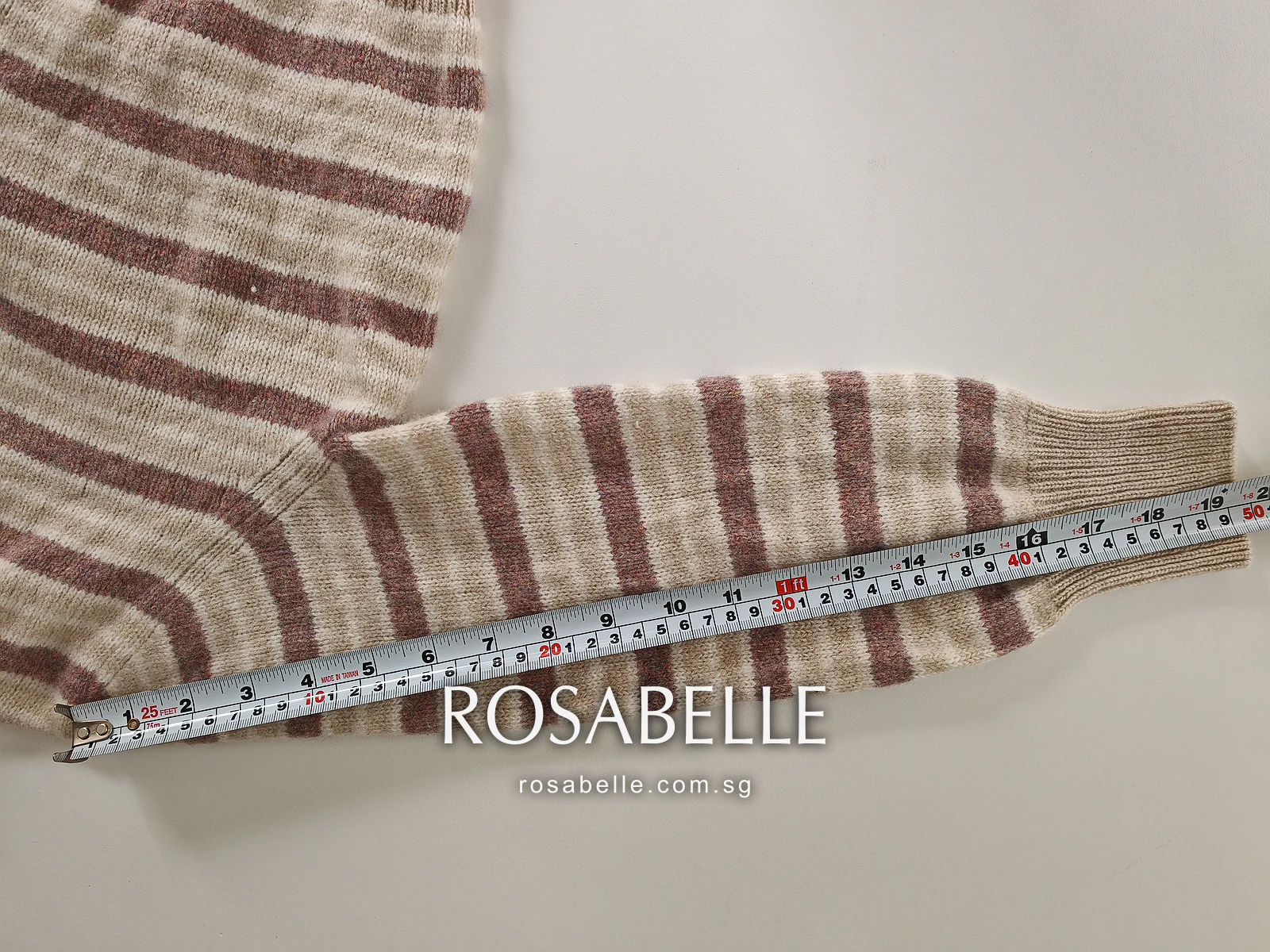
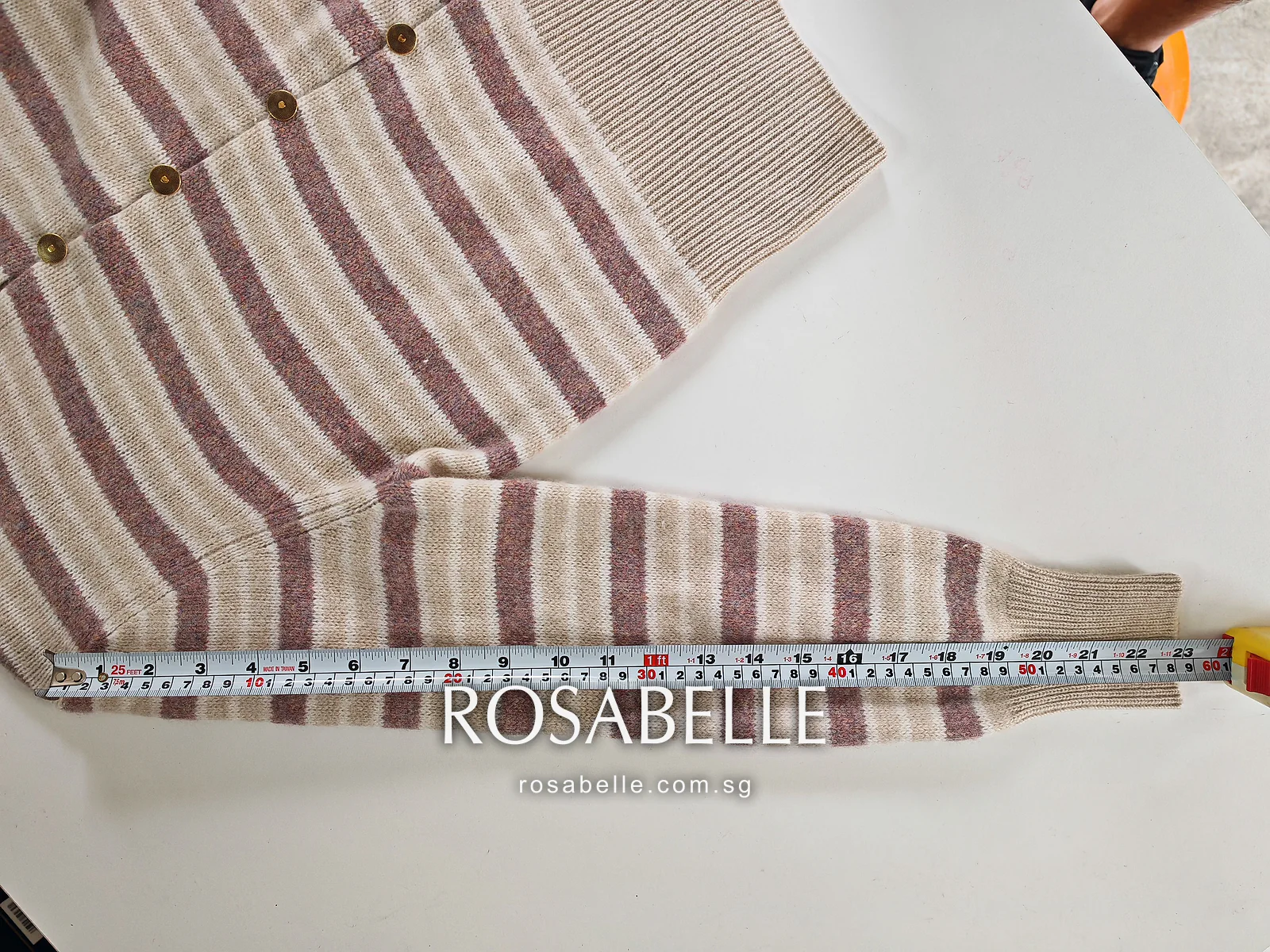
We measured it on arrival down the button placket, across the chest below the armholes and along each sleeve from shoulder to cuff, and measured the placket and both sleeves again the same way when the work was finished. The photographs on this page are those measurements.
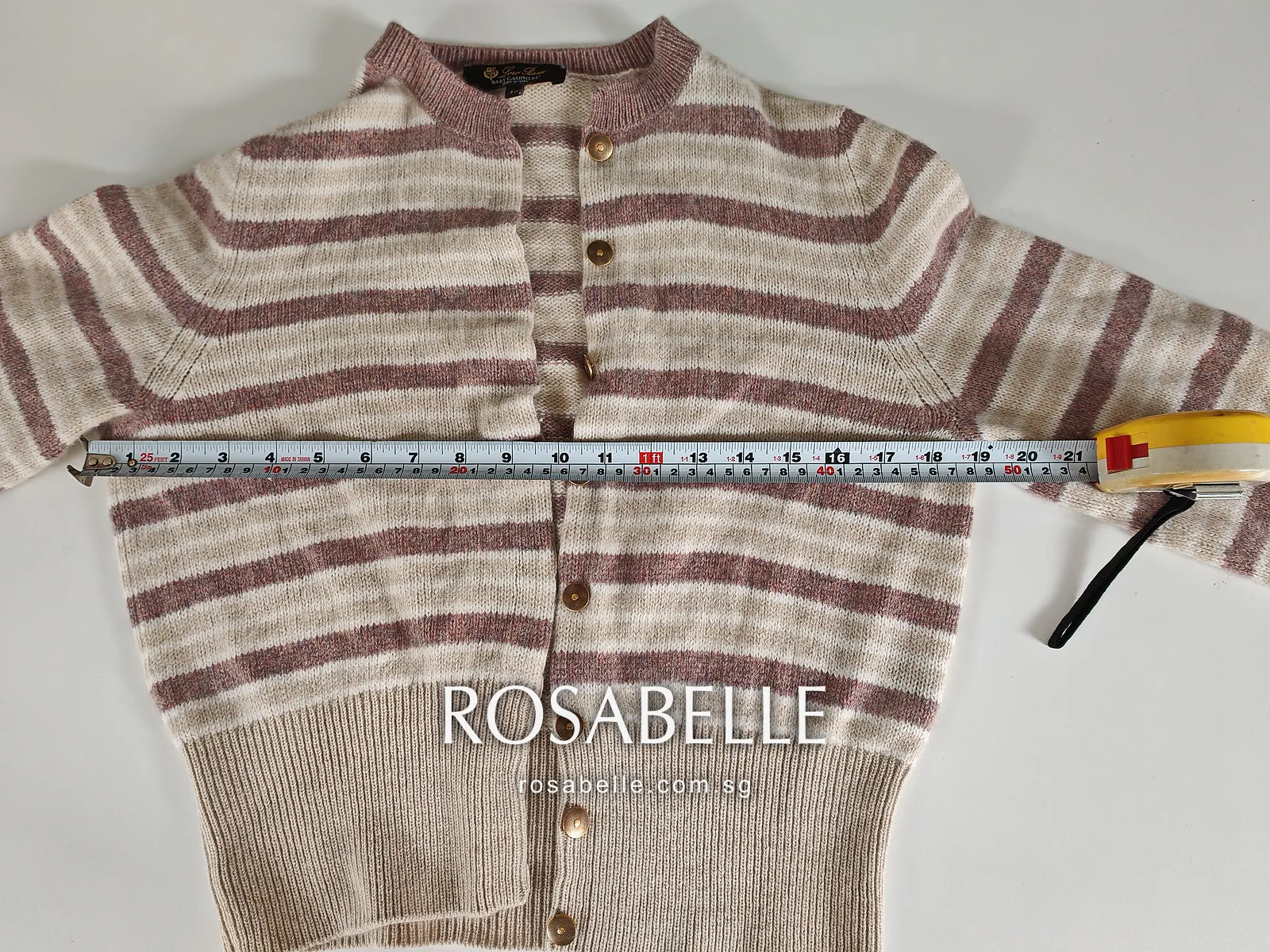
The chest was measured on arrival but not photographed again at the end, so it appears here once. The photographs are working shop records, shown as captured with no colour correction.
Why does cashmere shrink in a washing machine?
Cashmere is the fine undercoat hair of the cashmere goat. Like wool, each fibre is covered in small overlapping scales. A knit is made under tension, and when it is wetted the fibres relax and the knit draws in. With continued movement in water the scales also catch on one another and lock, and the fibres felt into a denser, smaller fabric.
A washing machine supplies water and movement for the whole length of a cycle, and the spin adds pressure on top. A soft, fine cashmere knit gives the fibres plenty of room to move, which is part of what makes it feel the way it does.
How did Rosabelle reblock the cardigan?
Measuring before anything else
The cardigan was measured along the placket, across the chest and along both sleeves before any work started, so the result could be checked against fixed points rather than judged by eye.
Relaxing the fibres
The knit was relaxed so that it could move again. Pulling a shrunken knit without doing this first strains the yarn, and a fine cashmere yarn has little to spare.
Reblocking body, sleeves and edges together
The body, both sleeves and the ribbing were eased back together, and the cardigan was dried in that shape so it held it. The deep hem rib, cuffs and neckline were kept to their own proportion, because a rib that is stretched with the body stops gripping.
What did Rosabelle deliberately avoid, and why?
- Stretching it by hand while wet. The areas you grip move more than the rest, and the knit comes back uneven.
- Heat to speed the drying. Warmth with movement is what felts animal fibres; drying had to be controlled and in shape.
- Working one sleeve or the body on its own. Easing one part leaves the others short and the proportions wrong.
- Pulling the hem rib out with the body. A deep rib that is overstretched no longer draws the hem in.
What was the result?
The cardigan's size improved significantly. The placket length and both sleeves were measured again at the same points when the work was finished, and those photographs sit beside the arrival measurements on this page.
What does this case show about shrunken cashmere?
A machine wash gives cashmere the water and movement that make it shrink, and a fine, soft knit is quick to respond to both. It also shows that a cashmere knit which has drawn in has room to come back. How much of the shrinkage is felting is what an assessment decides, and it is why the result on this cardigan is evidence about this piece, not a forecast for every shrunken cashmere sweater.
How should you care for a cashmere cardigan?
Do:
- Follow the care label, and machine wash only if it allows it.
- Where it does, use the gentlest wool cycle, cold water, a low spin and a mesh bag.
- Press water out in a towel, then dry the cardigan flat in its own shape, out of direct sun.
- Bring a shrunken knit in as it is, and tell us how it was washed.
Don't:
- Wring, rub or soak cashmere for long.
- Tumble dry a cashmere knit unless the label allows it.
- Hang a wet knit; its own weight pulls it out of shape.
- Try to stretch a shrunken knit back by hand before it has been seen.
The honest note
Can every shrunken cashmere knit be reblocked?
Not always. We do our best, but many factors will affect the outcome. Complete recovery is possible on some garments but cannot be guaranteed. How far the fibres have felted, how the knit was made, how long and how hard it was washed, and what has already been tried on it all change the work. Each cashmere knit is measured and assessed before any work starts.
Case documented by Rosabelle Launderette's garment-care team. Case practitioner and technical review: Zach Lim.
Reblocked in-house at Rosabelle Launderette, Singapore, established 1998. This case records one garment in one condition and is not a guarantee of outcome.
Published and technically reviewed 10 October 2026.
Sources & further reading
Related knitwear and wool cases
More knitwear cases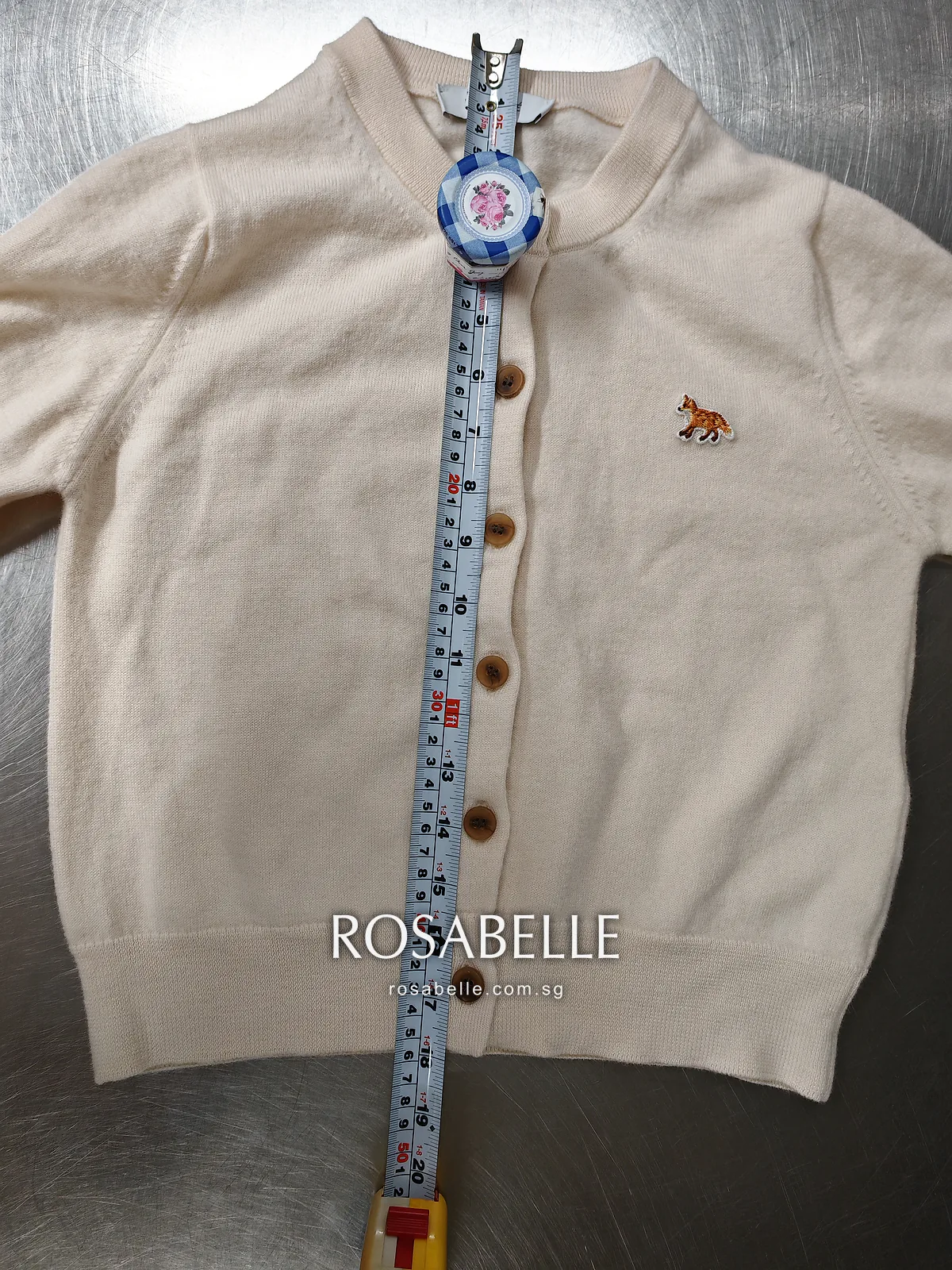
Common questions
Questions about shrunken cashmere knitwear
Can a shrunken Loro Piana cashmere cardigan be reblocked?
Cashmere is a fine animal hair with the same surface scales as wool, so it shrinks the same two ways: the knit draws in as the fibres relax, and the fibres felt as their scales lock together under water and movement. Reblocking works on the first far more than the second. This Loro Piana cardigan in 100% cashmere shrank in a home machine wash, and after it was relaxed and reblocked its size improved significantly. How far a cashmere knit comes back depends on how much it has felted, so each one is assessed before any work starts. Complete recovery is possible on some garments but cannot be guaranteed.
Why does cashmere shrink in a washing machine?
A washing machine supplies the two things that felt animal fibres: water, which lets the scales on each fibre open, and continuous movement, which pushes those scales into one another until they catch and lock. Fine fibres such as cashmere have a lot of surface for their size, and a soft, loosely twisted knit lets them move freely. This cardigan was machine washed at home and came out smaller in the body and sleeves.
Should I try to stretch a shrunken cashmere cardigan back myself?
Pulling a wet cashmere knit by hand moves the parts you grip more than the rest, so the body, sleeves and ribbing come back out of proportion, and the strain falls on a fine, soft yarn. Fibres that have felted do not move at all. On this cardigan the body, both sleeves and the ribbed collar, cuffs and deep hem had to be worked together, with each rib kept to its own proportion.
How much does it cost to fix a shrunken cashmere cardigan in Singapore?
Reblocking is quoted after the cardigan is assessed, because the work depends on how far it has shrunk and how much of that is felting. Routine sweater cleaning at Rosabelle is on the price list; the reblocking quote is given before any work starts.
How should a cashmere cardigan be washed to stop it shrinking?
Follow the care label first, and only machine wash cashmere if the label allows it. Where it does, use the gentlest wool cycle in cold water with a low spin, keep the knit in a mesh bag, and dry it flat in its own shape out of direct sun. Never tumble dry cashmere unless the label allows it. For a valuable knit, or if you are unsure, have it cleaned professionally.