
Journal · Case study · Stain removal · Published
Removing Colour Run From a Louis Vuitton Nylon Parka in Singapore
The colour run on this white Louis Vuitton parka was removed, and the parka went back to its owner to wear. It arrived with teal, bluish-green dye marks on the front, hood, sleeves and mesh lining, and its drawcords were stained. The dye came from the parka's own leather toggles, which had been in contact with bleach and had started to bleed.
The shell is polyamide, a fabric that tolerates bleach and many stain treatments poorly, and it had already been exposed to bleach once. The work had to go in order: stop the toggles releasing dye, remove the dye transfer from the polyamide, then treat the drawcords, all without weakening the fabric further. It records what happened to this parka, not an outcome to expect from every garment.
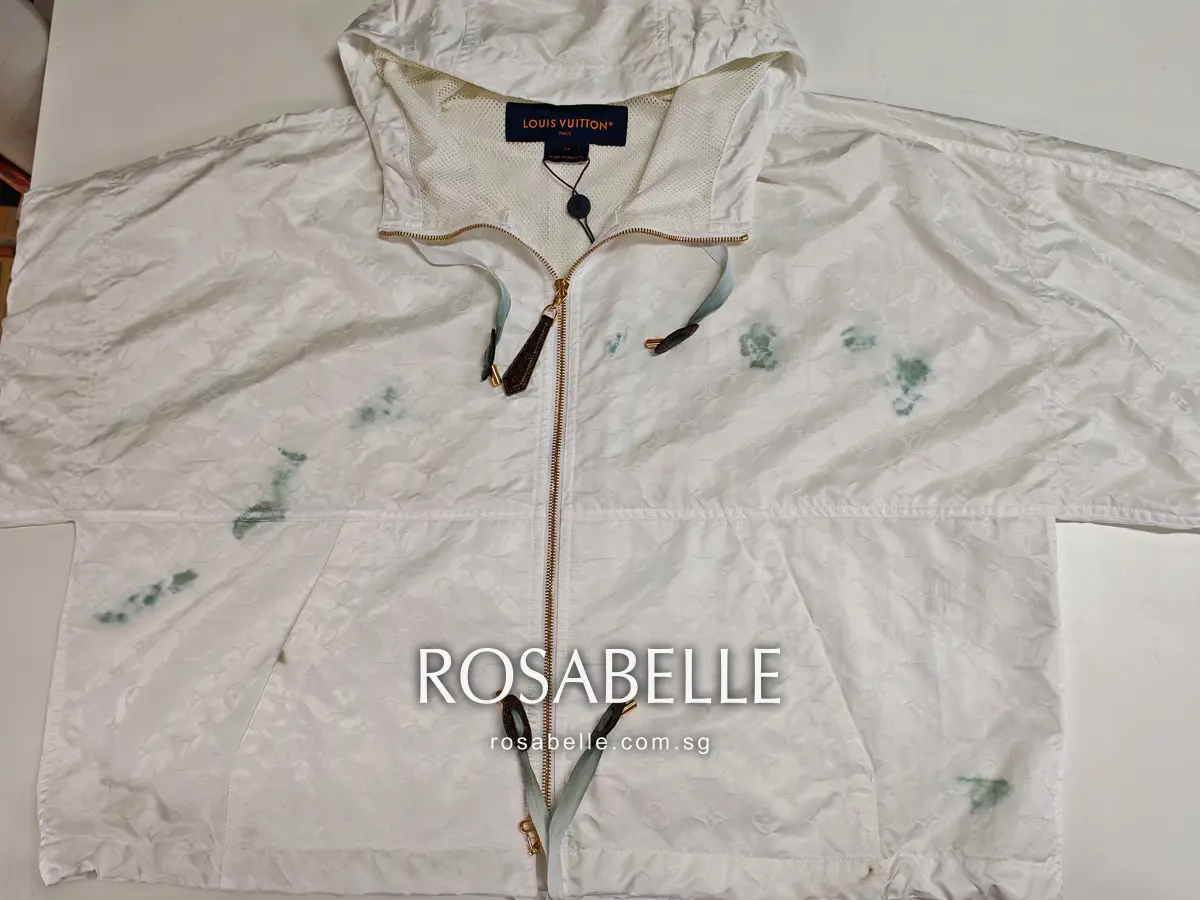
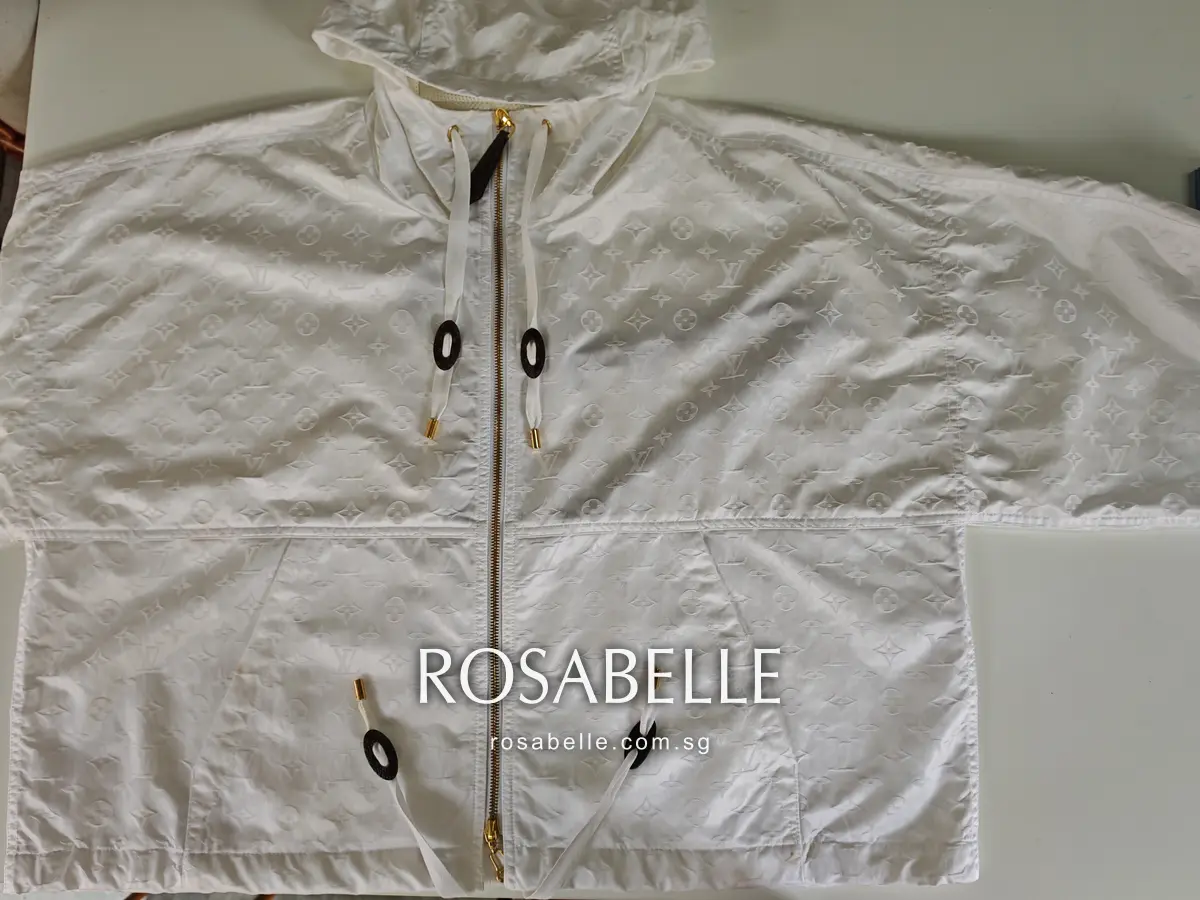
The photographs are shop records shown as captured, with no colour correction; what they show is whether the marks are there.
What condition was the Louis Vuitton parka in when it arrived?
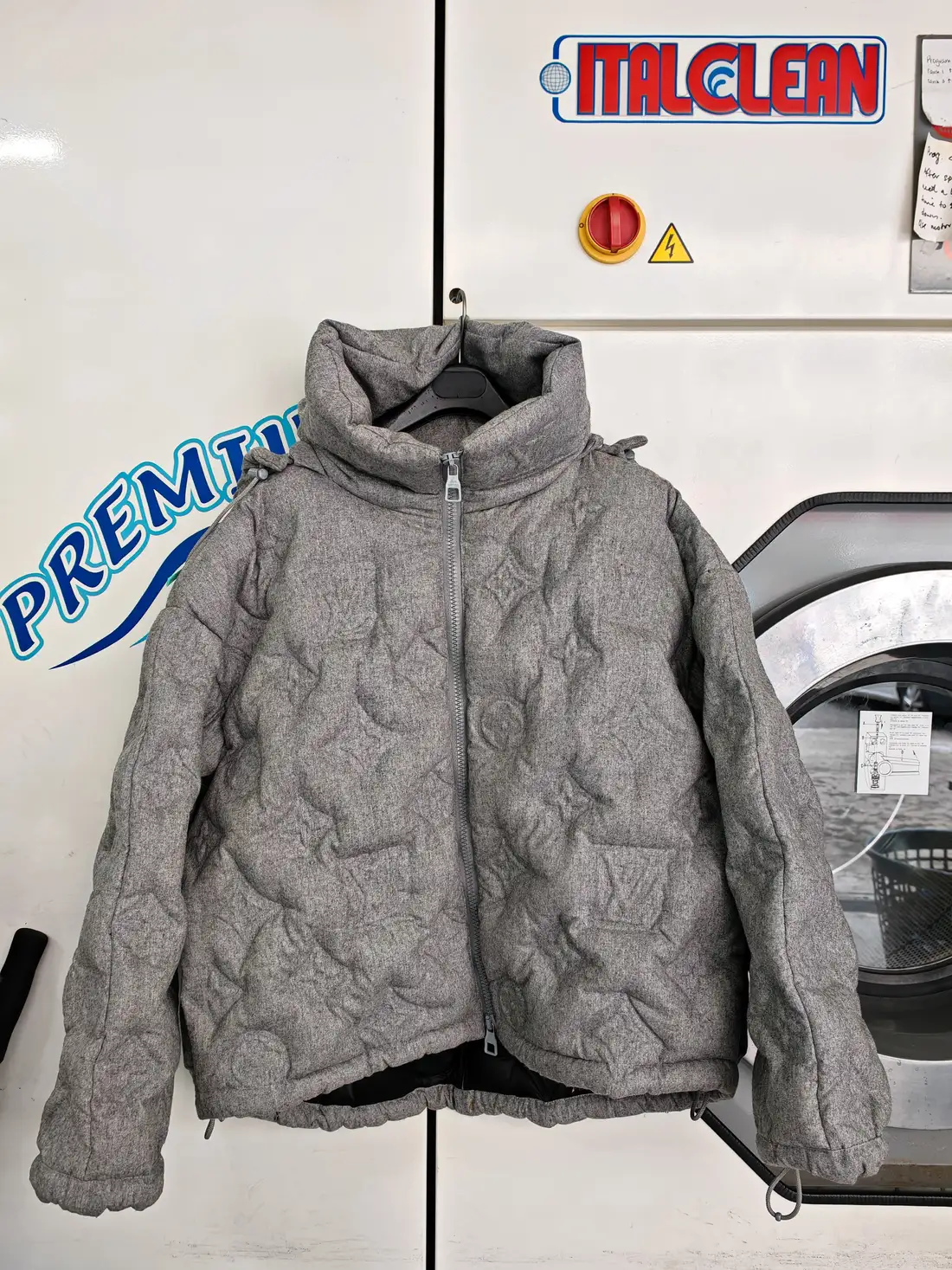
The parka had dye marks in several places, and the dye was still coming from the garment itself. It is a white Louis Vuitton hooded parka in polyamide with a monogram pattern, a gold zip, a mesh lining, and leather toggles on its drawcords.
- Dye transfer on the shell. Teal, bluish-green marks across both front panels, the hood and the sleeves.
- Dye in the lining. Marks on the mesh lining as well as the outer.
- Stained drawcords. The white cords had taken up dye near the toggles.
- Bleeding toggles. The leather toggles were still releasing dye.
Why did the leather toggles bleed dye onto the parka?
Leather trim is dyed. In our workshop experience, bleach can damage the surface of dyed leather and leave the dye free to move when the garment gets wet. On this parka the toggles hang on drawcords that rest against the fabric, so the dye had a direct route onto the polyamide and into the cords themselves.
Why is a polyamide parka difficult to treat?
Polyamide, commonly called nylon, is weakened by chlorine bleach, and many stain treatments that suit cotton are too harsh for it. This parka had already been in contact with bleach, so the fabric had less tolerance left than a new garment would. The main risk was not that the marks would stay, but that the fabric would weaken further or break down during the work.
The colour run added a second problem. Removing dye transfer while its source is still releasing dye only moves fresh dye onto the fabric. So the job had to be done in a fixed order.
How did Rosabelle remove the colour run?
Stopping the toggles bleeding first
While the toggles were still releasing dye, any treatment that wet the parka could have put fresh marks on it. The bleeding was stopped before any work on the marks began.
Taking off the zip pull
The leather zip pull was not bleeding. It was removed before treatment so that it would not be exposed to it and damaged, and refitted once the parka was finished.
Removing the dye transfer from the polyamide
With no fresh dye coming from the toggles, the marks on the shell, hood, sleeves and lining were treated. Each step was judged against how much the bleach-exposed polyamide could take, not against how quickly the marks would clear.
Treating the drawcords
The drawcords were treated after the shell, once the toggles on them were no longer releasing dye.

What did Rosabelle deliberately avoid, and why?
- Bleach or bleach-based stain removers. The polyamide had already been exposed once, and more bleach risked the fabric breaking down.
- Treating the marks before the toggles were stopped. Fresh dye would have moved onto the fabric during the work.
- Leaving the zip pull on. It was not part of the problem, so it was kept away from the treatment.
- Stronger treatment to clear the marks faster. Speed was not worth the risk to a fabric that had already been weakened.
What was the result?
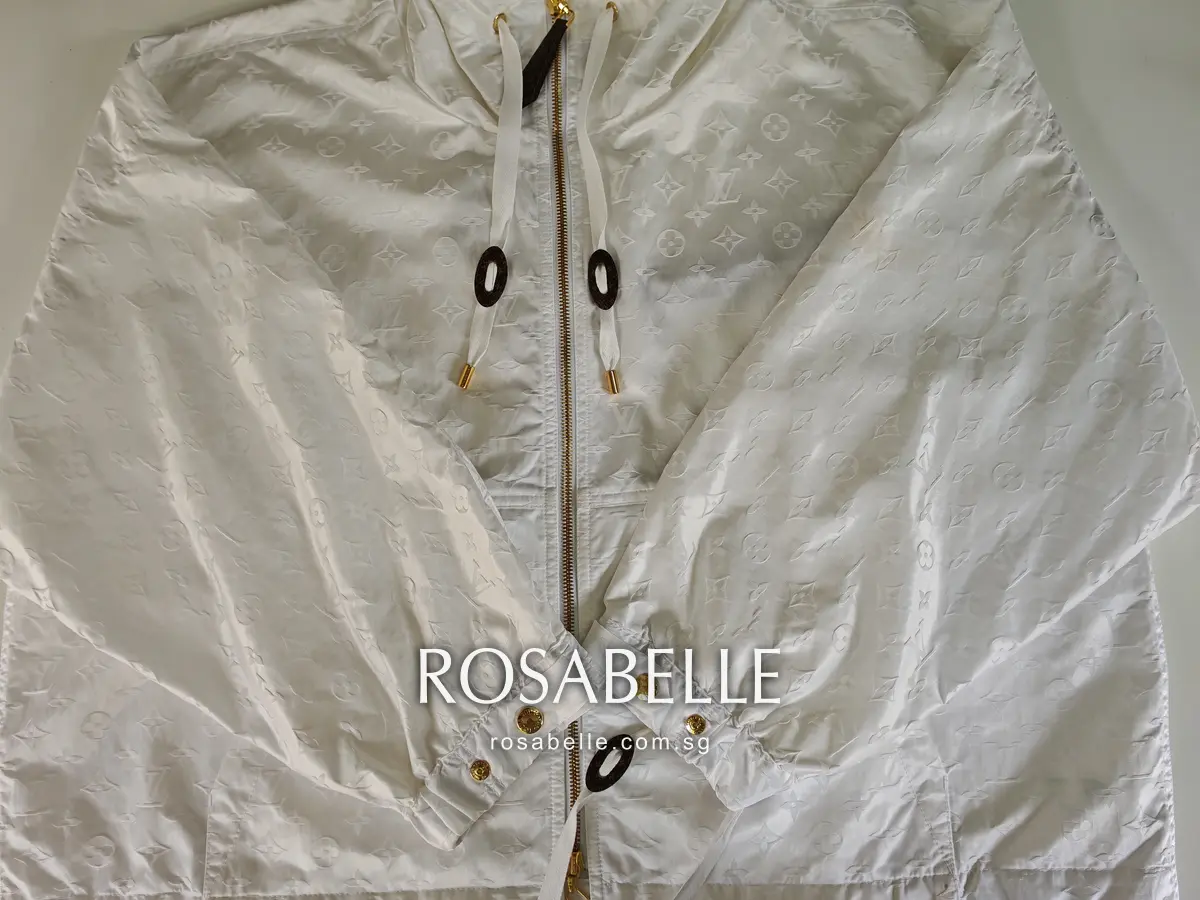
All of the colour run was removed, and the parka went back to its owner to wear.
- Dye transfer on the shell, hood and sleeves: removed.
- Marks in the mesh lining: removed.
- Leather toggles: no longer bleeding.
- Drawcords: treated, and white again in the after photographs.
- Zip pull: refitted.
What does this case show about colour run on a garment?
When the dye comes from part of the garment itself, removing the marks is the second job, not the first. The source has to stop releasing dye before the fabric can be cleaned, or the marks come back during treatment.
The case also shows that a garment's history changes what it can take. Earlier contact with bleach left this parka with less margin, and the treatment was set around that. If you bring in a garment with colour run, say what it has been in contact with, even if it seemed minor. The result on this parka is evidence about this piece, not a forecast for every garment.
How should you care for a parka with leather trim?
Do:
- Check the care label before using any stain remover; the crossed-out triangle means no bleach. GINETEX publishes the care symbols.
- Keep bleach and bleach-based cleaners away from leather trim.
- If dye runs, keep the garment dry and bring it in with the trim as it is.
- Tell your cleaner about any contact with bleach, however brief.
Don't:
- Use chlorine bleach on polyamide or nylon.
- Wash the garment again after the colour has run.
- Rub at dye marks; it spreads them.
- Cut off or treat the trim yourself before a cleaner has seen it.
The honest note
Can colour run always be removed from a bleach-exposed garment?
No, and complete removal is not something we promise. This parka cleared fully, but bleach-exposed polyamide leaves little margin. Bleach damage to a fibre itself cannot be reversed by cleaning, and a fabric weakened far enough can break down under any treatment. We also do not recolour leather, so where bleach has changed the colour of a leather trim, cleaning will not bring it back. A different garment needs its own assessment, and a photograph alone is not enough to judge it.
Case documented by Rosabelle Launderette's garment-care team. Case practitioner and technical review: Zach Lim.
Cleaned in-house at Rosabelle Launderette, Singapore, established 1998. This case records one garment in one condition and is not a guarantee of outcome.
Published and technically reviewed 4 September 2026.
Sources & further reading
Related colour-run and outerwear cases
More stain-removal cases
Common questions
Questions about colour run on nylon and leather-trimmed garments
Can colour run be removed from a nylon jacket?
Often, but the source of the dye has to be dealt with first. On this Louis Vuitton polyamide parka, the dye that had run from its leather toggles onto the white nylon was removed. The toggles were stopped from bleeding before the marks were treated, or fresh dye would have moved onto the fabric during the work.
Why did the leather trim on my jacket bleed dye?
Leather trim is dyed, and in our workshop experience damage to its surface can leave that dye free to move when the garment gets wet. On this Louis Vuitton parka, contact with bleach is what set the leather toggles bleeding onto the nylon and the drawcords.
Can I use bleach on a white nylon jacket?
Check the care label first, and do not use chlorine bleach on polyamide (nylon): it weakens the fibre. On a garment with leather trim it can also start the leather bleeding, as it did on this Louis Vuitton parka. A garment that has already been in contact with bleach is more fragile, so every later treatment has less margin.
Why stop the dye bleeding before removing the colour run?
While the source is still releasing dye, any treatment that wets the garment can move fresh dye onto it. On this parka the leather toggles were dealt with first, then the dye transfer was removed from the polyamide, and the drawcords were treated last.
Should I wash a jacket again after the colour has run?
No. Washing it again with the bleeding trim still attached can spread the dye further. Keep the jacket dry, leave the trim as it is, and tell your cleaner what happened, including any contact with bleach.
Can all colour run be removed from a bleach-exposed garment?
Not always, and complete removal is not something we promise. This Louis Vuitton parka cleared fully and went back into use, but bleach damage to a fibre cannot be reversed by cleaning, and a fabric weakened far enough can break down under any treatment. Each garment needs its own assessment.