
Journal · Stain removal ·
Celine Bouclé Jacket: Removing Colour Run From a Cleaning Cloth
The owner polished the gold buttons with a damp cloth. The cloth’s dye went into the jacket.
What came in
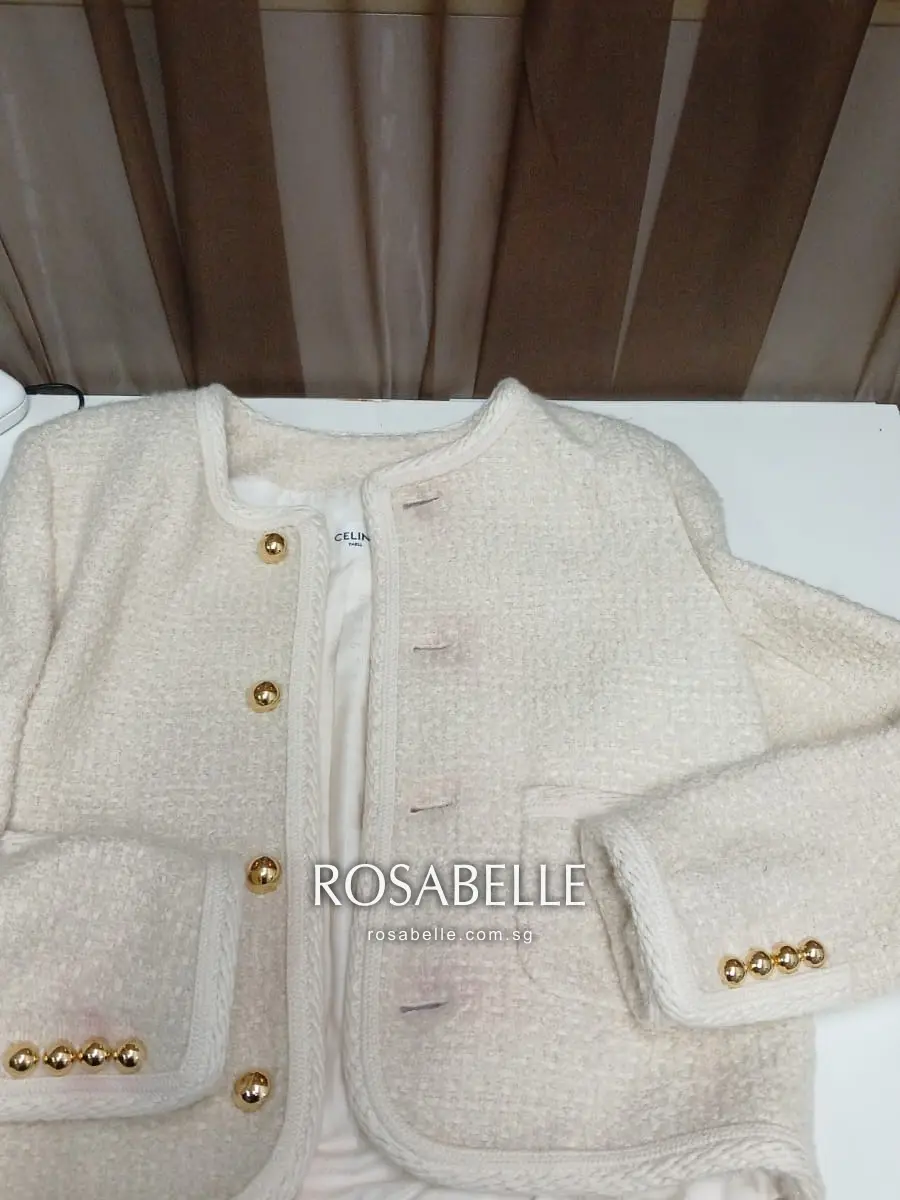
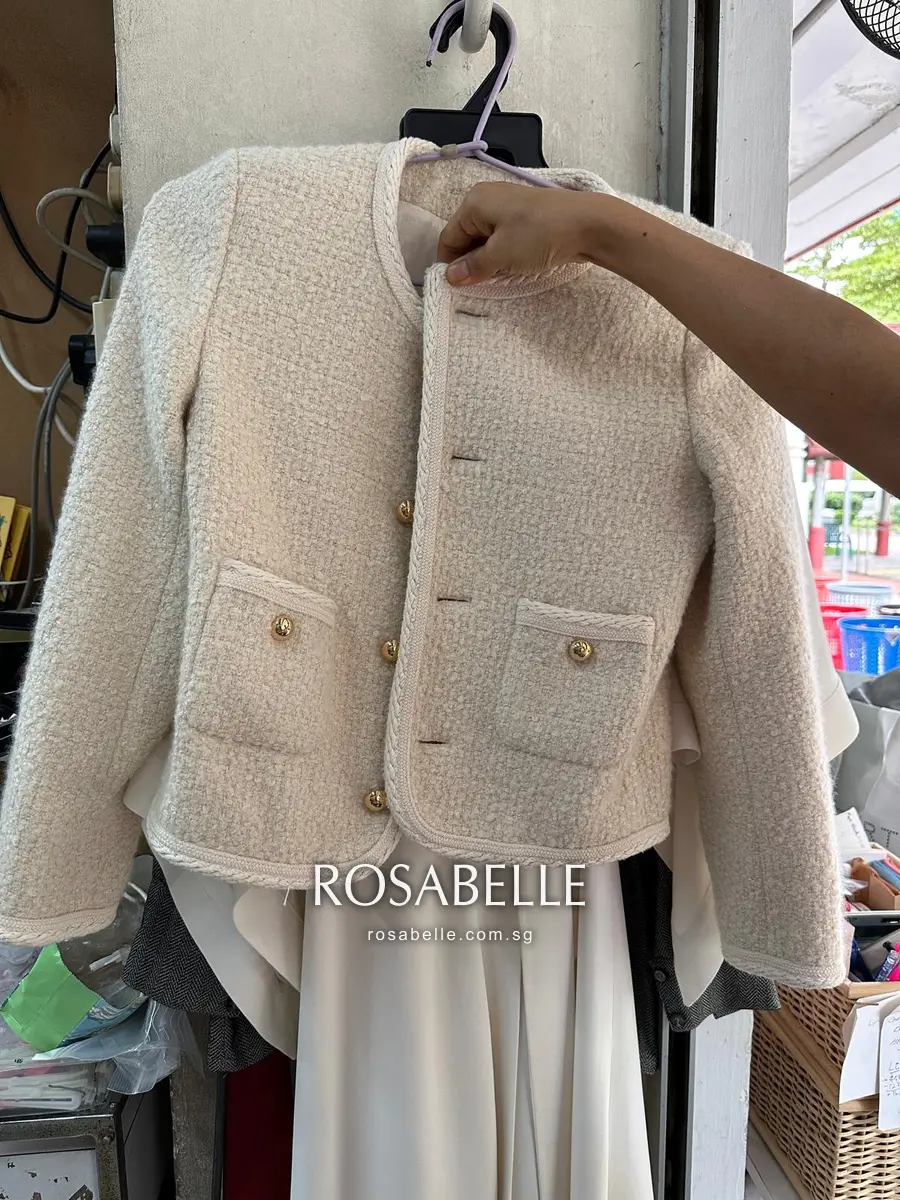
A cream bouclé jacket in the short, round-necked, gold-buttoned cut, with a composition label reading sixty per cent cashmere and twenty per cent wool with silk and polyamide, made in Italy. The owner had wanted the gold buttons to look their best and had gone over them with a damp cloth. The cloth was coloured. Its dye came out into the water and went straight into the cream bouclé, blooming pink around each button and running down the placket where the cloth had travelled.
Why colour run is not a stain
A stain is a substance sitting on and in the fibre. Colour run is dye, and dye is built to bond to textile fibres permanently. It has already done chemically what a stain manages only by accident, and it did it while the fibre was wet and open. So the instinct that makes an ordinary mark better makes this one worse. Scrubbing spreads the dye into clean cloth and widens the marked area. Warmth or a hot wash sets it for good. Treat dye transfer as a soiling problem and you drive it in.
The work
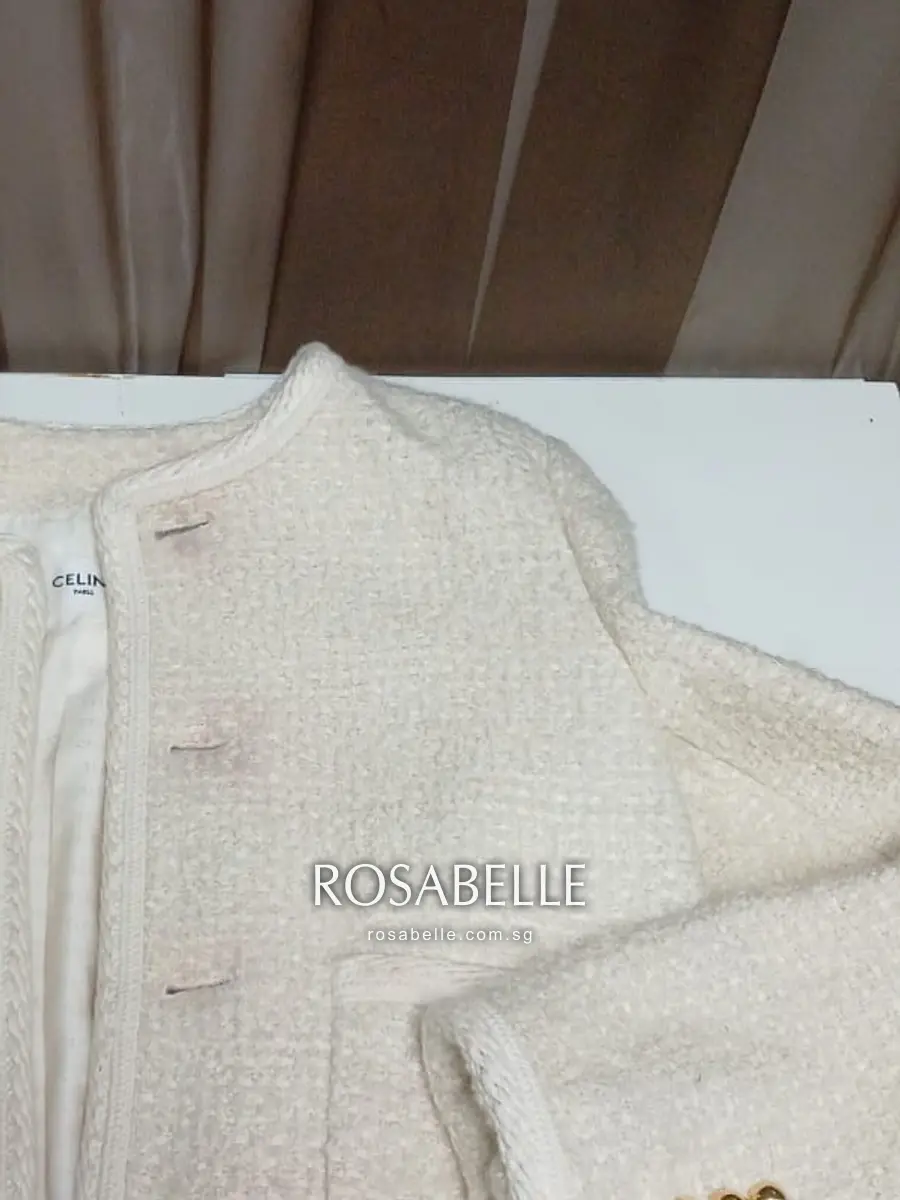
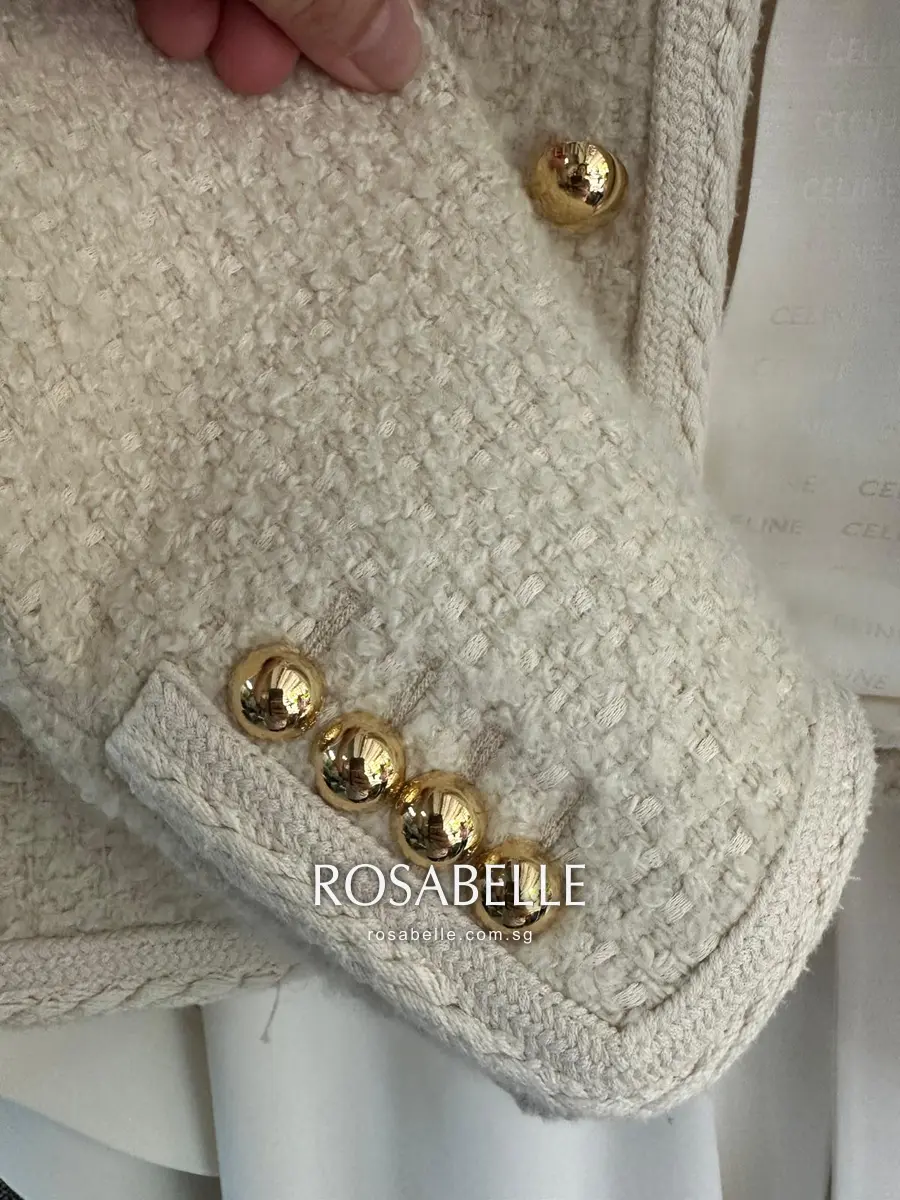
The jacket was worked in solvent rather than water, which lifted the transferred dye without wetting the bouclé again and without the agitation that felts a cashmere blend. The gilding on the buttons was kept out of the treatment. The pink came out entirely and the cream did not shift.
The honest note
This one went well, and it is worth saying why. The transfer was fresh, the ground colour was undyed cream, and the cloth had not been through heat before it reached us. Change any of those and it gets harder. Dye that has been through a warm wash or a tumble dryer is usually permanent, and colour run onto a dyed garment leaves less room to work, because whatever lifts the transferred dye can lift the garment’s own. If a coloured cloth or a rogue garment has run onto something, keep it away from heat and bring it in rather than experimenting on it. As with every case here, this is a record of one piece, not a promise about the next. A note on the photographs: they are working records from the shop, taken on the day at whatever bench or rail was free, so the light and the background change between frames. Nothing has been colour-corrected, lightened or retouched.
Case practitioner and technical review: Zach Lim.
Related cases
More like this
Common questions
Frequently asked
Can colour run or dye transfer be removed from clothing?
Transferred dye bonds to the fibre the way the garment’s own dye does, so it has to be lifted rather than washed off, and heat from a tumble dryer or a hot wash sets it further. On this cream Celine bouclé jacket the pink came out completely. The transfer was fresh, and the jacket had not been dried or pressed since it happened.
What causes a colour run stain on a garment that was never washed?
A damp coloured cloth is the common one. Wiping a garment, or its hardware, with a wet cloth that is not colourfast releases dye into the water, and the water carries it into the cloth. It happens most often to people taking care of a piece rather than neglecting it, polishing buttons, dabbing at a mark, wiping a collar, and it lands on light-coloured garments where it shows.
Is dye transfer different from an ordinary stain?
Yes, and treating it like one makes it worse. An ordinary stain is a substance sitting in the fibre. Dye transfer is a colourant that has bonded to the fibre chemically, which is exactly what dye is built to do. Scrubbing spreads it into clean cloth and heat fixes it, so the approach that helps with mud or food actively harms this.
Can a cashmere bouclé jacket be cleaned safely?
Yes, with the method chosen for the weave rather than for the stain. Bouclé is a looped, open weave and a cashmere blend felts if it is agitated wet, so working in solvent avoids both wetting the weave and the mechanical action that shrinks it. Metal hardware and gilded buttons are kept out of the treatment separately.
What should I do if something has run onto a garment?
Keep it away from heat and bring it in. Do not tumble dry it, press it or wash it warm to try to shift the colour, because heat is what turns a removable transfer into a permanent one. Scrubbing spreads the dye into clean cloth and makes the marked area larger, so the most useful thing you can do is stop and let it be looked at.
How should I look after a cashmere or bouclé jacket in Singapore?
Air it, have it cleaned properly, and resist wiping it. An air-conditioned office means a jacket like this rarely looks dirty, but body oils and perspiration still go into the weave, and in Singapore humidity they oxidise into yellowing while it hangs in the wardrobe. Do not spot-clean bouclé with a damp cloth, which is how this jacket picked up its colour run, and store it under a breathable cover rather than a plastic sleeve.