
Journal · Case study · Bedding · Published
Mouldy Bedding After Sea Shipping: Cleaning Duvets and Pillows in Singapore
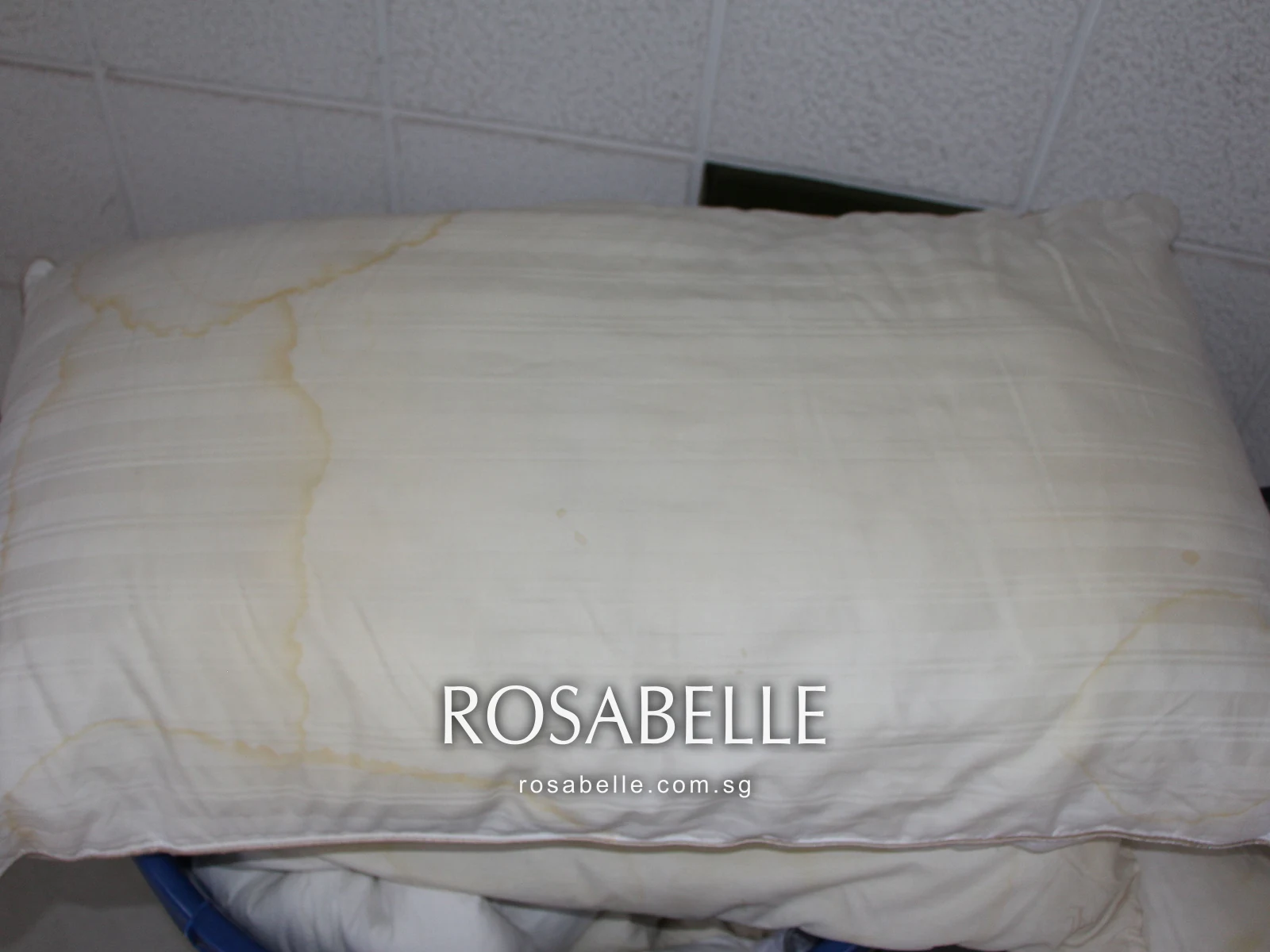
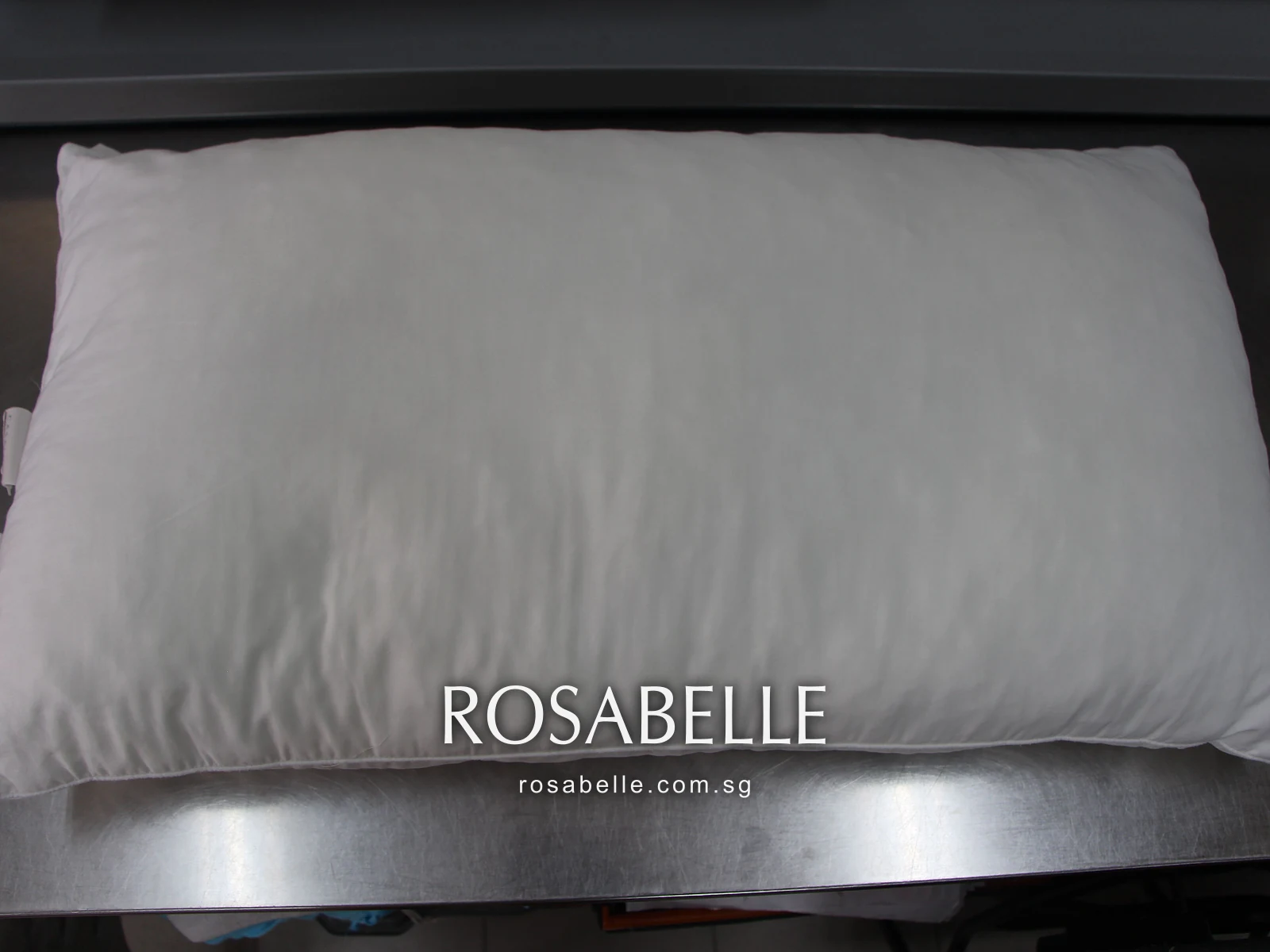
A household's duvets and pillows arrived in Singapore mouldy after sea shipping during a relocation, and every mark came out. The pillows were covered in yellow-brown tide marks; the duvets carried mould spotting and brown discolouration along their stitch lines.
Bedding shipped by sea sits for weeks in a sealed steel container, where condensation forms as the box cools and drips onto the goods. This page records what happened to this set, not an outcome to expect from every mouldy piece.

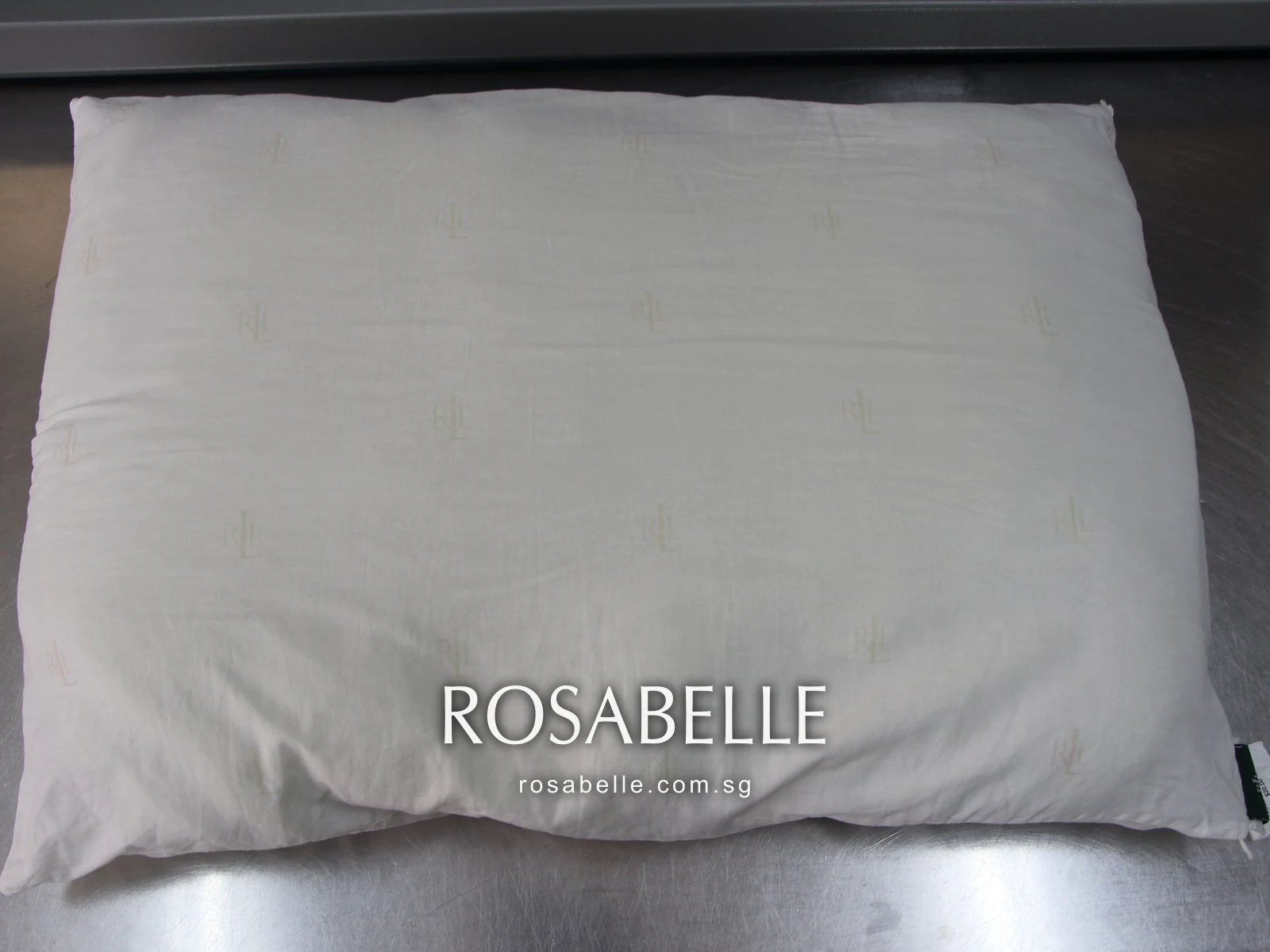
What condition was the bedding in when it arrived?
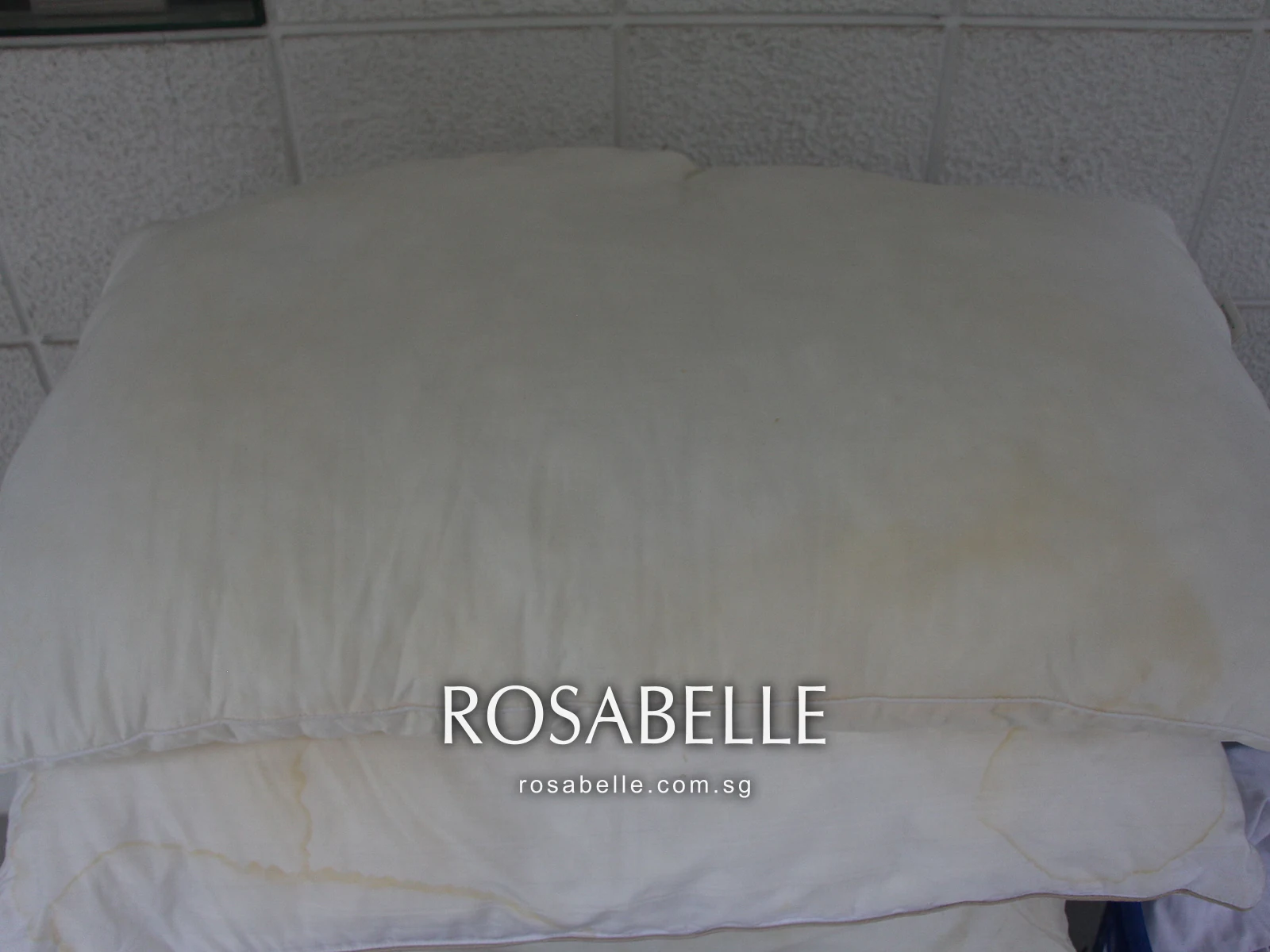
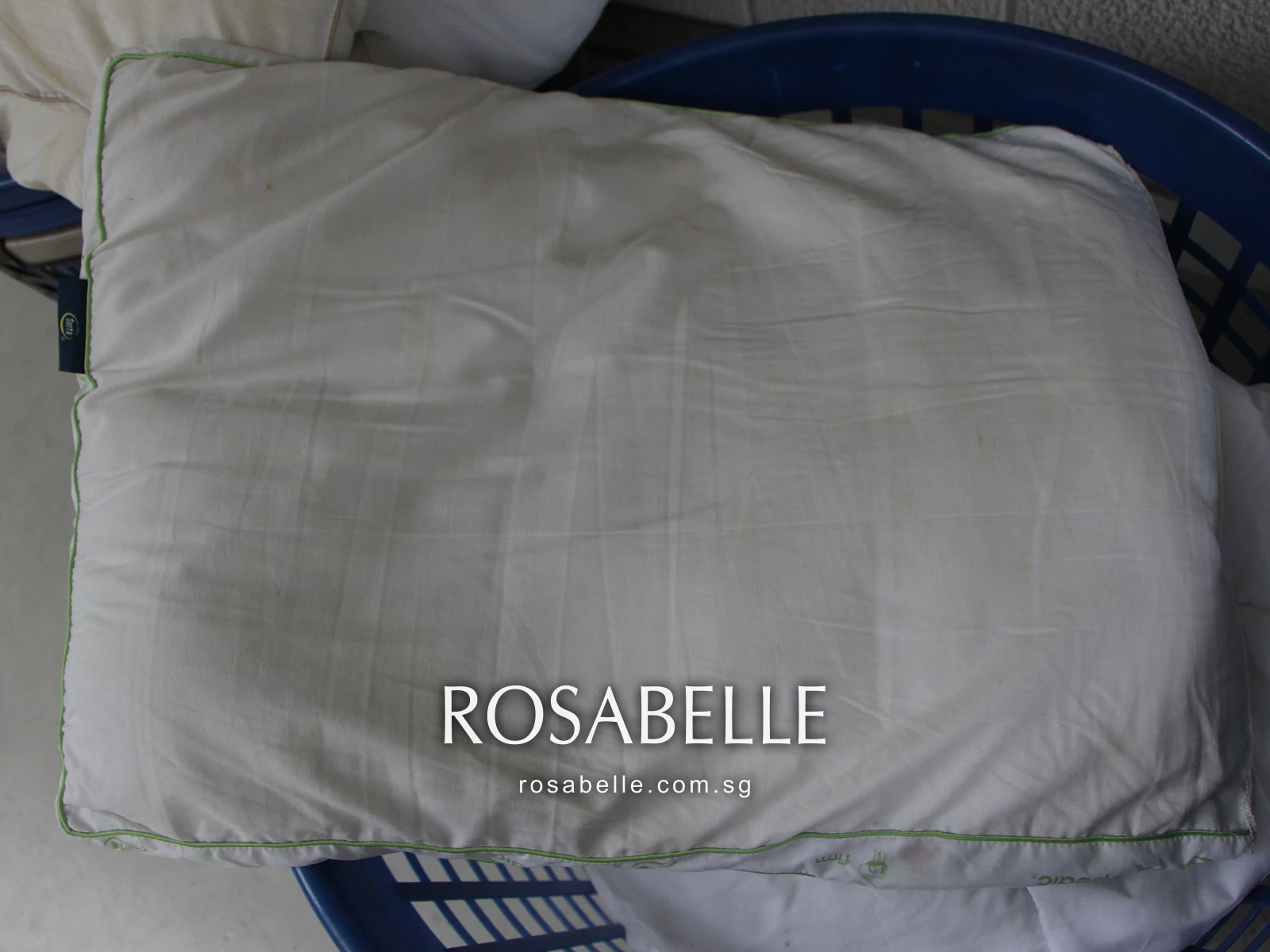
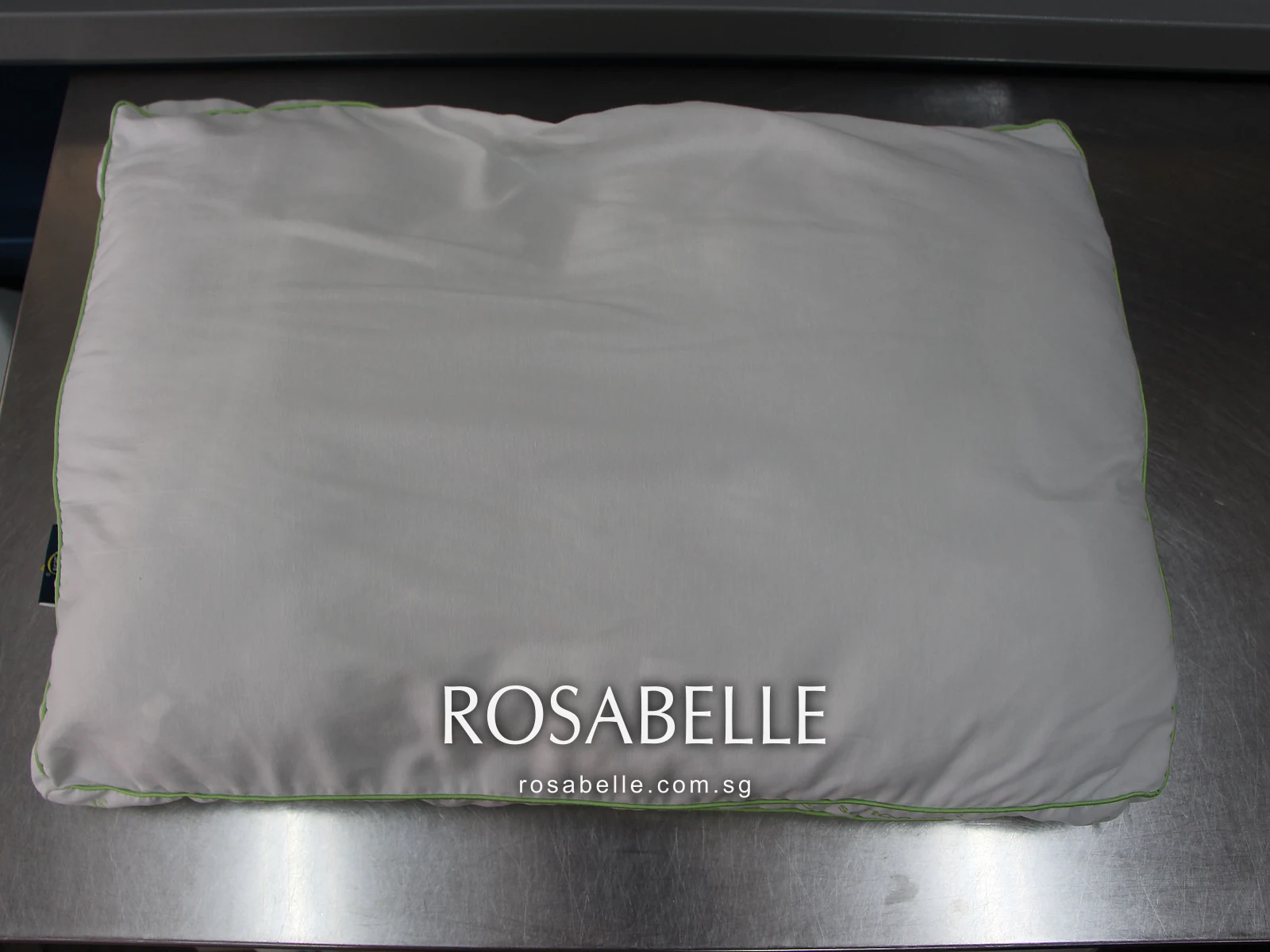
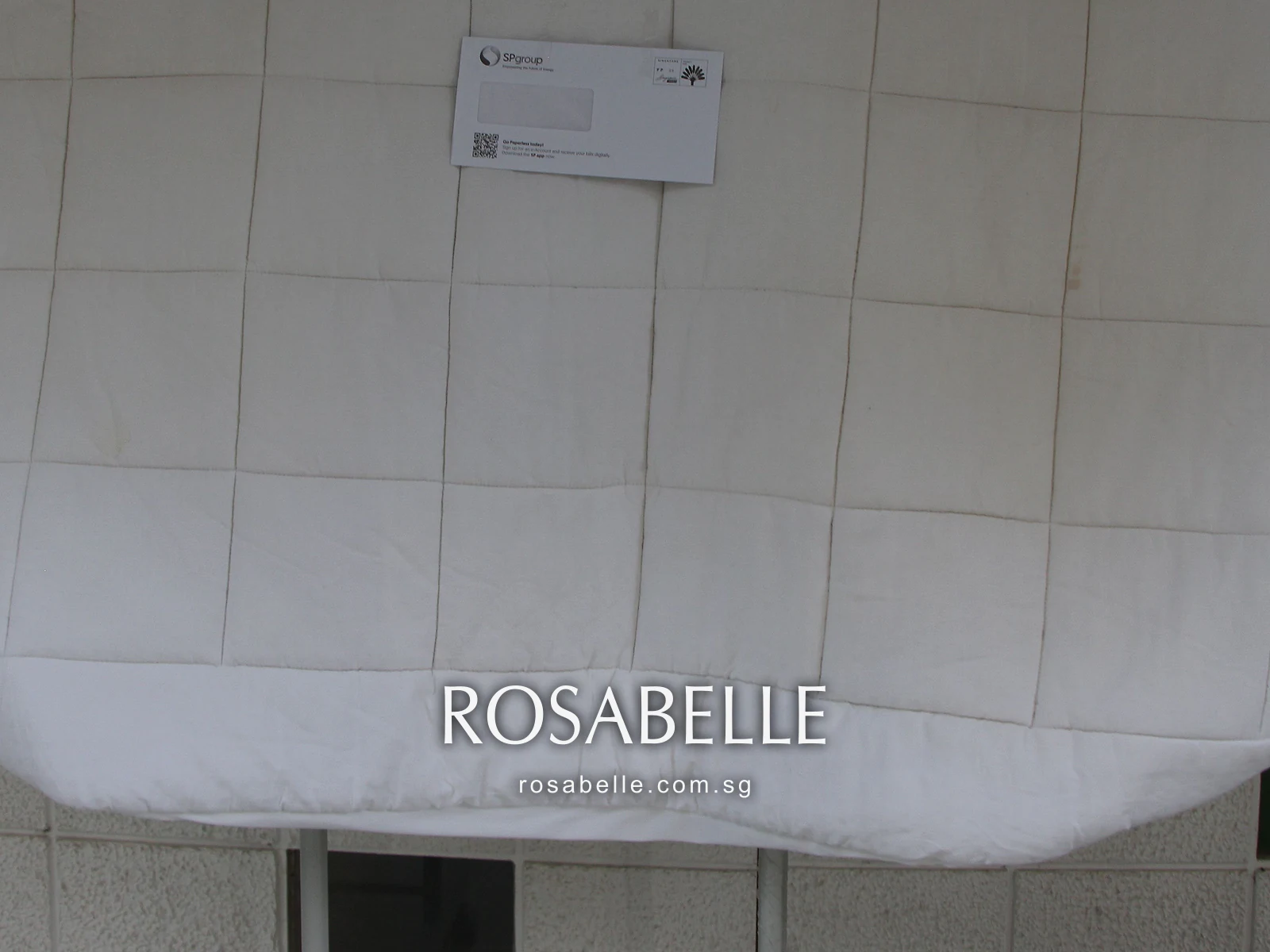
The pillows had the heaviest marking: yellow-brown tide marks spread across the casings, following the paths the moisture took through the fabric, and on some a grey mould shadow across the face. The duvets carried brown mould spotting and a brown discolouration that followed the stitched lines of the quilting, where fabric and fill are held tightest together.
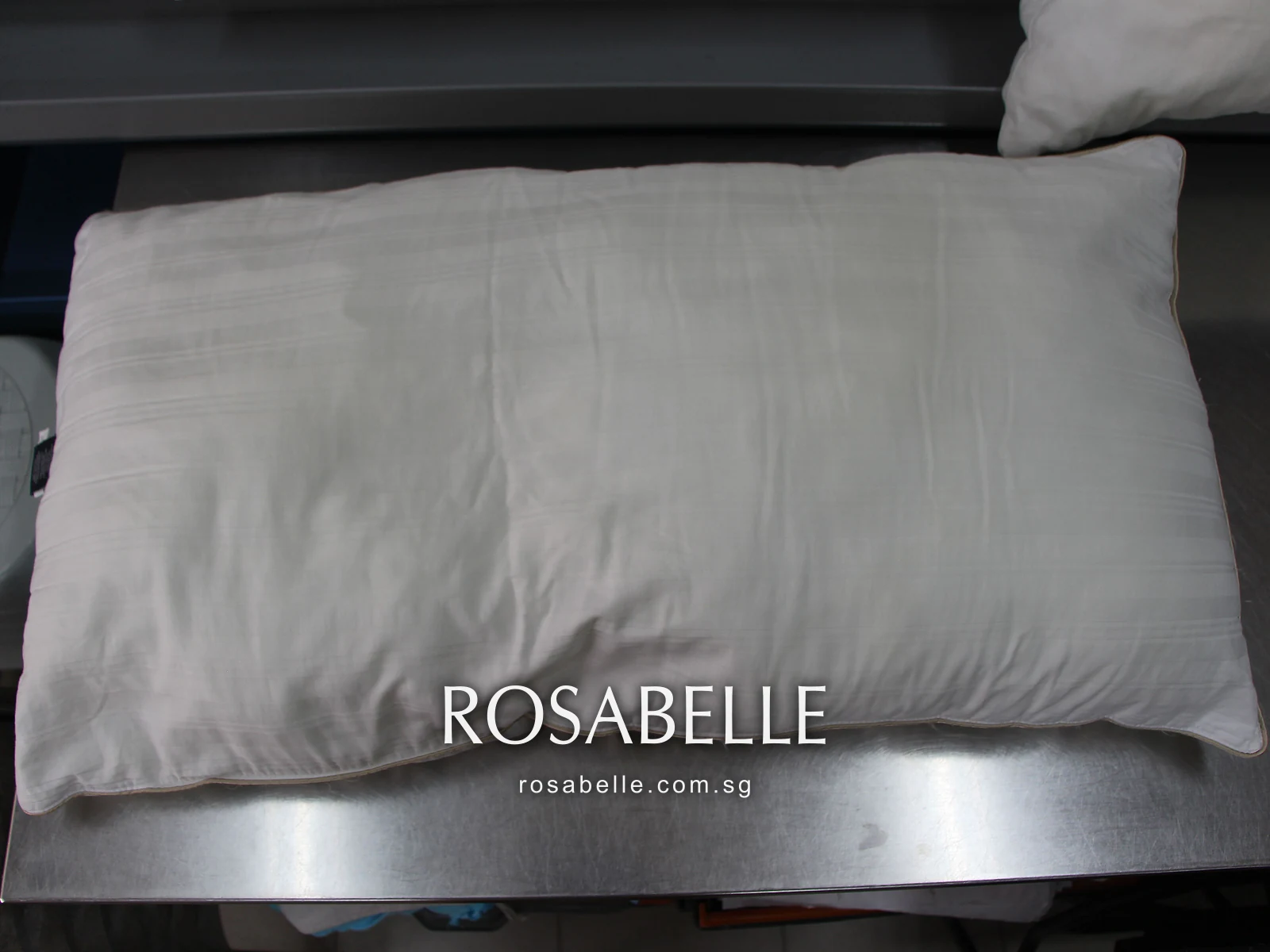
We hung each duvet and laid out each pillow on arrival to see every face before quoting. The set held several pillows of each kind, so the pairs on this page show a pillow of the same kind before and after, not necessarily the same individual pillow.
Why do items go mouldy after sea shipping?
A shipping container is a sealed steel box. When its walls and roof cool below the dew point of the air inside, the moisture in that air condenses on them, runs down the walls and drips onto the cargo. Marine surveyors call this container rain. The moisture comes from the air loaded with the goods, from the goods and wooden pallets themselves, and from air drawn in as the container heats and cools each day. Voyages between tropical and temperate climates make the swings larger.
Fabric holds that moisture. Singapore's relative humidity averages over 80 per cent, and mould growth increases in vigour above 75 per cent, so bedding that arrives damp and stays boxed after delivery keeps growing mould here.
How did Rosabelle clean the mouldy bedding?
Every face inspected before quoting
Each duvet was hung and each pillow laid out so that both faces, the edges and the stitch lines could be seen. Mould that has run along a quilting line is easy to miss on a folded duvet.
Treatment chosen for the casing and the fill
The casing fabric, the fill and the way each piece is quilted or piped decided how it was cleaned, so that the marks came out of the casing without distorting the quilting or the fill.
What was the result?
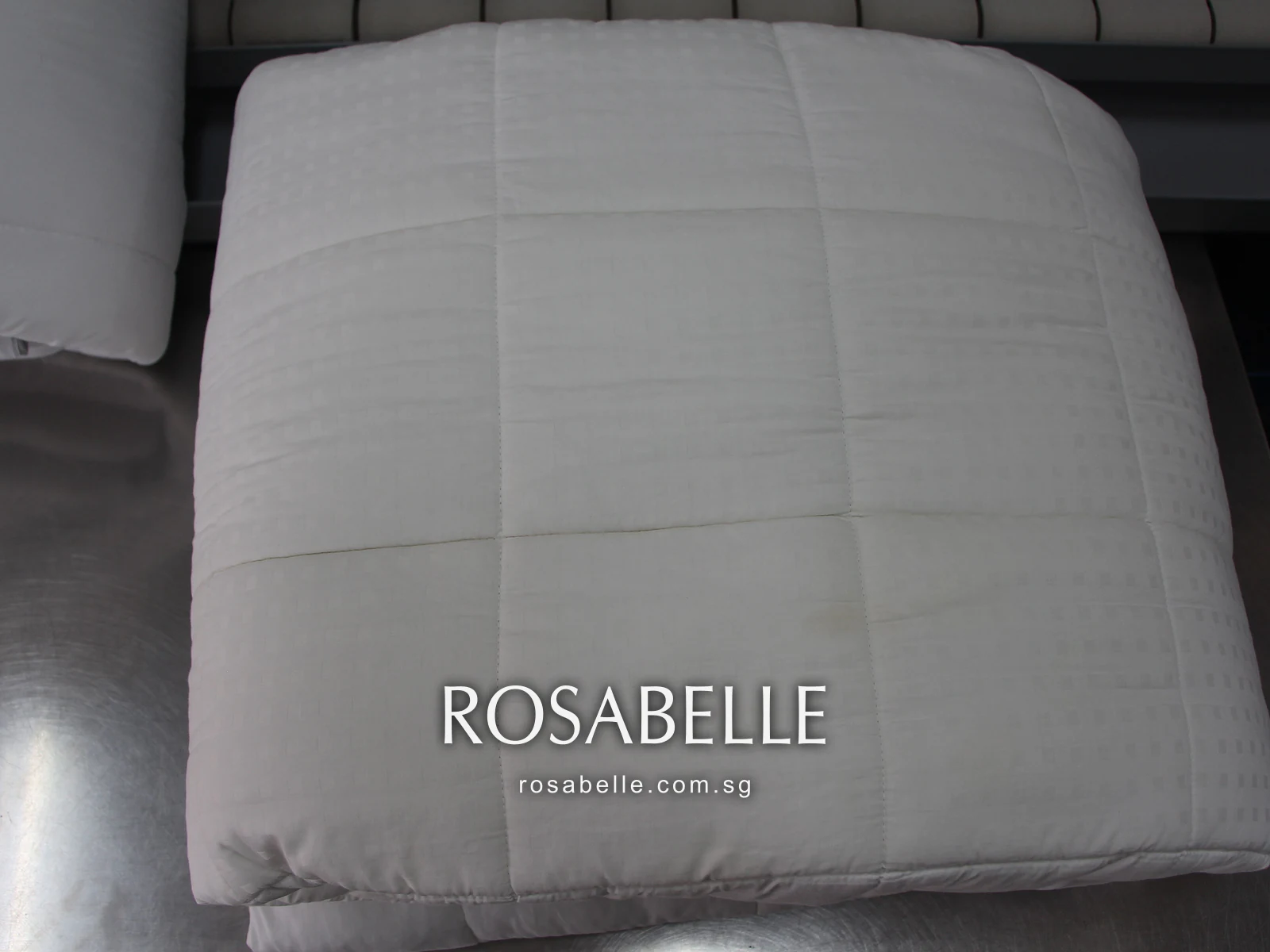
Every mark came out across the set: the tide marks on the pillows, the spotting on the duvets and the discolouration along the stitch lines.
What should you do when bedding arrives mouldy after a move?
- Photograph each piece where you unpacked it, with its box and packing, before cleaning or throwing anything away.
- Tell your removal company or cargo insurer before any work starts, and ask what they need from you.
- Take the pieces out of plastic and let them dry in moving air. Do not repack them damp.
- Keep heat away: a dryer, an iron or hot water can set mould staining into the fabric.
- Bring them in as they are, and tell us anything already tried on them.
When an insurer is paying, each piece is priced on an itemised quote you can send them, and we can bill the insurer directly once they approve it; see insurance claim cleaning. For bedding outside a claim, see bedding cleaning.
About these photographs
These are working shop records. The before frames were taken with the duvets hung on our rack and the pillows on a laundry basket; the after frames were taken on our steel work table, under different light. The white envelope in some before frames is the colour reference we use for whites; the after frames were shot without one, so this page makes no claim about colour, only about the marks. Nothing was colour-corrected.
The honest note
Can mould always be removed from bedding?
Not always. We do our best, but many factors will affect the outcome. Complete removal is possible on some items but cannot be guaranteed. How long a piece stayed damp, what its casing and fill are made of, and what has been tried on it since it was unpacked all change the work. This set came back clean; each piece is assessed before any work starts.
Case documented by Rosabelle Launderette's garment-care team. Case practitioner and technical review: Zach Lim.
Cleaned in-house at Rosabelle Launderette, Singapore, established 1998. This case records one set of bedding in one condition and is not a guarantee of outcome.
Published and technically reviewed 25 September 2026.
Sources & further reading
Related bedding and claim cases
More bedding cases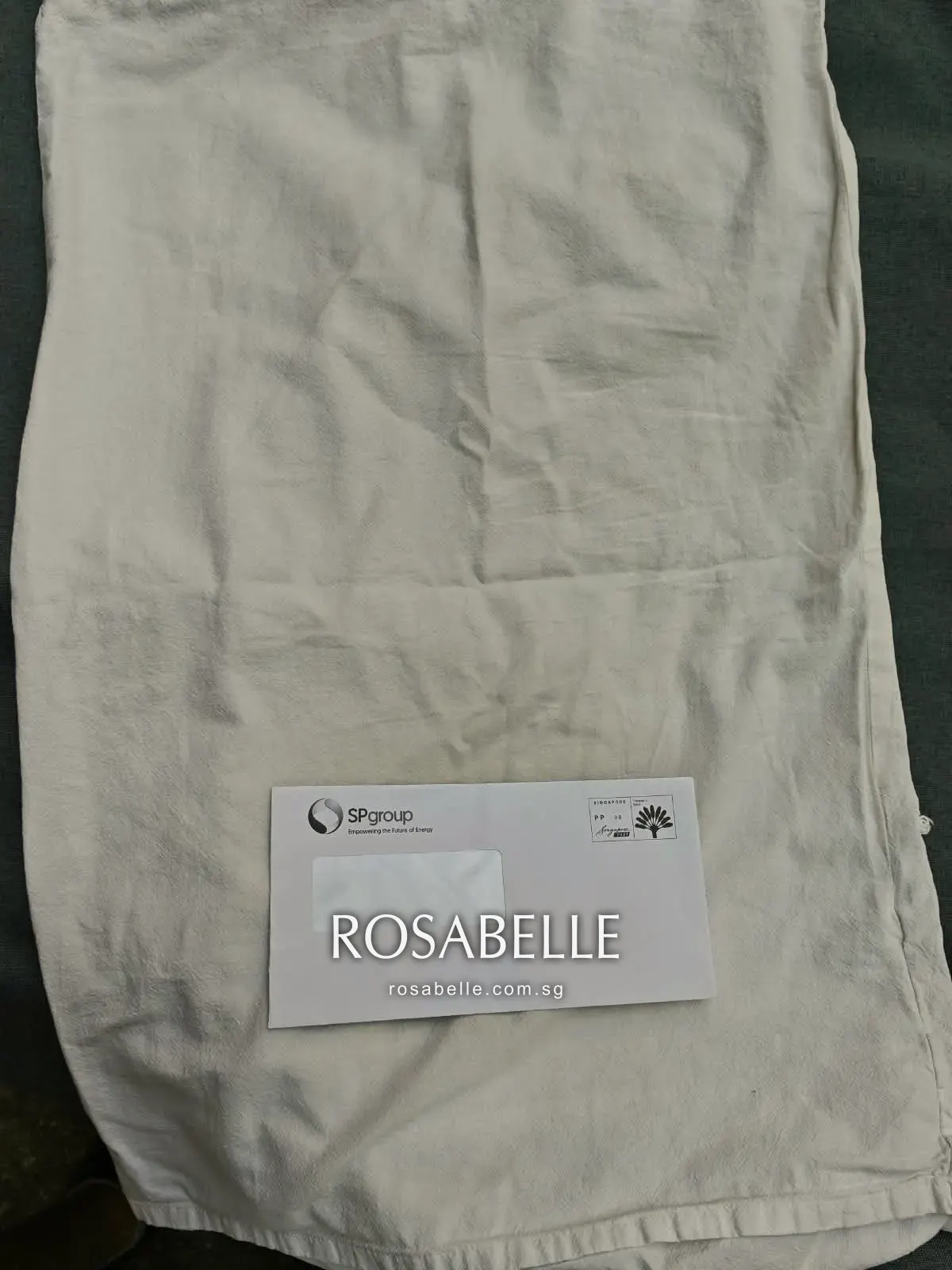

Common questions
Questions about mouldy bedding after sea shipping
Why does bedding go mouldy in a shipping container?
A shipping container is a sealed steel box. When its walls and roof cool below the dew point of the air inside, the moisture in that air condenses on them and drips onto the goods, which marine surveyors call container rain. Voyages between tropical and temperate climates make this worse. Duvets, pillows and clothes packed in that box hold the moisture for weeks, and mould grows in fabric that stays damp. The bedding in this case arrived in Singapore with tide marks and mould spotting after a relocation by sea.
Can mould be removed from a duvet or pillow?
Mould grows into the fibre of the casing and leaves staining behind it, so the growth has to be lifted and the staining treated, not just washed over. On this set of duvets and pillows, shipped by sea during a relocation, every mark came out. How long the pieces stayed damp, what the casing and fill are made of, and whether anything was tried on them at home all change the work, and each piece is assessed before any work starts. Complete removal is possible on some items but cannot be guaranteed.
What should I do with mouldy bedding after an international move?
Photograph each piece where you unpacked it, together with its box and packing, before cleaning or throwing anything away, because the removal company or insurer may want to see the damage as it arrived. Take the pieces out of plastic and let them dry in moving air. Keep heat away, including a dryer, an iron or hot water, which can set mould staining into the fabric. Then have them assessed.
Does insurance cover mould from sea shipping?
It depends on the policy and on how the moisture got in. A marine surveyor writing for the International Institute of Marine Surveying explains that under Institute Cargo Clauses (A), insurers do not treat condensation damage as accidental, because it is a near-certain risk of container transport, while water that entered through visible damage to the container is generally covered. Ask your removal company or cargo insurer before work starts. Rosabelle Launderette prices each item on an itemised quote you can send them.
How much does it cost to clean mouldy bedding in Singapore?
At Rosabelle Launderette mouldy bedding is priced per item on inspection, because the extent of the mould, the casing and the fill differ too much between pieces for a published rate. Each item is set out on an itemised quote, agreed before any work starts, and the work takes two weeks and upwards. Bedding is collected from homes anywhere in Singapore.