
Journal · Stain removal ·
Dior Denim Jacket: Cleaning a Yellowed Collar Without Stripping the Denim
A Christian Dior denim chore jacket came in with its cream cotton collar and cuff facings yellowed at every point of skin contact, and the collar already patchy from an attempt to lift it at home. The trim went back to an even cream. The indigo denim beside it is the same colour it was when the jacket arrived, which on a piece like this is the harder half of the job.
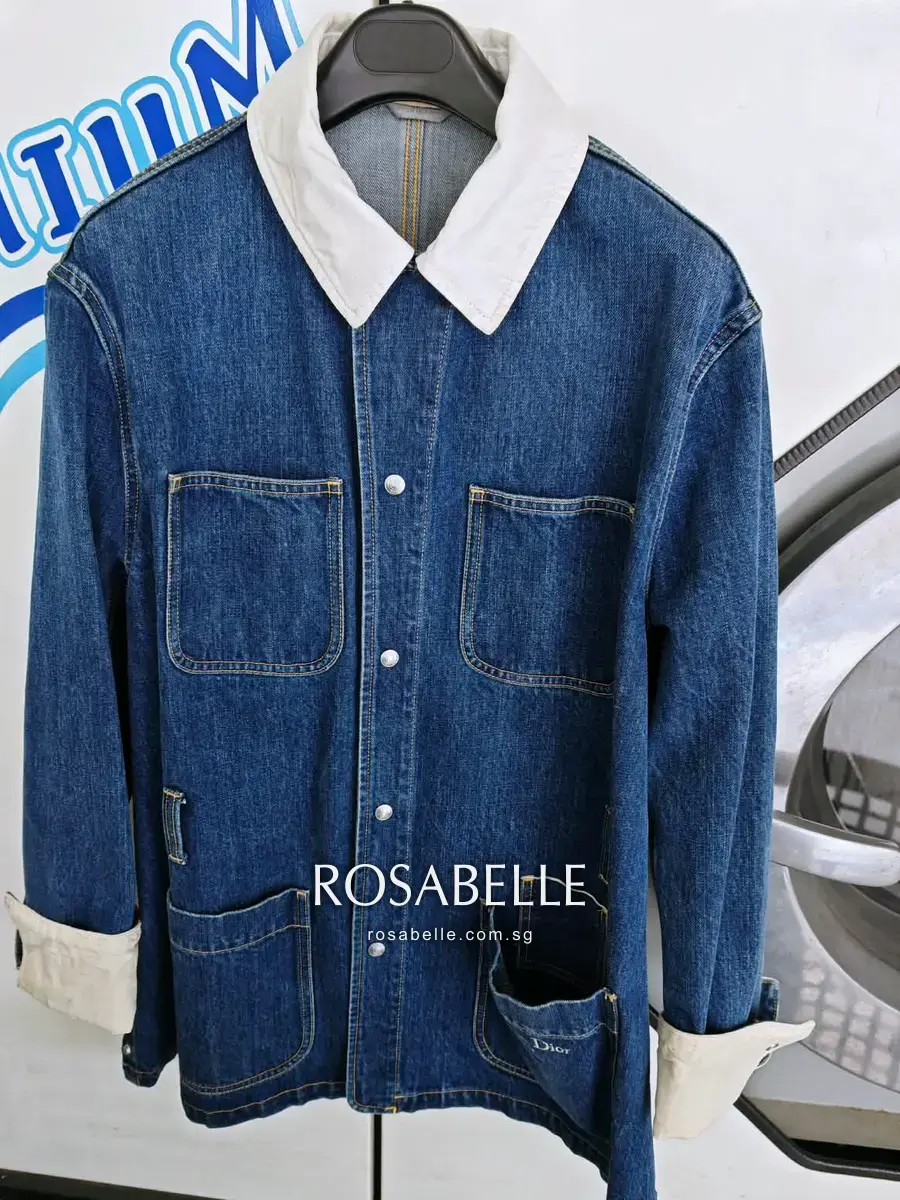
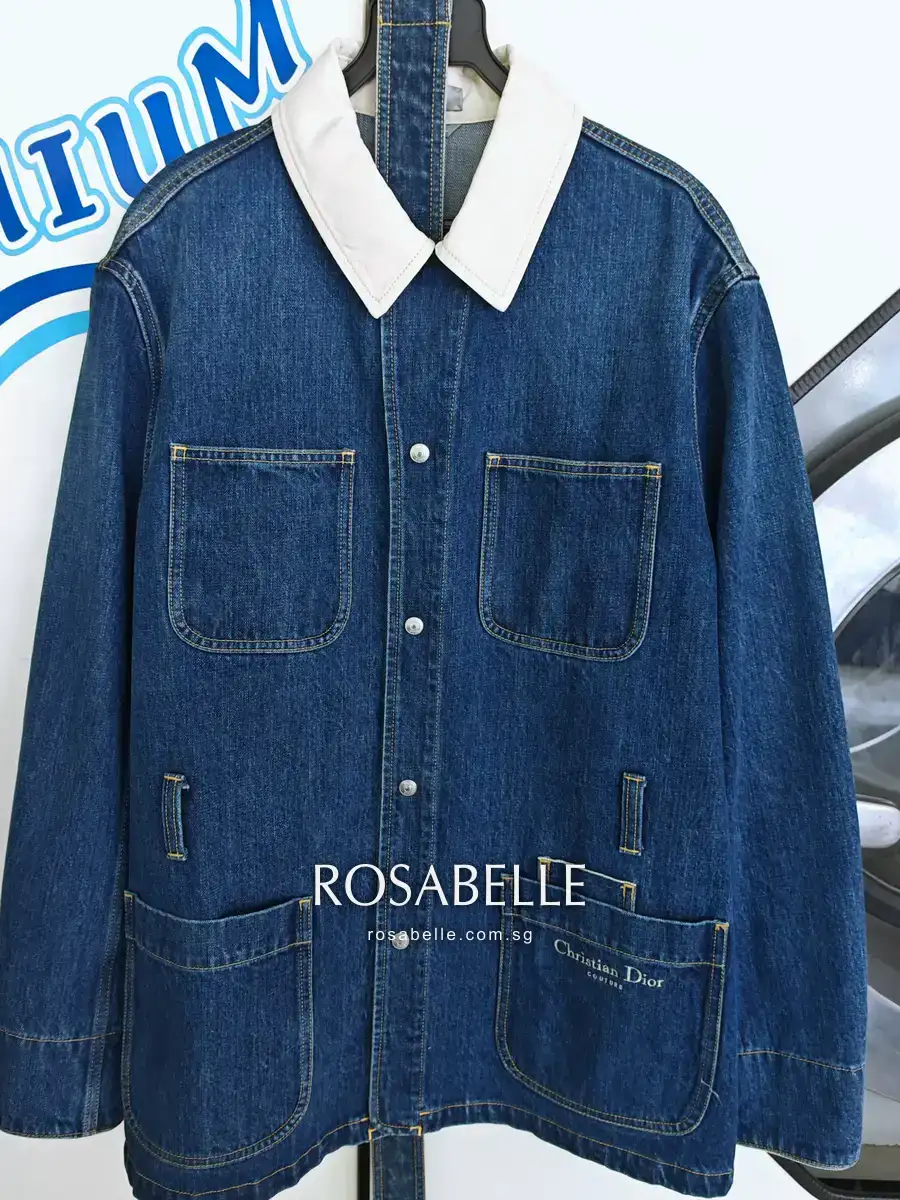
What came in
The jacket is a chore-cut Dior in mid-weight indigo denim, made in Japan, with cream cotton canvas at the collar, the collar stand and the cuff facings. That cream is the whole design: it is what the eye goes to, and it is the only part of the garment that shows soil.
It had gone yellow along the collar fold and around both cuffs, with fine brown speckling scattered across the cuff facings. Before the jacket reached us the owner had tried to bring the collar back at home. That attempt is visible in the before photographs: the collar came back lighter where the treatment had reached, still yellow beside it, and with the join between the two readable across the panel. Nothing was torn and nothing was stained in the ordinary sense. There was no single mark to point at, only cloth that had stopped being the colour it started as.
Why the denim is the risk, not the collar
Lifting yellowing out of cream cotton is ordinary restoration work. The difficulty here is the denim it is sewn to.
Denim is not colourfast. On ring-dyed denim the indigo is held on the outside of the yarn rather than running through it, and the white core is why a pair of jeans fades pale at the creases while the flat of the leg stays dark. A dye sitting that close to the surface is easy to move. Anything strong enough to take yellowing quickly out of a cream collar will also take indigo out of the denim it is sitting on, and it will not do it evenly: the cloth comes back lighter wherever the treatment reached hardest and unchanged an inch away, which reads as blotchy rather than as an honest fade. Indigo cannot be put back.
The second risk runs the other way. Indigo released into water does not simply disappear; it will settle into whatever absorbent cloth is nearest, and on this jacket the nearest absorbent cloth is a cream collar. A whole-garment soak can therefore fail twice at once: patchy denim, and trim that comes out of the bath greyer than it went in.
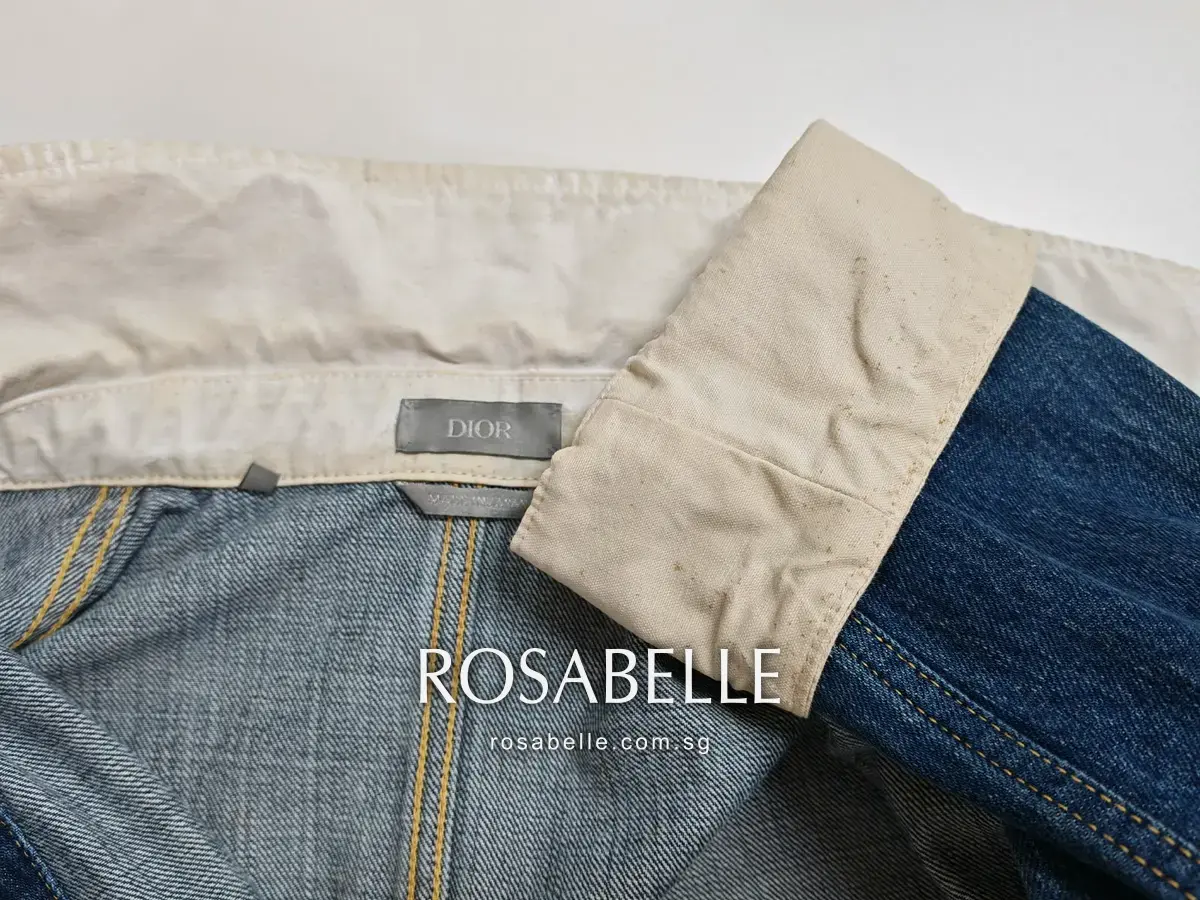
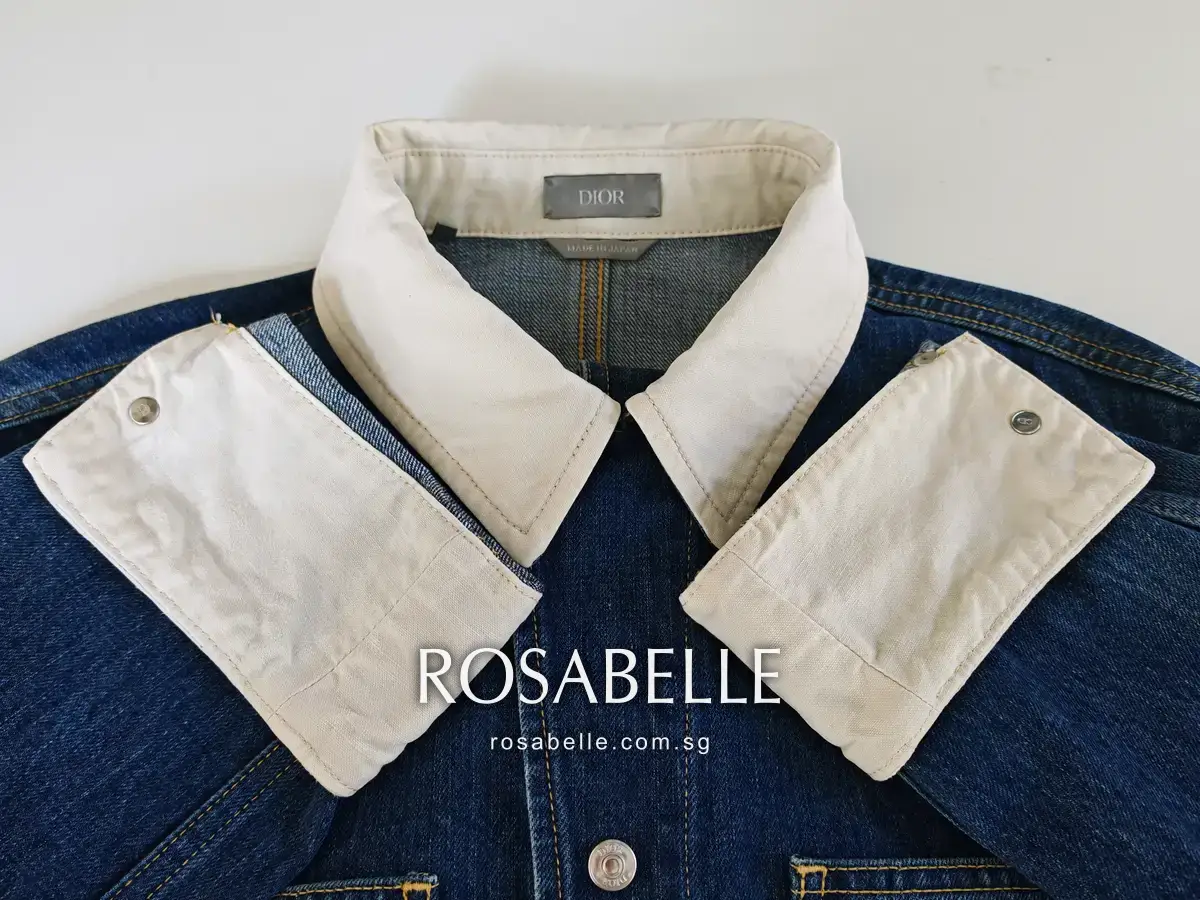
The work
The collar, collar stand and cuff facings were worked on their own rather than the jacket being put through one bath. Each panel took repeated controlled passes, mild enough that nothing was asked of the indigo, with the piece assessed and rinsed out fully between rounds so that neither the loosened soil nor any dye that had moved was left to settle back into the cream. Repetition is what does this job. Strength is what would cost the denim its colour.
The garment set the target. The undersides of the collar stand and the inner faces of the cuffs had never been in contact with skin, and those areas still carried the cream the jacket left the factory with. That is what the treated panels were matched to. Pushing past it would have looked wrong on a jacket designed around a warm off-white, and would have cost fabric strength for a colour the piece never had.
The partly lifted patch on the collar took the longest. A panel that has been half treated has two colours in it, and both have to be brought to the same place: the untouched yellow has to come down while the lighter area is left alone. It is slower than starting from an evenly soiled collar, which is the practical argument against trying this at home first.
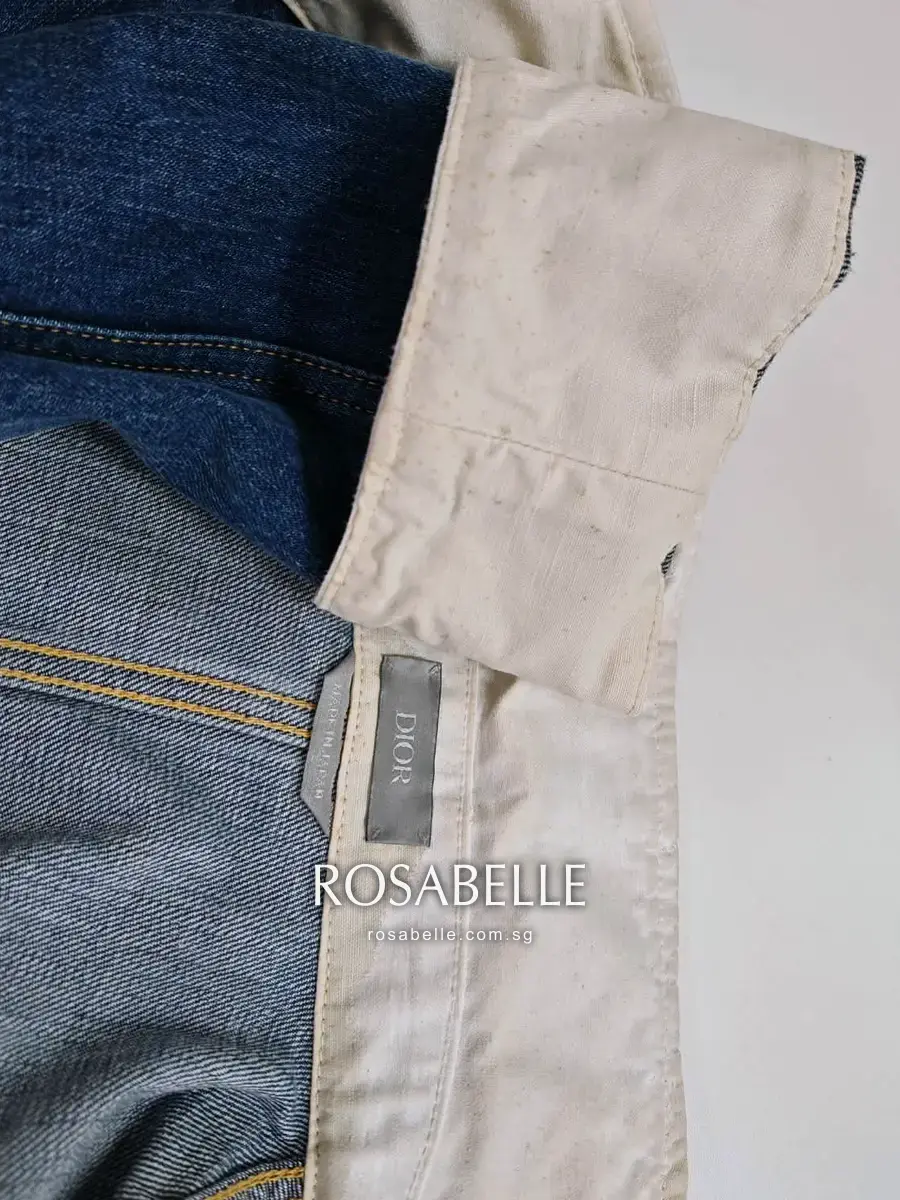
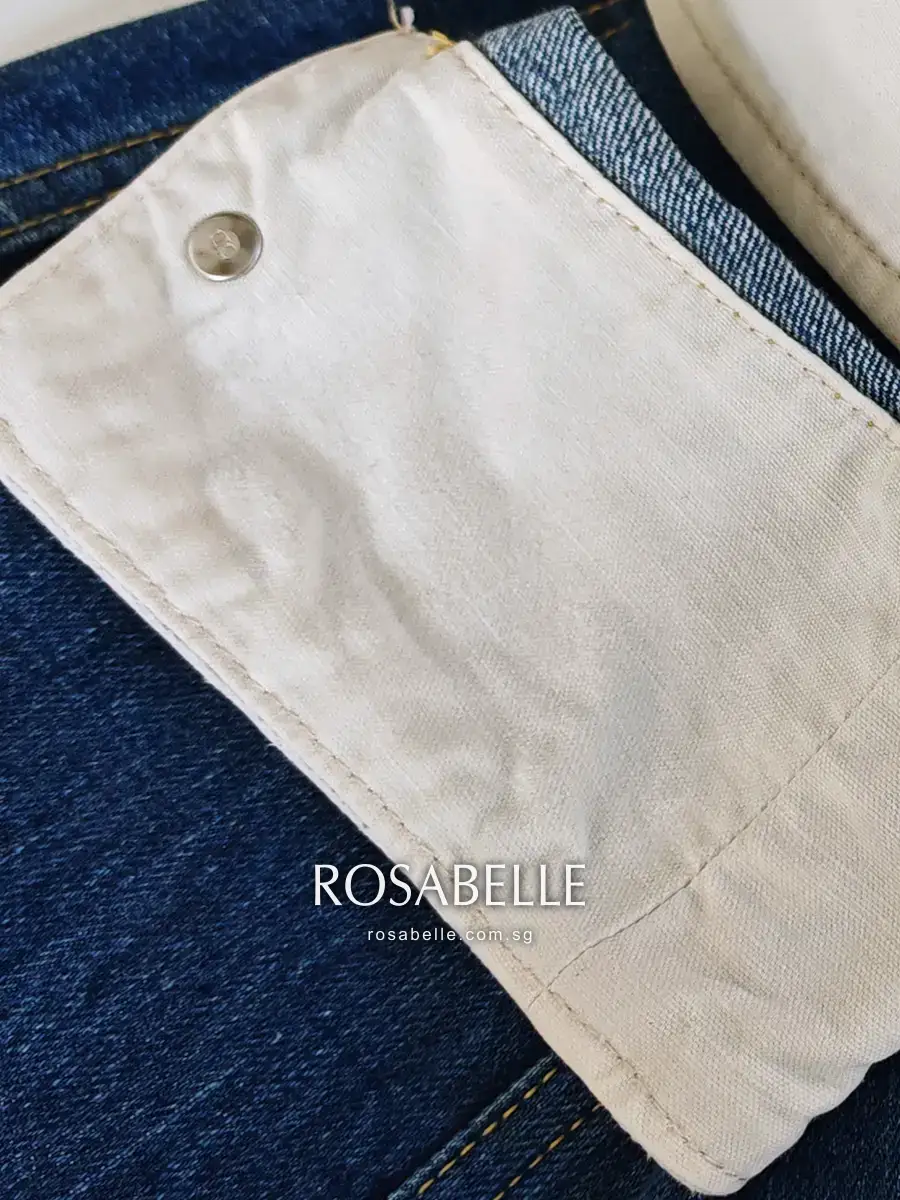
About these photographs
Every photograph on this page is colour-calibrated, and it is worth setting out how, because an uncalibrated before-and-after proves very little. A phone camera decides its own white balance each time it is picked up, so two frames taken on different days differ in overall warmth for reasons that have nothing to do with the garment in them.
Each frame here is referenced to a white surface that appears in that same frame — the shop's plain white wall in the close-ups, and the white side panel of the machine the jacket is hanging on in the two full-length pictures — and corrected so that surface reads neutral. Both halves of every pair are referenced to the same physical surface, which is what makes the pair comparable at all. The after frames were shot again against the same backgrounds for exactly that reason. Only the colour cast was changed: nothing was lightened, sharpened, masked or retouched.
What that leaves is measurable. On the collar-and-cuffs pair, the cuff facing sits 0.136 below its own frame's white in blue-to-red ratio before cleaning and 0.035 after, so the warm cast is about a quarter of what it was. On the cuff close-up the same measure runs 0.078 before and 0.023 after. The brown speckling needs no measurement at all: it is in one frame and not the other.
The jacket was cleaned as stain removal and restoration rather than as a standard dry clean, which is what a jacket in ordinary condition would have had. How a piece gets assigned to one method or the other is set out in wet cleaning versus dry cleaning. The yellowing itself is the same chemistry as on a yellowed cotton duvet set, and this is the second Dior in the journal, after a pair of cream Bermuda shorts.
The honest note
This one came back fully, and it would be dishonest to publish it as the standard outcome. The cream cotton was sound, the yellowing was oxidised body soil rather than damage to the fibre, and the home attempt had lightened the collar rather than bleached it. Any of those three going the other way changes the answer. Yellowing that has gone brown lifts partially at best. A collar that has already had household chlorine bleach on it can hold a yellow that no amount of washing removes, and the cotton is weaker for it. Indigo that has been moved is gone: if a home attempt has taken colour out of the denim, nothing done afterwards puts it back, and the honest advice at that point is to leave it alone rather than chase it.
The prevention is unglamorous and it works: clean the piece regularly, and clean it before it goes away for any length of time. Perspiration and skin oils are colourless when they are fresh and come out of a collar easily at that stage. Left in the cloth for a season they oxidise into a yellow that has to be treated rather than washed, and a jacket sealed into a wardrobe with that soil still in it goes on yellowing in the dark. Almost every yellowed collar we see arrived that way.
Case practitioner and technical review: Zach Lim.
Related cases
More like this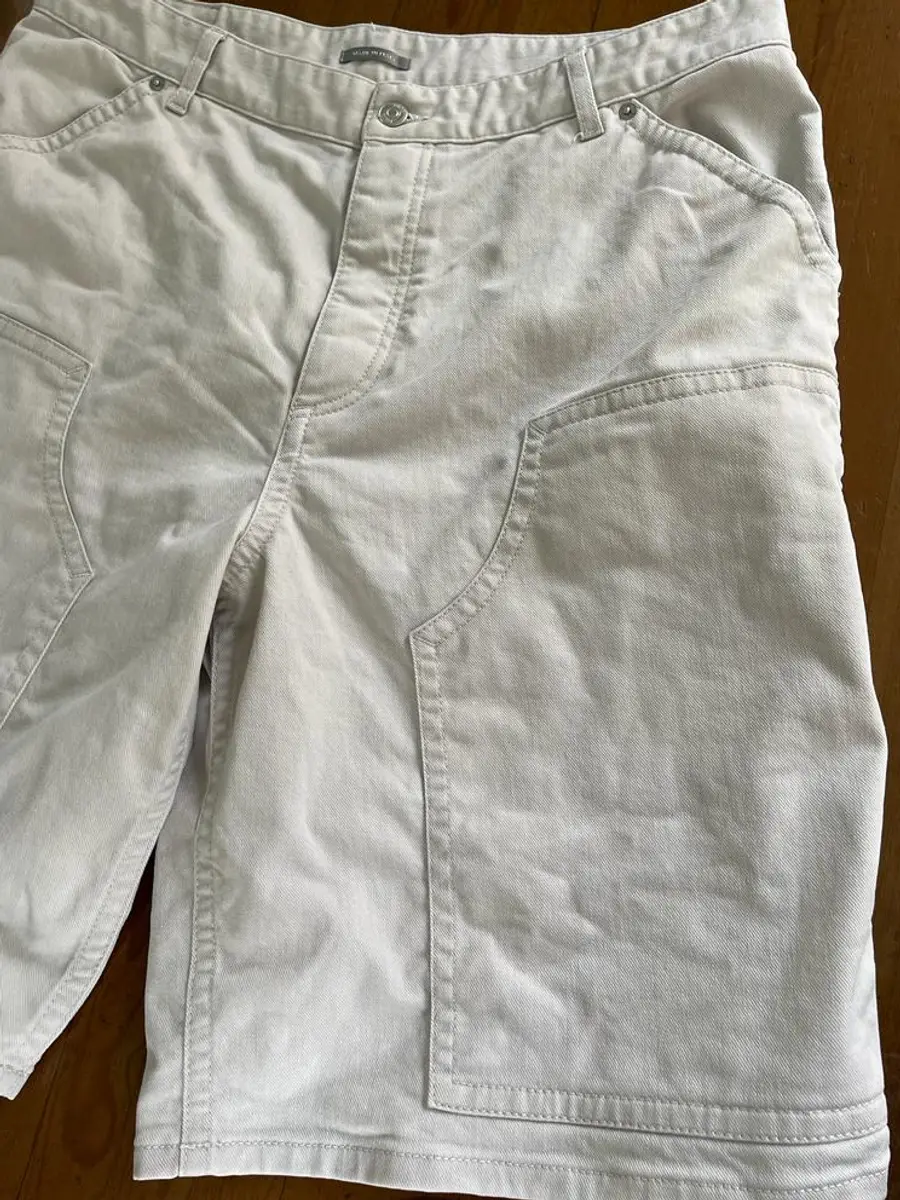
Common questions
Frequently asked
Can you dry clean a denim jacket?
Yes, and for a designer denim jacket it is usually the safer choice. Denim is not colourfast: on ring-dyed denim the indigo sits on the outside of the yarn rather than running through it, which is why jeans fade at the creases, and a hot domestic wash keeps moving that dye every time it goes round. Dry cleaning works in a solvent rather than in water, so it lifts soil without pulling indigo out of the cloth. Where a jacket carries cream or white trim, as this Dior chore jacket does, the trim is treated on its own by hand rather than left sitting in water with loose indigo around it. A jacket is $20 and upwards to dry clean at Rosabelle, and restoration work on discoloured trim is quoted after we have seen the piece.
Why does the cream collar on a denim jacket turn yellow?
Because of what the collar absorbs from the person wearing it. Perspiration, skin oils, hair product and sunscreen go into cream or white cotton colourless and stay invisible for a while, then oxidise over months into a yellow that sits inside the fibre rather than on the surface. Collars and cuffs go first because they are in constant contact with skin. In Singapore it happens faster than in a temperate climate, because you perspire into a jacket all year, and a piece put away without being cleaned yellows in the wardrobe, since the compounds are already in the cloth and go on oxidising in the dark.
Can cleaning strip the colour out of denim?
Yes, and on a jacket like this one it is the real risk. Indigo on ring-dyed denim is a surface dye held on the outside of the yarn, so it is easy to move and impossible to put back. Anything strong enough to lift yellowing quickly out of a cream collar will also lift indigo, and it does not lift evenly: the denim comes back lighter wherever the treatment reached hardest and unchanged elsewhere, which reads as patchy rather than faded. That is why the trim on this jacket was worked on its own instead of the whole garment going through one strong bath.
Can you use bleach on a denim jacket with a white or cream collar?
Chlorine bleach, no. On cotton it can set a yellow permanently rather than removing it, so a collar treated that way is often past saving by the time it reaches us, and it weakens the fibre besides. It is also indiscriminate: any that reaches the denim will move the indigo, unevenly and for good. Oxygen bleach is gentler and is the safer thing to reach for at home, but on a made-up garment it is difficult to keep to the panel you are treating, which is how a collar ends up lighter in patches. On a jacket worth restoring, the trim is worked on its own in controlled passes rather than bleached in one go.
What happens if you try to clean a yellowed collar at home?
Usually it comes back uneven, which is how this jacket arrived. The owner had worked on the cream collar at home before sending it in, and the panel came back lighter where the treatment had reached and still yellow beside it, with the boundary between the two visible. Household whiteners are difficult to apply evenly to one small area of a made-up garment, and once loose indigo from the denim next to it is in the water, that dye can settle back into the cream cloth as a blue-grey cast. A partly lifted panel is also harder to correct than the original yellowing, because there are now two colours in it to reconcile rather than one.
How do you clean a garment that is part denim and part cream cotton?
Separately, and never by soaking the whole thing at once. The two materials want opposite things: the cream cotton needs an oxidising treatment to lift yellowing out of the fibre, and the indigo denim needs to be kept away from anything that will move its dye. On this jacket the collar and cuff facings were worked locally in repeated controlled passes, with the water managed so that any indigo released from the denim beside them was carried away rather than allowed to settle into the cream cloth. The result is judged against the parts of the trim that were never soiled, because the target is the original cream, not white.
How much does it cost to dry clean a designer denim jacket in Singapore?
Dry cleaning a jacket at Rosabelle starts from $20 and laundering one from $17, and those are starting prices for a standard piece in standard condition. Restoration work beyond a standard clean — lifting yellowing out of cream trim, or correcting an uneven home attempt — is quoted separately once we have seen the garment, because the price depends on how far the discolouration has gone and on what has already been done to it. Standard turnaround is five working days; a job that needs repeated passes takes longer, and we confirm that at drop-off.
Do the photographs on this page show the colour accurately?
Yes, and deliberately so. Every frame is colour-calibrated against a white surface that appears in that same frame: the shop wall in the close-ups, the white side panel of the machine in the two full-length pictures. Both halves of every pair are referenced to the same physical surface, so the two can honestly be compared. This matters because a phone camera sets its own white balance each time it is used, which makes an uncalibrated before-and-after nearly worthless as evidence. Measured against that white, the warm cast on the cuff facing falls from 0.136 to 0.035 in blue-to-red ratio on the collar-and-cuffs pair, and from 0.078 to 0.023 on the cuff close-up. Only the colour cast was corrected: nothing was lightened, sharpened, masked or retouched.
How often should a denim jacket be cleaned?
Often enough that the soil behind the yellowing never gets the months it needs to oxidise, and always before the jacket is put away for an extended period. Perspiration and skin oils are invisible while they are fresh and come out easily at that stage; the same soil left in a collar for a season turns yellow and becomes restoration work instead. If a piece is going into storage between wears, cleaning it first is the single thing that prevents the case described on this page.