
Journal · Case study · Stain removal · Published
Removing Dried Glue of an Unknown Type From a Cotton T-Shirt in Singapore
All of the glue came out of this navy cotton T-shirt, even though nobody knew what kind of glue it was. Children had put it on the sleeve, leaving two dried patches, and the owner could not say which glue they had used.
Different glues need different removers, and the wrong one can take the dye out of dark cotton. So the residue was tested before it was treated. The T-shirt is unbranded and no longer sold, and it mattered to its owner. This page records what happened to this garment, not an outcome to expect from every glue stain.
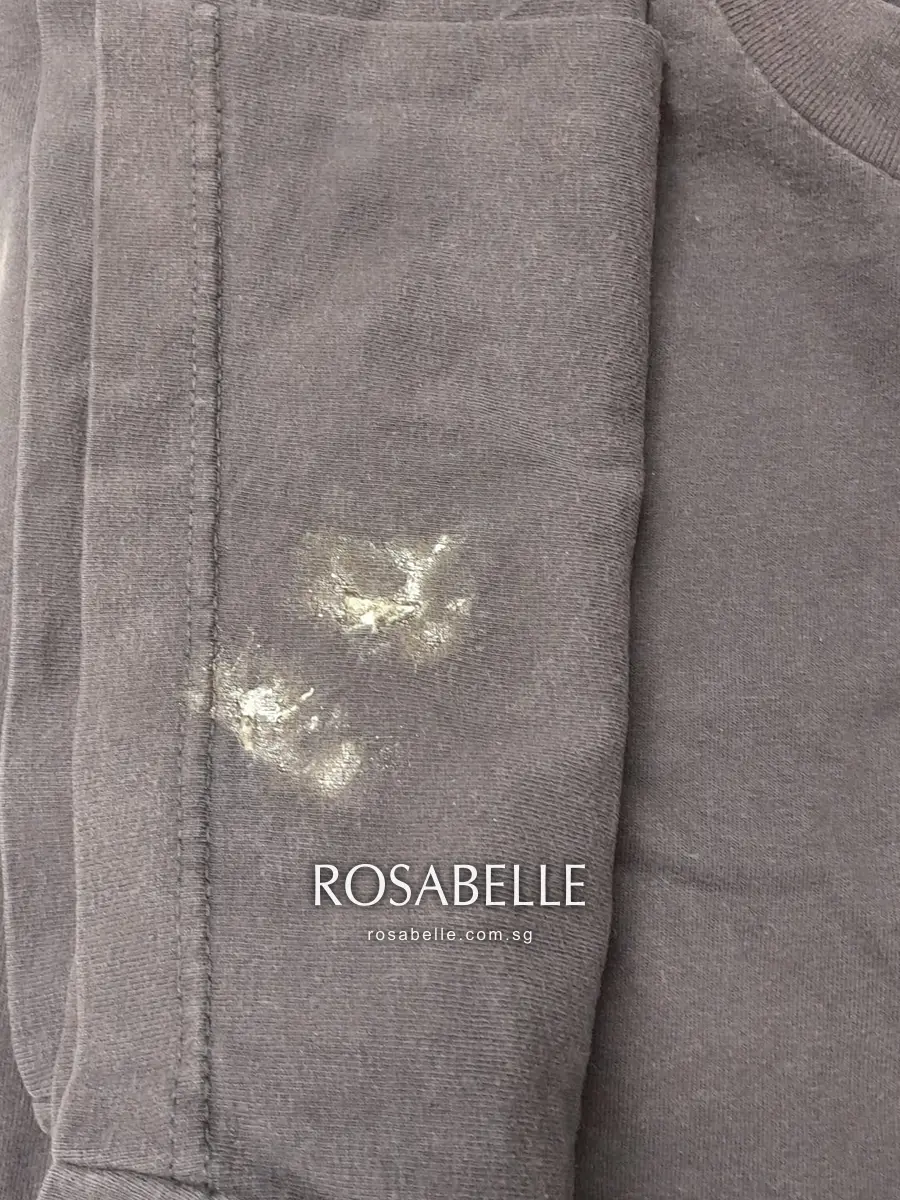
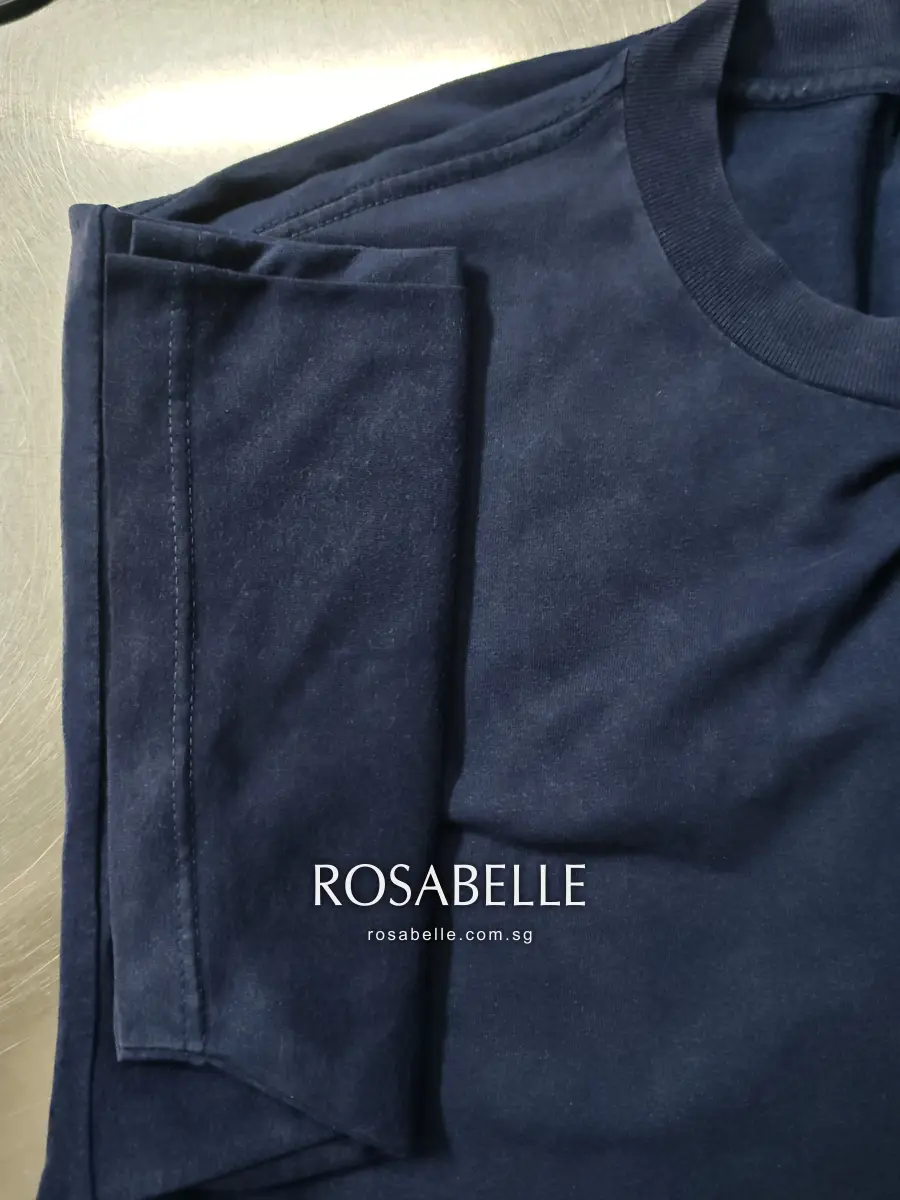
Both photographs are shop records, shown as captured with no colour correction. They were taken under different light. The navy reads brown in the before frame because of that light, not because of the glue or the cleaning. What the photographs show is whether the glue is there.
What was the condition of the T-shirt on arrival?
The T-shirt was sound apart from the glue. There were two patches on one sleeve, just above the hem stitching, each a few centimetres across. The glue had dried white and flaky at the edges and stayed shiny where it was thickest.
The owner could tell us how it happened but not what it was. Children had been using glue nearby, and nobody knew which one had reached the shirt.
Why is glue of an unknown type hard to remove from clothes?
Glue is not one substance. School glue, glue sticks, super glue, hot glue and craft or glitter glues are made from different materials, and each responds to different removers. A product that dissolves one type can leave another untouched.
Dark cotton adds a second risk. Some of the solvents that break down glue also take dye out of fabric, so a removal that works on the glue can leave a pale patch in its place. On a navy T-shirt that patch would be as visible as the glue was.
How did Rosabelle remove the glue?
Testing the residue first
Because the type of glue was unknown, the first step was to find out how the residue responded, rather than work through products on the shirt. The testing decided what was used on the patches.
Protecting the navy dye
The treatment had to remove the glue without lifting colour from the cotton around it. A clean sleeve with a pale patch would not have been a result.
What did Rosabelle deliberately avoid, and why?
- Guessing the glue. Trying one remover after another on the shirt multiplies the chances of lifting dye.
- Heat before the glue was gone. Drying or pressing over residue can set it into the fibres.
- Forcing it off. In our workshop experience, scraping or rubbing hard at glue on jersey roughens the knit and leaves a fuzzy patch that shows on a dark colour.
What was the result?
All of the glue was removed.
- Both glue patches: gone, with no residue left in the jersey.
- The T-shirt: returned to its owner.
What does this case show about glue on clothes?
Not knowing the glue is the real problem, more than the glue itself. When the type is known, the remover can be chosen for it. When it is not, the safe course is to test how the residue behaves before treating the garment.
It also shows that an everyday garment can be worth specialist care. This was an ordinary cotton T-shirt, but it could not be replaced, and that decided how carefully it was handled. The result here is evidence about this shirt, not a forecast for every glue stain.
What should you do if glue gets on your clothes?
Do:
- Wipe fresh washable glue off with a damp cloth before it dries.
- Find out which glue it was, and keep the tube or bottle if you can.
- Lift off only what comes away easily from the surface.
- Tell your cleaner what has already been tried on the stain.
Don't:
- Tumble dry or iron the garment while any glue remains.
- Pour nail polish remover or other solvents onto dark or acetate fabrics without testing a hidden area first.
- Try several removers one after another on the same patch.
- Scrub or scrape hard at glue on knitted fabric.
The honest note
Can every glue stain be removed from clothing?
Not every one. This T-shirt came in with the glue dried but untreated by heat, and its dye held. Glue that has been ironed or tumble dried, fabric that is acetate or similarly sensitive, or a patch where a remover has already lifted dye can leave a mark that cleaning cannot reverse. We tell you what to expect after assessing the garment. The photographs on this page are working shop records taken under changing light, and nothing in them was colour-corrected.
Case documented by Rosabelle Launderette's garment-care team. Case practitioner and technical review: Zach Lim.
Cleaned in-house at Rosabelle Launderette, Singapore, established 1998. This case records one garment in one condition and is not a guarantee of outcome.
Published and technically reviewed 11 September 2026.
Sources & further reading
Related stain-removal cases
More stain-removal cases
Common questions
Questions about removing glue from clothes
How do you get dried glue out of a T-shirt?
It depends on the glue. Washable school glue usually softens in cool water and washes out, but super glue, hot glue and craft glues need different removers, and the wrong one can take dye out of the fabric. If you do not know what the glue is, stop before trying several products and have it assessed. On this navy cotton T-shirt, Rosabelle tested the residue first and then removed all of it.
What should I do if I don't know what kind of glue is on my clothes?
Do not guess with strong solvents. Scrape off only what lifts easily, keep the garment away from heat, and bring it in with whatever you know about how the glue got there. A cleaner can test how the residue responds before treating it, which is what we did on this T-shirt, where the glue had been put on by children and its type was unknown.
Will washing remove glue from clothes?
Sometimes. Glues sold as washable, such as most school glues, are made to come out in water. Others, including super glue and hot glue, will not wash out, and the heat of a tumble dryer can make what is left harder to remove. Check the patch before drying, and do not dry or iron the garment while any glue remains.
Can nail polish remover take glue off clothes?
Nail polish remover often contains acetone, which dissolves some glues but also dissolves acetate fibres and can pull colour from some dyes. Acetone should be tested on a hidden part of the garment first. On a dark T-shirt, a pale patch where the dye has lifted can be harder to live with than the glue.
Can every glue stain be removed from clothing?
Not every one. This T-shirt came clean, but glue that has been ironed or tumble dried, or a remover that has already lifted dye, can leave a mark that cleaning cannot reverse. We tell you what to expect after assessing the garment.