
Journal · Case study · Table linen · Published
Cleaning Heirloom Table Linen Marked 1827 and 1895 in Singapore
Eight pieces of a family's linen damask table linen, marked with the family name in 1827 and 1895, came in with brown age staining along their folds. Most of the staining came out, and every stitched mark is intact.
Nothing on the linen was repaired, restitched or altered. This page records what happened to this set, not an outcome to expect from every piece of old linen.
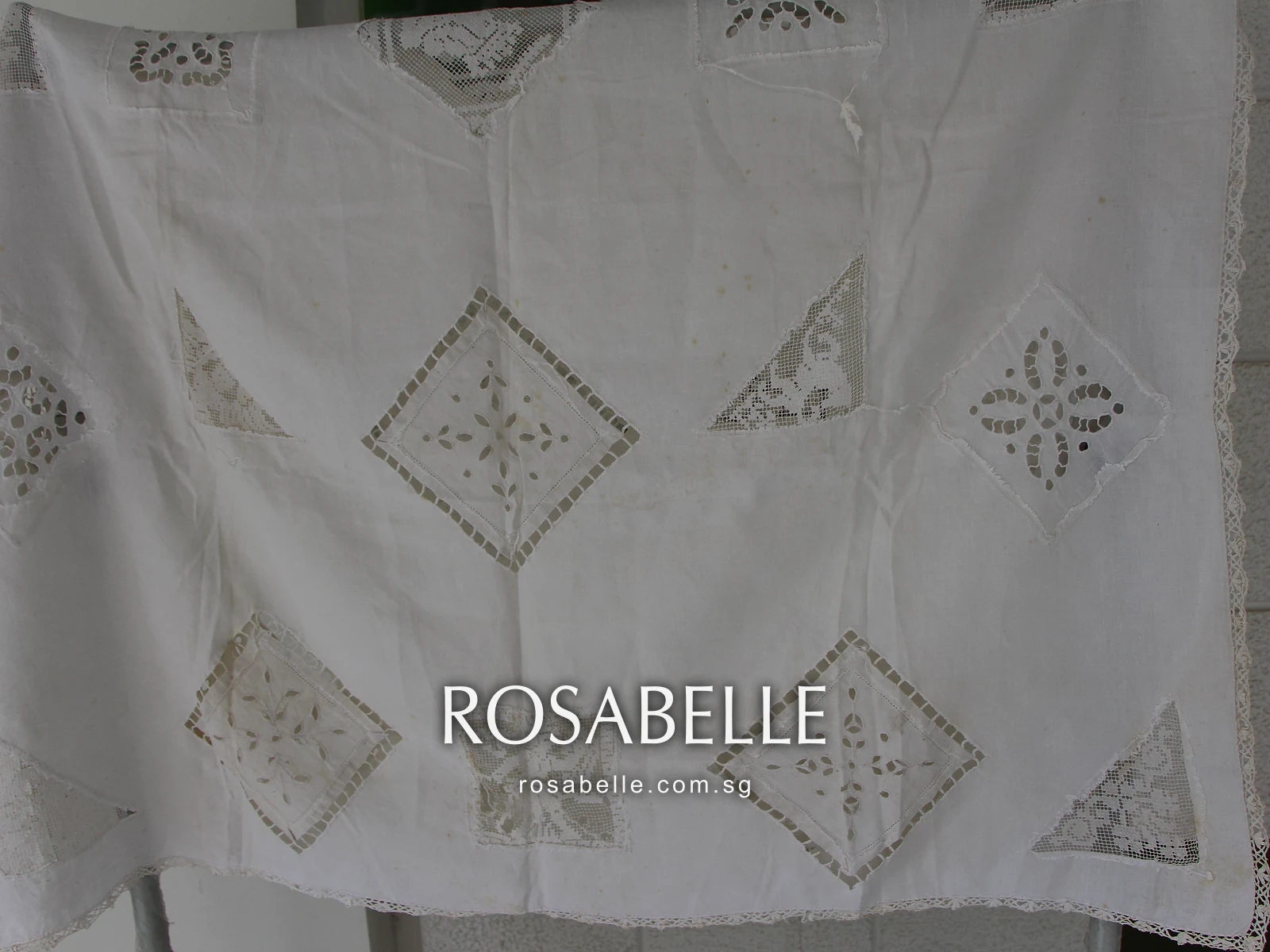
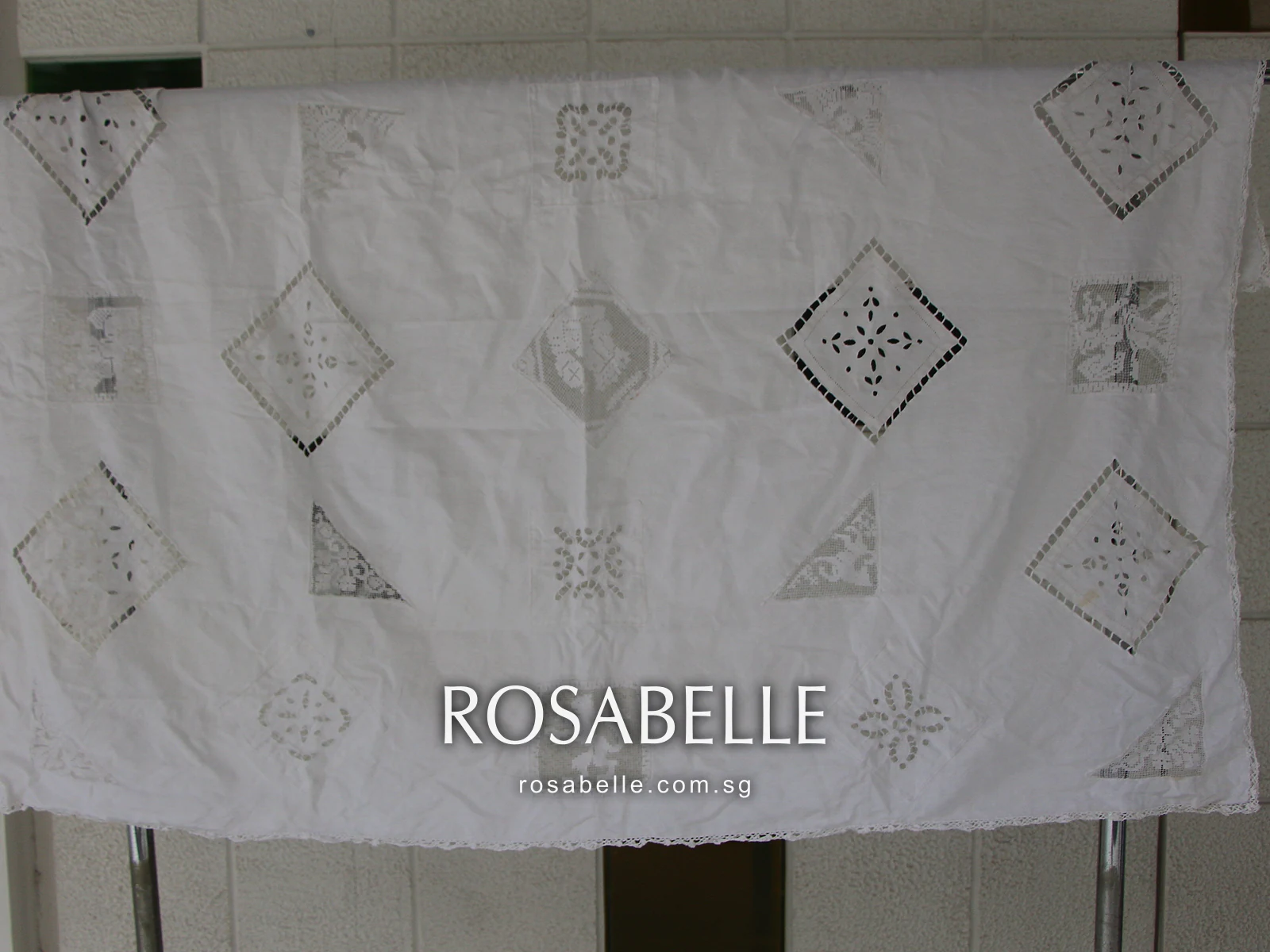
What came in?
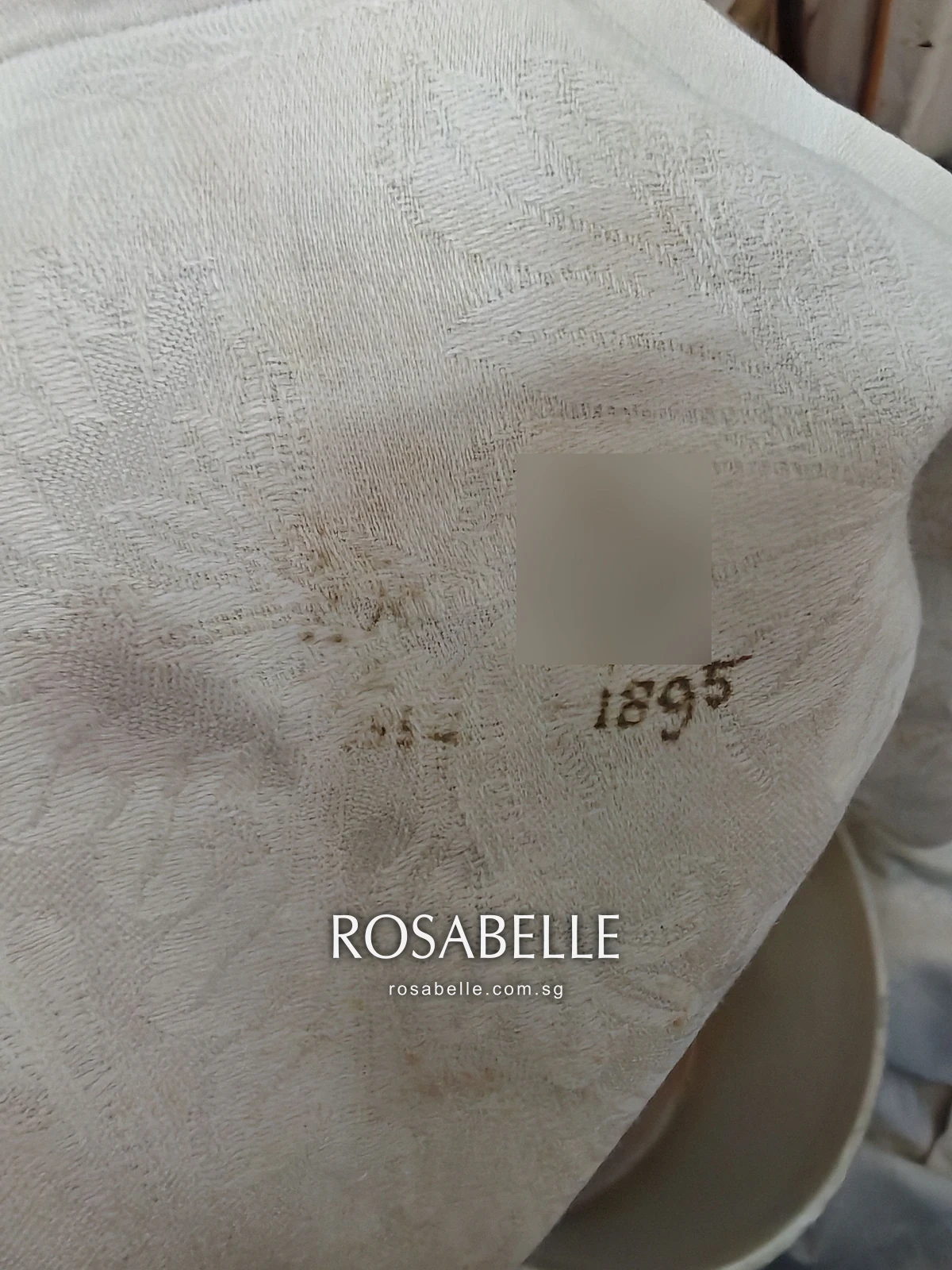
The family has passed this linen down through several generations. One cloth carries the family name and a second line dated 1827, nearly two hundred years ago; another carries a monogram dated 1895. The marks are worked in brown thread into the cloth itself, so each piece records who it belonged to and when. Nothing else could stand in for it, and if it were damaged there would be no replacing it.
We are honoured that the family trusted us with work this delicate.
Across the set the linen had brown staining in bands along the lines it had been folded on, with scattered brown spots between them. One cloth arrived with a repair made long before it reached us.
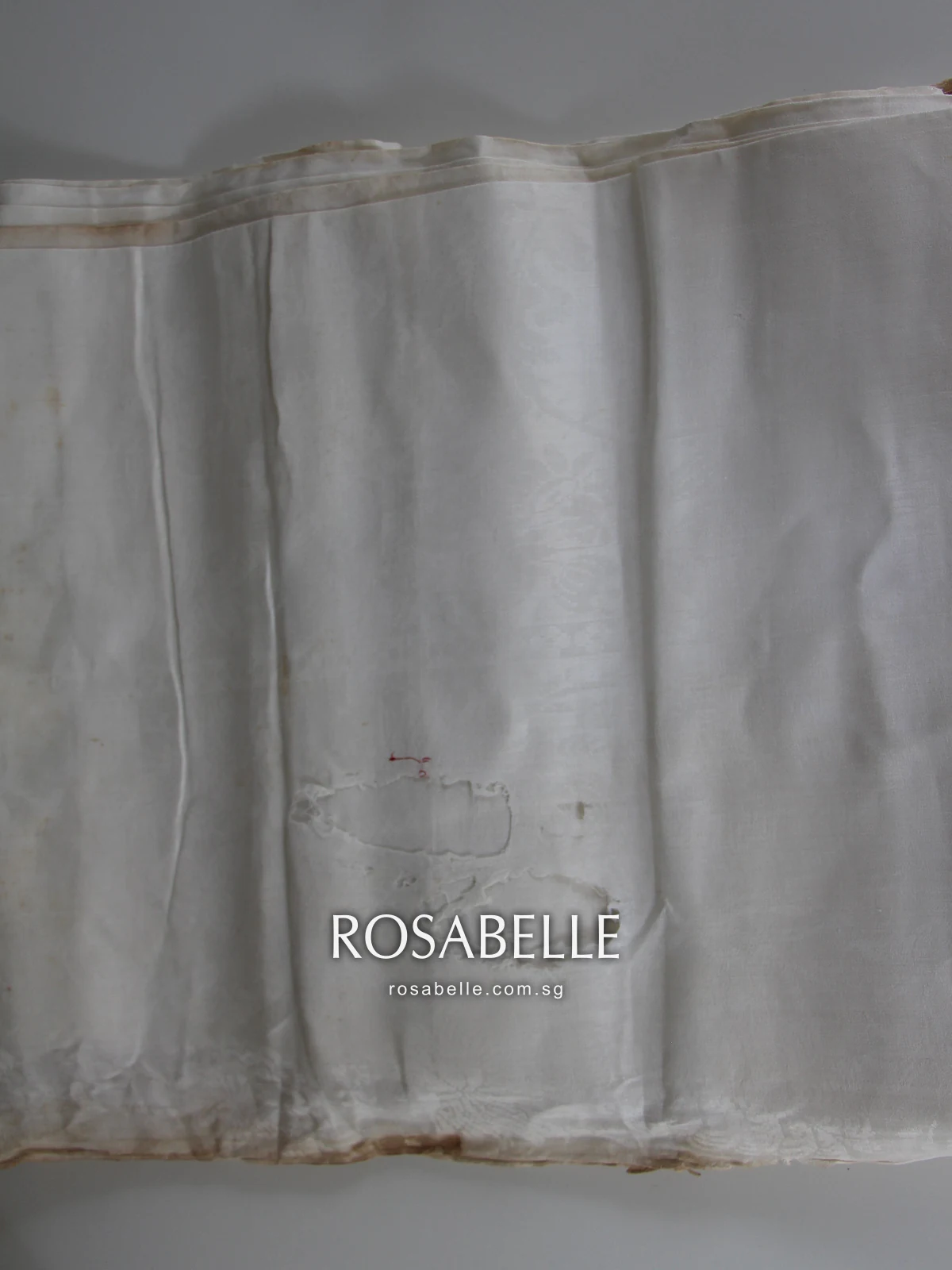
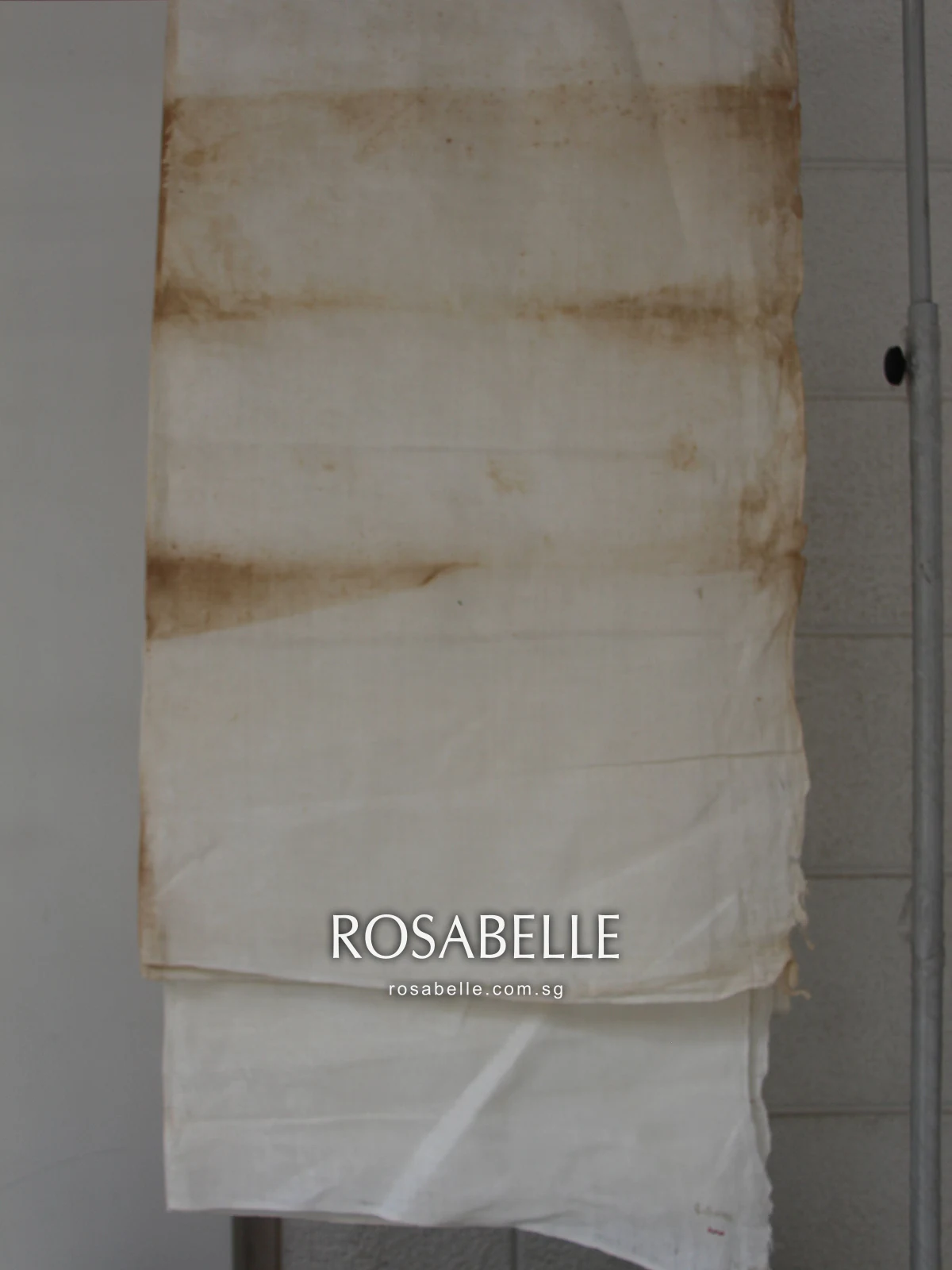
Why does old linen turn brown along the folds?
Linen is a cellulose fibre. Over decades it oxidises and becomes acidic, which shows as yellowing and brown discolouration and leaves the fibre weaker. Folds concentrate that damage: the fibres are stressed along every crease, the outer edge of a fold is the part exposed to air and light, and where damp linen dries, a brown line forms at the boundary between wet and dry.

How did Rosabelle clean the heirloom linen?
Every piece examined first
Each cloth was opened out and hung so that its folds, its stitched marks, its lace and the older repair could be seen before any work started. Linen of this age is weakest along its old creases.
The stitched marks treated as part of the cloth
The names and dates are what make this linen the family's, so the work was chosen around them. The aim was to lift the staining from the linen and leave the brown thread of the marks as it was.
Kept as close to the original as possible
Every piece was handled as gently as it could be. We did not repair, restitch or reinforce anything. The older repair was left exactly as it came in.
What was the result?
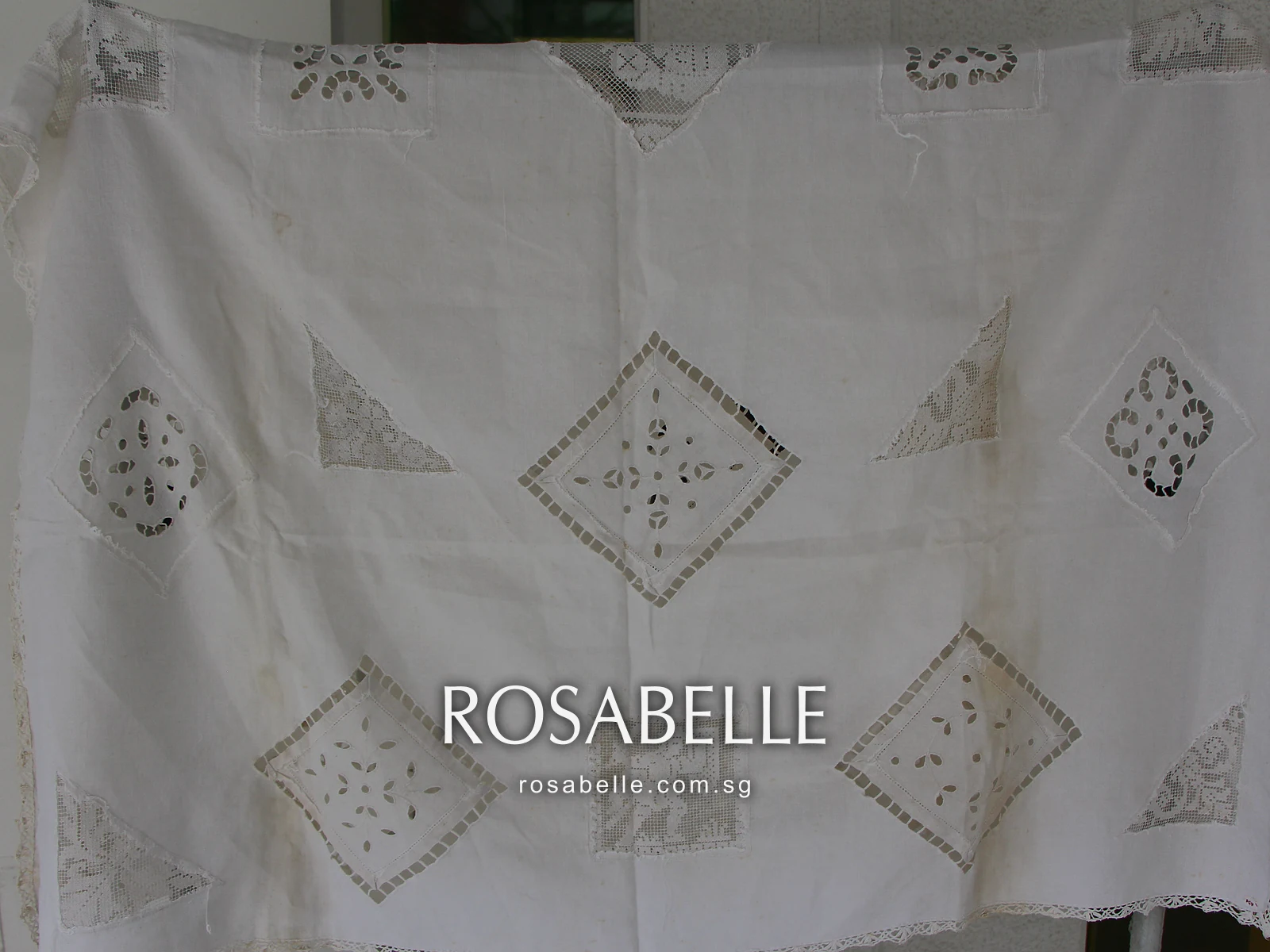
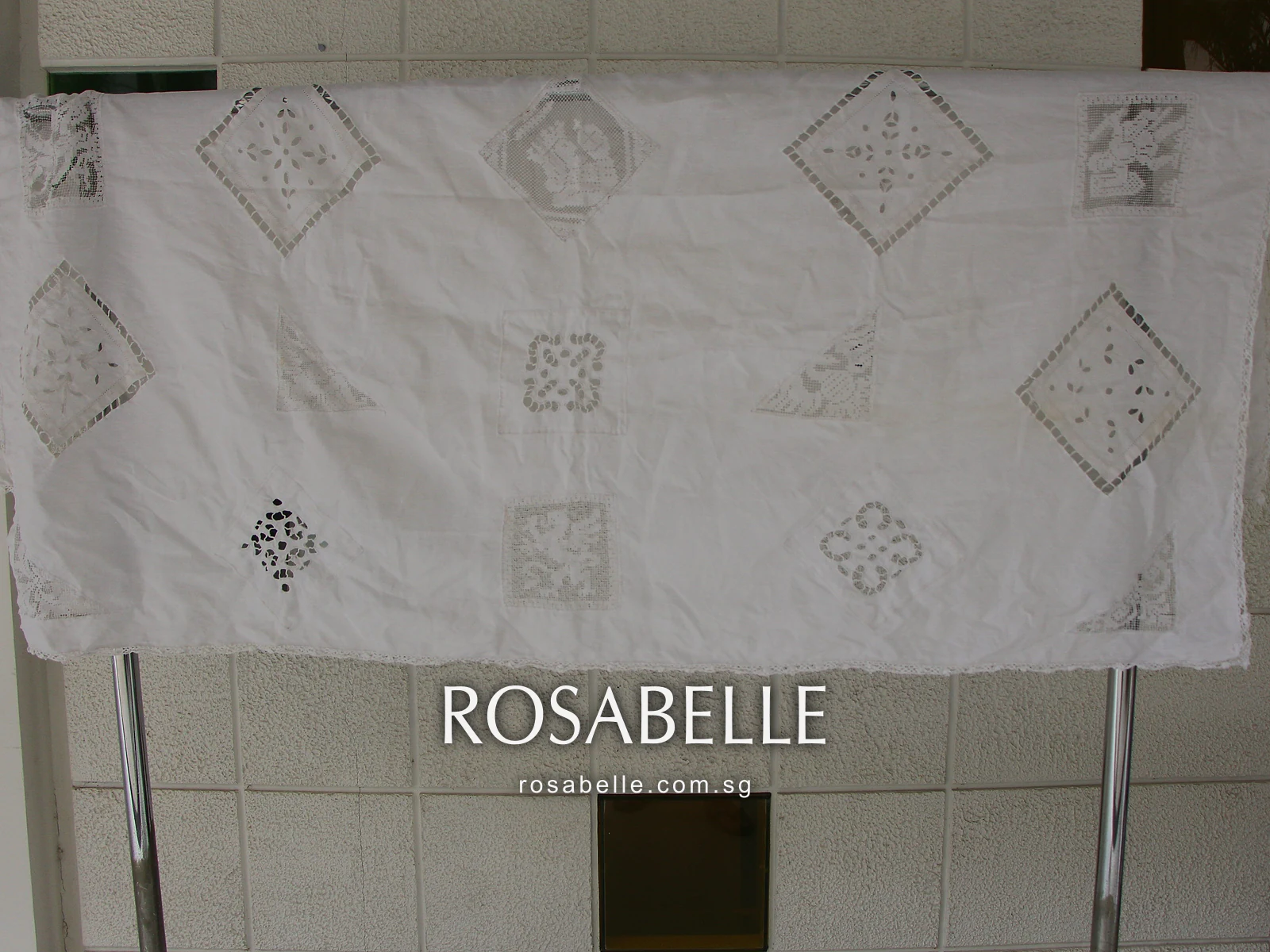
Most of the staining came out across the eight pieces, and a few faint marks remain. The family name, the monogram, the dates, the cutwork and lace, and the older repair are all intact.
How should antique table linen be stored?
- Store it clean and dry. Stains left in old linen go on oxidising.
- Keep it out of plastic and away from light, wrapped in breathable cotton or acid-free tissue.
- Pad the folds with rolled tissue, or roll the cloth on a tube, and refold along different lines now and then.
- In Singapore, check stored linen every few months rather than leaving it boxed for years.
For staining on old linen and garments, see stain removal and restoration.
About these photographs
These are working shop records. The before frames were taken on our rack when the linen arrived; the after frames were taken on the same rack after cleaning, under different light, and the cutwork tablecloth is hung differently in each. Nothing was colour-corrected, and this page makes no claim about colour, only about the staining. To keep the family's privacy, we blurred the names and initials in these photographs, leaving the first letter of each name. The linen itself was not altered.
The honest note
Can age stains always be removed from antique linen?
Not always. We do our best, but many factors will affect the outcome. Complete removal is possible on some pieces but cannot be guaranteed. The age of the linen, how it was stored, what has been tried on it at home and whether it carries stitched marks, lace or old repairs all change the work. On this set a few faint marks remain. Each piece is assessed before any work starts.
Case documented by Rosabelle Launderette's garment-care team. Case practitioner and technical review: Zach Lim.
Cleaned in-house at Rosabelle Launderette, Singapore, established 1998. This case records one set of linen in one condition and is not a guarantee of outcome.
Published and technically reviewed 13 October 2026.
Sources & further reading
Related yellowing and age-staining cases
More stain cases


Common questions
Questions about cleaning heirloom linen
Why does old linen turn brown along the folds?
Linen is a cellulose fibre, and over decades it oxidises and turns acidic, which shows as yellowing and brown discolouration. Folds concentrate the damage: the fibres are stressed along each crease, the outer edge of a fold is exposed to air and light, and moisture that dries out leaves a brown line where wet met dry. The linen in this case, marked 1827 and 1895, had brown staining in bands along the lines it had been folded on for years.
Can age stains be removed from antique table linen?
Age staining is a change in the fibre itself from oxidation, so it has to be lifted out of the linen rather than washed off, and old fibre is weaker than new. On this set of eight linen damask pieces, a family heirloom, most of the staining came out and a few faint marks remain. The age of the linen, how it was stored, what has been tried on it at home and any stitched marks or lace all change the work, and each piece is assessed before any work starts. Complete removal is possible on some pieces but cannot be guaranteed.
Is it safe to clean an heirloom tablecloth with names stitched on it?
Stitched names and monograms are often worked in a different thread from the cloth, and old thread can be weaker or less colourfast than the linen around it. We check the marks, the lace, any old repairs and the strength of the linen during assessment and point out what we see, but not every weakness shows beforehand. On this set, the family name and the monogram dated 1895 are intact after cleaning.
How should antique table linen be stored in Singapore?
Store it clean and dry, out of plastic and away from light, in breathable cotton or acid-free tissue. Pad the folds with rolled tissue, or roll the cloth on a tube, so the same creases do not take the stress year after year, and refold it along different lines now and then. Singapore's relative humidity averages over 80 per cent, so check stored linen every few months rather than leaving it boxed for years.
How much does it cost to clean heirloom linen in Singapore?
At Rosabelle Launderette, specialist stain work and restoration is typically from $100 upwards, because the age, condition and size of old linen differ too much between pieces for a published rate. Each piece is assessed and the price agreed before any work starts. Linen is collected from homes anywhere in Singapore or can be dropped off at our Queenstown and Orchard shops.