
Journal · Bridal restoration ·
Vivienne Westwood Wedding Gown: Removing Yellowing and Rust Stains
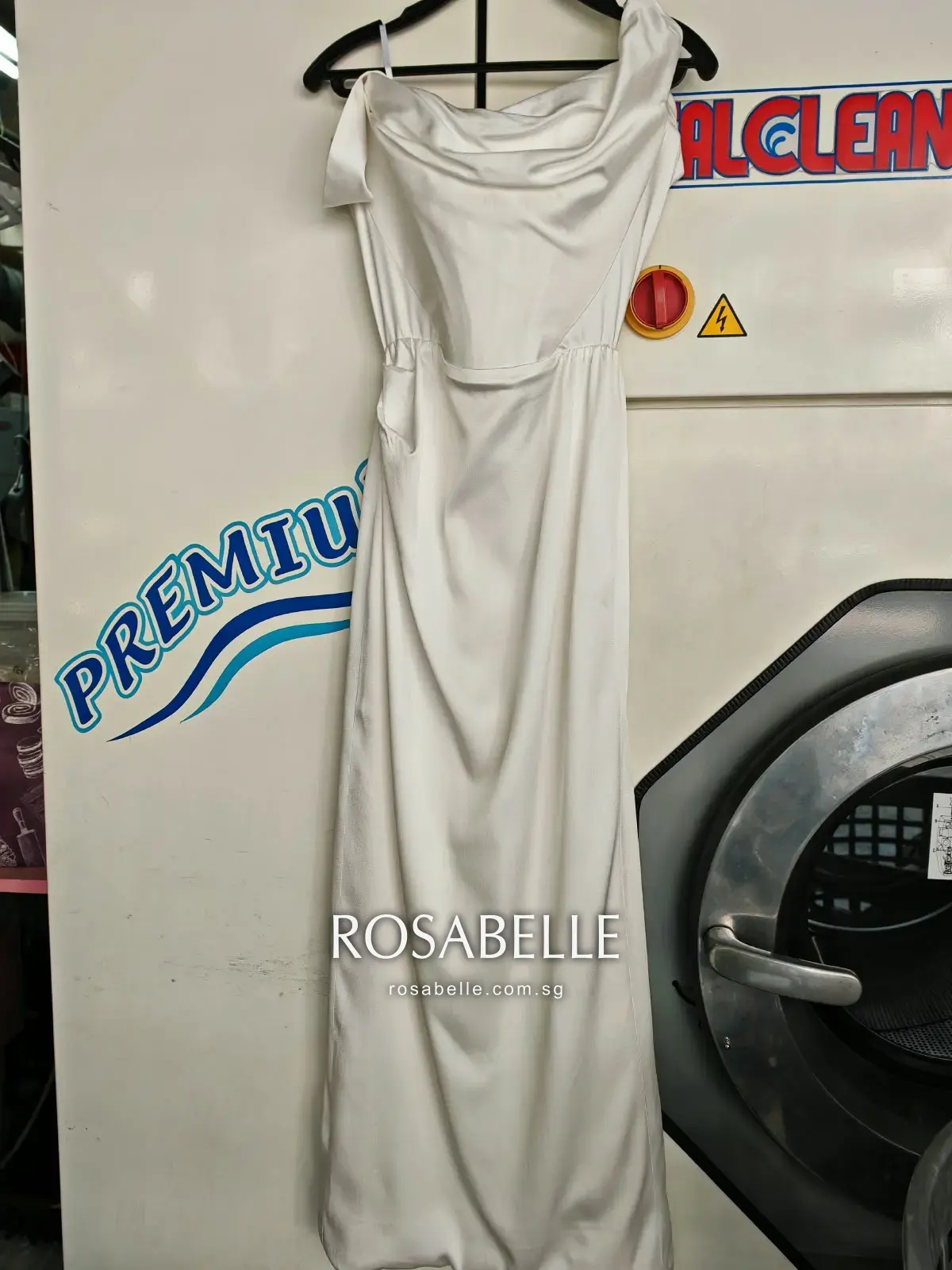
An ivory Vivienne Westwood wedding gown came in with a yellow cast through the drape, brown discolouration along the folded hem, and rust spotting on the hem edge. All three came out. The boned bodice, which had been well looked after, needed nothing but a clean and a press.

What came in
The gown is ivory crepe with satin-faced edges: an off-shoulder cowl, a knotted cap sleeve at each shoulder, a boned bodice, and a long skirt that wraps and gathers at one hip. It came to our Queenstown workroom for stain removal and restoration rather than a routine clean.
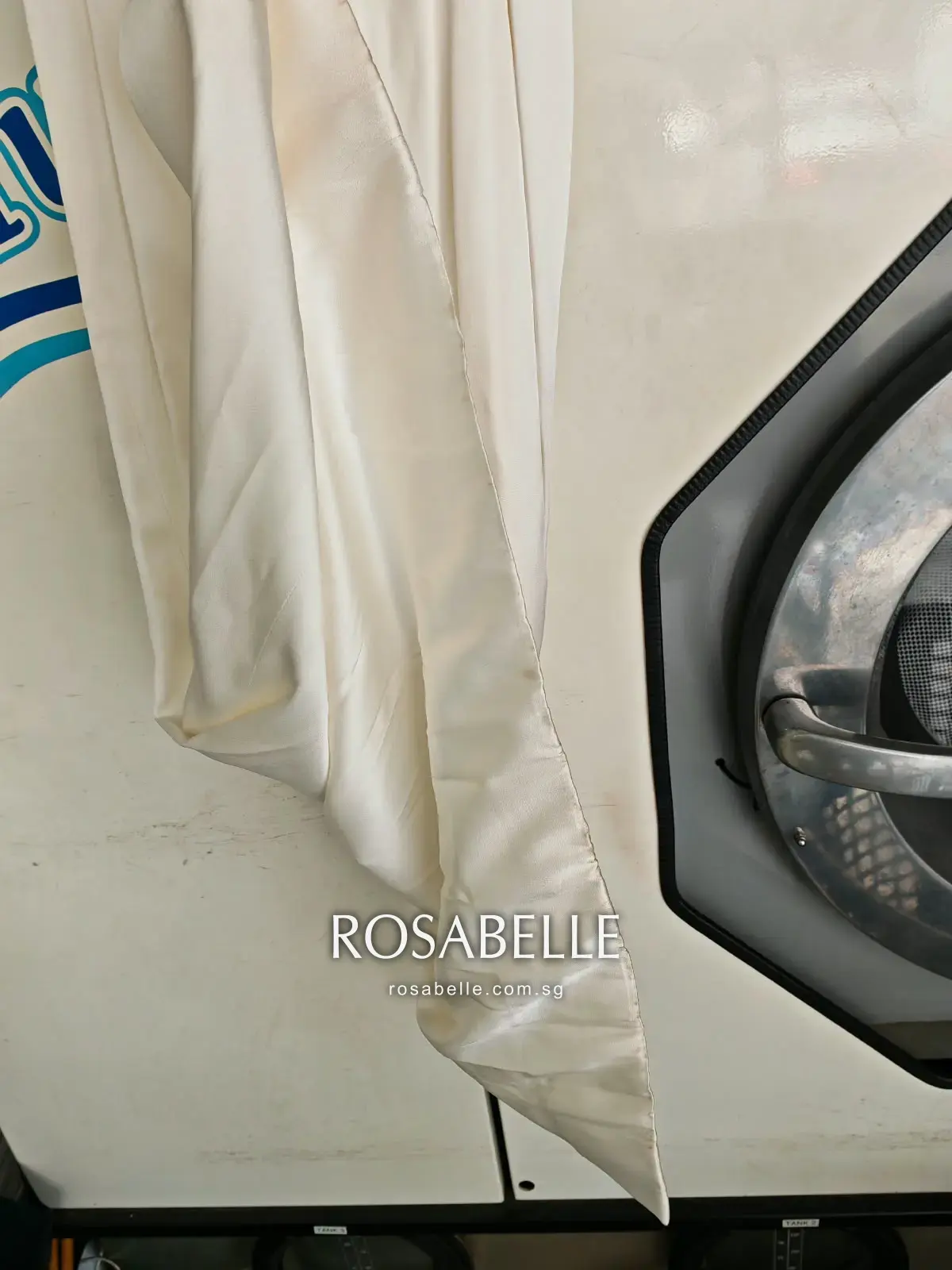
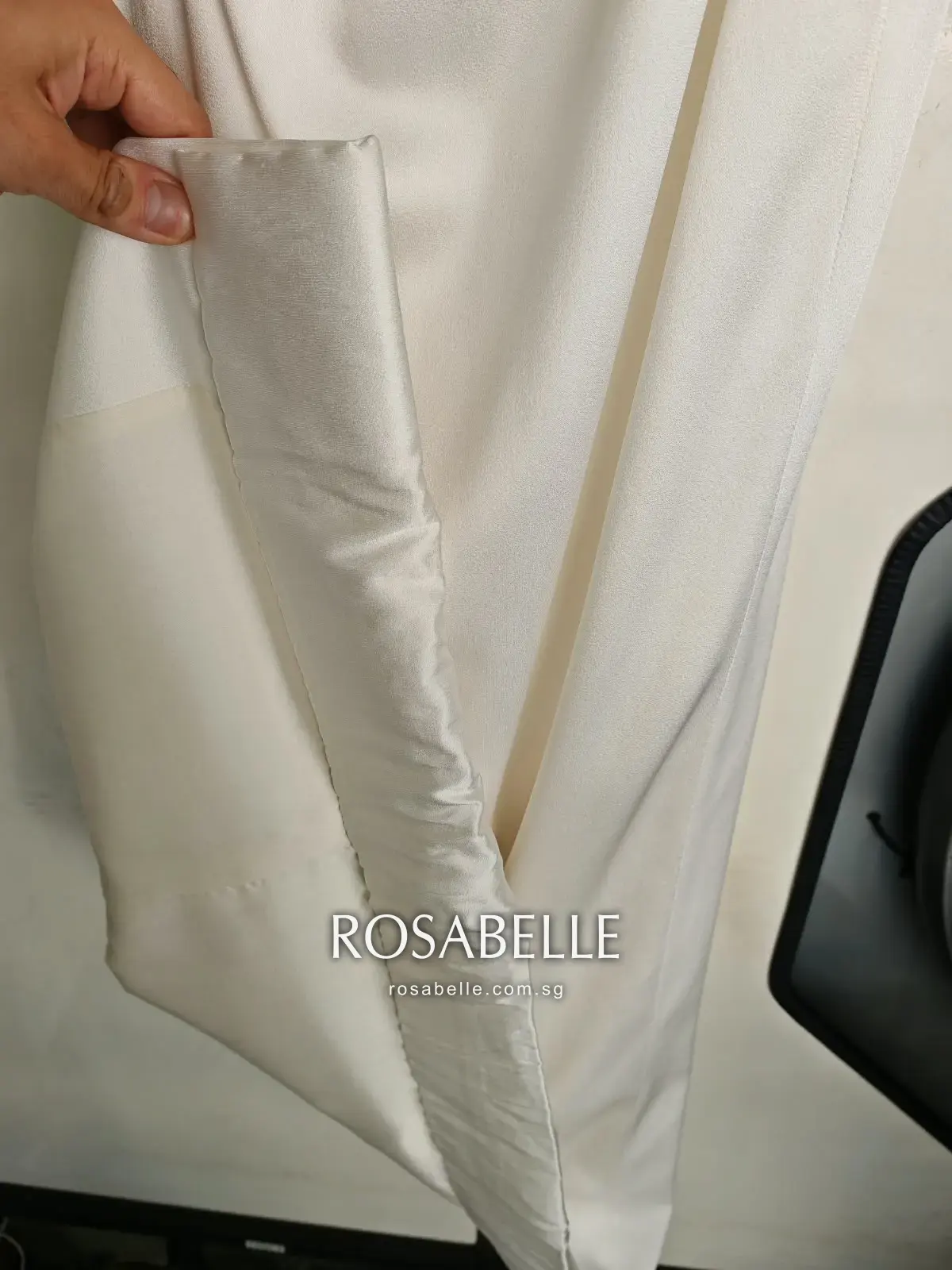
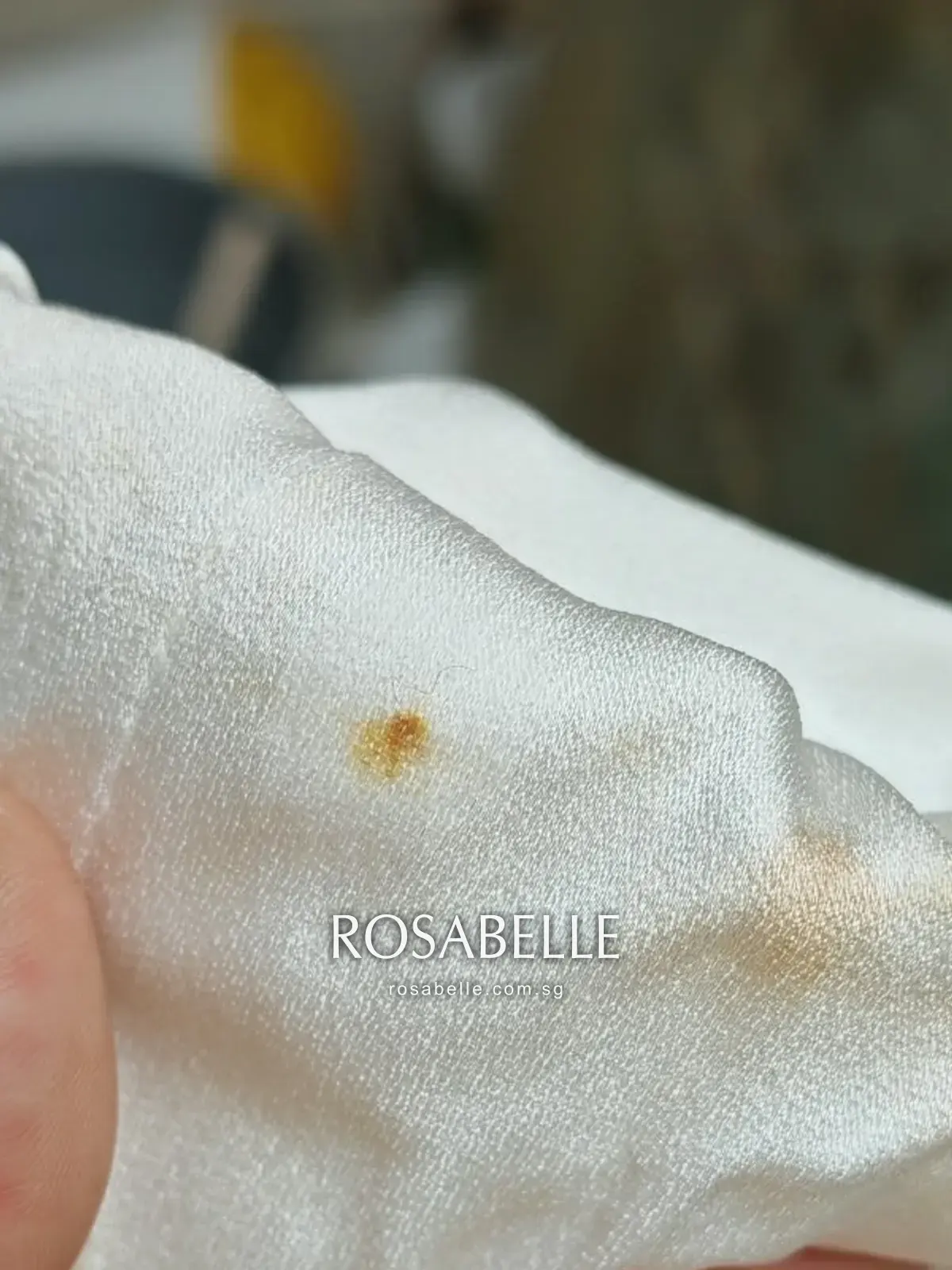
The ivory had gone uneven and warm, deepest where the fabric doubles back on itself. Along the folded hem and the facing behind it, that warmth had already carried into brown, running with the seam rather than sitting in a patch. On the hem edge sat rust-coloured spots: small, defined, and a different problem from the yellowing around them.
Why wedding gowns yellow in storage
A stored gown yellows from what was already on it. Perspiration, skin oils, hairspray, champagne and clear drink splashes go into the fabric colourless and stay invisible for months. In Singapore's heat and humidity they oxidise, and the cloth discolours around them. That is why the pattern follows the wearer and the floor: the hem that sweeps the ground, the folded edges that take the handling, the facings that sit against skin.
It is also why a gown put away uncleaned comes out worse than it went in. Yellow keeps travelling toward brown, and the further along that scale a mark has gone, the less any cleaner can honestly promise to reverse. It is the argument for cleaning a gown before it goes into storage and again while it sits there, as with a 1970s silk wedding gown brought in for a routine clean fifty years on. The same chemistry, on a different material, is in the case of a tote that yellowed and browned in storage.
The work
Each problem needed its own treatment, which is what separates gown restoration from gown cleaning. Everything was tested on a hidden seam allowance first.
The general yellowing was worked across the whole gown in repeated controlled passes, with the piece assessed between rounds rather than pushed through one aggressive bath. Crepe distorts if it is forced, and a distorted panel cannot be pressed back. The brown along the folded hem was treated at the seam by hand, where the residue had concentrated and the fabric doubles on itself.
Rust is not soil. It is iron oxide, transferred from metal such as a fitting, a hanger, a pin or the water itself, and it ignores the chemistry that lifts oxidised perspiration. Chlorine bleach sets it rather than lifting it. That is the reason to leave a rust spot on a gown alone until it reaches a cleaner.
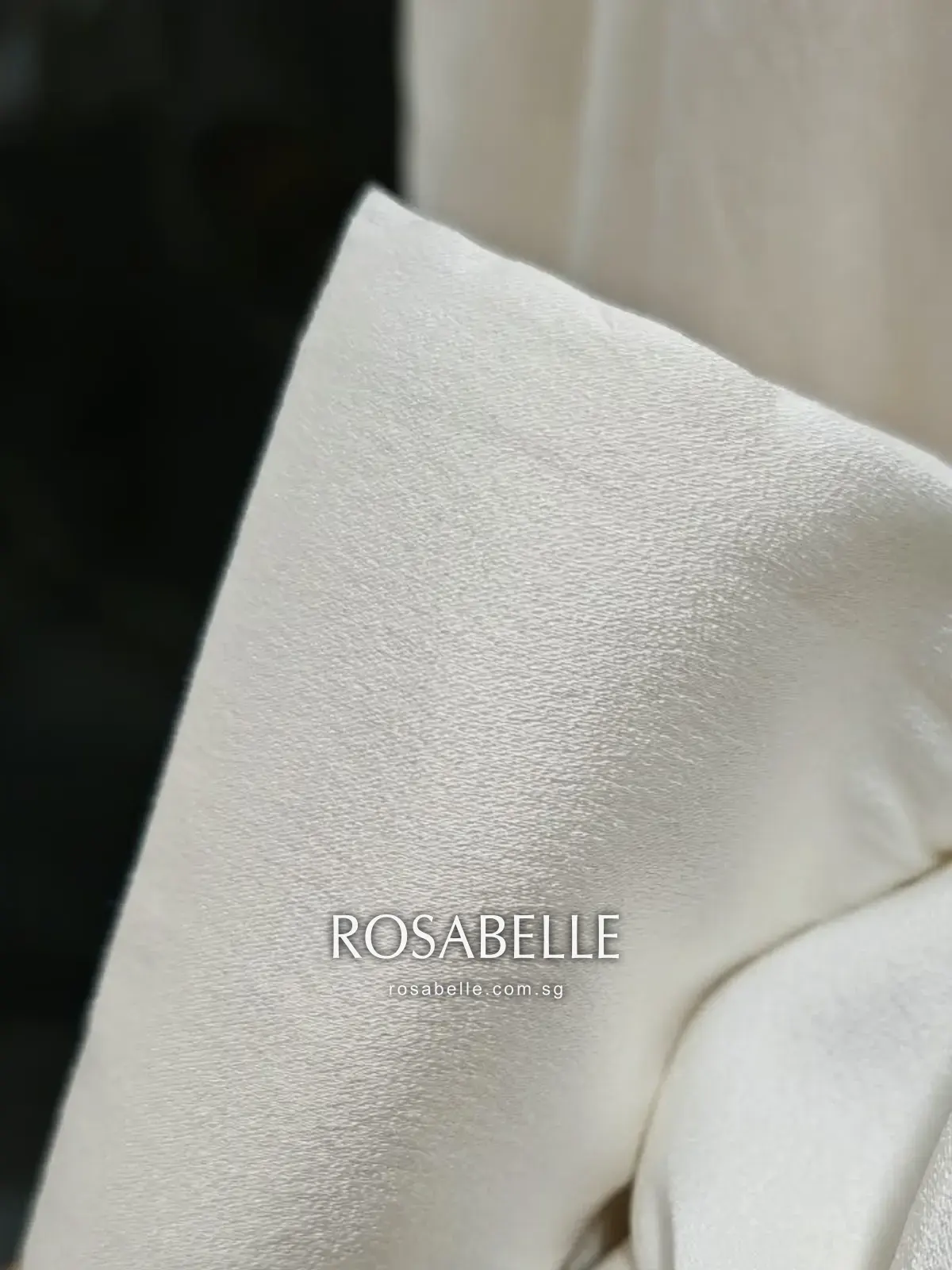
The bodice was the easy part. The ribbing across the torso had been well cared for, with no crushing at the boning channels and no discolouration along the seams, so it needed cleaning and pressing and nothing else. That is worth knowing if you own a corseted gown: the structured half usually survives storage better than the hem, which drags, and the folded edges, which trap residue.
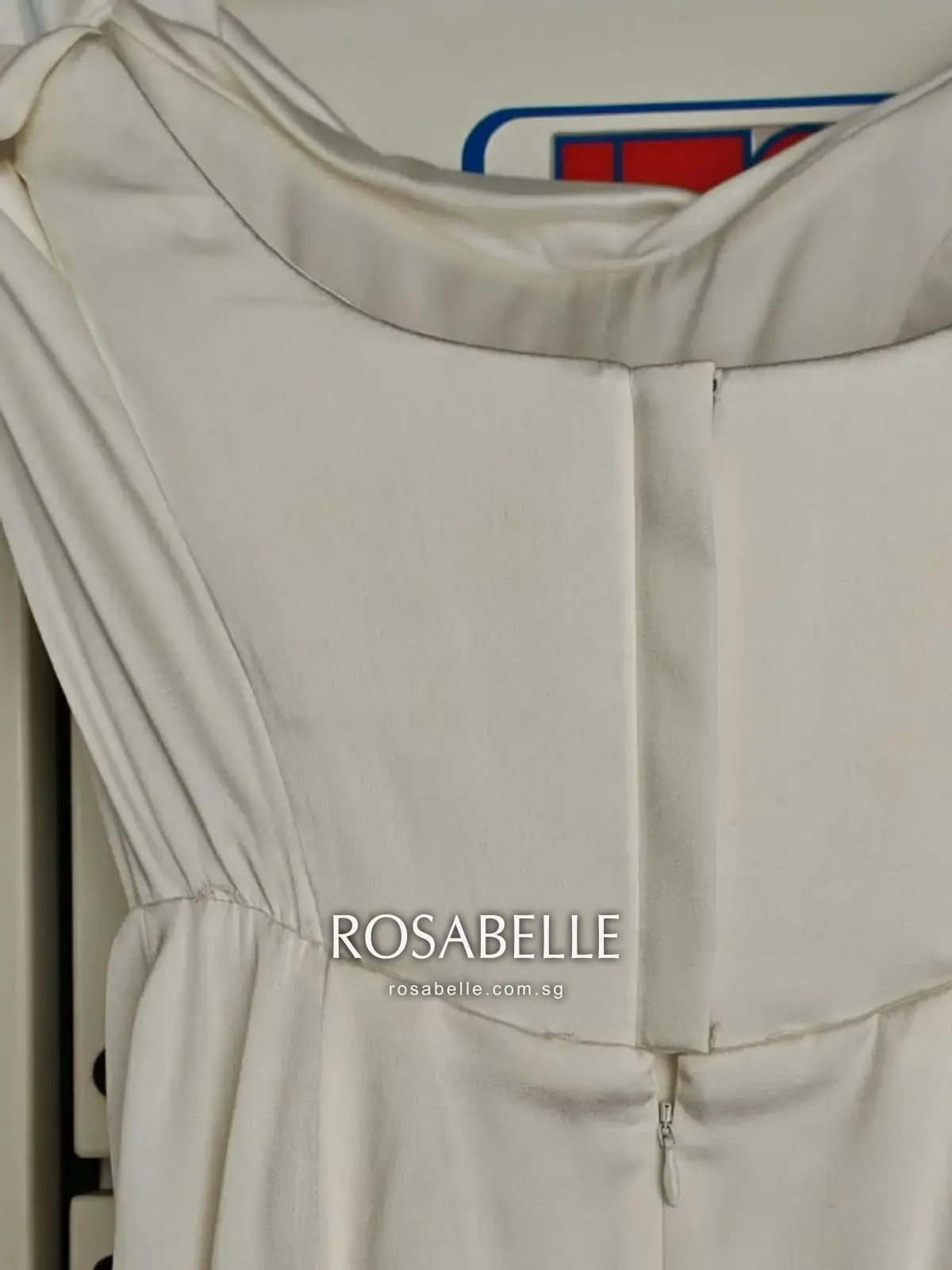
Finishing was done by hand on the pressing table. The cowl at the neckline and the gathers at the hip are cut into this gown rather than built into it, and a machine form would press them flat. That part of couture work takes longer than the cleaning.
The honest note
This gown came back further than some do. Where discolouration has sat for years and gone properly brown, not all of it lifts, and we say so at the counter rather than after the work. What we will not do is promise a result on a one-of-a-kind piece before we have looked at it.
Bring an ivory gown in while its marks are still yellow, and never put one away uncleaned: a gown that goes into the wardrobe carrying invisible residue comes out carrying visible stains. Wedding gown cleaning at Rosabelle is quoted after inspection, cleaned at our own facility in Queenstown, and collected from anywhere in Singapore if you would rather not carry it.
Case practitioner and technical review: Zach Lim.
Related cases
More like this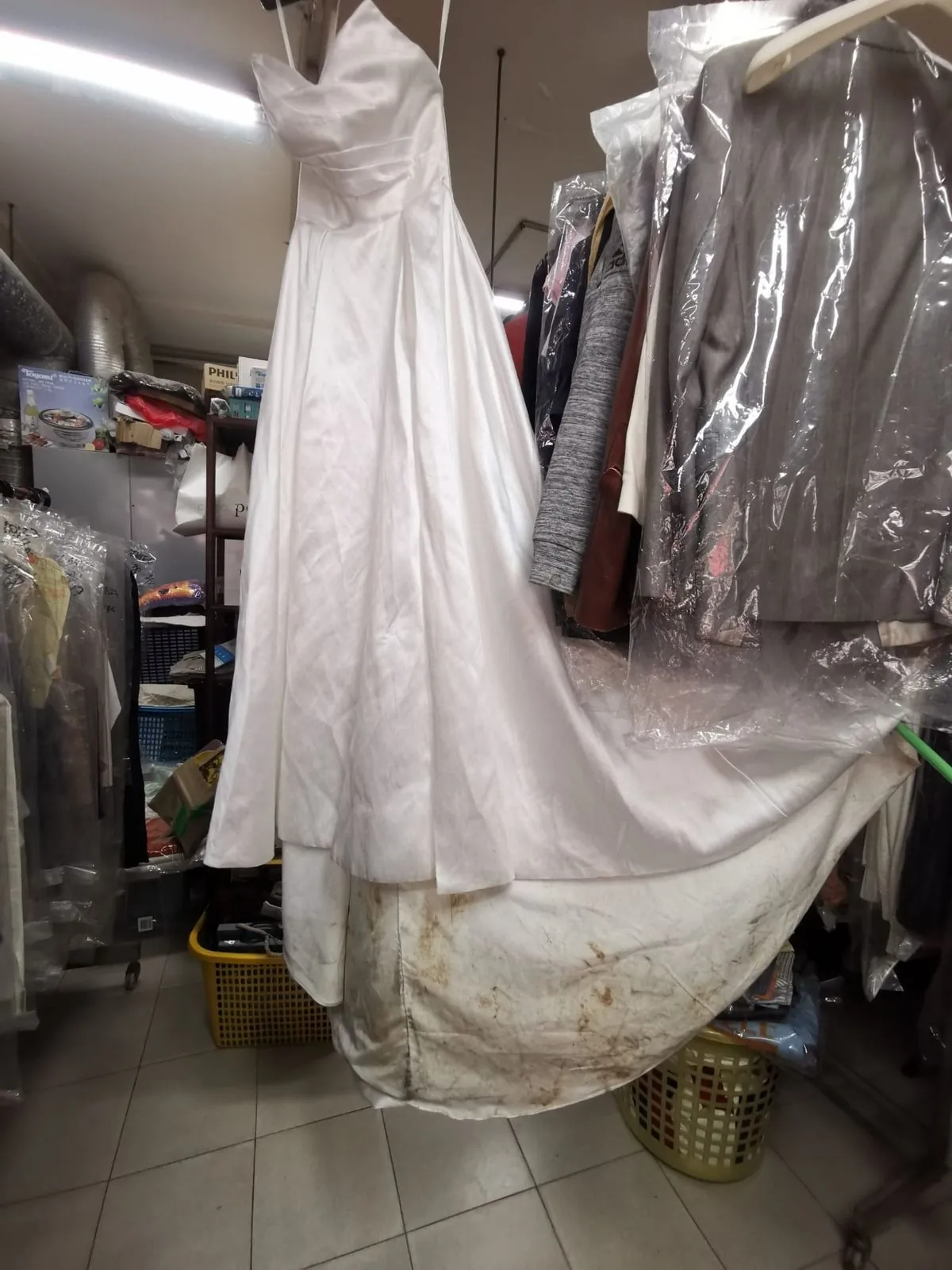
Common questions
Wedding gown cleaning in Singapore
Where can I get a wedding gown cleaned in Singapore?
Rosabelle Launderette cleans and restores wedding gowns in Singapore from two walk-in outlets, Queenstown (163 Stirling Road) and Orchard (Far East Shopping Centre), with islandwide pickup and delivery. Every gown is cleaned at our own Queenstown facility rather than sent out to a third-party plant, so the same team handles the piece from inspection to final press.
How much does wedding gown cleaning cost in Singapore?
Gown cleaning at Rosabelle starts from $190 and rises with construction and soiling, because a simple silk slip is a different project from a heavily beaded ballgown. Unstructured wedding dresses are $90. The price is confirmed after the gown has been inspected, never after the work. Turnaround is five working days and upwards. Yellowing like this gown's is common in Singapore, where year-round humidity accelerates the oxidation that turns stored ivory uneven.
How long does wedding gown cleaning take in Singapore?
Five working days and upwards at Rosabelle, depending on the complexity of the gown and the scope of the work. Restoration sits at the longer end: this Vivienne Westwood gown needed separate treatments for the overall yellowing, the browned hem and the rust spotting. We give a timeline once the gown has been inspected.
Why do wedding gowns turn yellow in storage?
A stored gown yellows from what was already on it. Perspiration, skin oils, hairspray, champagne and clear drink splashes go into the fabric colourless and stay invisible for months, then oxidise in Singapore's heat and humidity until the cloth discolours around them. The hem, the folded edges and the facings usually go first, because they take the most contact.
Can yellowing be removed from an old wedding gown?
Yellowing in an old gown is discolouration that has travelled into the fibre over time, from yellow toward brown as it matures. This ivory Vivienne Westwood gown went back an even ivory after repeated controlled treatments. Complete removal is possible on some gowns but cannot be guaranteed; we assess the gown and say what we expect before any work starts.
What are the rust-coloured spots on a stored wedding gown?
Rust: iron oxide picked up from a metal fitting, a hanger, a pin or the water, not ordinary soiling. It needs its own treatment, and chlorine bleach sets it rather than lifting it. The rust spotting along this gown's hem was treated separately from the yellowing and came out.