
Journal · Case study · Bridal · Published
Cleaning a Lace Mermaid Wedding Gown After the Wedding in Singapore
This lace mermaid gown came in after the wedding with a pink makeup-like mark on the lace and floor dirt through the underskirt and hem, and the after photographs show neither. The mark sat across two lace motifs. Its origin is not known, but on our assessment it was most likely makeup or lipstick.
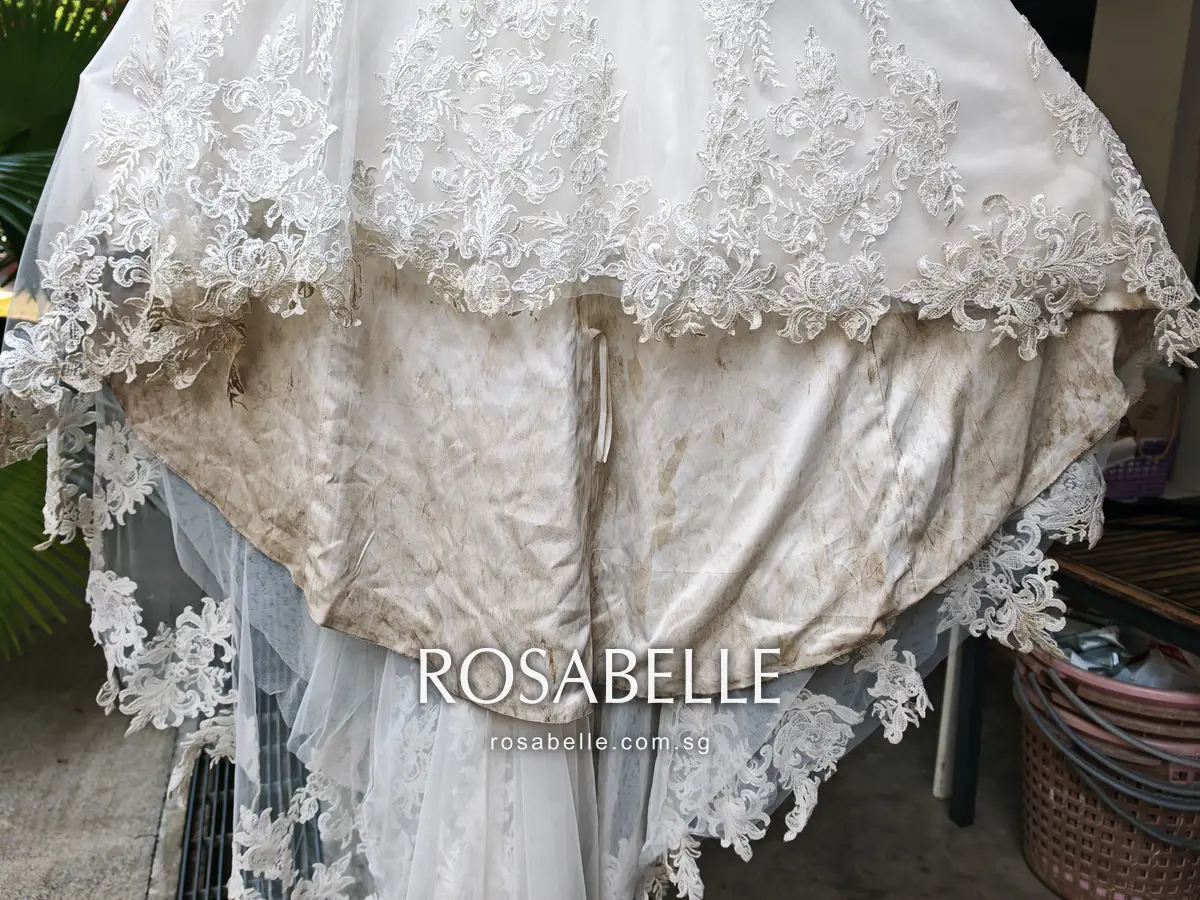
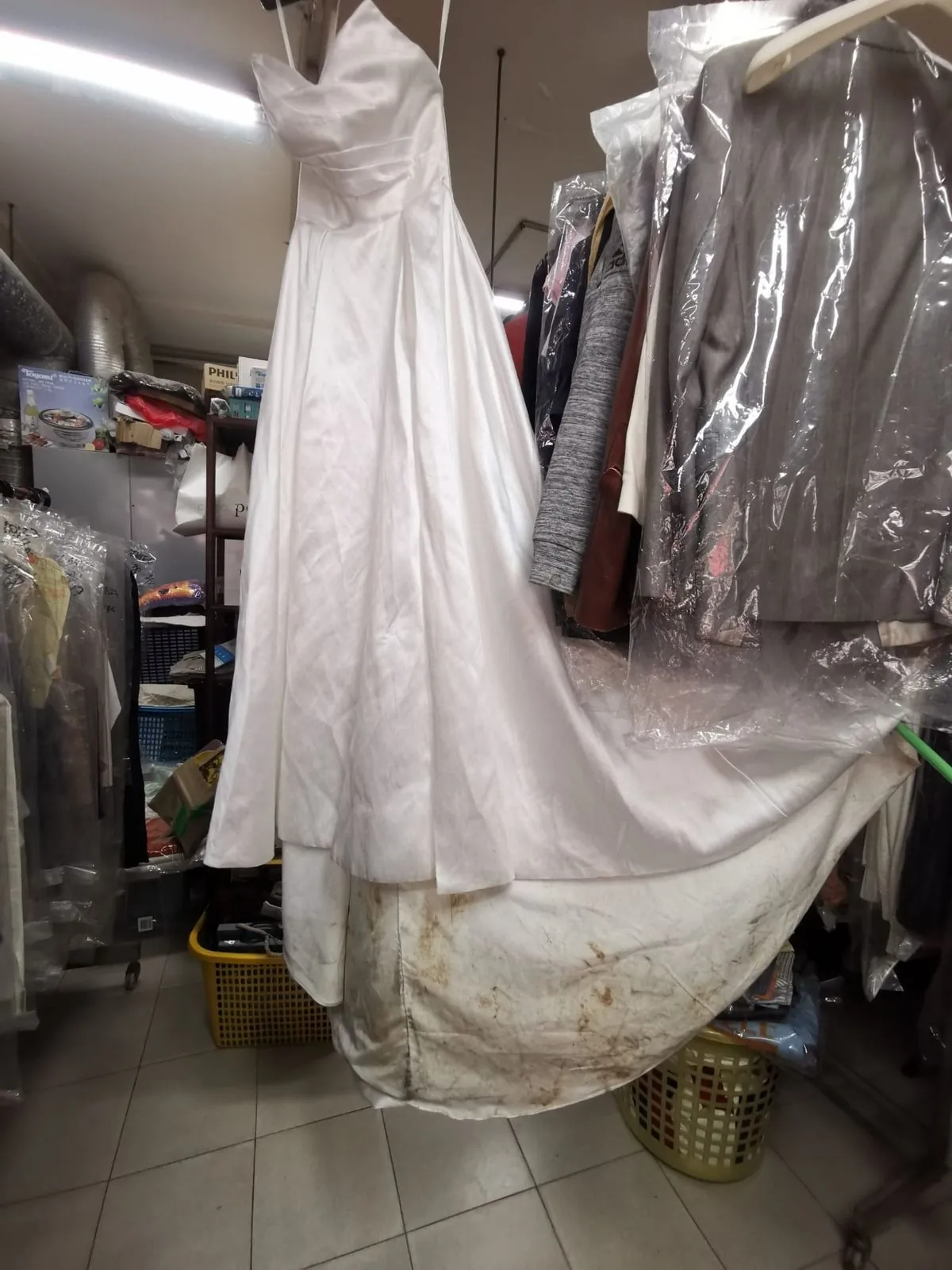
The underside of the flare, the satin underskirt and the lace at the hem had turned grey-brown, mostly from floors rather than mud. The gown is built from sequinned lace appliqués over tulle, so every treatment had to suit the lace, the sequins and the tulle at once. This page records what happened to this gown, not an outcome to expect from every wedding dress.
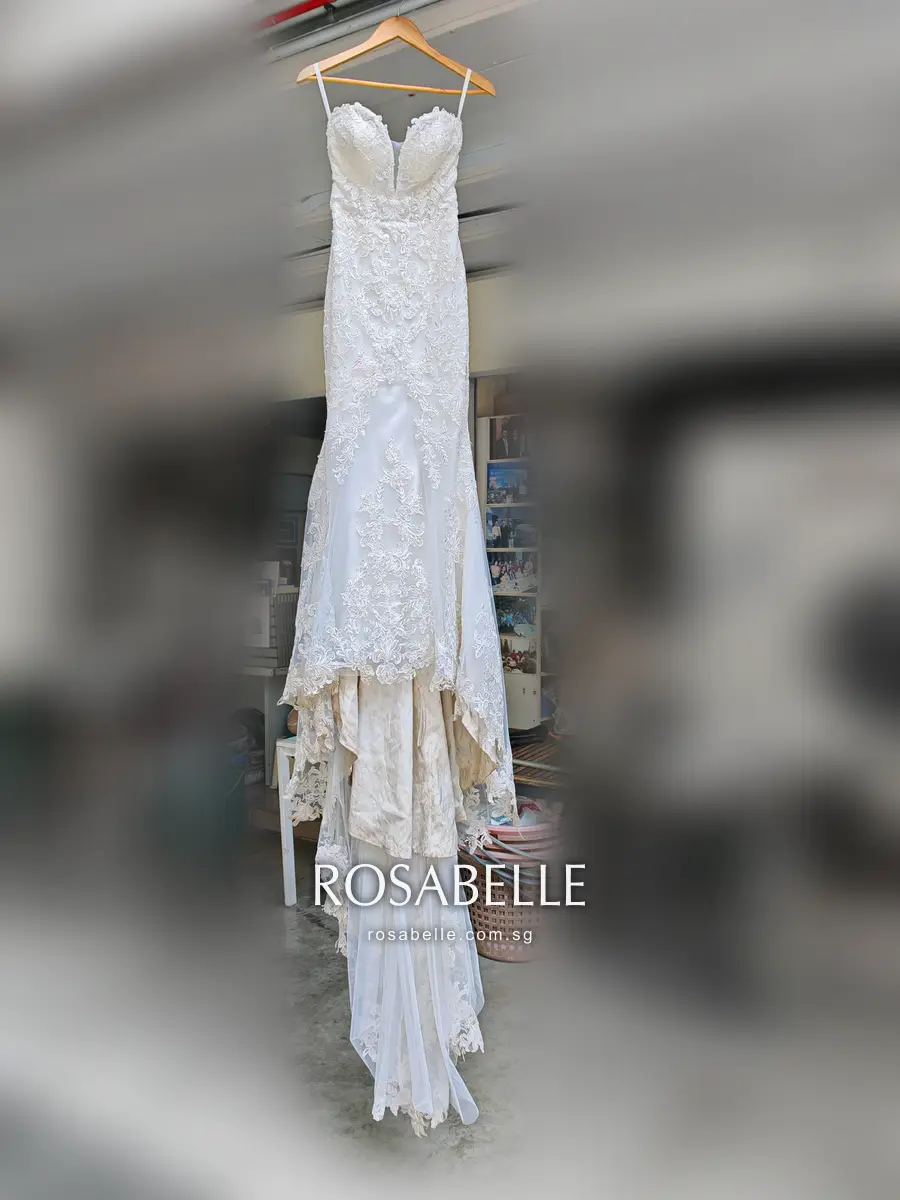
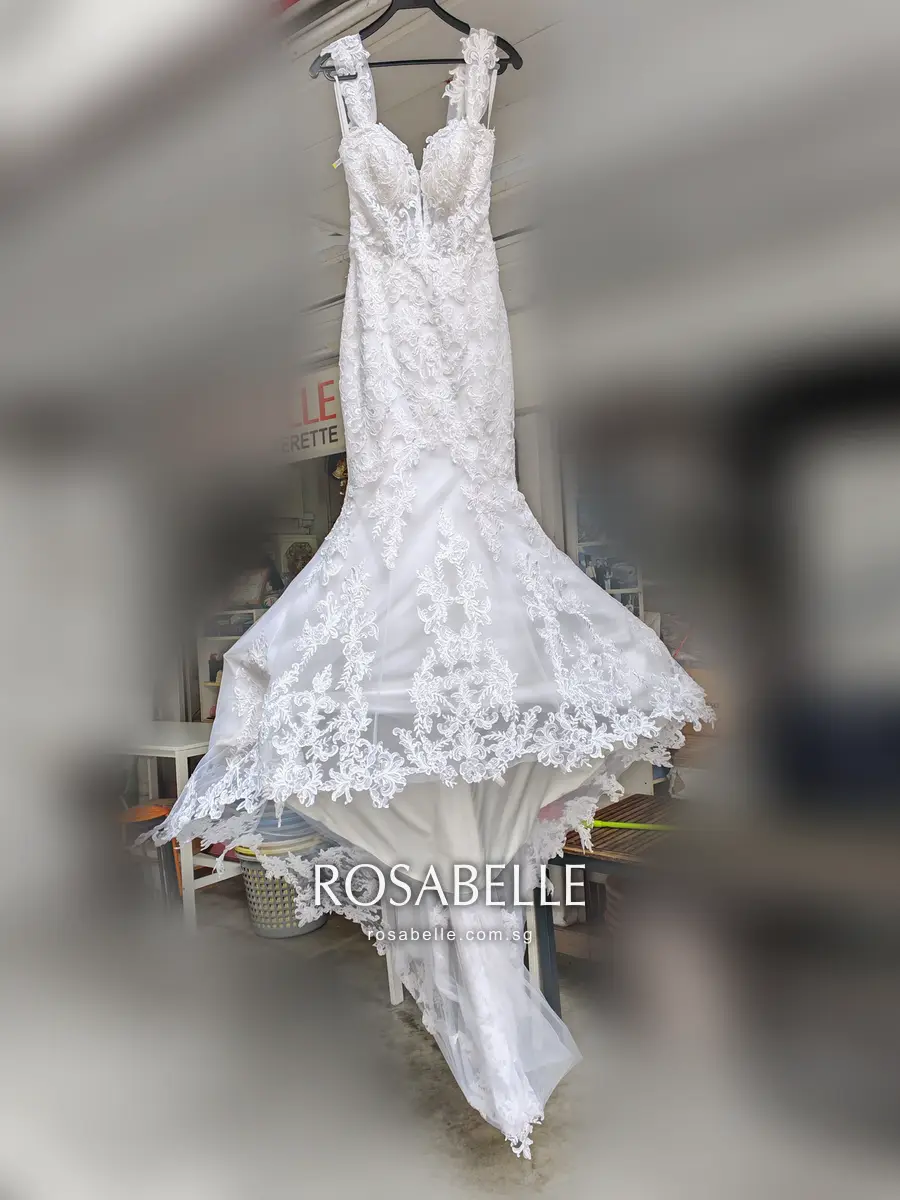
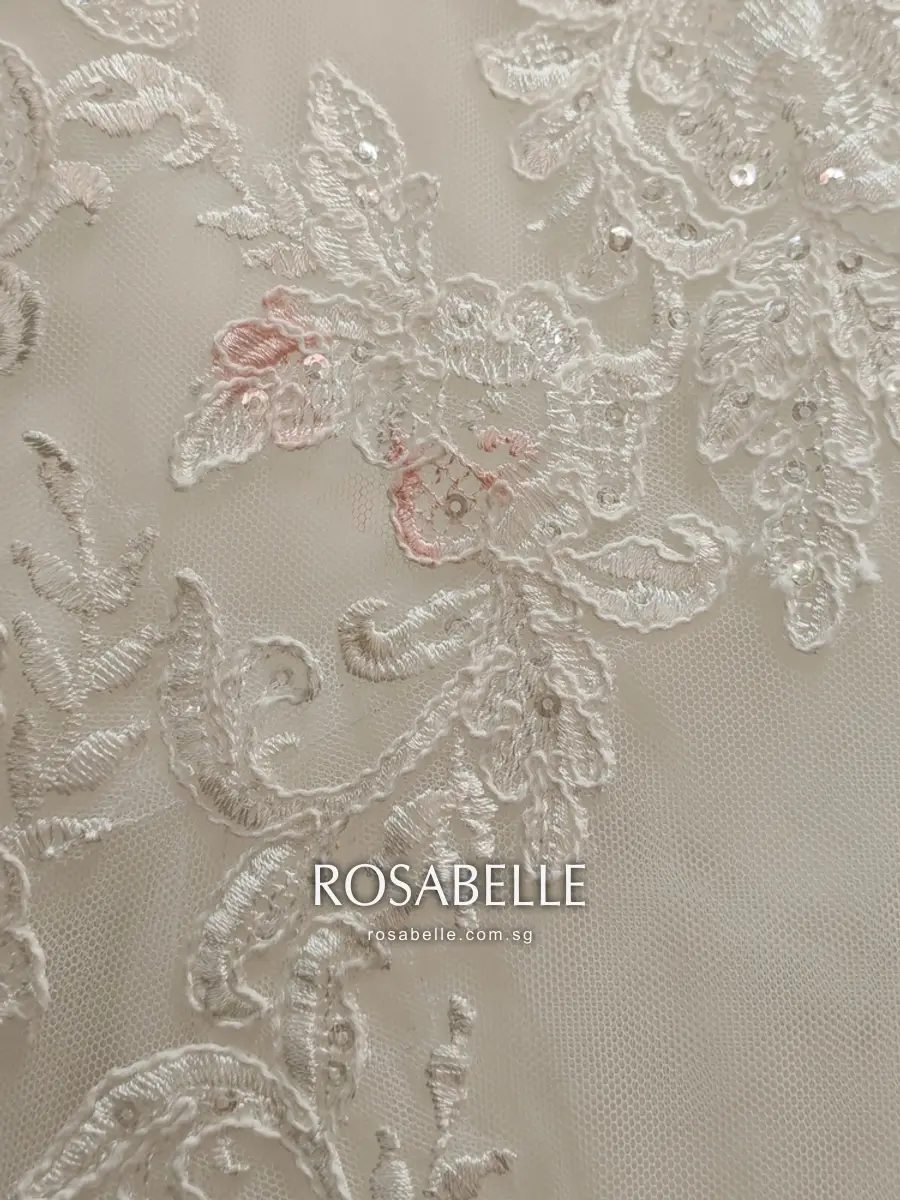
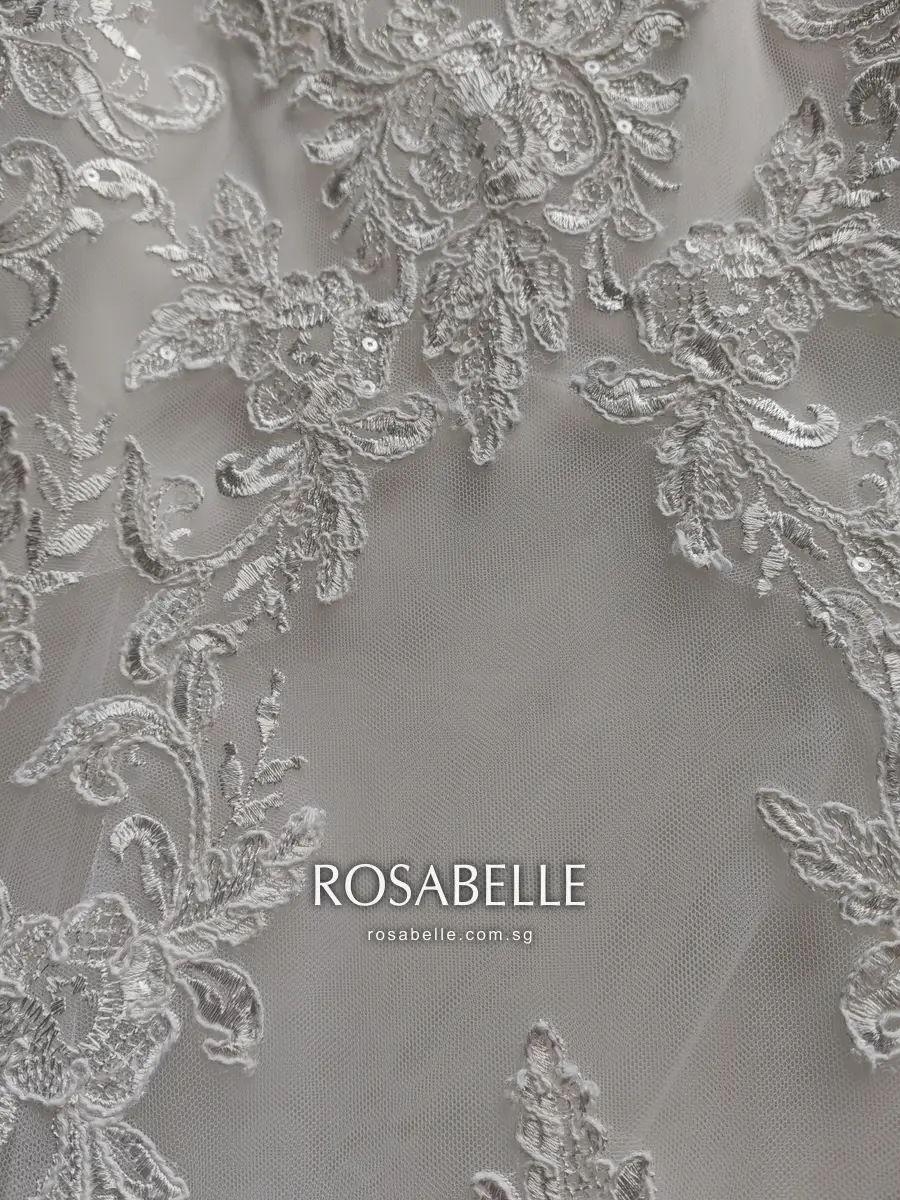
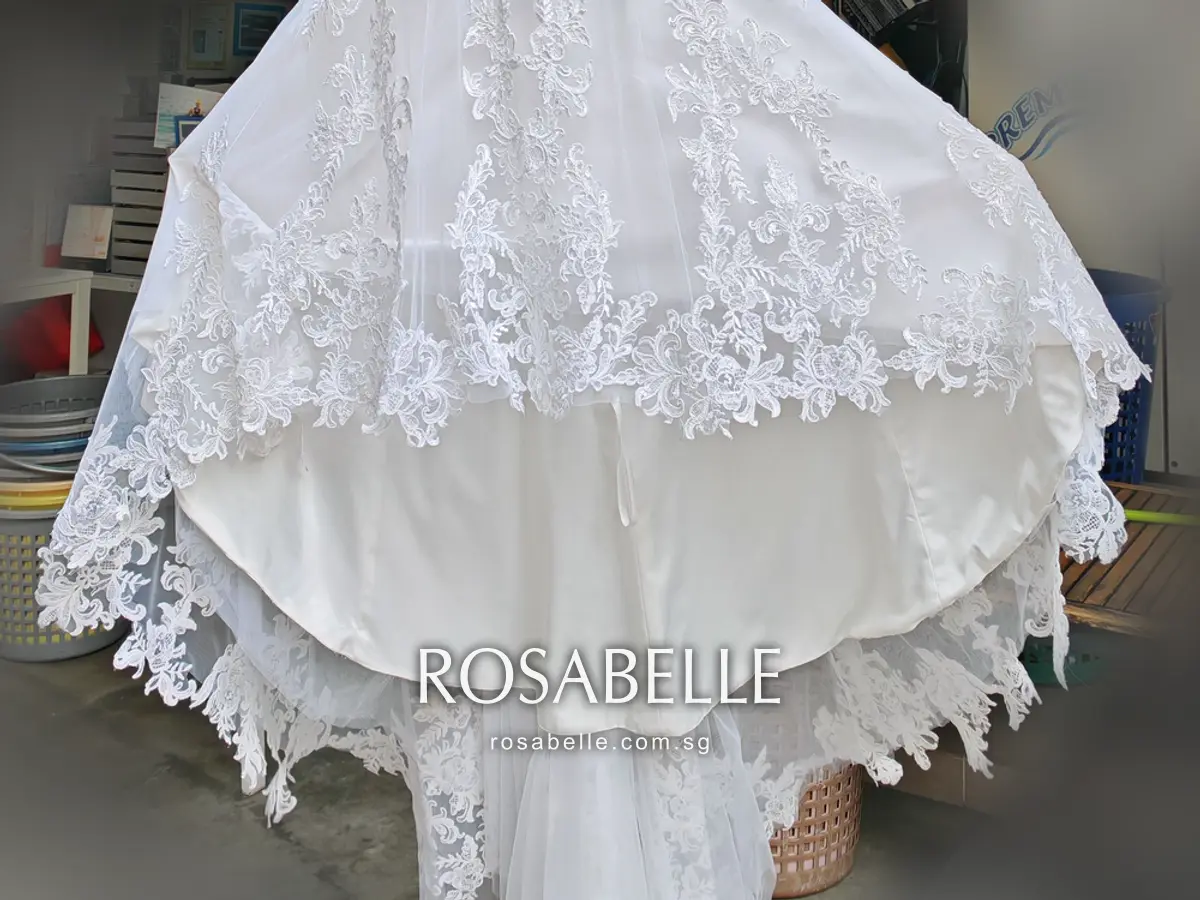
All photographs are shop records, shown as captured with no colour correction. The background of the two full-length frames has been blurred to keep other customers' items out of view; the gown itself is untouched. The white panel of the dry-cleaning machine behind the gown reads the same colour in both of those frames, so they can be compared directly. The close-ups were taken in different light and are a record of the marks and the soil, not of the exact shade.
What was the condition of the lace mermaid gown on arrival?
The gown came in after the wedding with two separate problems. The first was a pink-red mark across two flower motifs of the lace, sitting on the corded outlines and the embroidery thread. The second was soil at the bottom of the gown: the satin underskirt, the lace appliqués at the hem and the underside of the train had all turned grey-brown.
A fitted mermaid gown flares from the knee, so the underskirt and the hem sit close to the floor all day and collect whatever is on it. The soil here was mostly floor dirt, not mud. It was heaviest on the satin underskirt, which is hidden when the gown is worn and easy to miss until the gown is turned up.
Why are makeup and floor soil hard to clean from a lace wedding gown?
Makeup and lipstick carry colour in an oily base. Rubbing at them pushes the colour deeper into the thread and outwards into the surrounding fabric. On this gown, the surrounding fabric was open tulle, where a spread mark is hard to reverse.
Floor soil is a different problem. Dirt works into the satin weave and into the raised cords of the lace, and it is spread over a large area rather than in one spot. Cleaning it evenly matters: a hem that is only partly cleaned can leave a line where clean fabric meets soiled fabric.
The trims add a third constraint. Sequins, corded lace and tulle each react differently to cleaning. A treatment that suits the satin may not suit the sequins sewn onto the lace above it.
How did Rosabelle clean the gown?
Treating the mark on the lace
The pink mark needed a treatment of its own, chosen so that the colour would lift out of the lace rather than spread into the tulle around it. The work had to leave the sequins and the corded outlines of the motifs as they were.
Cleaning the underskirt, hem and train
The whole gown was cleaned, with particular attention to the underskirt, the lace at the hem and the underside of the train, where the soil was. The aim was an even colour from the knee to the end of the train, with no line where the soiling had stopped.
Finishing
The gown was finished and hung so that the flare, the lace edge and the train fell open, as in the after photograph.
What did Rosabelle deliberately avoid, and why?
- Rubbing the mark. Friction spreads an oily, coloured mark into open tulle and roughens the lace.
- Treating the hem as a spot. Working only on the darkest patches risks a visible edge between cleaned and uncleaned fabric.
- One treatment for every material. In our workshop experience, sequins and fine tulle are the parts of a lace gown most easily damaged, so they set the limits for the whole gown.
What was the result?
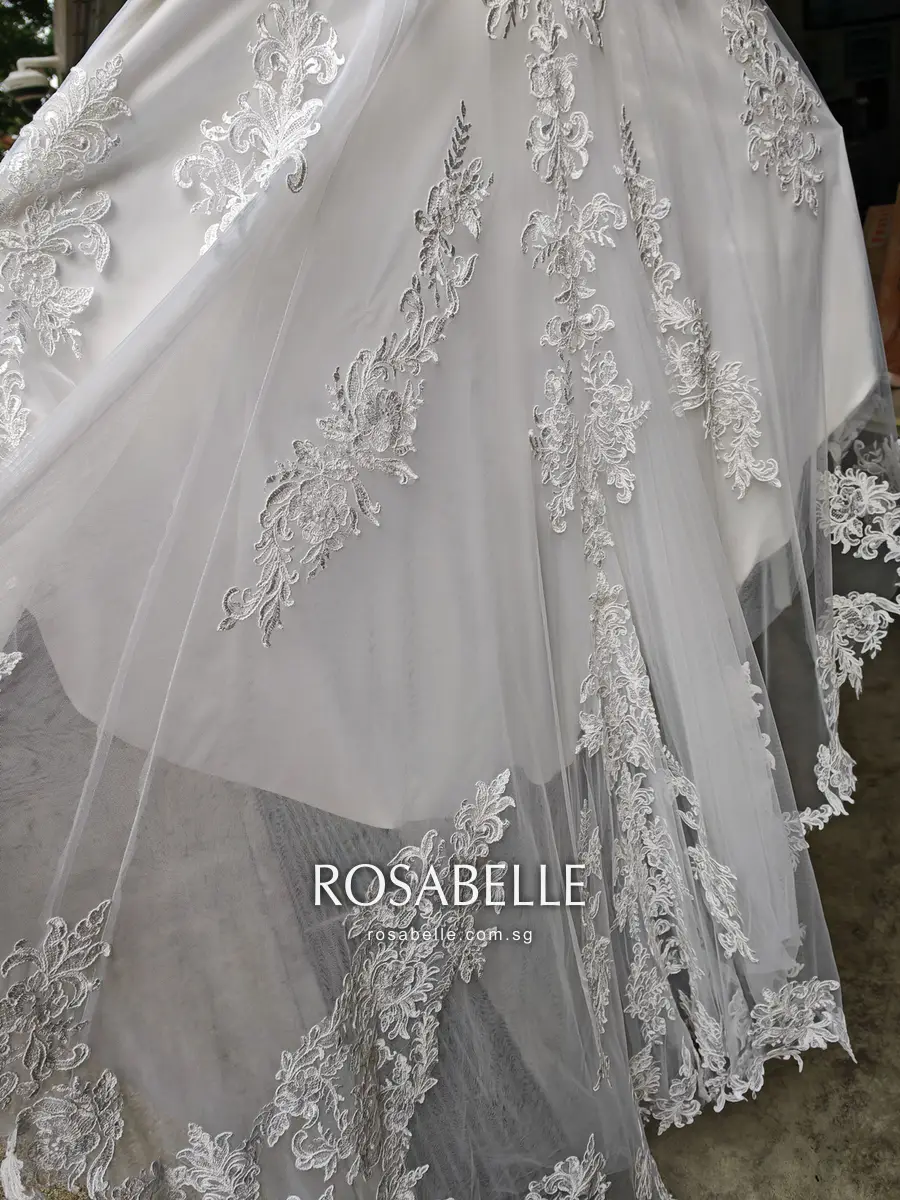
The photographs taken after cleaning show no pink left in the lace, and an even ivory on the satin underskirt, the lace hem and the train.
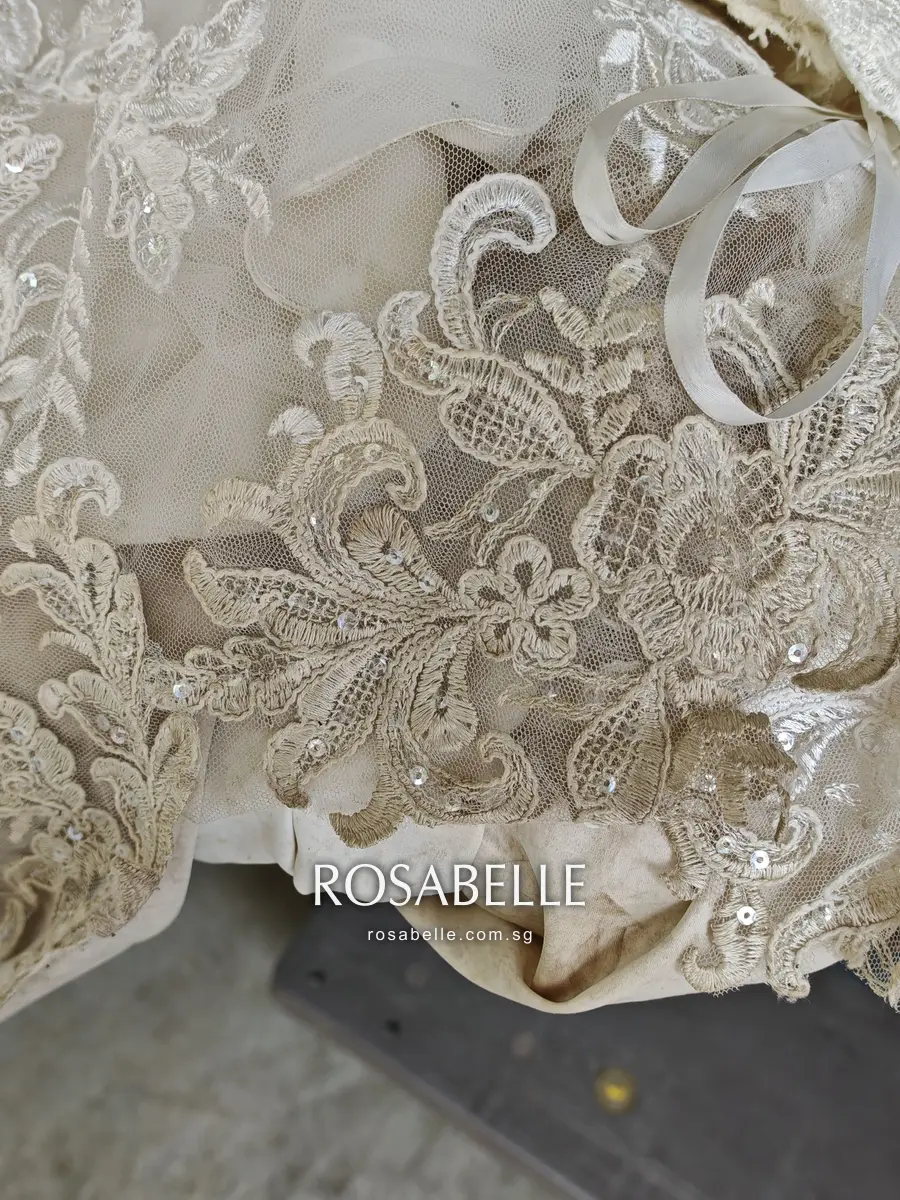
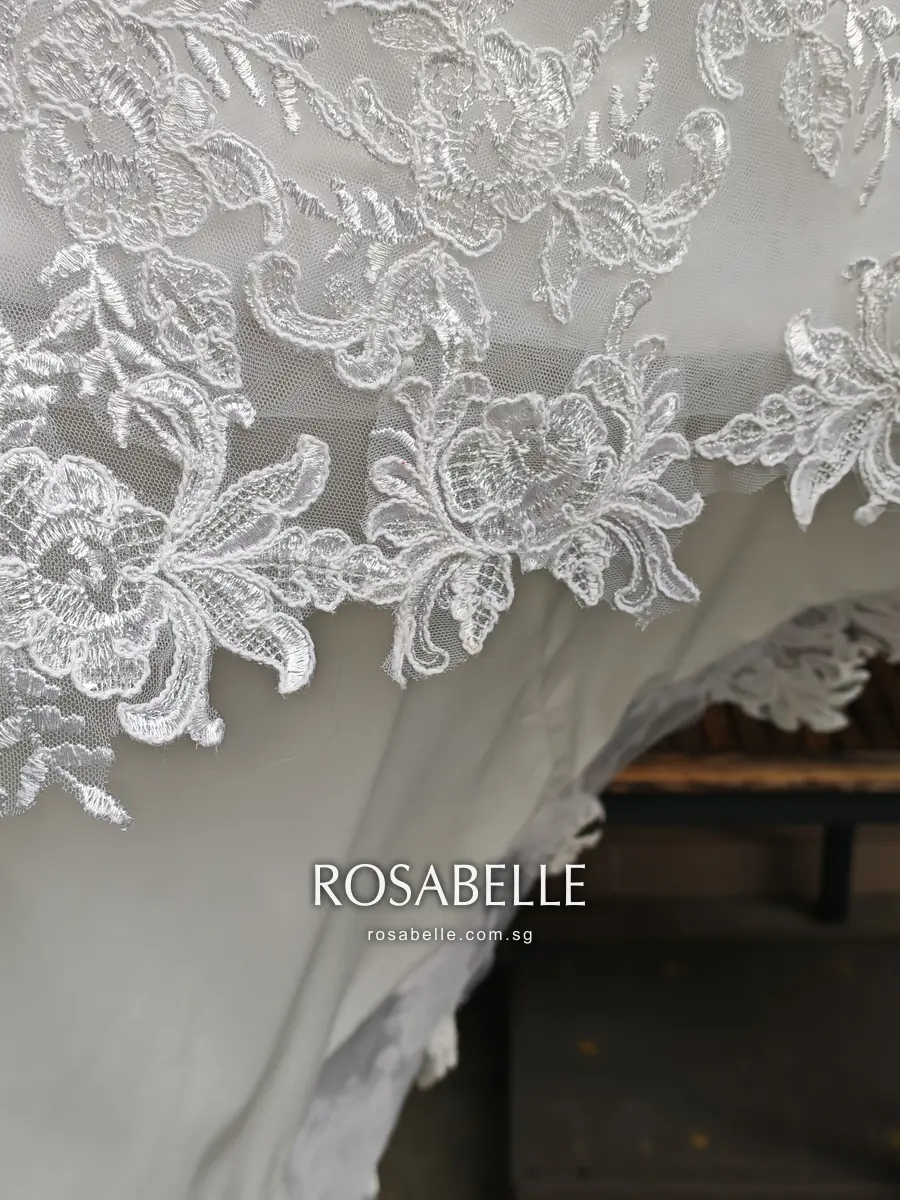
- The pink mark: no pink visible in the lace motifs.
- The underskirt: the grey-brown soil is gone from the satin and its scalloped hem.
- The lace hem and train: white again, with no line where the soil had been.
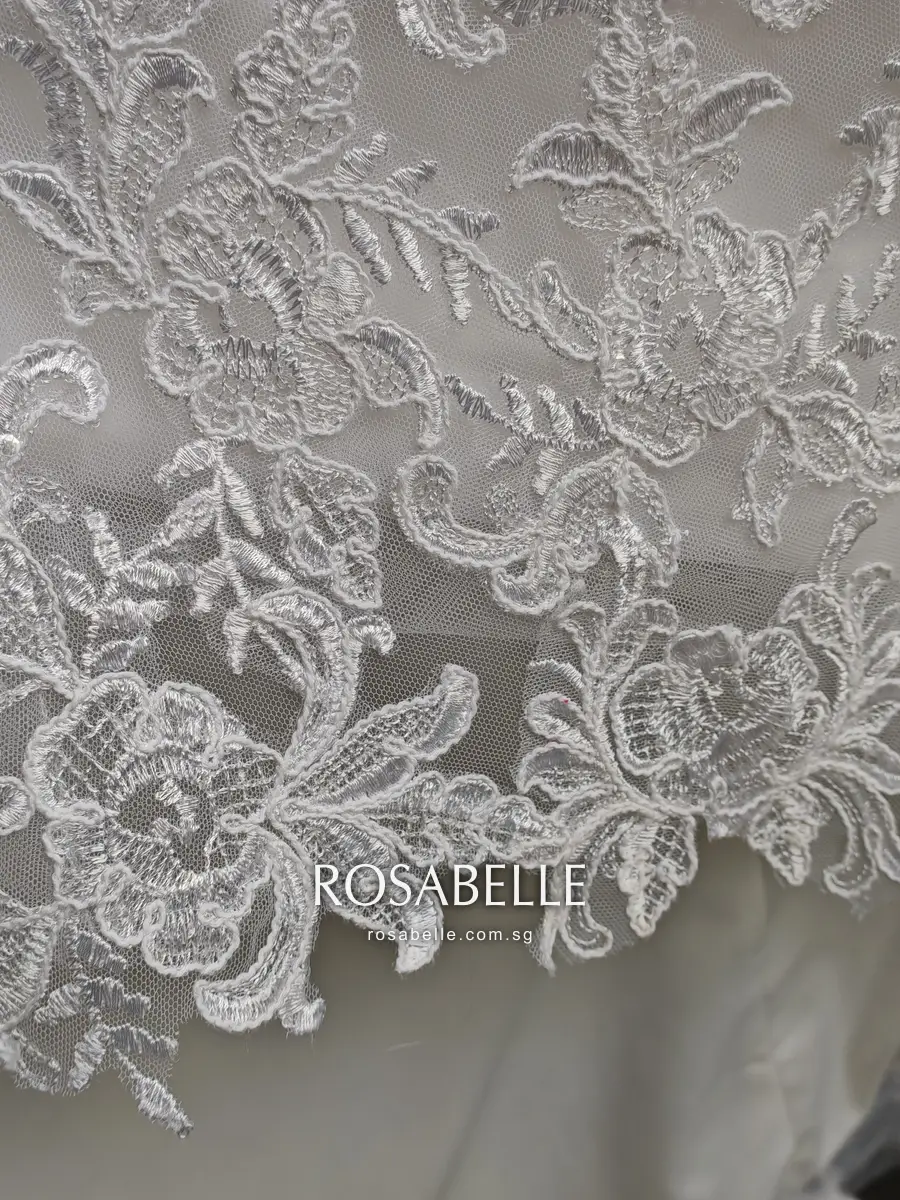
- The lace and sequins: intact, with the corded outlines standing clear.
What do the lace and embroidery look like after cleaning?
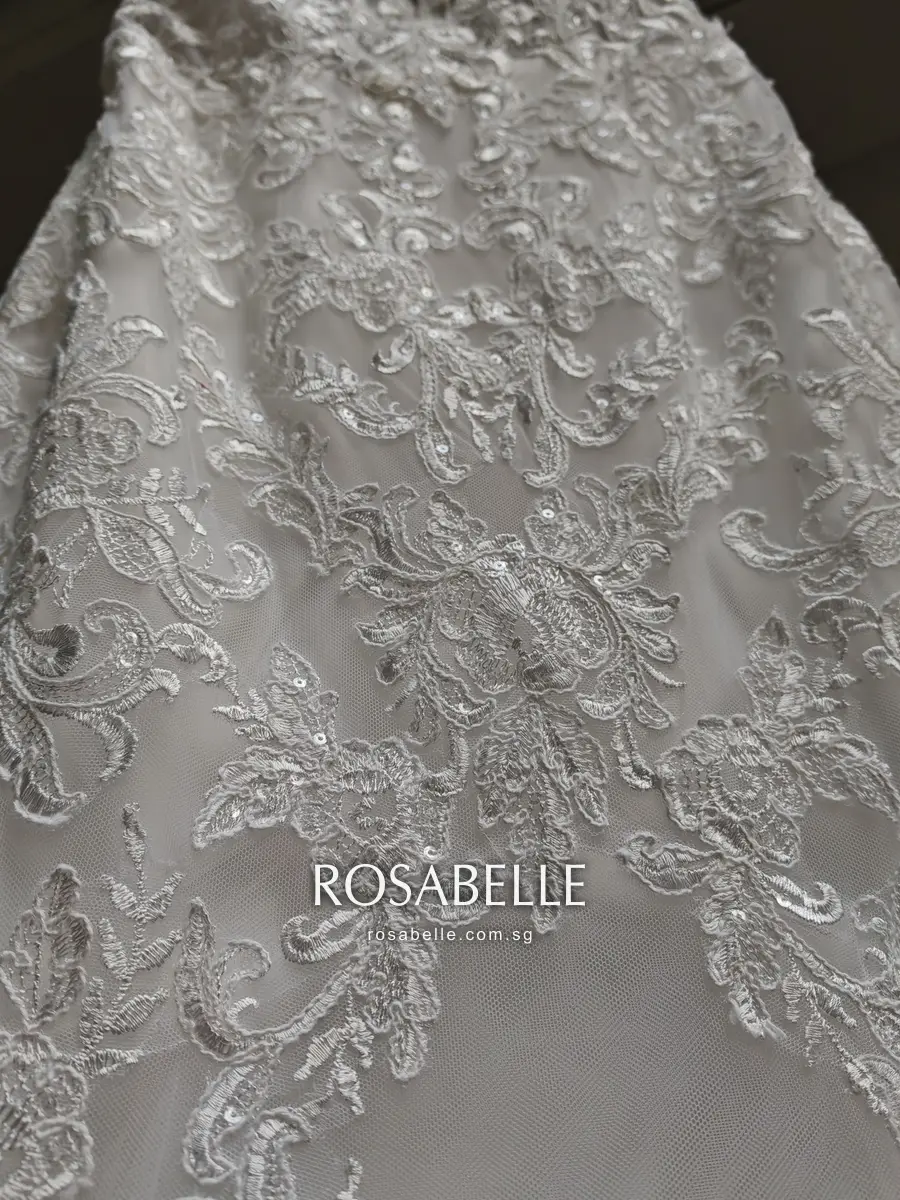
The lace on this gown is made of separate appliqués, flowers and leaves outlined in raised cord and scattered with small sequins, stitched onto tulle. They are dense across the skirt, spaced out in sprays down the train, and finish in a scalloped edge above the underskirt.
What does this case show about cleaning a wedding gown after the wedding?
Most of the soil on a gown is in places the wearer never sees. On this gown it was on the underside of the flare and the underskirt, and it was heavier than the outside of the gown suggested. Turning the gown up is the first check after the wedding.
It also shows that the trims, more than the stain, decide how a gown is cleaned. A mark on plain satin and the same mark on sequinned lace over tulle need different handling. The result here is evidence about this gown, not a forecast for every wedding dress.
How should you care for your wedding gown after the wedding?
Do:
- Bring the gown in for cleaning soon after the wedding, before marks have time to set.
- Turn the skirt up and look at the underskirt and the underside of the train.
- Tell your cleaner about any mark you know of, and anything already tried on it.
- Hang or lay the gown somewhere dry and out of sunlight until it is cleaned.
Don't:
- Rub makeup or lipstick with a wet cloth or wipe.
- Iron or steam over a mark before it has been removed.
- Leave the gown folded in a bag in a humid room.
- Wash a lace, sequinned or boned gown at home.
The honest note
Can every mark be removed from a wedding gown?
Not every one. This gown came in soon after the wedding, and its marks were soil and a likely makeup mark, which had not been set by heat or home treatment. Marks left for months, stains that have oxidised to yellow or brown, and trims that have already been damaged may not come back fully, and we tell you what to expect after assessing the gown. The close-up after frame of the mark was shot nearer and in different light from the before frame, so the two show the same area of lace at a different scale.
Case documented by Rosabelle Launderette's garment-care team. Case practitioner and technical review: Zach Lim.
Cleaned in-house at Rosabelle Launderette, Singapore, established 1998. This case records one gown in one condition and is not a guarantee of outcome.
Published and technically reviewed 17 September 2026.
Sources & further reading
Related wedding gown cases
More bridal cases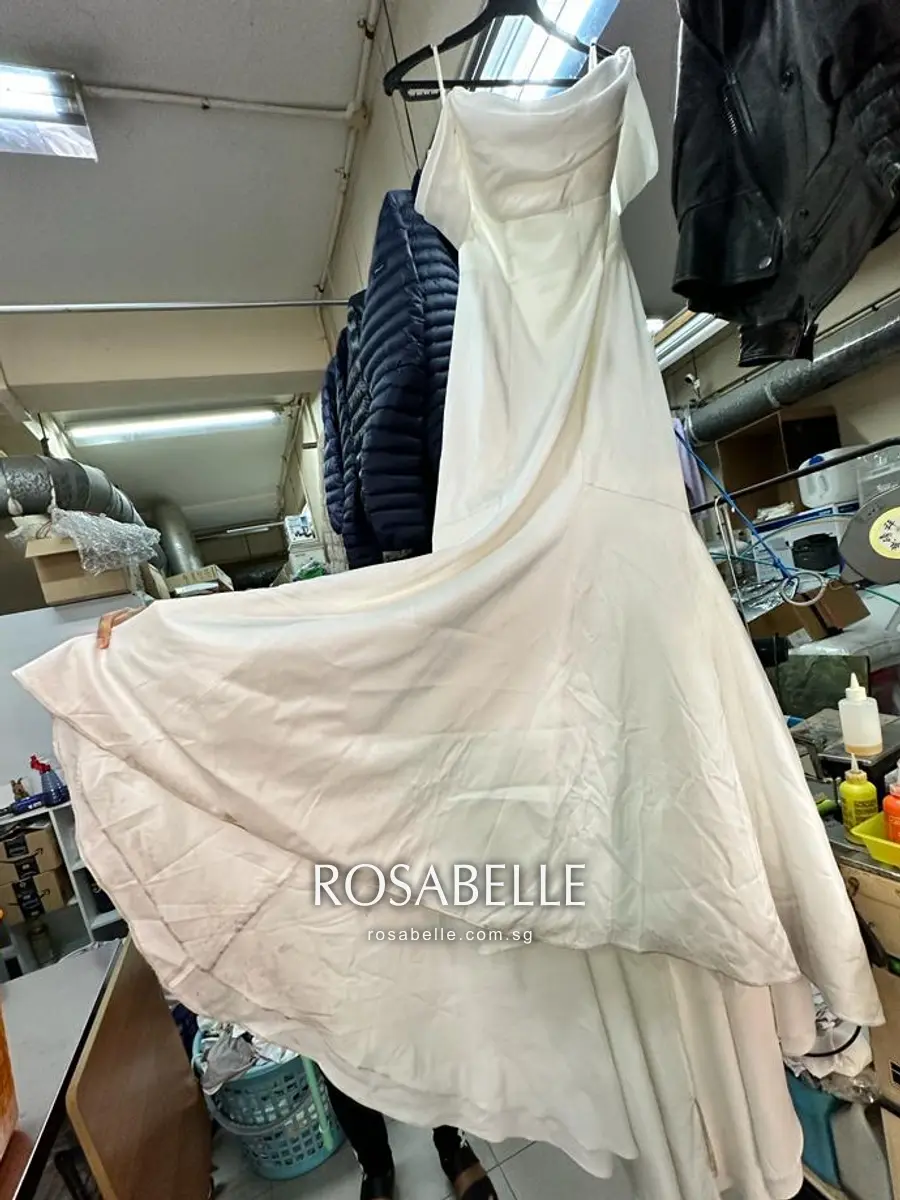

Common questions
Questions about cleaning a wedding gown after the wedding
How do you get makeup or lipstick off a wedding dress?
Blot, do not rub, and keep water, wipes and stain removers off it until you know what the fabric and trims are. Makeup and lipstick are oily and coloured, so rubbing spreads them into lace and tulle, and heat can set what is left. On this lace mermaid gown, a pink mark that was likely makeup or lipstick was assessed and treated at Rosabelle, and no pink was left in the lace afterwards.
How soon should a wedding dress be cleaned after the wedding?
As soon as you can after the wedding. The Canadian Conservation Institute notes that oils, food and drink stains and soil from use can oxidise and set over time, and that some soils feed mould. Singapore's humidity, with a mean of about 82%, makes waiting riskier. Some marks, such as spilled drinks, are hard to see at first and darken as they oxidise.
Can a dirty wedding dress hem be cleaned?
On this gown the soil was mostly floor dirt, and it sat on every layer that touched the ground. The hem and train came in grey-brown, on the satin underskirt as well as the lace, and both were cleaned back to an even ivory. What the soil is, how long it has sat and whether it was treated at home first all change the work.
Can a lace wedding dress with sequins be cleaned?
Yes, but the trims decide the method as much as the lace does. In our workshop experience, sequins, beads, glued stones and fine tulle each react differently, so the gown is assessed first and the treatment chosen to suit every material on it. This gown had corded lace appliqués with sequins over tulle, and they came back intact.
How much does wedding gown cleaning cost in Singapore?
At Rosabelle, wedding gown cleaning starts from $190 and rises with the construction of the gown and how soiled it is. A routine gown clean takes five working days and upwards. A gown with stains, a long train or heavy embellishment is quoted after inspection.