
Journal · Bridal restoration ·
Wedding Gown: Removing Floor Soiling From the Hem and Train
The grey band a long train picks up off the floor in a single evening, taken back to white.
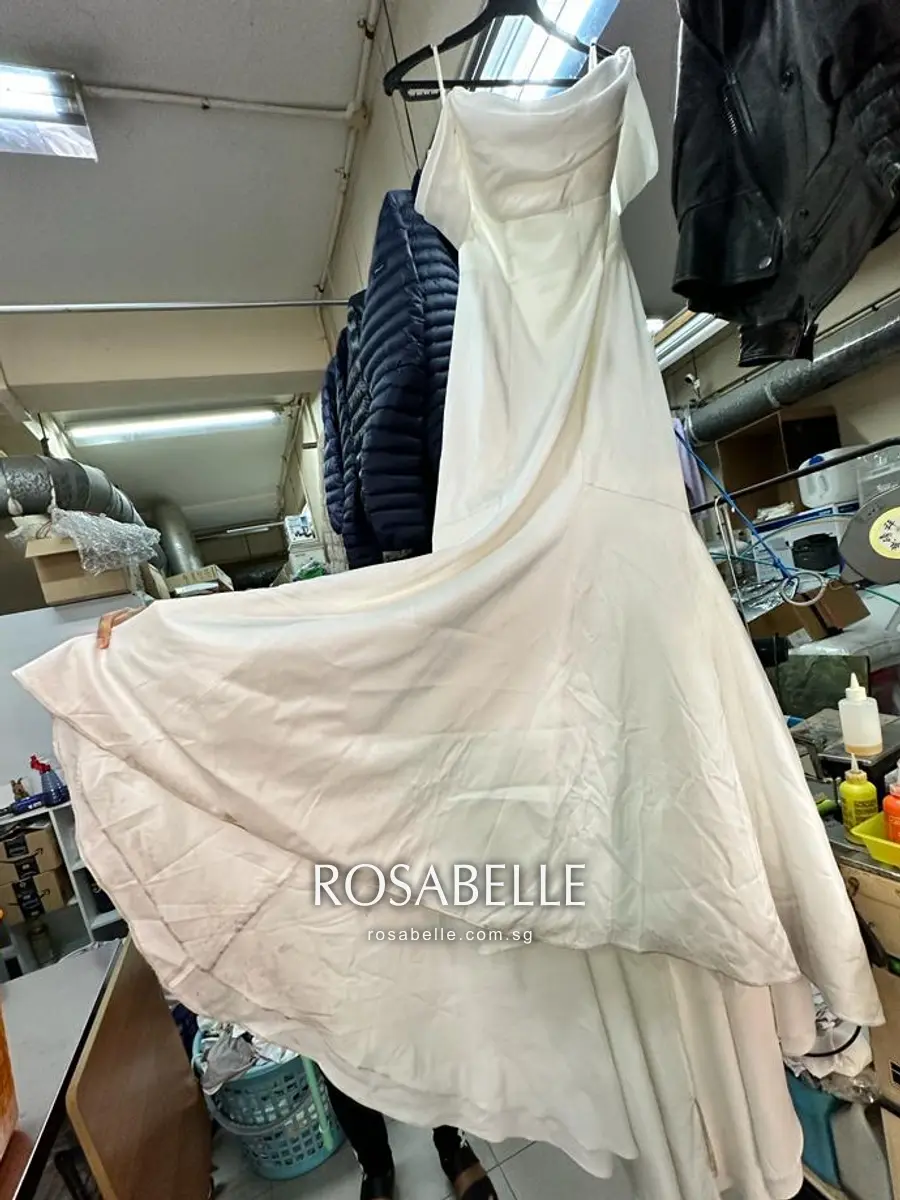
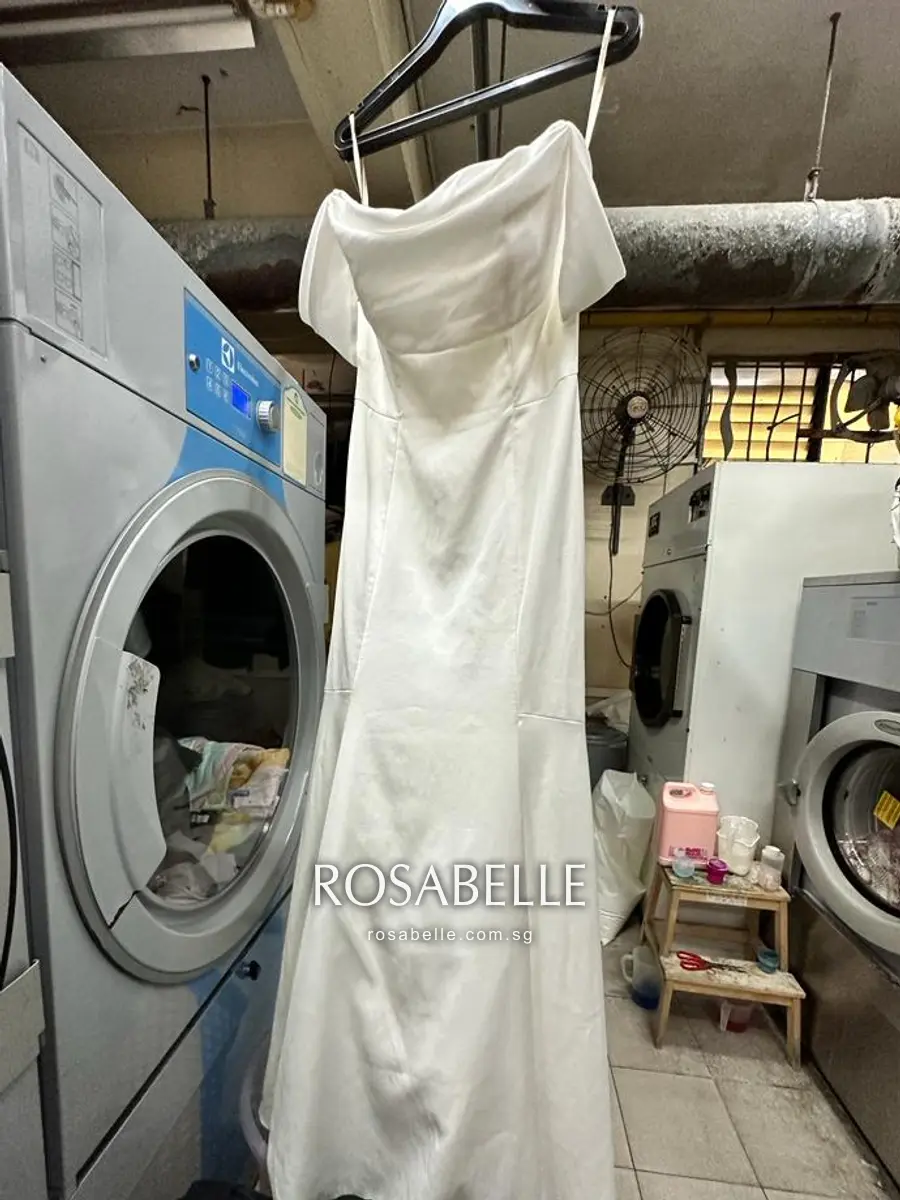
What came in
A strapless satin gown with a very long train and a scalloped underlayer, in shortly after the day itself. The gown was sound and the body of it was clean. All the damage was in the last few inches: a grey-brown band running the length of the hem and right around the sweep of the train, with the underlayer edge greyer than the satin above it.
Why the hem takes it all
A train is fabric dragged across the floor for several hours, and it collects whatever the floor has. Dust, grit, shoe polish, spilled drink, the residue of whatever the venue was cleaned with. None of that needs an outdoor ceremony or a rainy carpark. An ordinary indoor reception at a Singapore hotel produces the same tideline. It also lands on the part of the gown that is hardest to treat, because a hem is usually several layers thick, often weighted or horsehair-braided, and the soiling is ground into the weave by the weight of the fabric moving over it rather than sitting on the surface.
The work
The hem and train were treated as their own job before the gown was cleaned through, so the ground-in soiling was released rather than driven further in. The layered skirt was then dried under control, because a train this size holds moisture between its layers and uneven drying replaces the soiling with watermarks. Finished by hand and returned in a hanging cover.

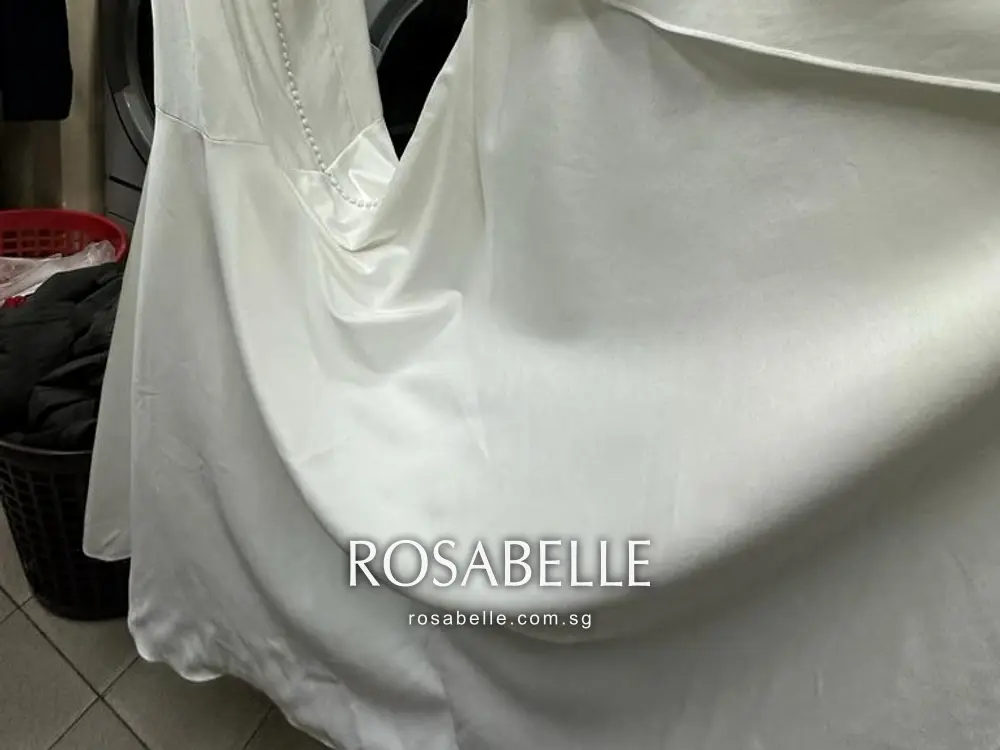
How far the train runs
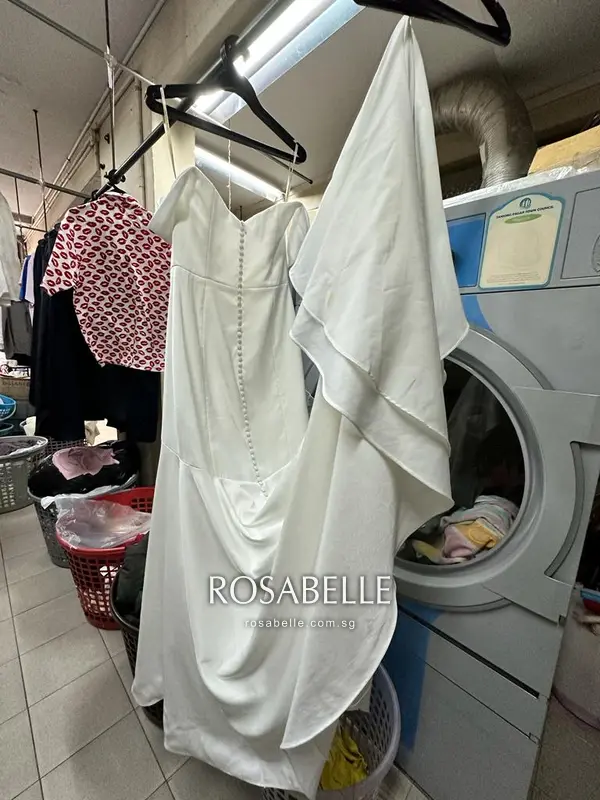
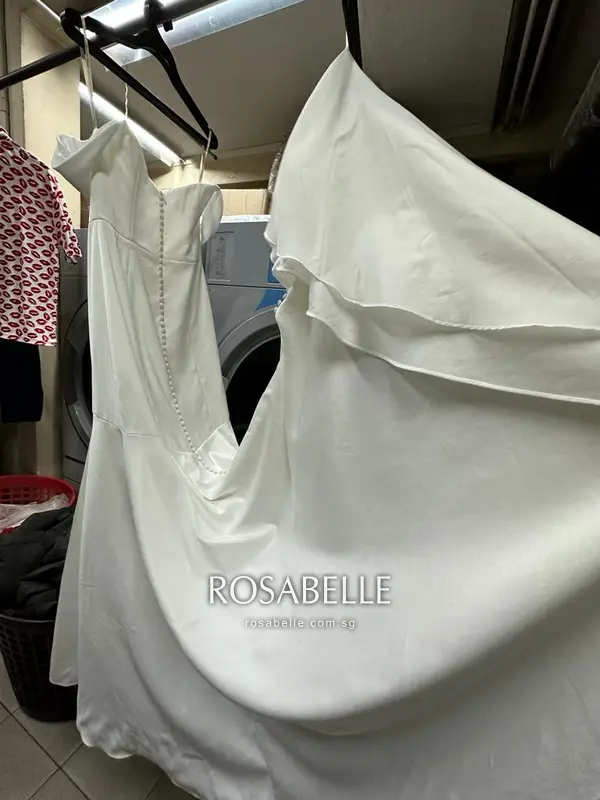
The train is most of this garment. It carries a scalloped underlayer beneath the satin, so the soiled edge that came in was a long run of fabric in two layers rather than a border along a hem, and every inch of it had to be treated and then dried without watermarking. These are the after frames.
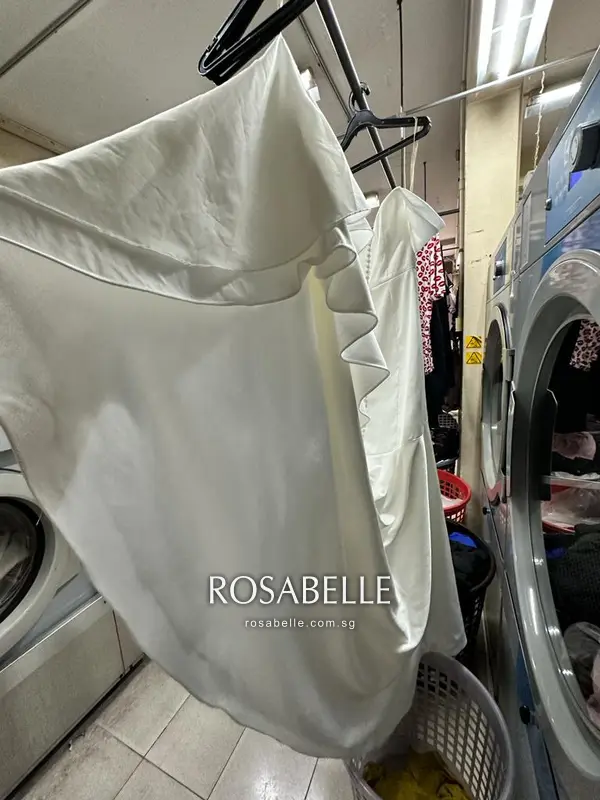
The honest note
This gown came in soon after the wedding, which is most of why it went as well as it did. Floor soiling left for months oxidises and bonds, and in Singapore humidity, which averages over 80 per cent, a gown left in the garment bag it went home in can come back yellowed and mildewed as well as grey. Two weeks is the usual advice and it is good advice here. As with every case in this journal, this is a record of one gown rather than a promise about the next. A note on the photographs: they are working records from the shop, taken on the day at whatever bench or rail was free, so the light and the background change between frames. Nothing has been colour-corrected, lightened or retouched.
Case practitioner and technical review: Zach Lim.
Related cases
More like this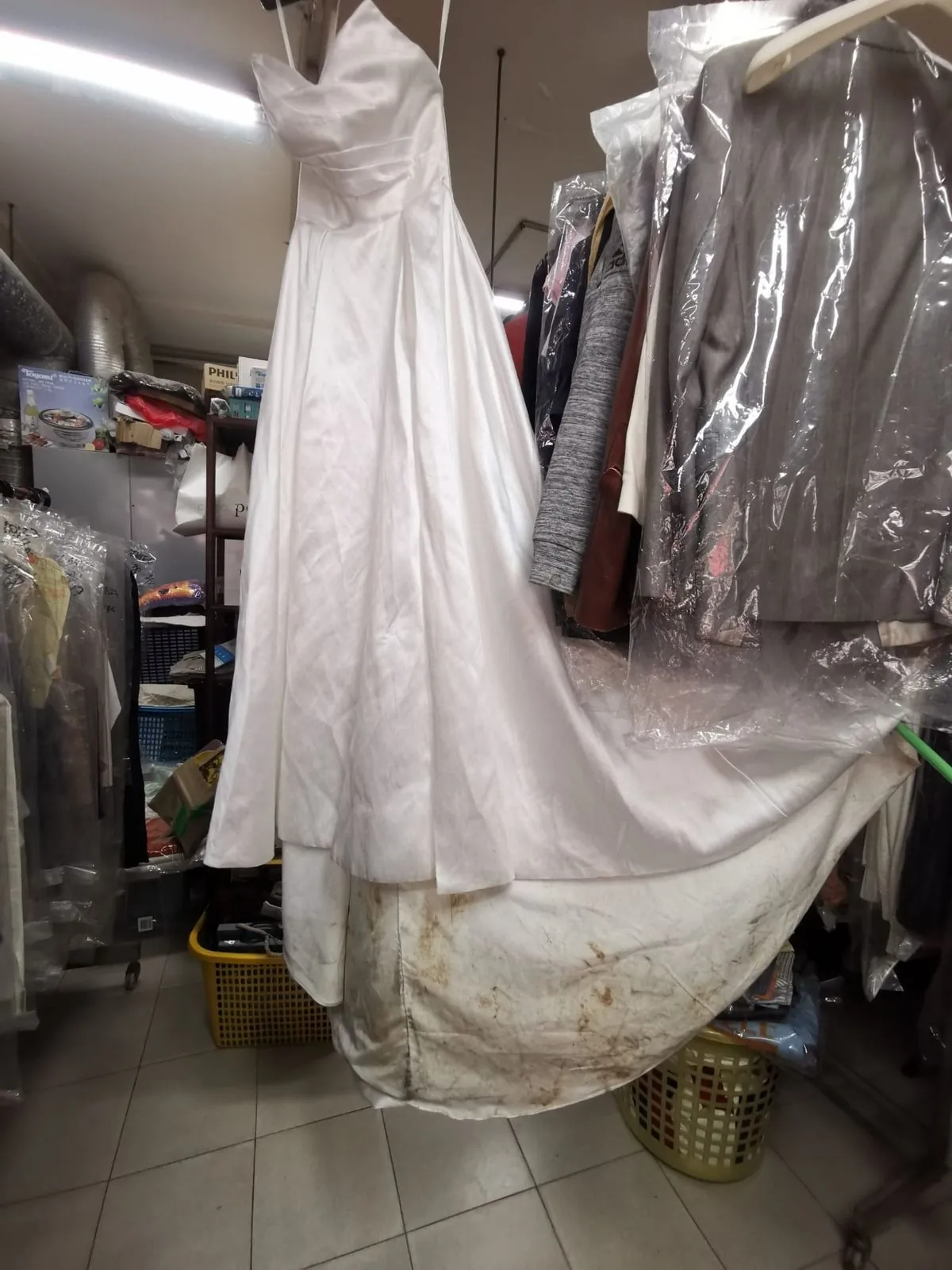


Common questions
Frequently asked
How do you clean a dirty wedding dress hem?
The hem and train are treated as their own job before the gown is cleaned through, because floor soiling is ground into the weave rather than sitting on the surface, and cleaning the gown as a whole first would drive it deeper. After treatment the layered skirt has to be dried under control so the layers dry evenly, otherwise watermarks replace the soiling that was removed.
Why does a wedding gown hem get dirty even at an indoor wedding?
Because a train is fabric dragged across the floor for several hours, and it picks up dust, grit, shoe polish and whatever the venue floor was cleaned with. An outdoor ceremony is not needed to produce the grey tideline along the hem; an ordinary indoor reception does it. It lands on the hardest part of the gown to treat, since a hem is usually several layers thick and often weighted or braided.
How much does wedding gown cleaning cost in Singapore?
At Rosabelle wedding gown cleaning starts from $190, confirmed after the gown has been inspected. The final figure depends on the construction, the fabric and the scope of the work, since a heavily soiled hem, beading or a long layered train all add to it. Quotes elsewhere in Singapore commonly run from around $120 to $400 depending on what is included.
How long does wedding gown cleaning take in Singapore?
Five working days and upwards at Rosabelle, depending on the gown and the work involved. A heavily soiled hem takes longer, because the treatment is done in stages and a layered skirt has to be dried under control so the layers dry evenly. The timeline is confirmed at drop-off once the gown has been assessed.
How soon after the wedding should I clean my gown?
Within about two weeks if you can manage it. Floor soiling, perspiration and drink spills are grey or colourless when fresh and oxidise into set yellow-brown staining over months, so a gown left in the bag it went home in is a harder job than the same gown a fortnight later. In Singapore humidity that window is shorter than most brides expect, and mildew becomes a risk as well as yellowing.
How should I store a wedding gown in Singapore?
Clean it first, then keep it somewhere cool, dark and as dry as you can manage, wrapped in acid-free tissue rather than left on a wire hanger. Do not leave it sealed in the plastic bag it came home in, because plastic holds moisture against the fabric and Singapore humidity averages over 80 per cent, which is what turns storage into yellowing and mildew. Check on it once a year.