Journal · Case study · Leather care · Published · Updated
Removing Sweat Odour From a Massimo Dutti Leather Jacket in Singapore
Removing sweat odour from a leather jacket without changing the leather means treating both the leather and the lining, on a hide that is sound. Persistent odour in a worn leather jacket usually sits in the lining and the hide rather than on the surface, so airing and fragrance rarely clear it.
In this Rosabelle case, a tan Massimo Dutti jacket lost its sweat and musty odour while its colour, finish and handle stayed the same. The outcome is specific to this jacket's condition.


What was the condition of the Massimo Dutti leather jacket on arrival?
A short tan leather jacket, softly finished, with a fabric lining and a zip front. The hide was sound: no mould bloom on the surface, no staining, no cracking at the elbows or the collar fold. By eye it was a jacket in good order.
It smelled of two things at once: a musty note, and under it the staler smell of perspiration that had gone into the jacket over a long stretch of wearing. The owner had stopped wearing it. Nothing was damaged; it had become unwearable for a reason nobody could see.
Why does sweat odour stay in a leather jacket?
The lining takes perspiration first, because it is the textile layer pressed against the body; the hide behind it absorbs what comes through. In our workshop experience, what remains in the material, including salts and skin oils, is what the smell comes from, and the lining usually holds most of it.
In a warm, humid room that residue keeps the odour going, and humidity also favours mould.
Airing a jacket on a balcony moves air past the surface but does little about residue held inside the hide and lining. A scented spray adds a second smell on top of the first. Persistent odour often requires treatment of both the lining and the leather rather than surface masking alone.
What made this jacket difficult to clean?
The risk was to the surface of the hide. In Rosabelle's assessment, a leather's colour and finish sit in a thin layer near the top, and a treatment aggressive enough to strip odour-producing residue quickly can take that layer with it. The jacket would come back lighter, uneven along the seams and edges, or flatter in sheen. Cleaning also removes some of the oils that keep a hide supple, and a hide dried too quickly can stiffen.
The measure of success was therefore that the jacket should look unchanged, with only the odour gone.
How was the odour treated?
Assessing the hide and its finish
The hide was checked for condition and finish before treatment, and the strength of treatment was set to what this hide was assessed as able to take.
Treating the hide and the lining separately
The lining and the hide were treated separately and to different requirements, because the textile lining and the leather tolerate different treatment.
Drying under control
Drying was slow and controlled. Rushed drying is a common cause of stiffness and cracking in leather.
Reconditioning the hide
Cleaning takes some of the natural oils out of a hide along with the soil, so the hide was reconditioned in stages afterwards to bring its suppleness and handle back to what they were, not to a glossier version. Reconditioning is part of the cleaning process. It does not recolour the leather or recoat its finish; Rosabelle does not offer recolouring or refinishing.
What did we deliberately avoid, and why?
- Airing or sun-drying as the treatment. Air movement does not reach residue inside the material, and light and heat can fade dyes and dry out skin materials.
- Fragrance or odour sprays. They mask the smell and leave the source in place.
- A stronger, faster clean. It would lift residue sooner but put the colour and finish at risk.
- Fast drying. It risks leaving the hide stiff.


The back is the panel to check on a jacket like this: it is the largest continuous area of hide, and any lightening shows first along the yoke seam and the centre-back join.
What was the result?
The odour was removed. The colour, surface finish and handle of the hide were unchanged, and no lightening appeared along the seams of the back panel.
On a leather odour job, an unchanged-looking hide is evidence the treatment was controlled. The photographs are hard to tell apart for that reason.
What does this case teach?
Odour in a worn leather jacket is a problem of what the lining and hide have absorbed, not of the surface. The useful test of a leather clean is what did not change: colour depth, sheen, suppleness and the seams.
How should you look after a leather jacket after wearing it?
Do:
- Store it out of sealed plastic, with airflow.
- Keep silica gel nearby in a closed wardrobe.
- Keep it out of direct sun.
- Have it cleaned before it goes away for a long stretch, rather than after.
Don't:
- Machine wash it.
- Spray vinegar or fragrance onto the lining or hide.
- Leave it in the sun to dry out a smell.
The honest note
What limits odour removal on other leather jackets?
Full odour removal from leather is difficult and we do not promise it. This jacket cleared because the hide was in good condition, the finish was intact, and no mould growth was visible. A musty smell alone does not confirm that mould is present, and mould is not always visible by the time a piece arrives, because it may already have been wiped off. Where mould has stained a hide, the staining is usually permanent even after the growth is gone. A hide already cleaned aggressively elsewhere has less finish left to work with. Cleaning also does not repair colour wear, cracking or peeling in the finish.
Tanning method, previous treatments, storage and wear all shape what a hide will tolerate, and two jackets that look identical can behave differently. Every piece is assessed on its own before we start.
Case documented by Rosabelle Launderette's garment-care team. Case practitioner and technical review: Zach Lim.
Cleaned in-house at Rosabelle Launderette, Singapore, established 1998. This case records one garment in one condition and is not a guarantee of outcome.
Updated 18 September 2026: summary and headings rewritten; humidity and mould statements now cite their sources.
Sources & further reading
Related leather cases
More like this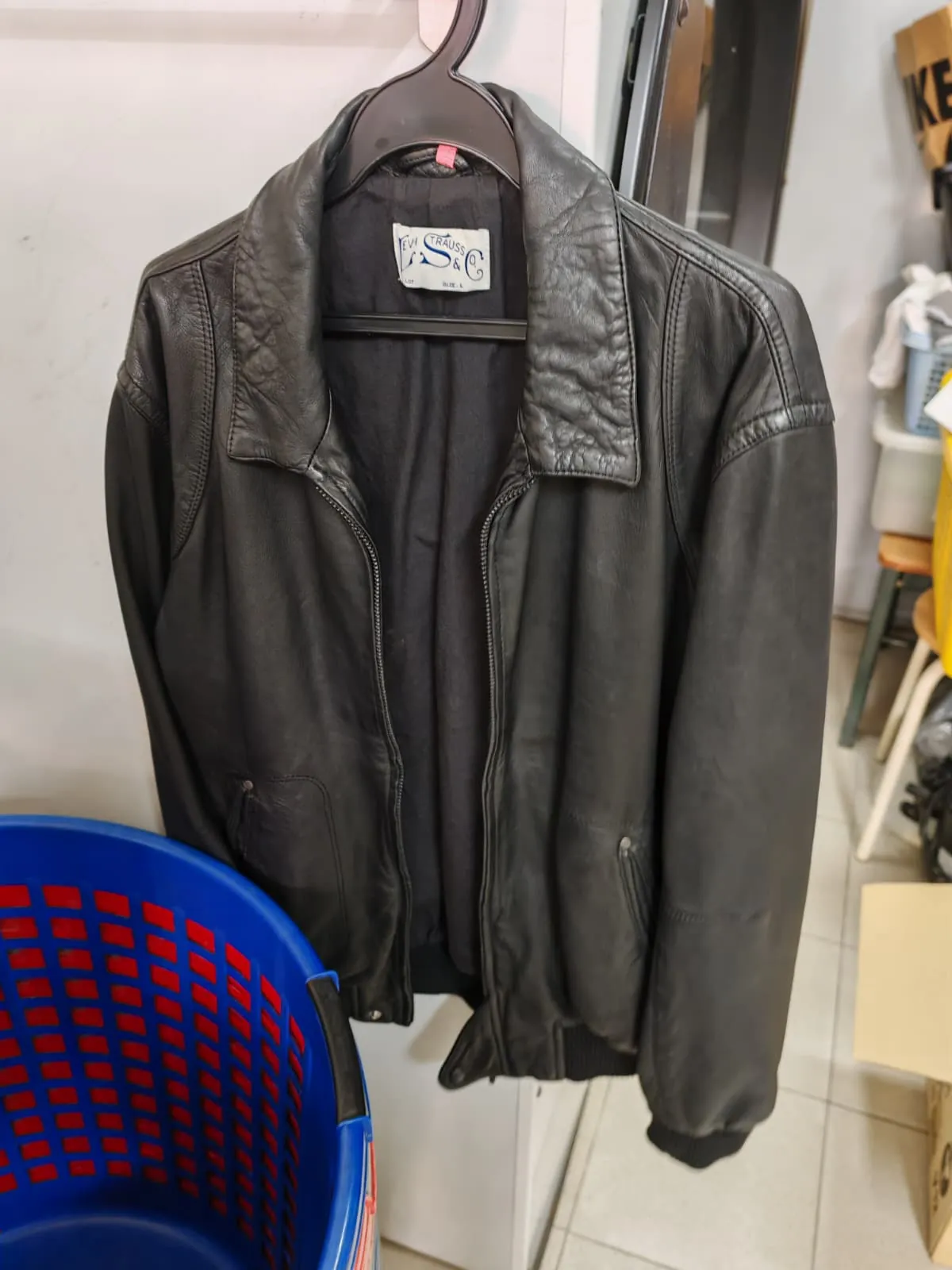
Common questions
Questions about leather jacket odour
Does cleaning a leather jacket change its colour or finish?
It should not. Colour and surface finish sit near the top of the hide, and a treatment strong enough to lift odour quickly can take some of that layer with it, leaving the jacket lighter, patchier, flatter in sheen or stiffer. A properly cleaned jacket should look as it did before. On this Massimo Dutti jacket the before and after photographs are deliberately hard to tell apart: the colour and grain did not change, and only the odour went.
How do you get a sweaty smell out of a leather jacket?
Persistent sweat odour usually needs the source removed from both the lining and the hide, rather than airing or spraying the jacket. Perspiration passes through the lining into the underside of the leather, and the residue it leaves can keep producing odour in humid conditions. On this jacket the hide and the lining were treated separately, dried under control and the hide reconditioned afterwards. Results depend on the hide, its finish and how long the odour has been present.
Does baking soda or vinegar remove the smell from a leather jacket?
Not reliably, and vinegar carries its own risk. Both act mainly on odour at a surface, while the smell in a worn leather jacket is usually held inside the lining and the hide. Diluted vinegar can lighten some linings and may affect a leather finish it touches. If a jacket still smells after a few days of airing in shade, the source is probably inside it, and a professional assessment of the hide and lining is the safer next step.
Should you hang a leather jacket in the sun to get rid of the smell?
It is better not to. Light can fade dyes and heat can dry out skin materials, and neither change is easy to reverse. Airing in shade with moving air does no harm, but it rarely clears odour that is held inside the leather and the lining. Store leather out of direct sun and out of sealed plastic, with airflow, and have it cleaned when a smell develops rather than trying to dry it out.
Can you put a leather jacket in a washing machine?
Machine washing is not recommended for leather garments. Depending on how the leather was tanned and finished, water can make it shrink or stiffen, detergent can remove oils that keep it supple, and tumbling can damage the surface finish. At Rosabelle, leather is cleaned in a separate process from textile garments, with the hide and its lining treated according to their condition.
Does the lining of a leather jacket need to be cleaned separately?
In odour cases, often yes, because the lining is the textile layer in contact with the body and takes perspiration first. Cleaning only the outside can leave the main source in place, which is why a jacket can smell fresh for a day and then smell as before. On this jacket the lining and the hide were treated separately and to different requirements, then dried slowly.
How much does it cost to clean a leather jacket in Singapore, and how long does it take?
Leather jacket cleaning at Rosabelle starts from $160. Heavy mould or exotic hides may carry additional charges, always assessed and confirmed before work begins. Leather work takes two weeks and upwards, rather than the five working days an ordinary garment takes, because drying and conditioning cannot be rushed. Every piece is priced after inspection.