
Journal · Case study · Couture · Published
Cleaning a Beaded Couture Mini Dress in Singapore
This beaded couture mini dress was cleaned by hand, with the beadwork protected throughout and the finishing done by hand pressing and steaming. The piece is a Phan Huy design from the house's Spring/Summer 2025 collection: a strapless chiffon outer layer over an inner skirt covered in sequins and applied fabric petals.
It came in for a care clean rather than a repair, and it went back cleaned and finished with its construction intact. The work on a garment like this is decided by how it is built, not by its label — there was no care label on it. This page records what happened to this dress.
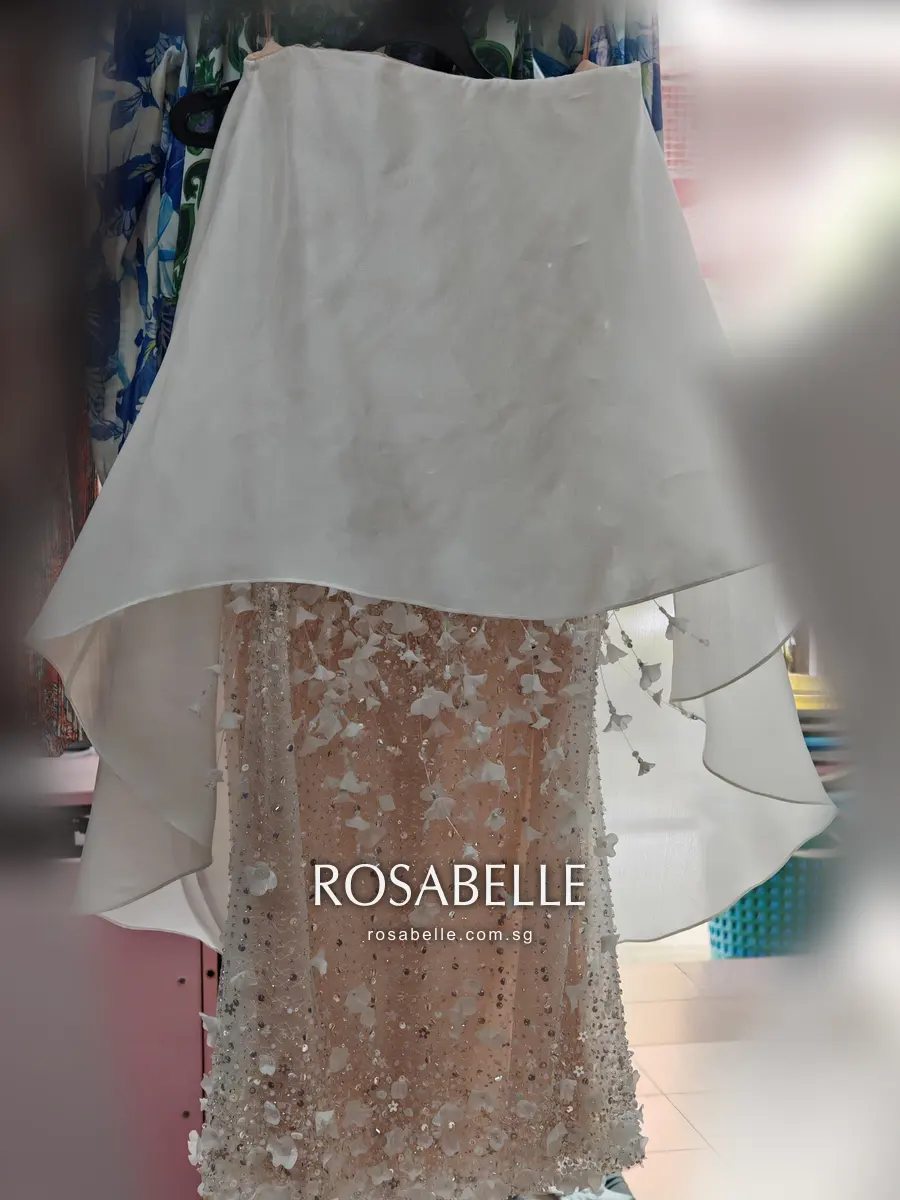
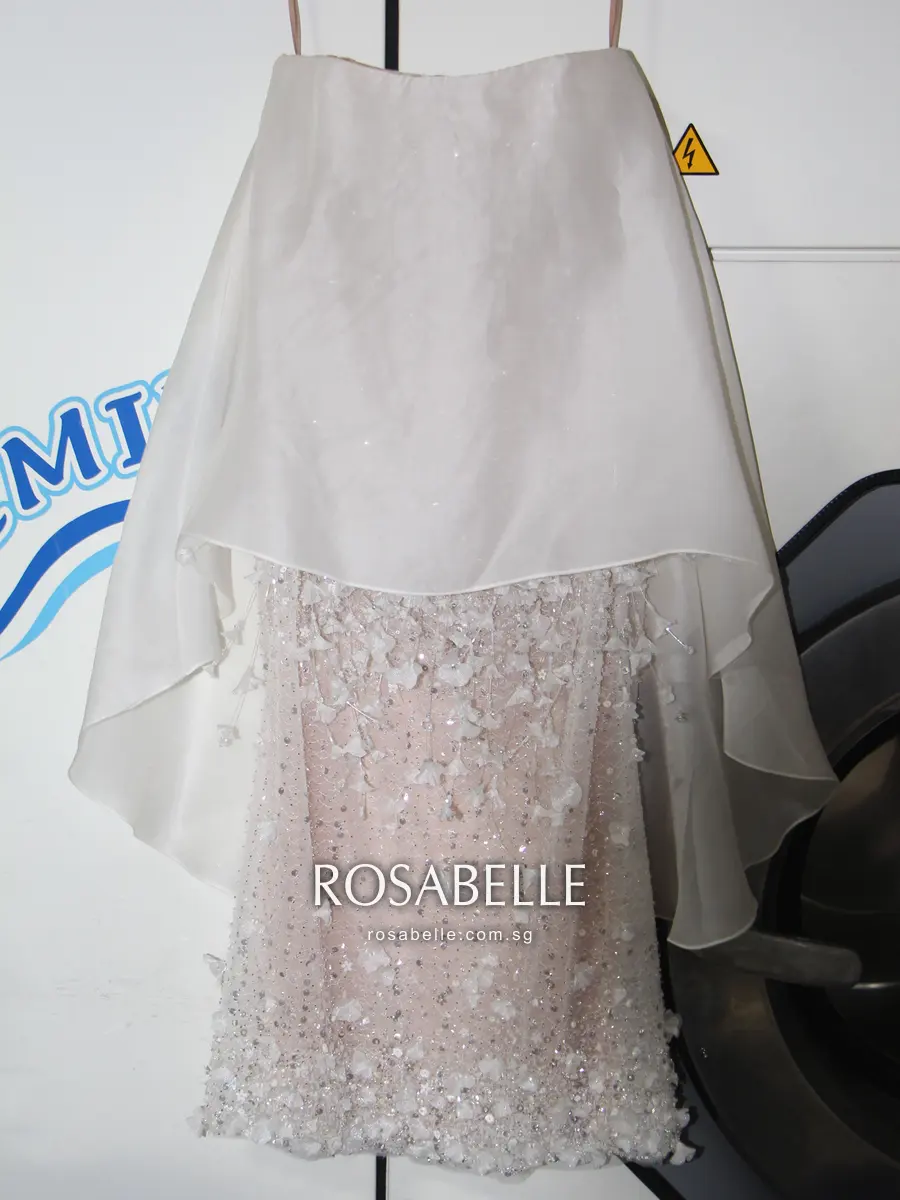
All photographs are shop records, shown as captured with no colour correction. In the first frame the background has been blurred to keep other customers' items out of view; the dress itself is untouched, and the other frames are as shot. The two frames were taken in different parts of the shop and in different light, so they record the dress before and after the work rather than an exact shade.
What is a Phan Huy couture mini dress?
Phan Huy is a Vietnamese couture house founded in 2023. In January 2026 it showed on the official Paris Haute Couture Week calendar, where its designer was the youngest, and the first from Southeast Asia, to be selected. Selection for that calendar is controlled by the Fédération de la Haute Couture et de la Mode.
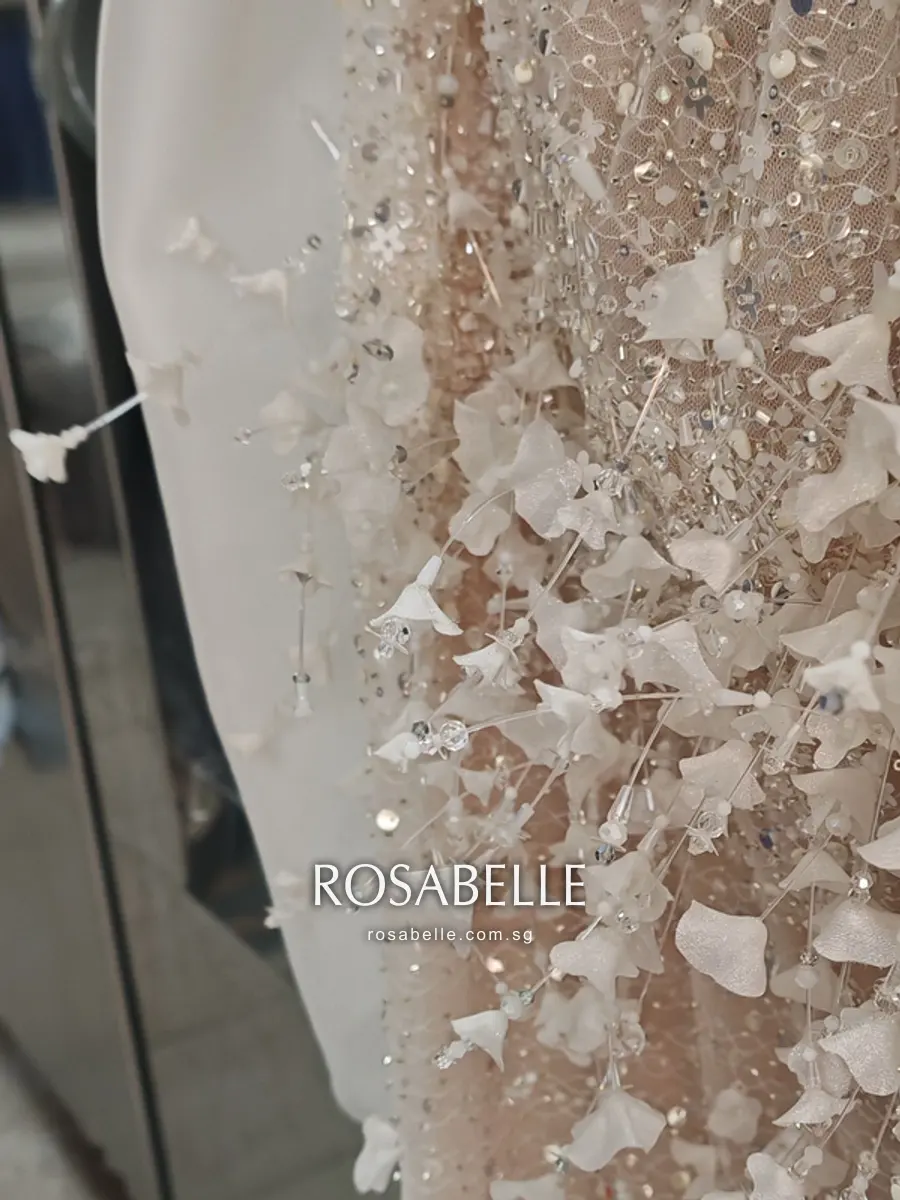
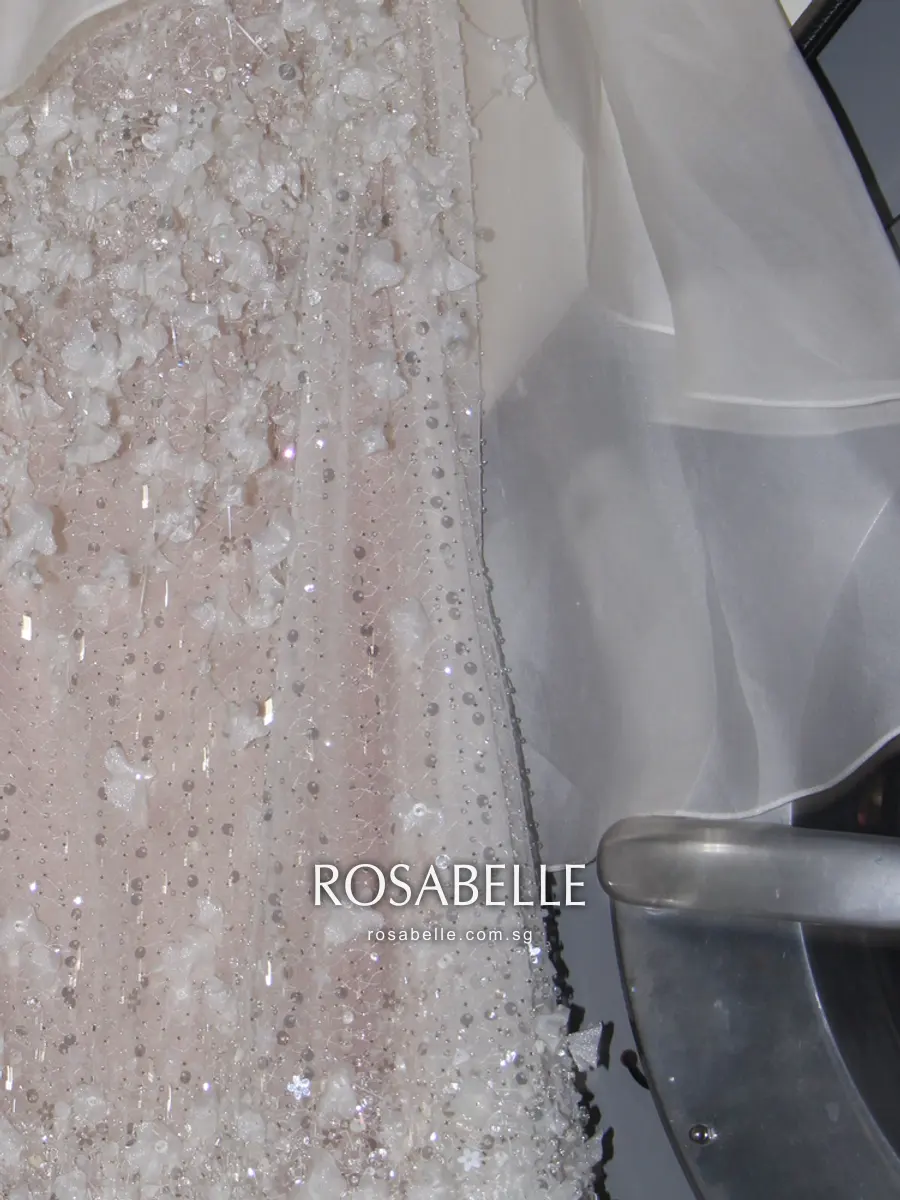
This dress is from the house's Spring/Summer 2025 collection, listed by the brand as 60% sequin and 40% chiffon. The outer layer is a strapless chiffon shell, cut shorter and open at the front so the inner skirt shows through, and closed at the back with a curved hem and a centre-back zip. The inner skirt carries the sequins and the applied petals.
Why does a beaded couture piece need different handling?
Beads, sequins and applied petals are attached to the ground fabric rather than woven into it, so they move independently of it. Anything that pulls, presses or agitates the surface acts on those attachments first. Sequins also respond to heat, and a fabric petal holds its shape from how it was made, not from how it is pressed.
That is why the decisions on this dress were about handling rather than product. The work was done by hand, the beadwork was protected throughout, and the finishing used a combination of hand pressing and steaming. The rest of the treatment is our own and we do not publish it.
What does the inside of the dress show?
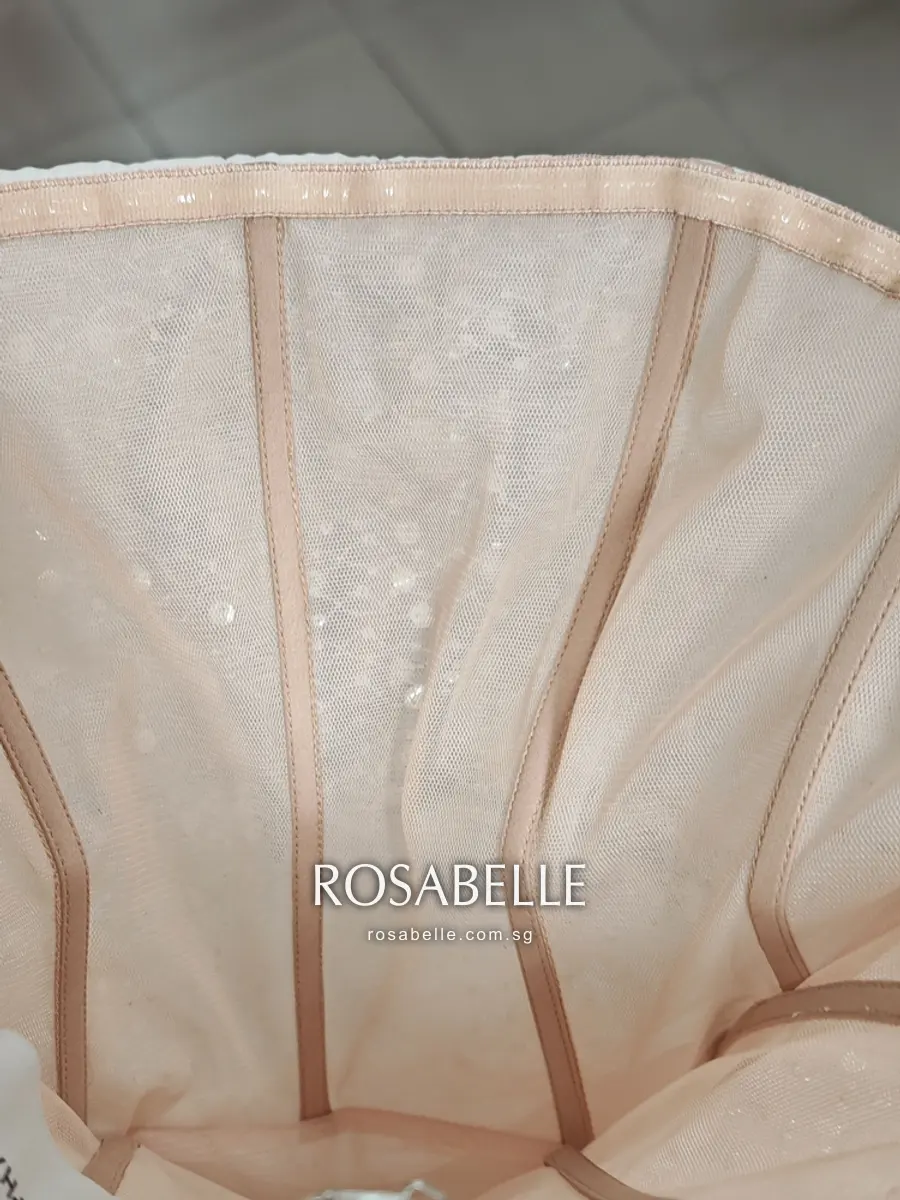
The bodice is lined in fine mesh and divided by vertical boning channels that hold the strapless shape. Structure like this matters to the work, because it decides how the dress can be supported while it is handled and how it has to be finished afterwards.
What did Rosabelle deliberately avoid, and why?
- Machine agitation of any kind. Agitation works on the threads holding the beads and the petals before it works on the cloth.
- Direct iron contact on the beading and the petals. Heat and pressure act on the sequins and on the attachments underneath them.
- Flattening the petals. The petals carry the volume of the skirt, and pressing them flat would remove what the piece is built around.
What was the result?
The dress was returned cleaned and finished. The chiffon outer layer, the sequinned inner skirt and the applied petals are intact, and the bodice holds its shape. It came in sound, and it went back sound.
What does this case show about cleaning couture?
Couture is assessed as construction. The label tells you little, and on this dress there was no label at all. What decides the work is how the piece is put together and what its trims will tolerate — which is also why two dresses that look alike can need quite different handling.
How should you care for a beaded or embellished dress?
Do:
- Hang a beaded piece with support, so the weight of the beading is not carried on one point.
- Bring it in as it is, and say what it is made of if you know.
- Keep it dry and out of sunlight until it is cleaned.
Don't:
- Press a beaded or applied surface directly.
- Treat a mark at home on embellished fabric; home treatment can loosen the attachments.
- Store the piece compressed. Applied petals take a set from being squashed.
The honest note
What we can and cannot say about a piece like this
Every couture piece is assessed on its own before any work starts. Construction, dye, trims and how they are attached all change what is possible, and not every weakness shows beforehand. We flag at-risk trims where we can. This page records one dress in one condition, and the photographs are working shop records rather than studio photography.
Case documented by Rosabelle Launderette's garment-care team. Case practitioner and technical review: Zach Lim.
Cleaned in-house at Rosabelle Launderette, Singapore, established 1998. This case records one garment in one condition and is not a guarantee of outcome.
Published and technically reviewed 8 September 2026.
Sources & further reading
Related designer pieces
More cases
Common questions
Questions about cleaning beaded and couture pieces
How do you clean a beaded couture dress?
Beads, sequins and applied petals are attached to the ground fabric rather than woven into it, so handling, drying and finishing all act on those attachments before they act on the cloth. On this Phan Huy mini dress the work was done by hand, with the beadwork protected throughout and the finishing by hand pressing and steaming. What the work involves changes with the fibre, the type of bead and how the trims are fixed, so we assess each piece before any work starts.
Can a dress with no care label be cleaned?
A care label records what the maker tested, and a couture piece is often made to a commission rather than a production run, so no label is issued. This dress arrived without one. In that case the assessment works from the construction instead: fibre, dye, trims and how they are attached.
Will the beading come loose during cleaning?
Beading is held by thread, and thread is affected by agitation, by tension when the garment is wet and heavier than usual, and by heat at the finishing stage. On this dress the beadwork was protected throughout and machine agitation was avoided. Loose or already-worn threads are flagged at assessment where we can see them, though not every weakness shows beforehand.
Can sequins be pressed?
Many sequins are a plastic film, so they change shape under direct heat, and pressing also bears on the threads holding them. The sequinned areas of this dress were finished without direct iron contact, using a combination of hand pressing and steaming. What is possible depends on the sequin material and on what sits underneath it.
Do you clean couture and runway pieces in Singapore?
Yes. Rosabelle cleans designer and couture garments, including beaded and embellished pieces, and each one is assessed before any work starts. Bring the piece in as it is, with nothing treated at home.