
Journal · Case study · Sofa covers & home · Published
Deep Cleaning Soiled Sofa Cushion Covers in Singapore
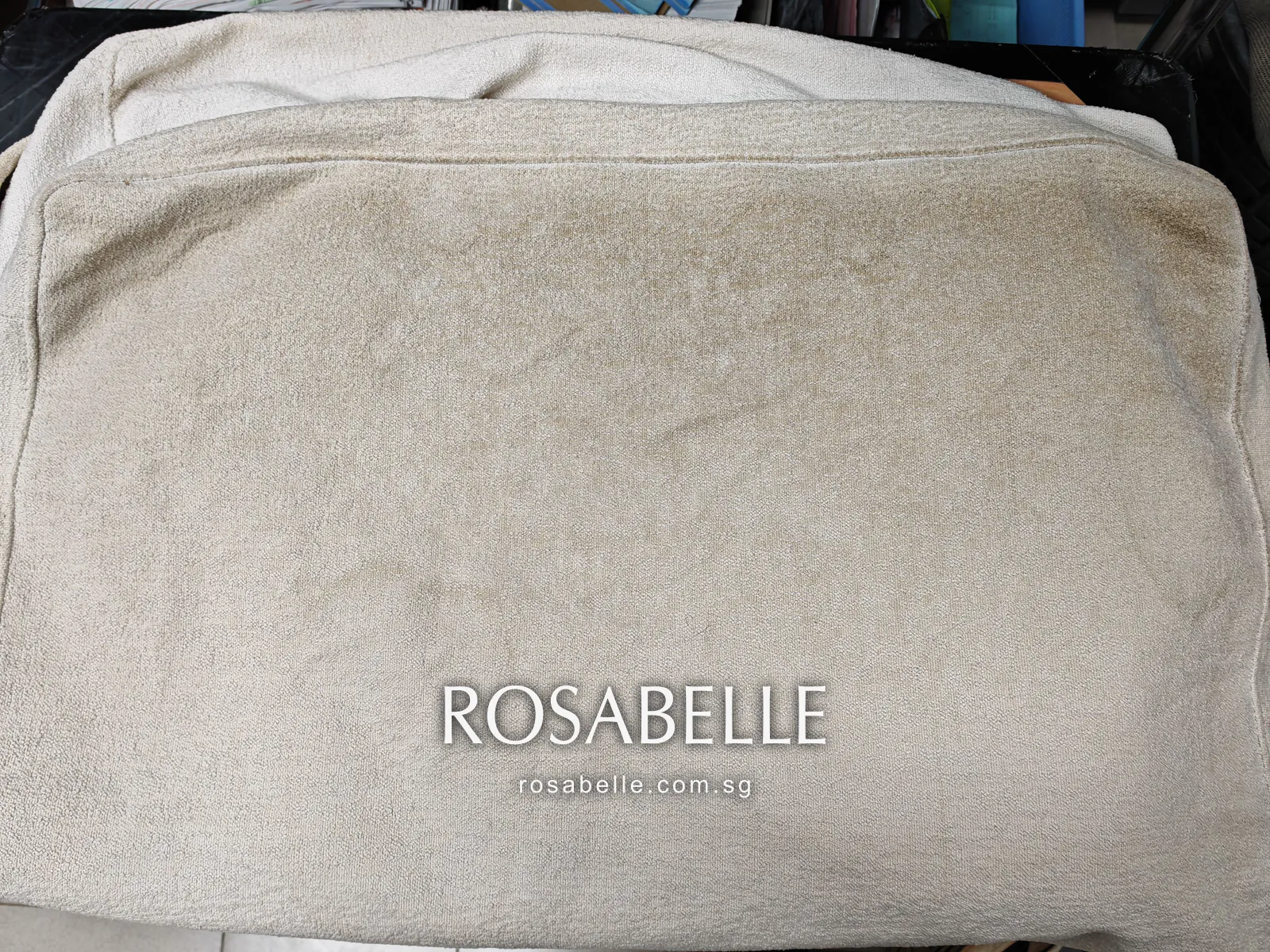
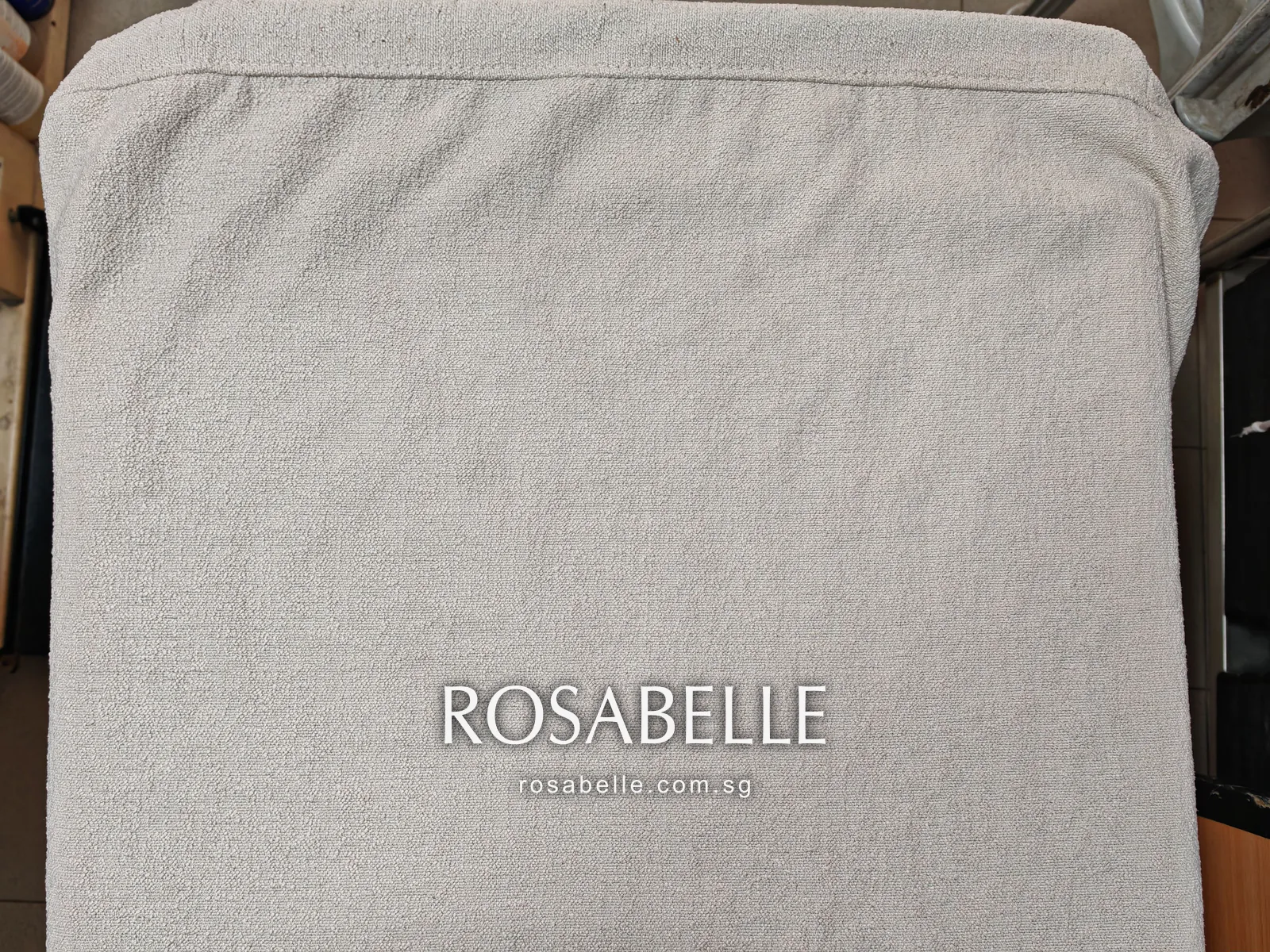
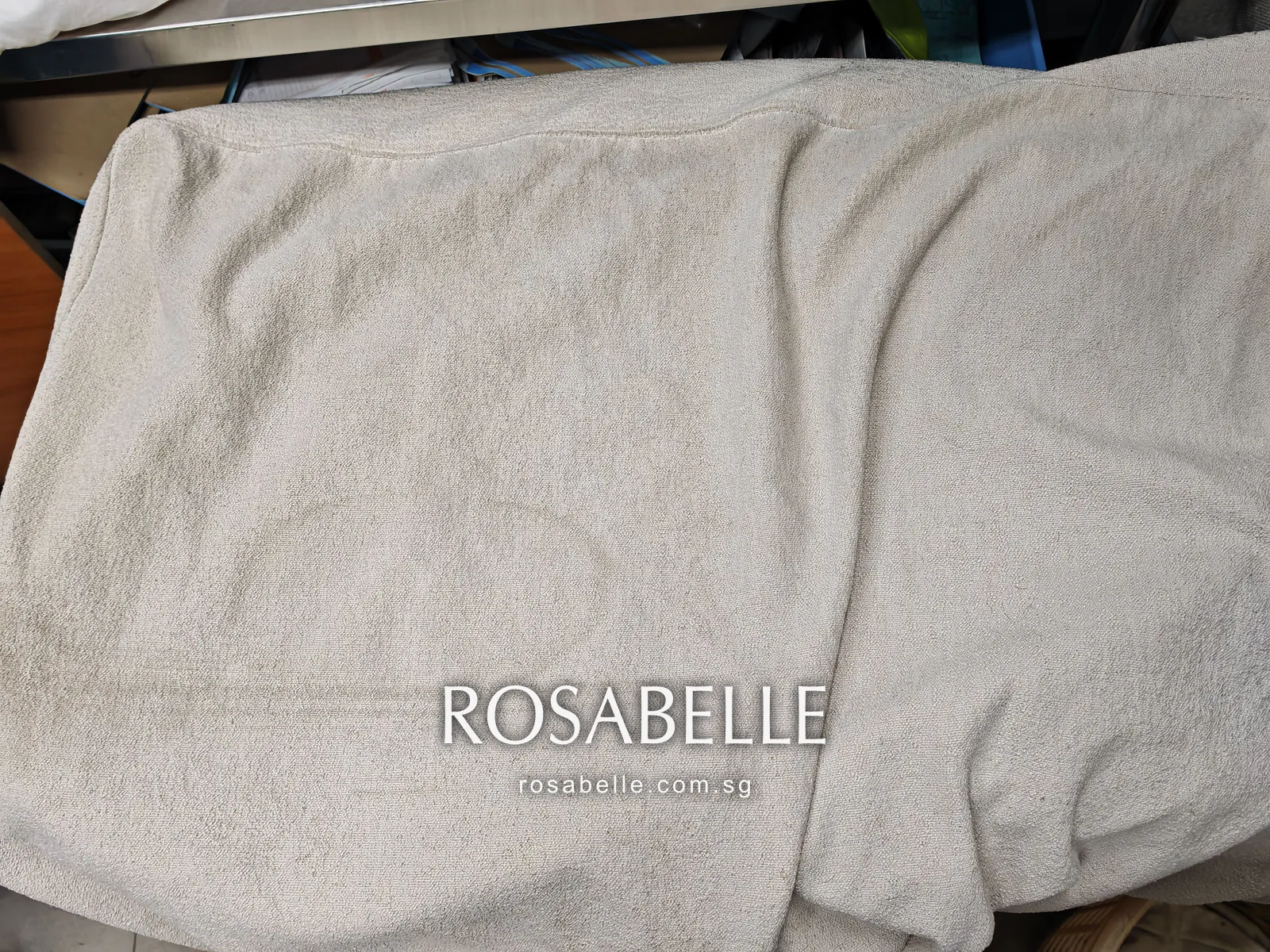
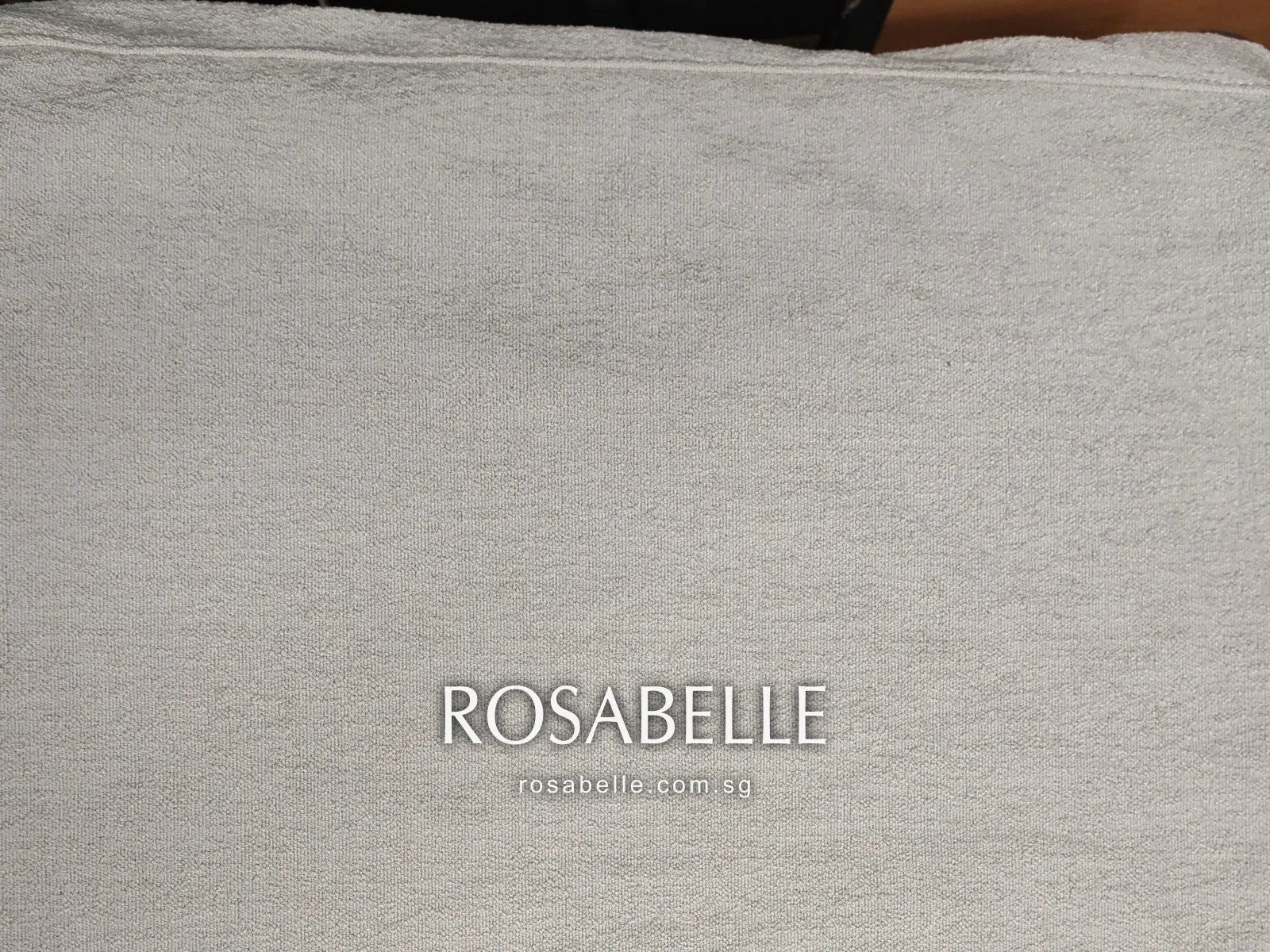
Removable cream sofa cushion covers came in grey from skin oil and sweat, and one carried tide marks where a spill had dried into the pile. The soiling and the tide marks came out, and the covers went back on their cushions.
This page records what happened to these covers, not an outcome to expect from every cover.
What came in?
The covers zip off the seat cushions of a sofa. Their cream looped pile had gone grey with use, heaviest along one long edge of the seat cover and spreading across its face. A second cover also had faint curved lines in its lower half where a spill or water had dried.
Why do sofa cushion covers go grey?
Skin oil and sweat pass into a cover wherever people sit, lean and rest their arms. The oil holds on to dust and everyday dirt, and the build-up darkens so slowly that it is rarely noticed until the cover is set beside something clean.
How does a dried spill leave tide marks?
A wet patch dries from its edge inward. As the edge evaporates, liquid flows outward to replace it and carries soil with it, which is left behind as a line where the patch ended. This is the same capillary flow that leaves a ring under a dried drop of coffee. Dabbing a mark with water at home can leave a fresh line in the same way.
What did the work have to achieve?
An even result across the whole cover
Both the grey soiling and the tide marks had to come out evenly from seam to seam. A cleaned patch beside soiled cloth dries with an edge of its own, which is how a tide mark forms in the first place.
Covers that still fit
A removable cover is cut to its cushion, so any shrinkage shows as a zip that will not close or a cover that pulls at the corners. The covers had to go back on their cushions as they came off.
How do you keep sofa cushion covers from going grey?
- Blot a spill straight away with a clean, dry cloth, working from the outside in, rather than wetting the patch further.
- Have the covers cleaned before the grey sets in. Seat covers take skin oil every day, so they soil faster than the back and arm covers.
- Check the care label before washing a cover at home. Some covers shrink, and a cover cut to its cushion will not go back on.
For removable sofa and cushion covers alongside duvets and bed linen, see bedding and home textile cleaning; prices by seat count are on the price list.
About these photographs
These are working shop records. The before frames were taken when the covers arrived and the after frames when the work was finished, under different light. Nothing was colour-corrected. The tide-mark cover was photographed draped before cleaning and laid flat after, so that pair does not show it in the same position. The result described on this page is what we saw on the covers, not a reading of the photographs' colour.
The honest note
Can soiling and tide marks always be removed from sofa covers?
Not always. We do our best, but many factors will affect the outcome. Complete removal is possible on some covers but cannot be guaranteed. How long the soiling has built up, what was spilled, the fibre and what has been tried at home all change the work. Each cover is assessed before any work starts.
Case documented by Rosabelle Launderette's garment-care team. Case practitioner and technical review: Zach Lim.
Cleaned in-house at Rosabelle Launderette, Singapore, established 1998. This case records one set of covers in one condition and is not a guarantee of outcome.
Published and technically reviewed 12 October 2026.
Sources & further reading
Related home textile cases
More bedding & home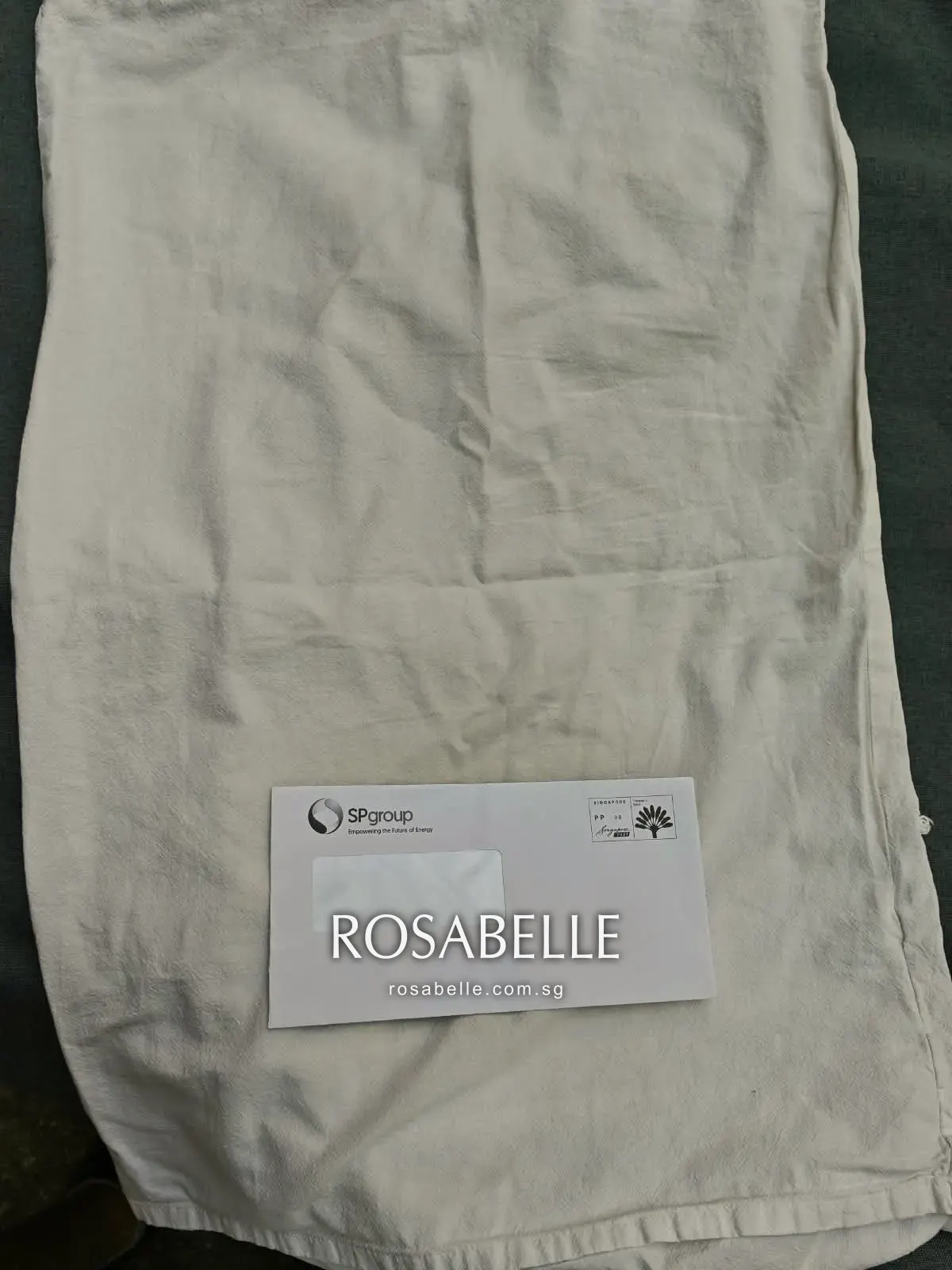


Common questions
Questions about sofa cushion cover cleaning
Why do sofa cushion covers turn grey?
Skin oil and sweat pass into a cushion cover wherever people sit, lean and rest their arms. The oil holds on to dust and everyday dirt, and the build-up darkens slowly until the cover reads grey rather than its own colour. On these cream sofa cushion covers the soiling was heaviest along one long edge and spread across the face of the cover.
What causes tide marks on a sofa cover?
When a spill or a wet patch dries, the liquid at the edge evaporates first and draws more liquid outward to replace it, carrying dissolved and loose soil with it. The soil is left behind as a line at the edge of where the patch was. Dabbing a mark with water at home can leave a new line in the same way. One of these covers had faint curved lines where a spill had dried into the pile.
Can tide marks and body-oil soiling be removed from sofa cushion covers?
Body-oil soiling is bound into the fibre by the oil itself, and a tide mark is soil concentrated at the edge of a dried patch, so both have to be lifted evenly across the whole cover, or the cleaned area dries with an edge of its own. On these cream sofa cushion covers the grey soiling and the tide marks came out, and the covers went back on their cushions. How long the soiling has built up, what was spilled, the fibre and what has been tried at home all change the work, and each cover is assessed before any work starts. Complete removal is possible on some covers but cannot be guaranteed.
Do you clean sofas in Singapore?
We clean removable sofa and cushion covers only, not fixed upholstery, and we do not work on-site. Covers that come off the frame are collected from homes anywhere in Singapore or can be dropped off at our Queenstown and Orchard shops, cleaned in-house and returned.
How much does sofa cushion cover cleaning cost in Singapore?
At Rosabelle Launderette, cushion covers are priced by seat count from $12 for one seat, $17 for two and $23 for three. Full sofa covers start from $30 for one seat, $40 for two and $60 for three. Pickup is free on the mainland with a minimum order of $100.