
Journal · Case study · Leather care · Published
Cleaning a Strellson Jacket With Cream Nappa Leather Sleeves in Singapore
This Strellson jacket came back fully clean, with no colour moving between its cream leather sleeves and its camel body. The sleeves are lamb nappa leather. The body is a stretch blend of cotton, polyester and elastane, and the collar, cuffs and hem are striped rib in camel and cream.
It came in for a routine clean, with no stains or damage recorded. The difficulty was the mix of materials: pale leather sewn against a dyed textile, in one garment that cannot be taken apart to clean. This page records what happened to this jacket, not an outcome to expect from every garment.
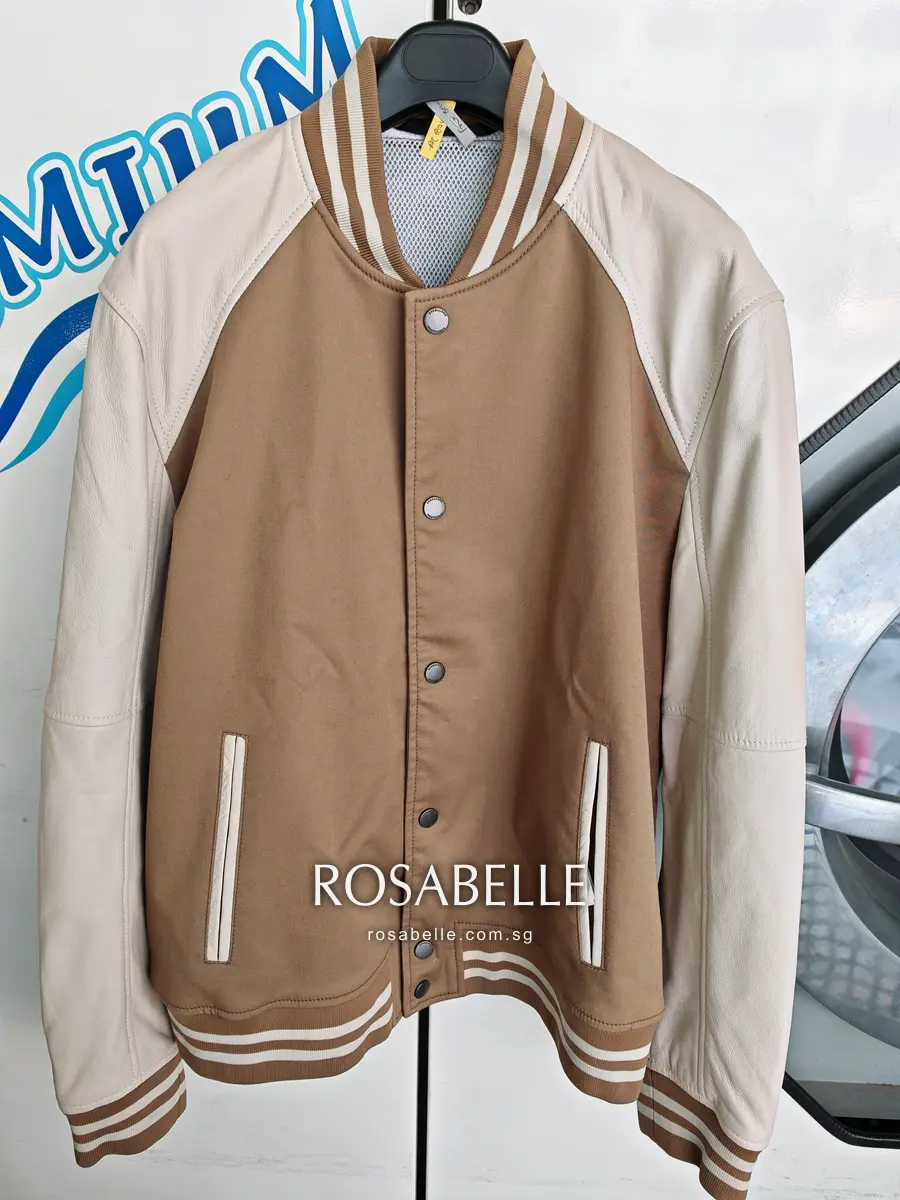
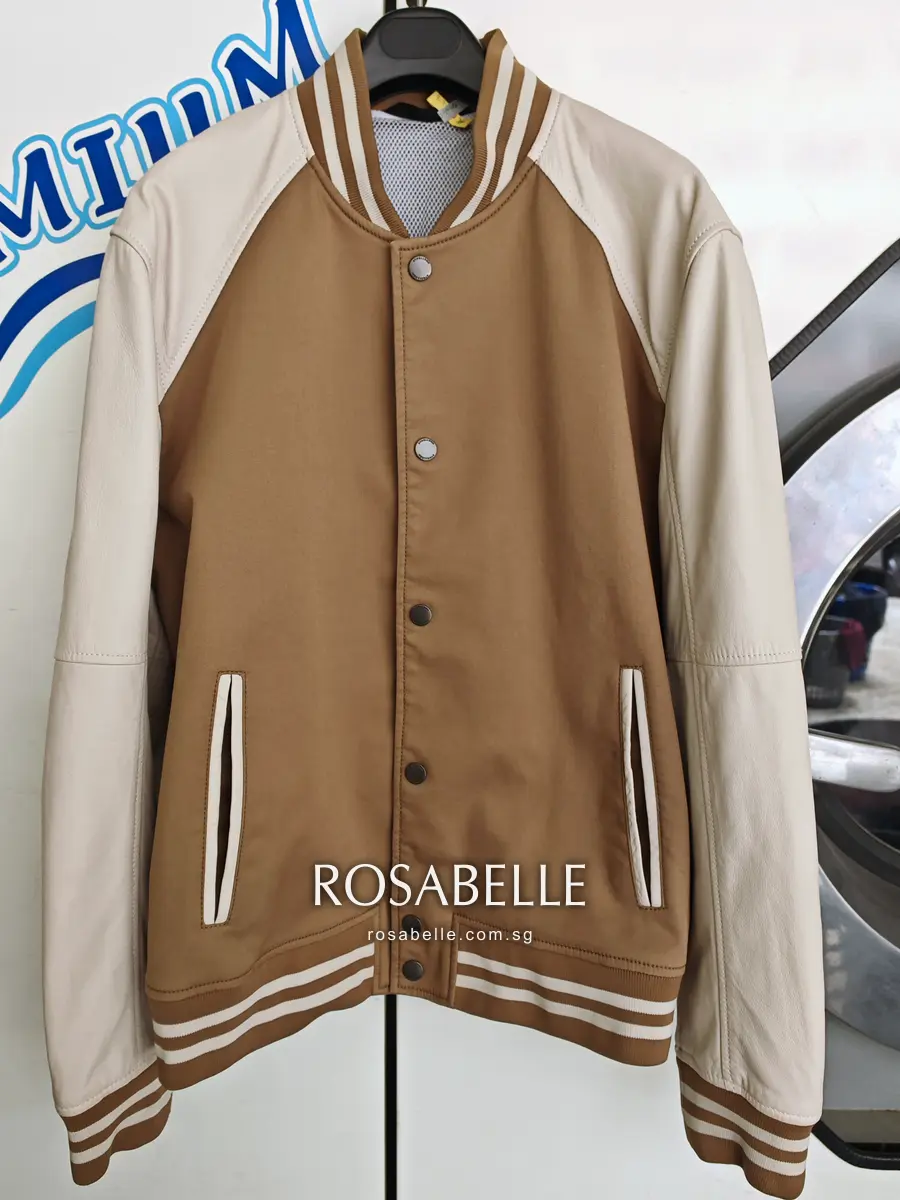
The photographs are shop records taken on two different days. Each frame has been colour-balanced against the same white wall behind the jacket, so that the camera's own colour setting does not differ between before and after; nothing else was changed, lightened locally or retouched. The camel body still reads a little deeper in the after frames, and we make no claim about why.
What is this Strellson jacket made of?
The care label lists the jacket's materials in three groups, and each one behaves differently when it is cleaned.
- Sleeves: 100% lamb nappa leather. Nappa is a soft, full-grain leather made from unsplit sheep, lamb or kid skin and dyed throughout (Etherington & Roberts). In a cream shade it shows any mark or transferred colour.
- Body: 61% cotton, 34% polyester, 5% elastane. A dyed camel textile with stretch in it.
- Linings: 100% polyester in both the body and the sleeves.
- Trims: striped rib in camel and cream at the collar, cuffs and hem, and cream piping on the welt pockets.
The label also carries the mark of the Leather Working Group, whose audit standard assesses how tanneries measure and control the environmental impact of their manufacturing. It is a mark about how the leather was made, not about how it should be cleaned.
Why is a jacket with leather sleeves and a cotton body difficult to clean?
Leather and textiles need different processes, and a jacket like this puts both in one garment. In our workshop experience, leather handled like a textile can stiffen or lose its shape. What suits the cotton-blend body is not what suits the lambskin, and the two meet along the seams, where anything used on one part can reach the other.
The colours raise the stakes. The body is a mid-tone camel and the leather is cream. If any dye leaves the body during cleaning, the pale leather and the cream stripes in the rib are where it shows, and dye taken up by leather is not simply rinsed out again.
How did Rosabelle clean the Strellson jacket?
Setting the work by the most delicate part
The cream nappa was the part with the least tolerance, both for the treatment itself and for any colour arriving from the body. The cleaning of the whole jacket was set around protecting it.
Handling each material for what it can take
The leather sleeves were cleaned as leather and the body as a textile, with care taken at the seams where the two meet.
Reconditioning the leather
Cleaning removes some of the oils that keep leather supple. Reconditioning, putting those oils back, is part of our leather cleaning, and the sleeves were reconditioned as part of this clean.
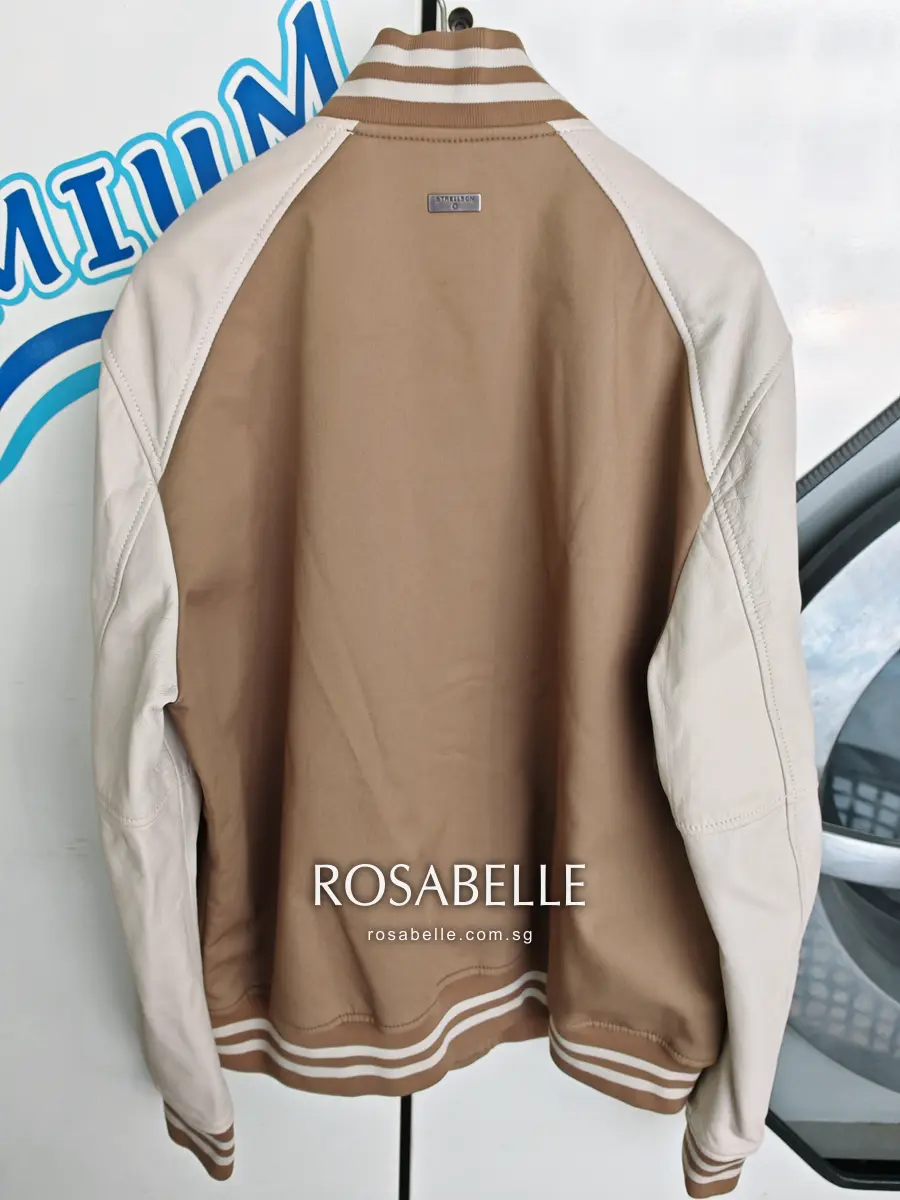
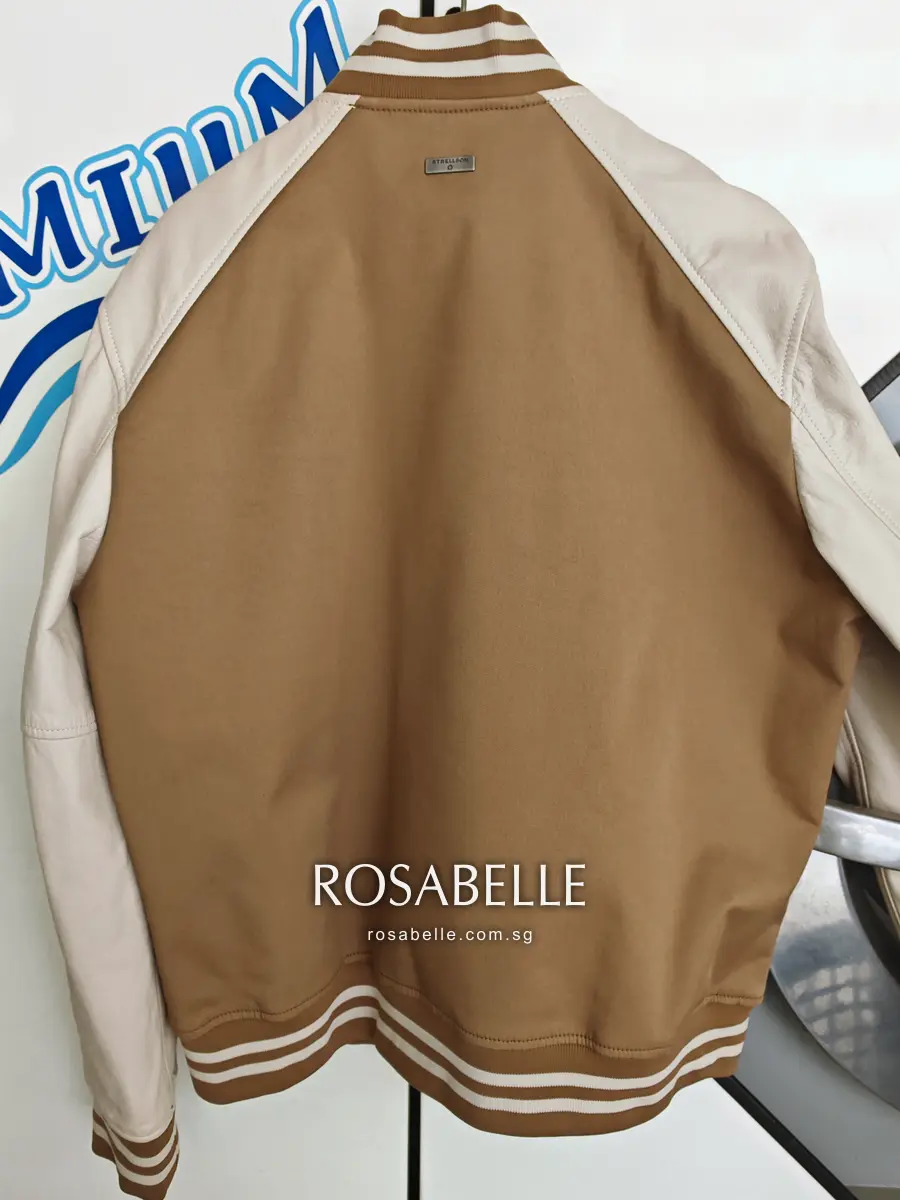
What did Rosabelle deliberately avoid, and why?
- Cleaning it as an ordinary garment. A process chosen for the cotton body would have put the leather at risk.
- Any step that risked the body's dye moving. On cream leather, transferred colour is far harder to remove than ordinary soil.
- Leaving the leather dry after cleaning. Without reconditioning, nappa loses its suppleness.
What was the result?
The jacket came back fully clean.
- Cream nappa sleeves: clean, with no camel dye taken up from the body.
- Camel body: clean.
- Striped rib and pocket piping: the cream stripes still cream, with no camel run into them.
- Leather: reconditioned as part of the clean.
What does this case show about cleaning mixed-material jackets?
A garment is only as washable as its most delicate part. This jacket's body could take a far more ordinary clean than its sleeves, but the sleeves decide how the jacket is cleaned, because they cannot be taken off.
It also shows that a routine clean can still need a specialist. Nothing was wrong with this jacket. The risk came from its construction, pale leather sewn to a dyed textile, and it would have been the same on a jacket that had never been worn. The result here is evidence about this piece, not a forecast for every garment.
How should you care for a jacket with leather sleeves?
Do:
- Hang it on a broad, shaped hanger so the leather shoulders keep their shape.
- Store it in a breathable cotton cover, in a wardrobe kept under about 55% humidity where you can.
- Blot spills on the leather straight away with a clean, dry cloth.
- Tell your cleaner about any home treatment the jacket has had.
Don't:
- Machine wash it, even if the body fabric alone would allow it.
- Store it in a plastic sleeve; it traps moisture against the leather.
- Use household cleaners or wet wipes on pale leather.
- Let dark or freshly dyed clothing rub against cream leather, especially when either is damp.
The honest note
Can every jacket with light leather sleeves be cleaned like this?
Not every one. This jacket came in sound, and its body did not release dye. A body fabric whose dye is loose, or leather that has already taken up colour, changes what cleaning can do. Soil can come out, but colour wear, cracking and peeling of the finish are usually permanent, and we do not recolour or refinish leather. Leather cleaning also takes longer than an ordinary garment, generally two weeks and upwards, and we give you a timeline at drop-off after assessing the piece.
Case documented by Rosabelle Launderette's garment-care team. Case practitioner and technical review: Zach Lim.
Cleaned in-house at Rosabelle Launderette, Singapore, established 1998. This case records one garment in one condition and is not a guarantee of outcome.
Published and technically reviewed 7 September 2026.
Sources & further reading
- Etherington & Roberts, Bookbinding and the Conservation of Books: A Dictionary of Descriptive Terminology — Nappa leather (Conservation OnLine, American Institute for Conservation)
- ISO 105-X12:2016 — Textiles: Tests for colour fastness, Part X12: Colour fastness to rubbing
- Leather Working Group — Leather Manufacturer Standard
Related leather cases
More leather cases

Common questions
Questions about cleaning jackets with leather sleeves
Can a jacket with leather sleeves be dry cleaned?
Yes, but not as an ordinary garment. The leather and the fabric need different handling, so a jacket with leather sleeves should go to a cleaner that works leather in-house. At Rosabelle, leather is cleaned on a process separate from textiles, and this Strellson jacket, with cream nappa sleeves on a cotton-blend body, came back fully clean.
How do you clean a varsity jacket with leather sleeves?
Treat it as a leather garment, not a washable one. Machine washing risks stiffening the leather and letting dye from the body run onto the sleeves. Spot marks gently at home if you must, keep water off the leather, and have the whole jacket professionally cleaned by a leather specialist.
Will the colour of the body run onto light leather sleeves?
It can, and on pale leather even a faint transfer shows. On this Strellson jacket the risk was camel dye from the cotton-blend body reaching the cream nappa sleeves and the cream rib stripes. The cleaning was set to prevent that, and no colour moved between the parts.
What is nappa leather?
Nappa is a soft, full-grain leather made from unsplit lamb, sheep or kid skin, usually dyed throughout. The sleeves of this Strellson jacket are 100% lamb nappa. Because it is fine and supple, it marks easily and loses suppleness if it dries out, so cleaning it includes reconditioning.
How long does leather jacket cleaning take in Singapore?
At Rosabelle, leather cleaning generally takes two weeks and upwards, longer than the five working days an ordinary garment takes. We give you a timeline at drop-off, after assessing the piece.
Can you restore the colour of a light leather jacket?
No. Our leather service is cleaning, which includes reconditioning; we do not recolour or refinish leather. Soil can come out with cleaning, but colour wear, cracking and peeling of the finish are usually permanent, and we will tell you which you have before we start.