
Journal · Notable pieces ·
1970s Wedding Gown: Routine Cleaning Before Long-Term Storage
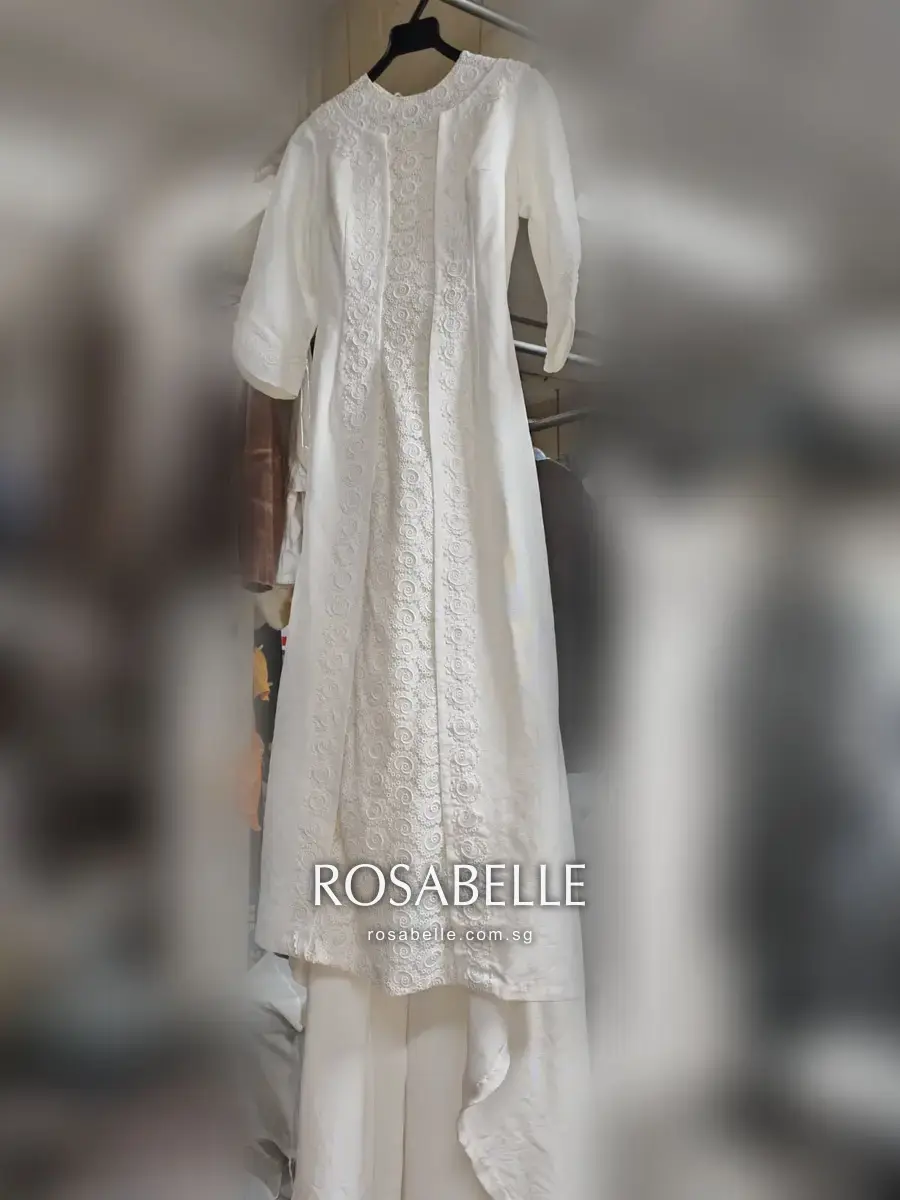
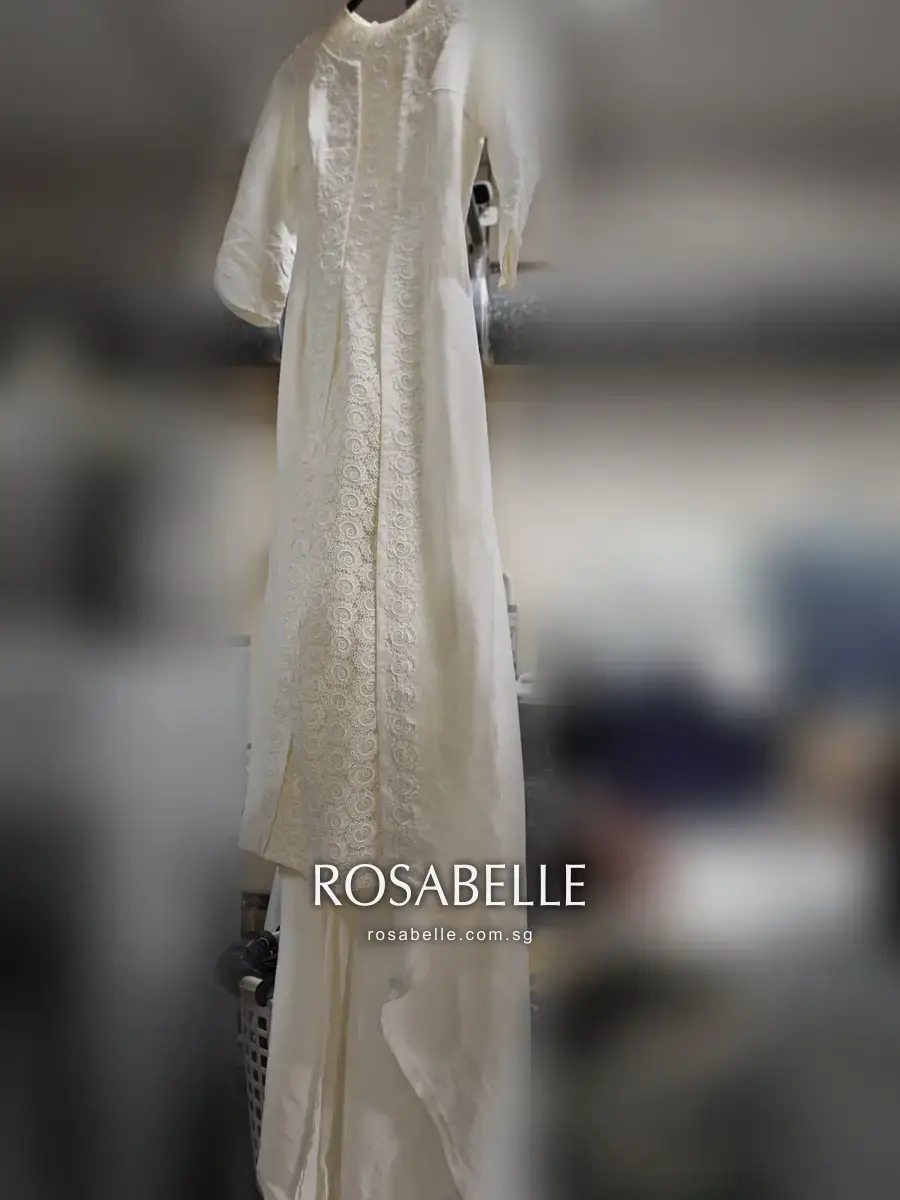
A silk wedding gown from the 1970s, worn at a Singapore wedding more than fifty years ago and kept ever since. Its owner brought it in for a routine clean before it went back into storage.
The gown
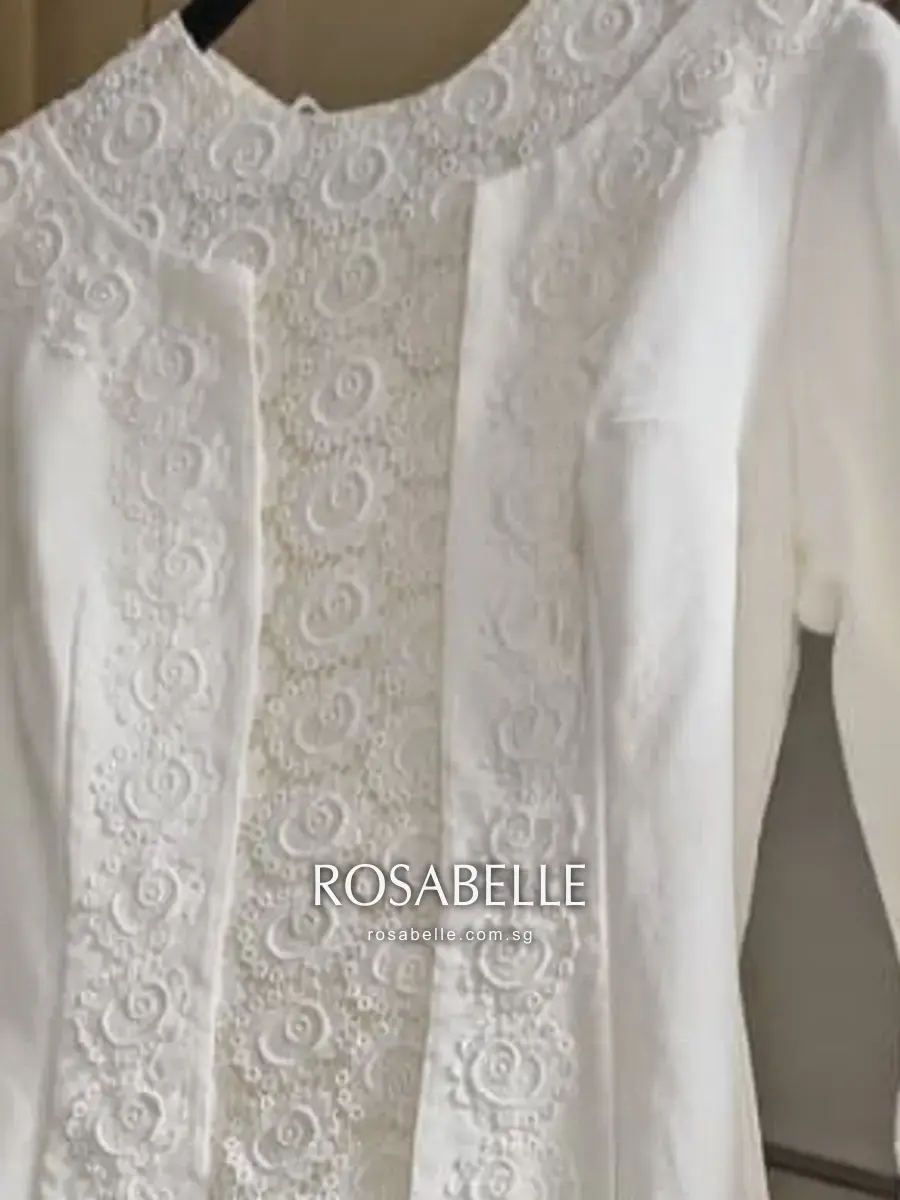
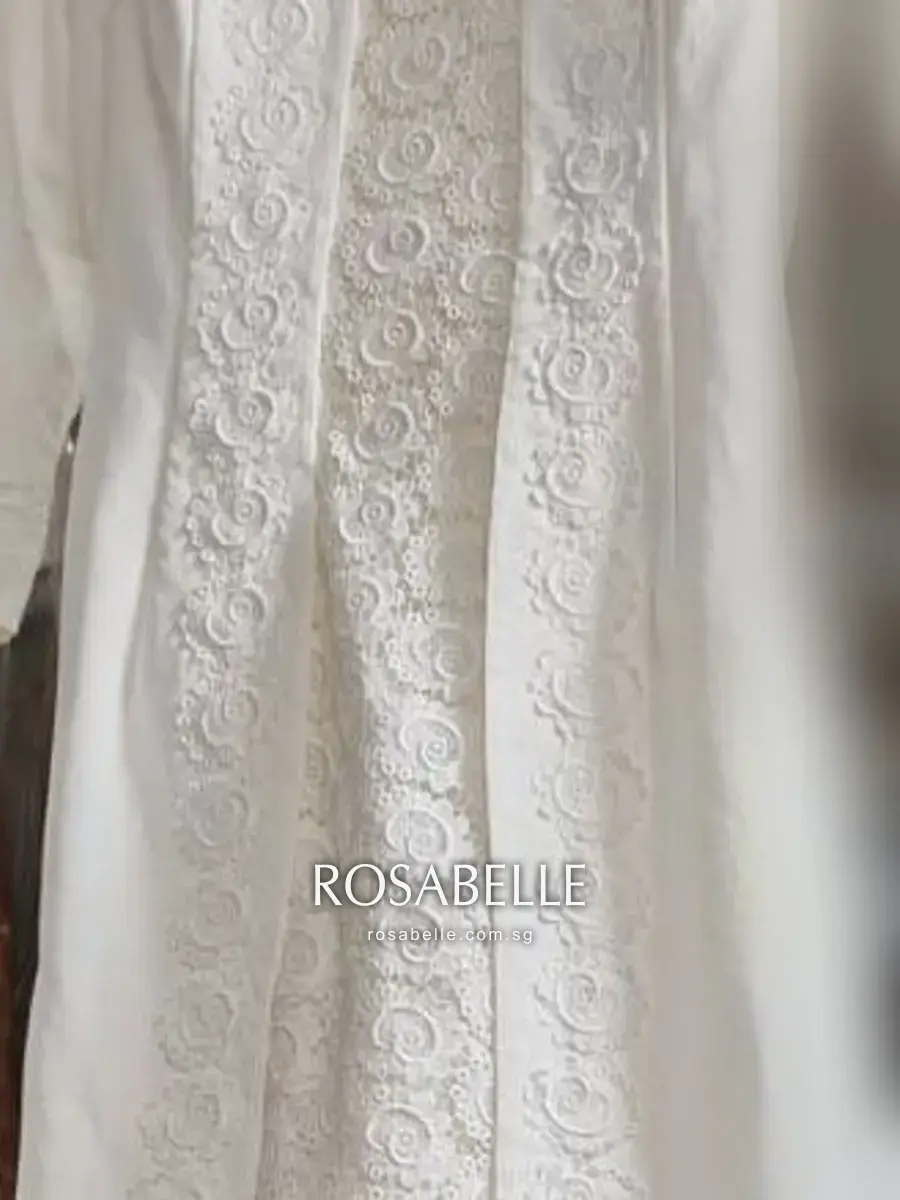
Ivory silk, floor-length, made in the 1970s. A high round neckline, three-quarter sleeves with embroidered cuffs, and a cutwork lace panel running the full length of the centre front, with embroidered scrollwork either side of it. Its owner was married in it more than fifty years ago and told us so with some pride. Nothing was wrong with it. She wanted it cleaned before it went back into the wardrobe.
Being handed a piece like that is a privilege. It is also the right way to treat one. A gown cleaned on a schedule tends to survive decades in a Singapore wardrobe. One cleaned only after something has visibly gone wrong often does not.
The work
Aged silk gets assessed before anything touches it. The fibre loses strength with time, and a cutwork panel is only as strong as the threads bridging its holes, so a fifty-year-old gown will not take what a new one takes. We used the gentlest method that would actually clean it, worked the lace by hand instead of agitating it, dried it slowly and under control, and finished it by hand so the embroidery kept its relief instead of being pressed flat. It went home in a hanging cover sealed at both ends.
Why a stored wedding dress still needs cleaning
The damage that ruins a stored gown is invisible on the day it goes into the wardrobe. Perspiration, body oils, perfume and sugar from a spilt drink all dry colourless, then oxidise over the years into the yellow and brown marks people put down to age. By the time a mark shows, it has been setting into the fibre for years. Mould works the same way. Singapore’s humidity reaches fabric that looks perfectly sound, and a wardrobe or a sealed plastic bag holds the moisture against it.
Looking clean and being clean are different things, and a dress worn for a single day is dirtier than it appears. Keep it dry, dark and out of plastic, look at it now and then, and have it cleaned periodically instead of waiting for a reason to. We clean gowns worn last month and gowns that have sat in a cupboard for thirty years, and the first job is always the easier one. Our page on wedding gown cleaning sets out what the work involves, and wet cleaning versus dry cleaning explains how the method gets chosen.
The honest note
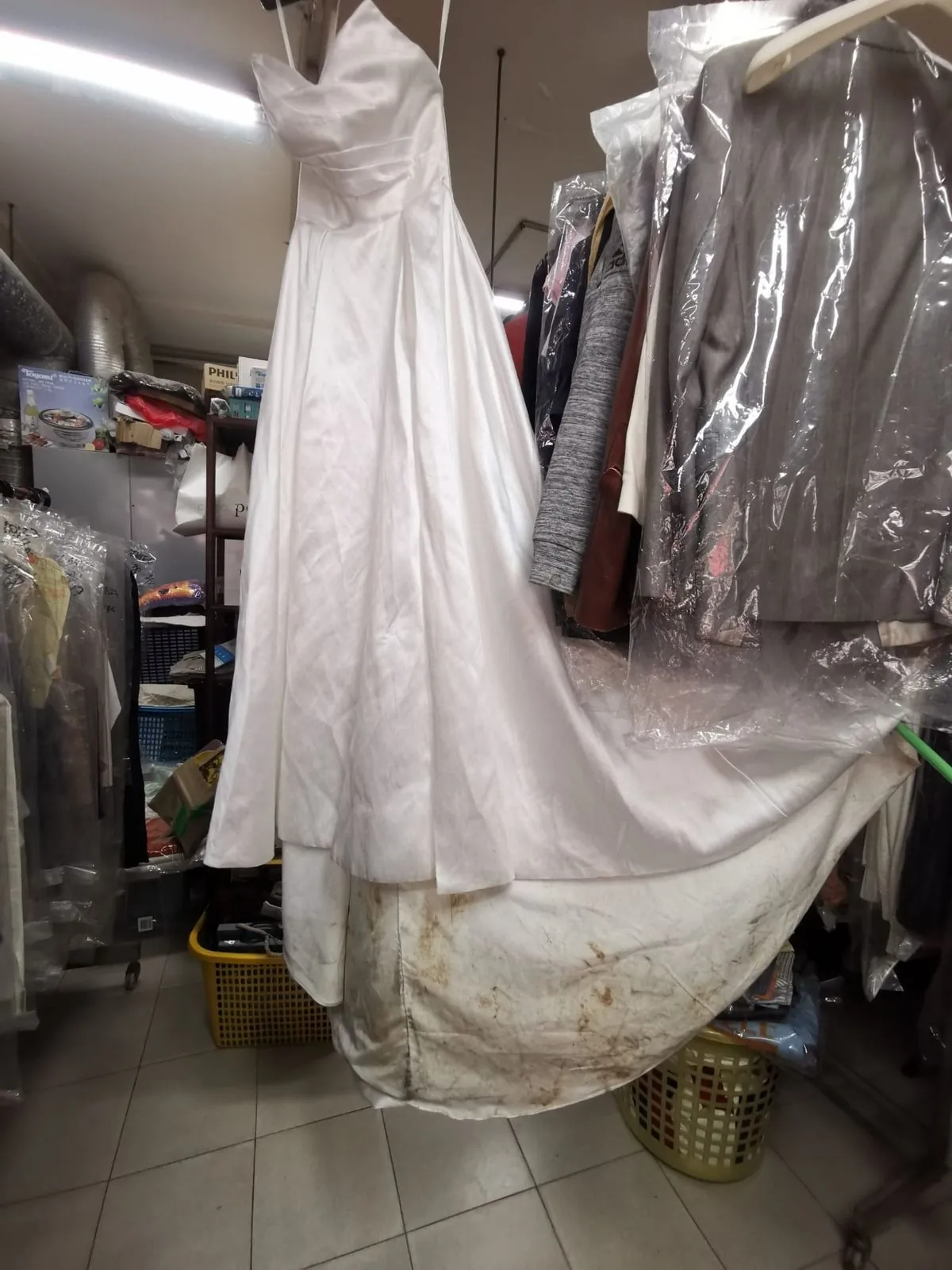
Cleaning on a schedule is prevention, and prevention is the part we can promise. Restoration is harder. Yellowing that has set into the fibre lifts by degrees rather than completely, and mould that has eaten through a thread leaves a hole no cleaning puts back. We assess an old dress and tell you what is achievable before we start; our case on removing mud from a gown train shows what that looks like when the job is a rescue instead of maintenance. For a gown in this condition the job is simple. Clean it, return it in a sealed hanging cover, and clean it again before the next long spell in storage.
Case practitioner and technical review: Zach Lim.
Related cases
More like this

Common questions
Frequently asked
Should you clean a wedding dress before storing it?
Yes, and before every long spell in storage rather than only the first one. Perspiration, body oils, perfume and sugar from drinks dry colourless and oxidise into yellow and brown marks over the years, so a dress that looks clean going into the wardrobe is not a clean dress. Cleaning it first is what stops those invisible residues setting into the fibre.
Why do wedding dresses turn yellow in storage?
Wedding dresses yellow in storage because of what was left in the fabric when they were put away. Invisible sugar, perspiration and body-oil residues oxidise slowly and darken from nothing to yellow to brown, and the fabric ages alongside them. In Singapore, humidity speeds that up and adds mould, which is why a stored dress is worth cleaning periodically rather than once.
How often should a wedding dress in storage be cleaned?
Periodically, rather than only when something is visibly wrong. A dress can spend decades in a Singapore wardrobe with nobody looking at it, and the damage that matters, oxidising residues and mould working into the weave, has usually been at work for years by the time it shows. A routine clean between long spells in storage is far easier on the fabric than a restoration afterwards.
Can a 50-year-old wedding dress still be cleaned?
Yes, where the fabric is still sound. This 1970s silk gown came in for a routine clean rather than a rescue, and was handled as aged silk: assessed first, cleaned by the gentlest method that would work, with the cutwork lace worked by hand and dried slowly. Age changes how a dress is handled rather than ruling cleaning out.
Can yellowing on an old wedding dress be removed?
Sometimes, and by degrees rather than completely. Oxidised yellowing that has been setting into the fibre for decades lifts partially, and mould that has eaten through a thread leaves a hole no cleaning can replace. We assess an old dress and tell you what is achievable before we start, which is why cleaning a dress on a schedule beats restoring it later.
How should you store a wedding dress in Singapore’s humidity?
Clean it first, then keep it dry, dark and out of plastic. A sealed plastic bag or a taped box traps moisture against the fabric, which is what mould needs. We return gowns in a hanging cover sealed at both ends rather than a preservation box, so the gown is protected on the way home and you choose where it lives. Check it now and then, and have it cleaned again before it goes back. Gown cleaning starts from $190, confirmed after inspection, with a turnaround of five working days and upwards.